Imamzadeh Yahya (Varamin): A Shia Shrine and Mausoleum in Iran
Site at a Glance
- Popularity
- Medium
- Country
- Iran
- Primary era
- Medieval
- Eras represented
- Medieval, Modern
- Civilizations
- Ilkhanate, Seljuk
- Site type
- Religious
- Remains
- Tomb
On this page13 sections
History
Foundation and Ilkhanate patronage
Imamzadeh Yahya (Varamin) is an active Shia shrine and mausoleum in Iran. An imamzadeh is a shrine associated with a descendant of a Shia imam. Yahya is identified as a sixth-generation descendant of Hasan ibn Ali, an imam and grandson of Muhammad.
The complex has a principal date in the 12th century, but its chronology remains uncertain. Its construction and expansion are also placed around 1260/61–1306/07, during the Ilkhanate, a Mongol-ruled dynasty based in Iran and neighboring regions. The mausoleum itself is dated to 1307/08.
Several patrons supported the shrine’s development. One was Fakhr al-Din, the local ruler of Ray when Varamin was its capital. A protégé of Arghun Khan, the fourth Ilkhanate ruler, Fakhr al-Din invested heavily in the complex and claimed descent from Hasan ibn Ali.
Tile removal and continuing use
Persian tiles were systematically removed from the shrine and sold in Europe and the United States from 1862/63 to 1875, amid wider looting of such tiles. Theft continued during the 19th and 20th centuries, dispersing parts of the shrine’s tilework into museum collections.
The shrine remains a place of prayer. Worshippers touch and kiss the tomb screen, pray beside it, leave offerings through its openings, and decorate it. Some visitors believe Yahya is spiritually present at the tomb and that prayers there may bring positive outcomes. The shrine has also drawn Afghan immigrants living in Varamin.
In 2015, it was a pilgrimage destination for Arbaeen, a Shia observance held forty days after Husayn’s martyrdom. Its courtyard serves for local events and picnics, and people visit family graves there. The complex entered Iran’s National Heritage List in 1933 as item 199.
Remains
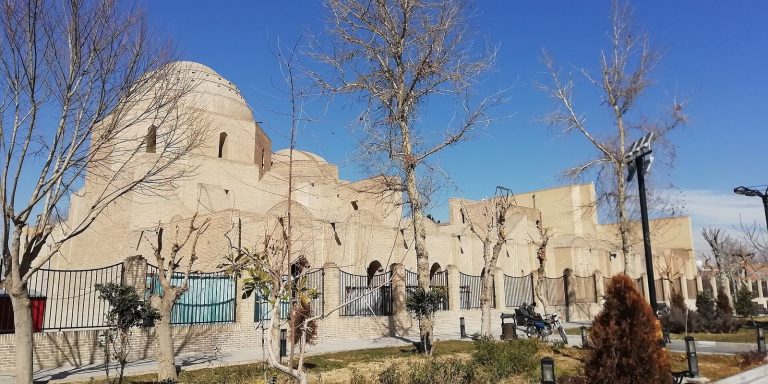
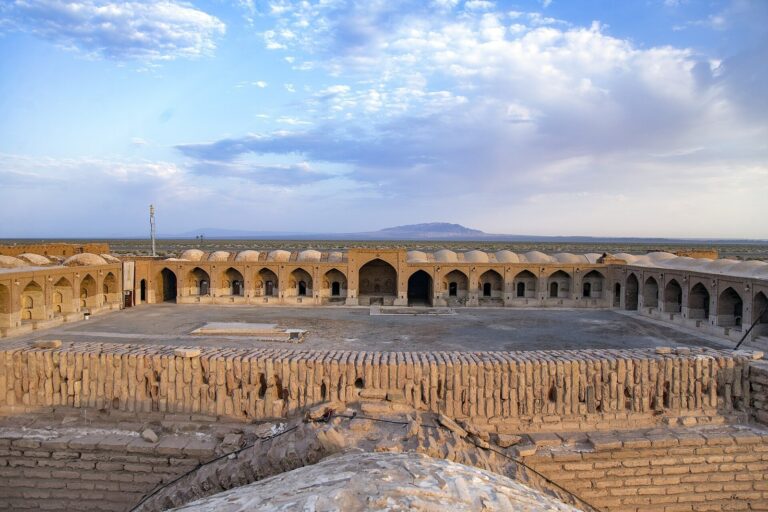
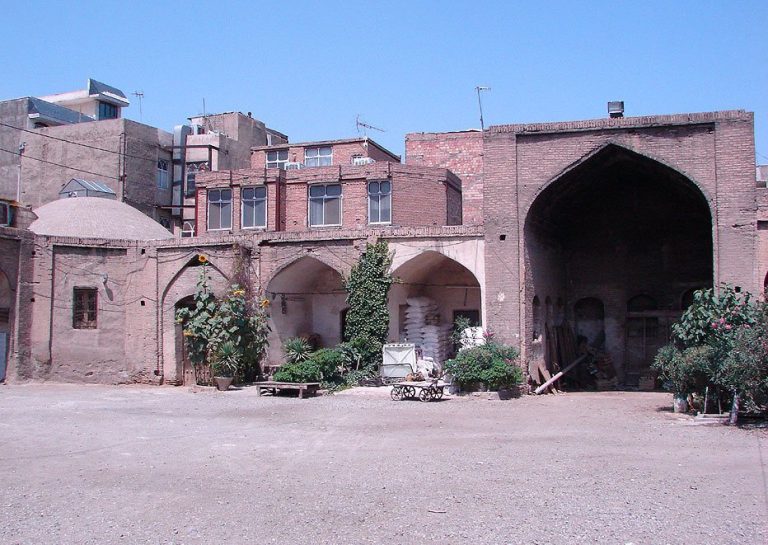
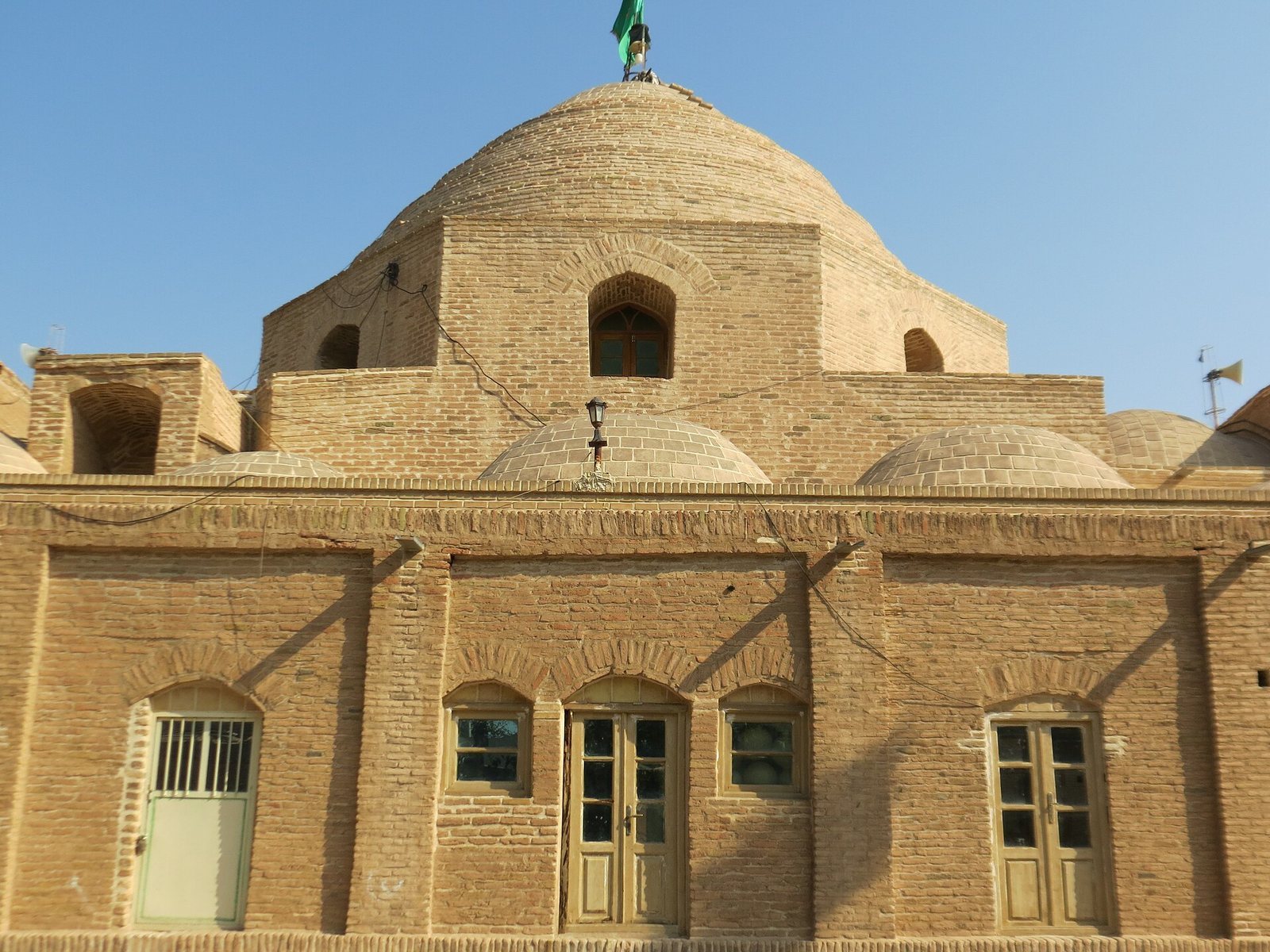
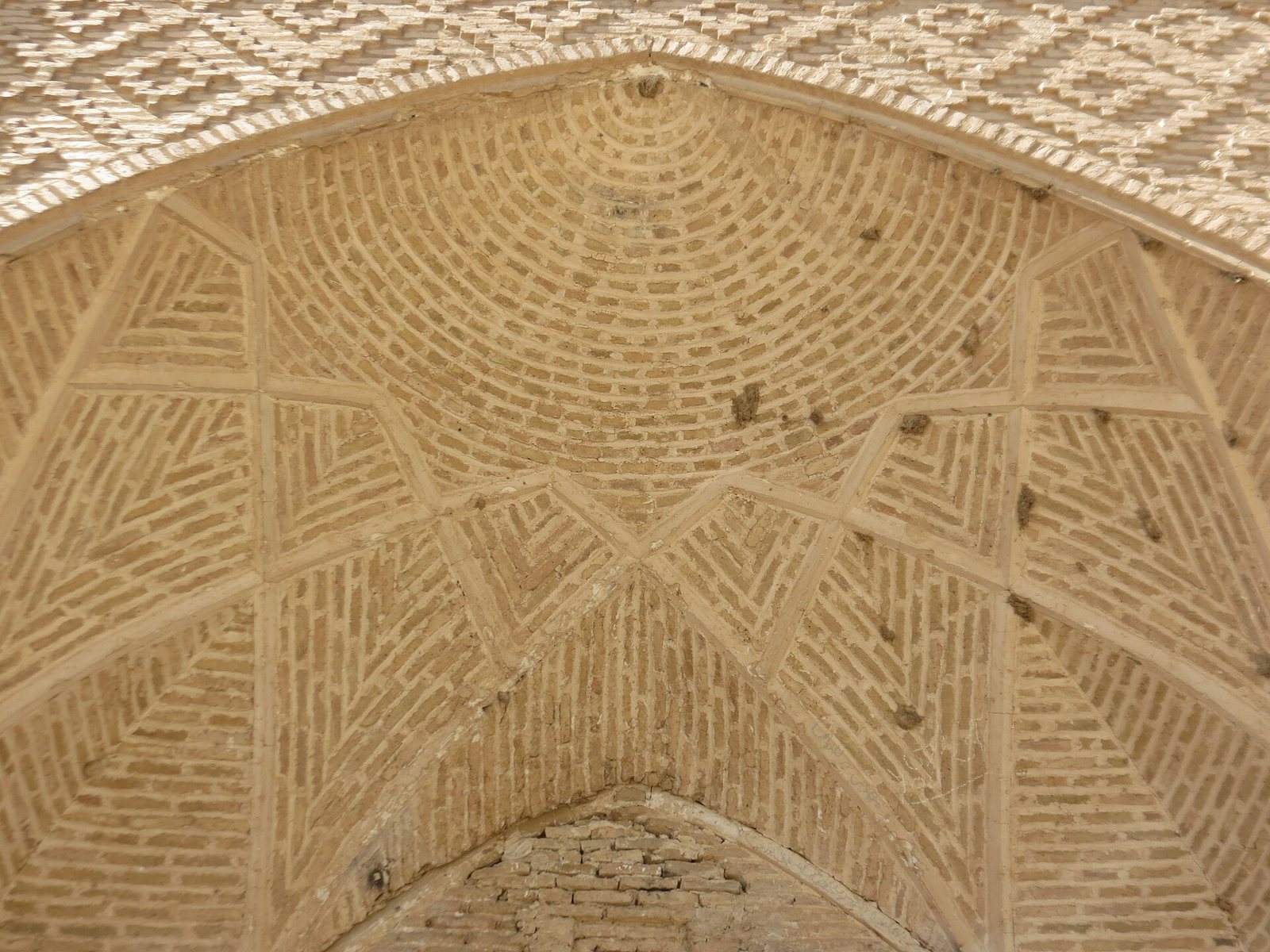
The complex has a rectangular exterior built principally of brick, with plaster and tile used in its decoration. Its architectural character is associated with the Azeri regional style of Iranian architecture, alongside forms linked to the earlier Ghaznavid and Seljuk dynasties and the Mongol-ruled Ilkhanate.
Enclosure, entrances, and dome
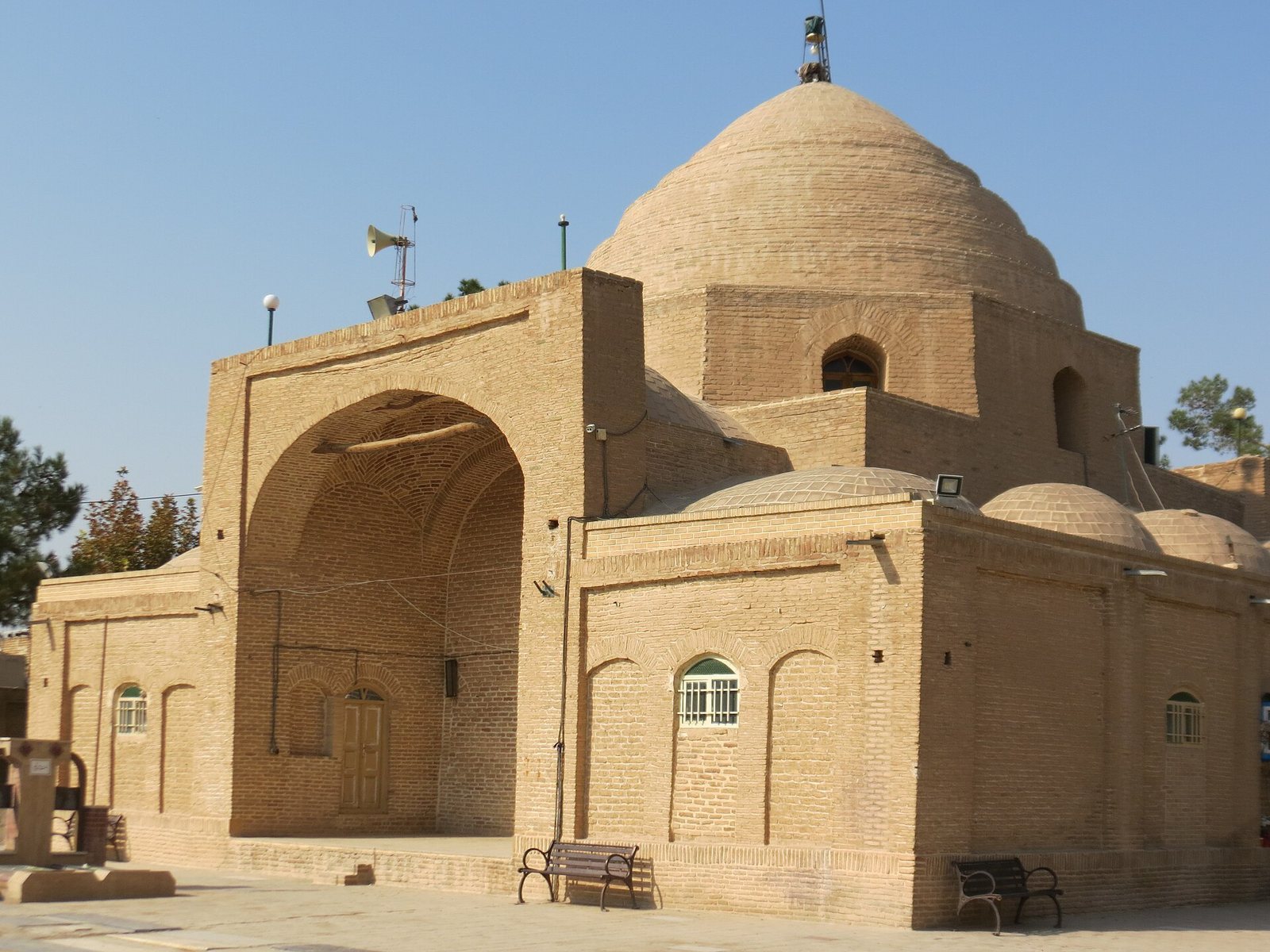
A low brick wall surrounds the tomb. The enclosure has a northern entrance and a southern gate approached from a neighborhood street. The portal, added after the Iranian Revolution, has a neo-Safavid design, with blue and orange tiles and calligraphy naming the shrine. A cemetery lies beyond it; the tombstones are aligned parallel to the direction of prayer toward Mecca.
The large brick dome rises from a square structure through an octagonal base. Its form is made of concentric, stepped rings, and eight openings with latticework are set into the structure.
Tomb chamber and interior
Chamber and inscription
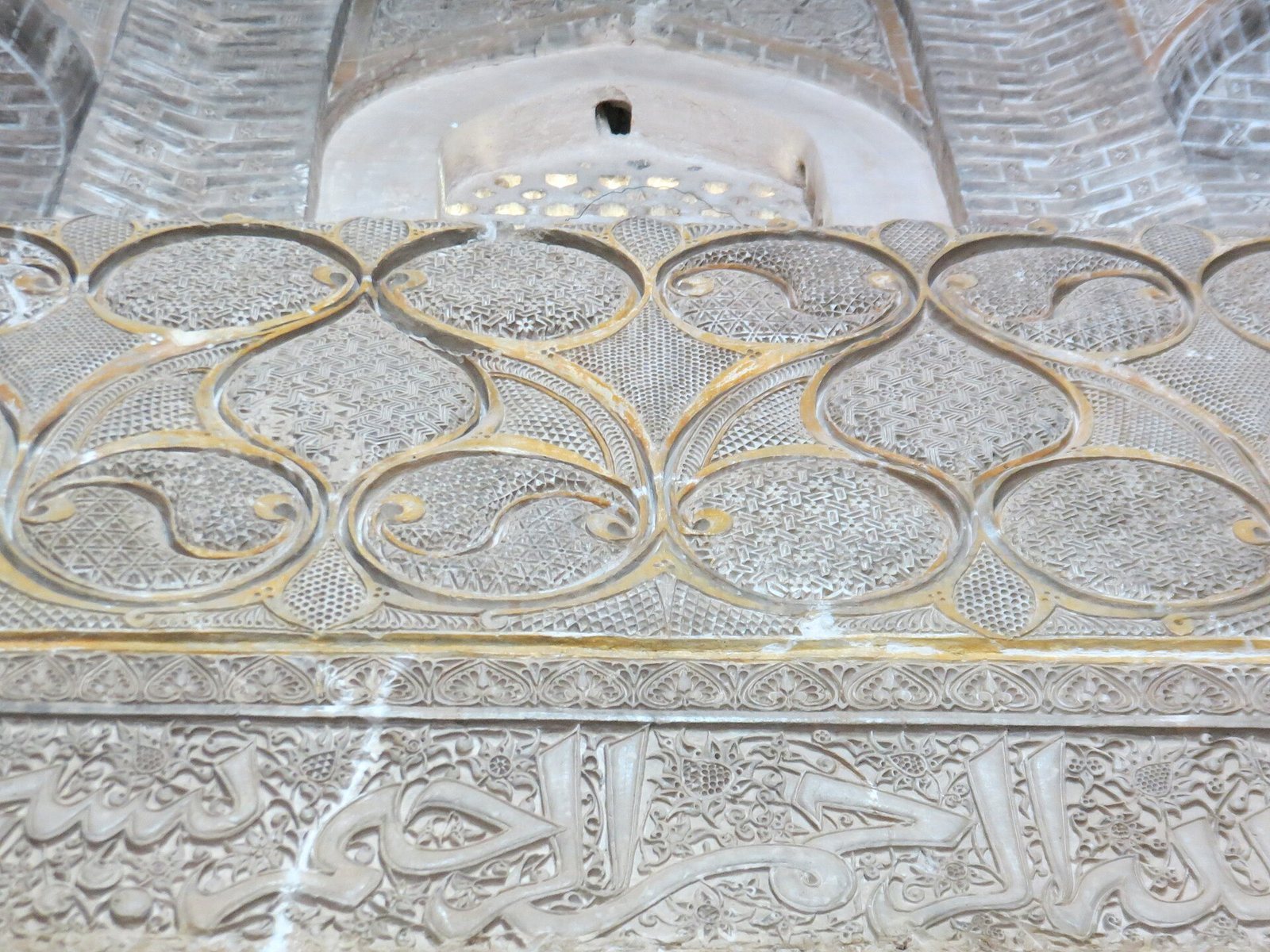
The tomb chamber is octagonal and built of brick. Its lower walls carry decorative plasterwork, with large tiles below. An inscription in plaster runs around the chamber at eye level. It begins with verses 1–4 of the Qur’an, includes the date July 1307, and ends with a hadith, a report about Muhammad’s words or actions.
Cenotaph and tomb screen
A cenotaph, a marker for a burial rather than the body itself, stands at the center of the chamber. An ornate screen of silver and gold encloses it. Green fabric attached to the screen separates the men’s area on the right from the women’s area on the left. The cenotaph has a cover made from especially costly glazed ceramic.
Furnishings and devotional displays
The chamber’s furnishings include lights, garlands, mirrors, framed pictures, flowers, bookshelves, carpets, and pillows. A mirror, candlesticks, and a Qur’an are placed on the cenotaph, while paper bills are left on the floor. Prayer stones made from sacred soil from Karbala are also available.
A pale indentation on the prayer-direction wall marks the former position of the tiled mihrab, a niche or other feature indicating the direction of prayer. Visitors often place signs over the indentation, including directions for facing Mecca, advice to angle the body by twenty degrees, and a display of Yahya’s genealogy. Images of the shrine and of its tiles in museum collections are placed on either side. During Ashura, which commemorates Husayn’s martyrdom, banners and other decorations may take their place.
Tilework and related finds
The tiled mihrab
The mihrab is dated to 1264/65 and was made from about 50 to 60 handmade luster tiles, glazed ceramics with a metallic-looking surface. Kashan master ceramicists were commissioned to make tiles for the shrine between 1262 and 1305; tiles were also made for the lower wall section and the cenotaph. Interlocking star-and-cross shapes formed part of the lower wall decoration.
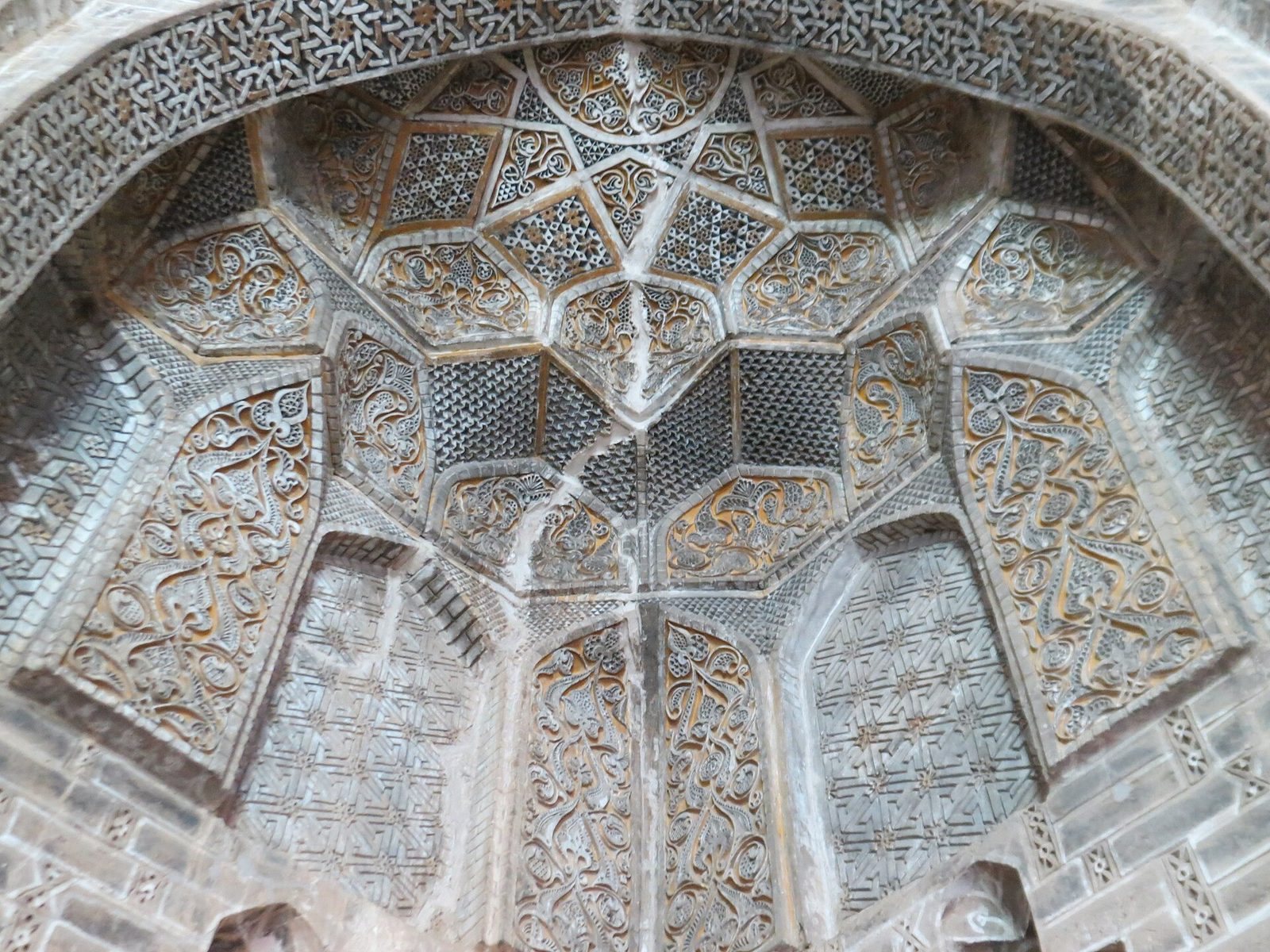
The mihrab’s design centers on a recessed panel, crowned by three-lobed arches above a cursive inscription. A second cursive band surrounds the arches. Raised, shallow wall projections support a gable-shaped frame and carry blue-and-white spiraling floral designs; calligraphy fills the gables. Further inscription panels and arches are edged with stylized flowers, while red, white, black, and blue interlaced patterns decorate the arches and the spaces between them.
Dated tile plaque
A turquoise-glazed tile found near the tomb belonged to the tomb of a Shia notable and is dated to 628 AH, in the Islamic calendar. Measuring 44 by 29 centimeters, it has raised Kufic and Naskh lettering, two styles of Arabic script, and a border containing Qur’an 5:60. It is set low on the outside of a mud-brick wall west of the old shrine. The plaque is described as the oldest dated tile plaque in Tehran and the oldest and finest object in the shrine’s museum.
Tiles in museum collections
Pieces from the shrine are now held in collections around the world. The British Museum has a group of 160 tiles, and another group is held by the Victoria and Albert Museum. Tiles from the gravestone are in the Hermitage Museum in Saint Petersburg, while a luster-tile mihrab is held by the Shrine Museum in Mashhad. Shrine tiles are also displayed at the Shangri La Museum of Islamic Art, Culture & Design in Honolulu. By 2020, tiles were believed to be divided among about 30 museums, with collections in cities including Doha, Tbilisi, London, Oxford, Paris, Glasgow, Baltimore, Chicago, Los Angeles, and Tokyo, and possibly Tehran.