Nebeske Stolice Archaeological Site: A Late Antique Christian Center
Site at a Glance
- Popularity
- Medium
- Country
- Serbia
- Primary era
- Medieval
- Eras represented
- Classical, Medieval
- Civilizations
- Byzantine, Roman
- Site type
- Religious
- Remains
- Basilica
On this page10 sections
History
Nebeske Stolice Archaeological Site, also known as the Church Ruin, is a Late Antique complex on Kopaonik in Serbia, below Pančić Peak. It was active from the third to the sixth century, during Late Antiquity, the later centuries of the Roman world and its transition toward the medieval period. The site began as a small residential complex and later became an important Christian cult center dedicated to Saint Procopius, an early Christian martyr revered in Eastern Christian traditions.
Residential beginnings and Christian center
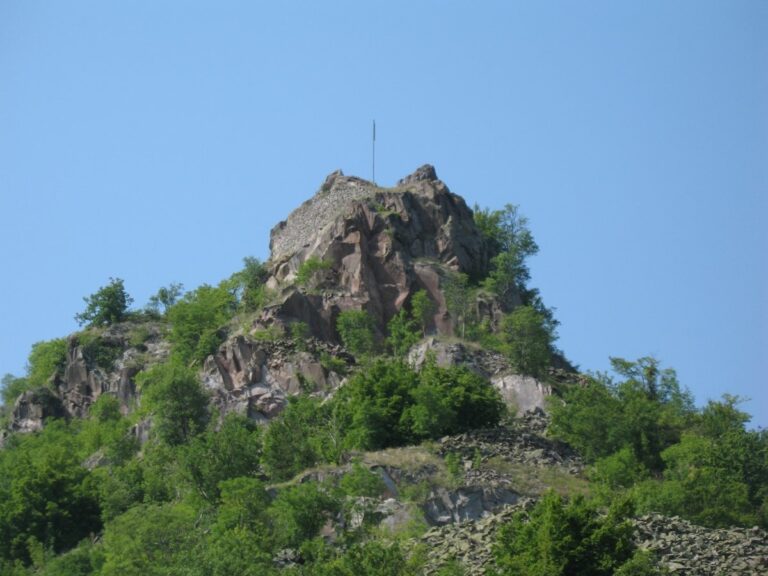
The earliest phase was a residential complex. By the fifth or sixth century, the site had developed into a Christian center focused on a church dedicated to Saint Procopius. A larger settlement is thought to have supported the center. It may have occupied a fortress on the hill to the south from the early Byzantine period, the opening centuries of the Byzantine Empire, or the fortification at Gradac in Gornje Leviće.
End of use and later investigations
The complex appears to have fallen out of use following destruction or abandonment during the Migration Period, a time of movements of peoples across Europe in Late Antiquity and the early medieval era. Local tradition identified the site as the Church of Saint Procopius, and people gathered there each year on the saint’s day, July 8.
Živojin Mišić, a Serbian military commander and field marshal, gave the nearby rock group the name Nebeske Stolice in 1895. The local tradition helped prompt archaeological investigations, which began in 1998 under archaeologist Gordana Tošić of the Institute for Protection of Cultural Monuments in Kraljevo, with support from Kopaonik National Park.
Remains
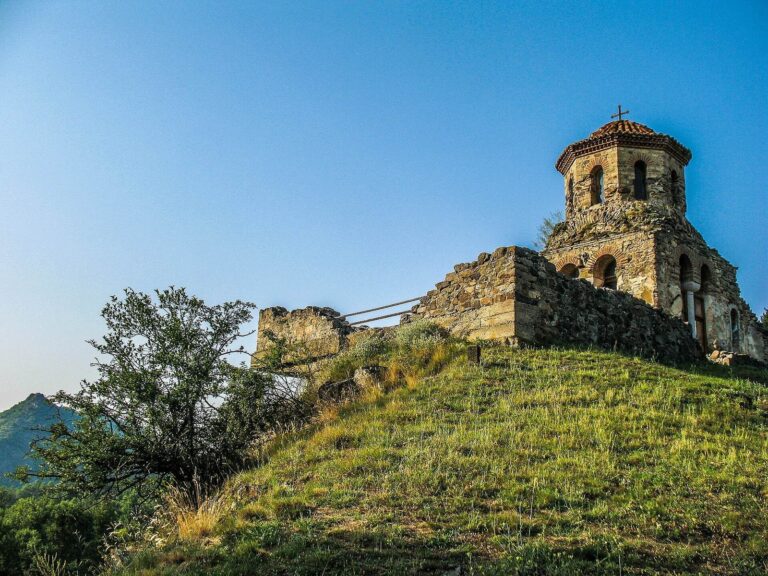
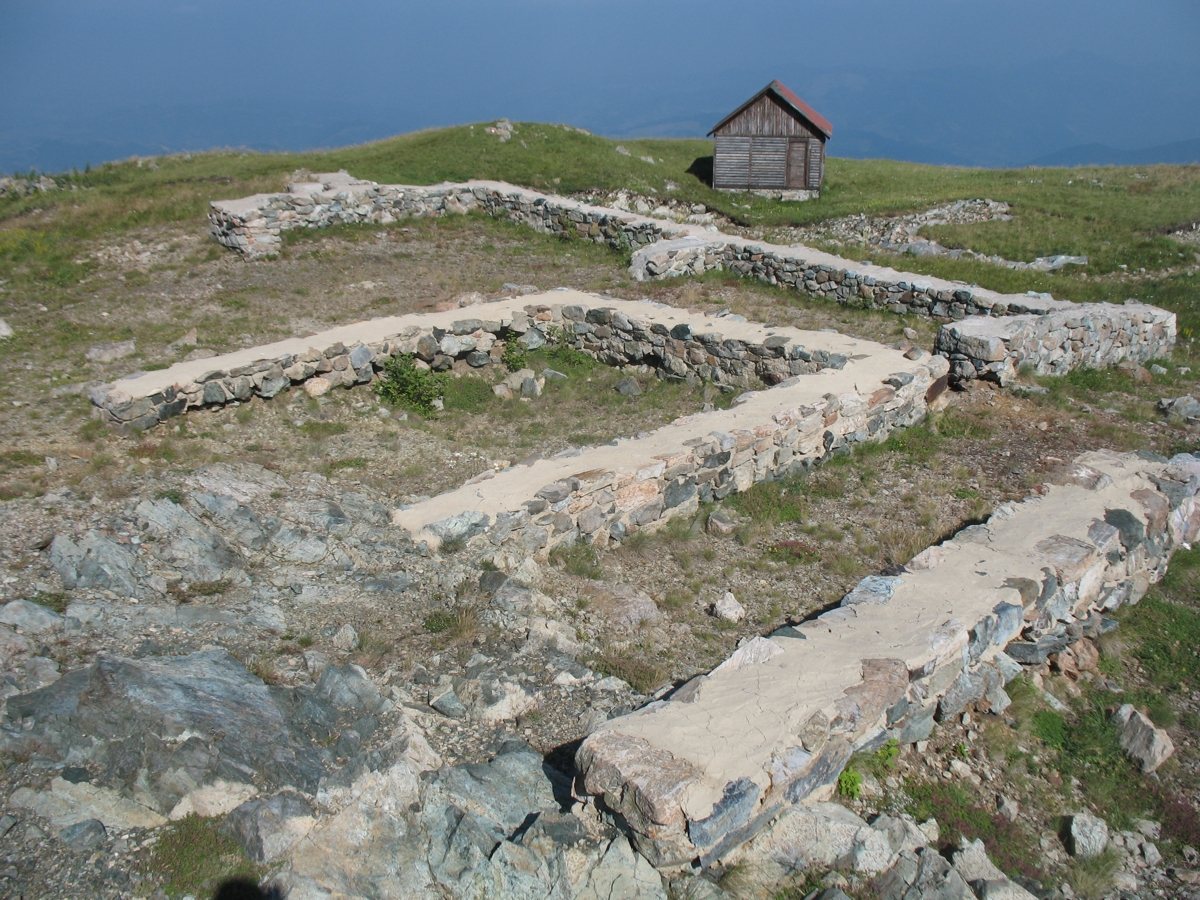
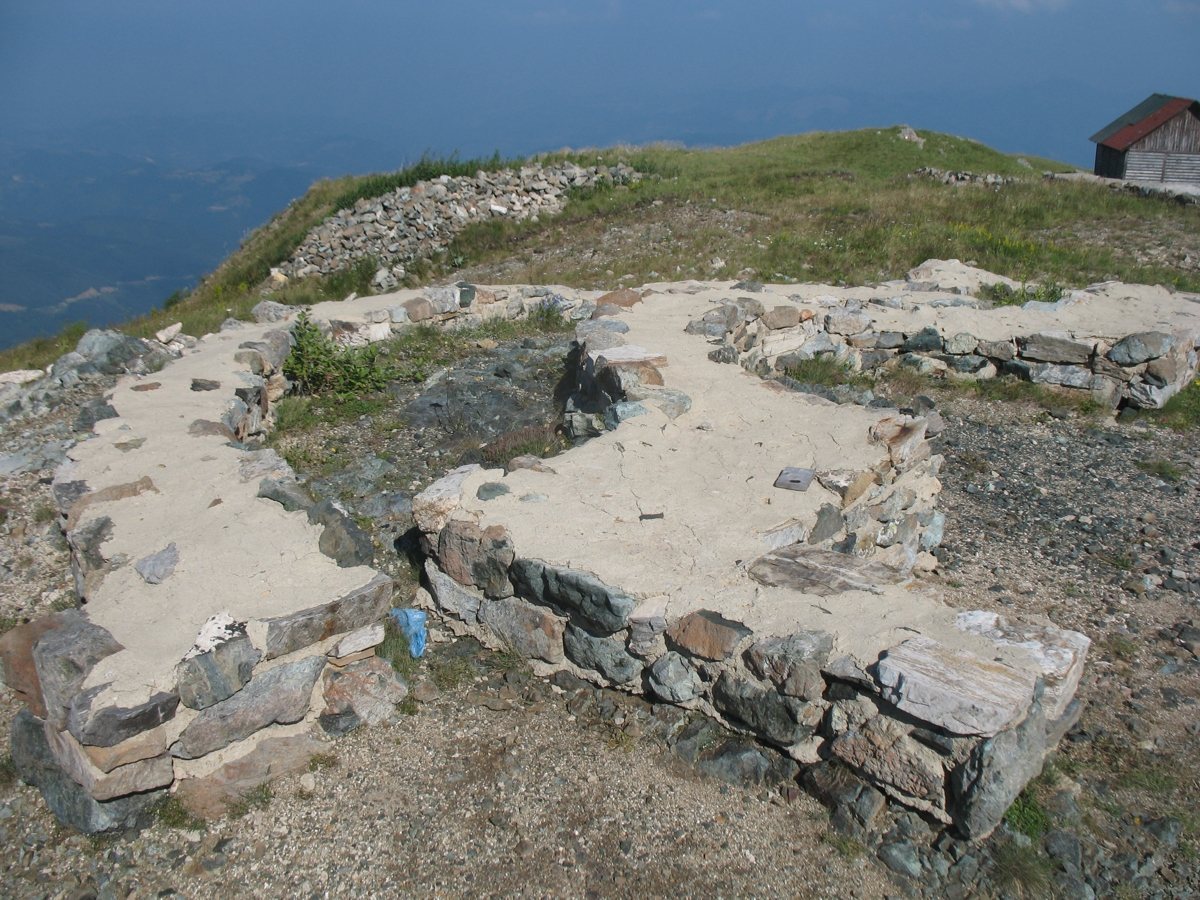
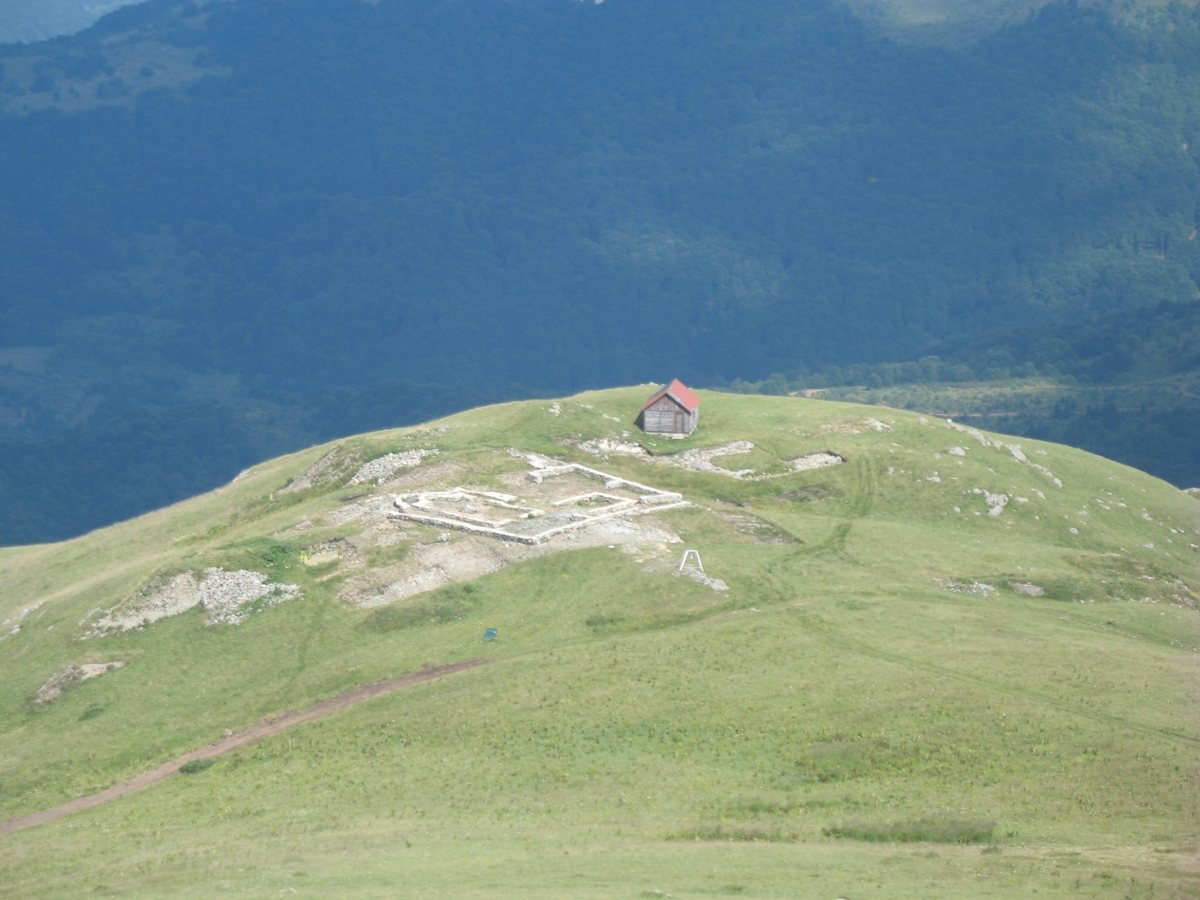
The complex lies below Pančić Peak and slightly east of the Nebeske Stolice rock group, beside a cart road that circles the peak. Its southern sector contains earlier building remains, while the church is aligned southwest to northeast. Rough and dressed stone bonded with lime mortar formed the basilica’s walls.
Southern residential complex
Coins date the building remains in the southern part of the site to the third and fourth centuries. Finds from this area include fragments of glass and ceramic vessels, glass-paste bracelets decorated with a false-braid pattern, and two kinds of clothing brooches. Brooches with turned-back feet belong to the sixth century and have parallels in Roman Dardania, a region of the central Balkans. Cross-shaped examples date to the second half of the fourth century.
The basilica
Plan and construction
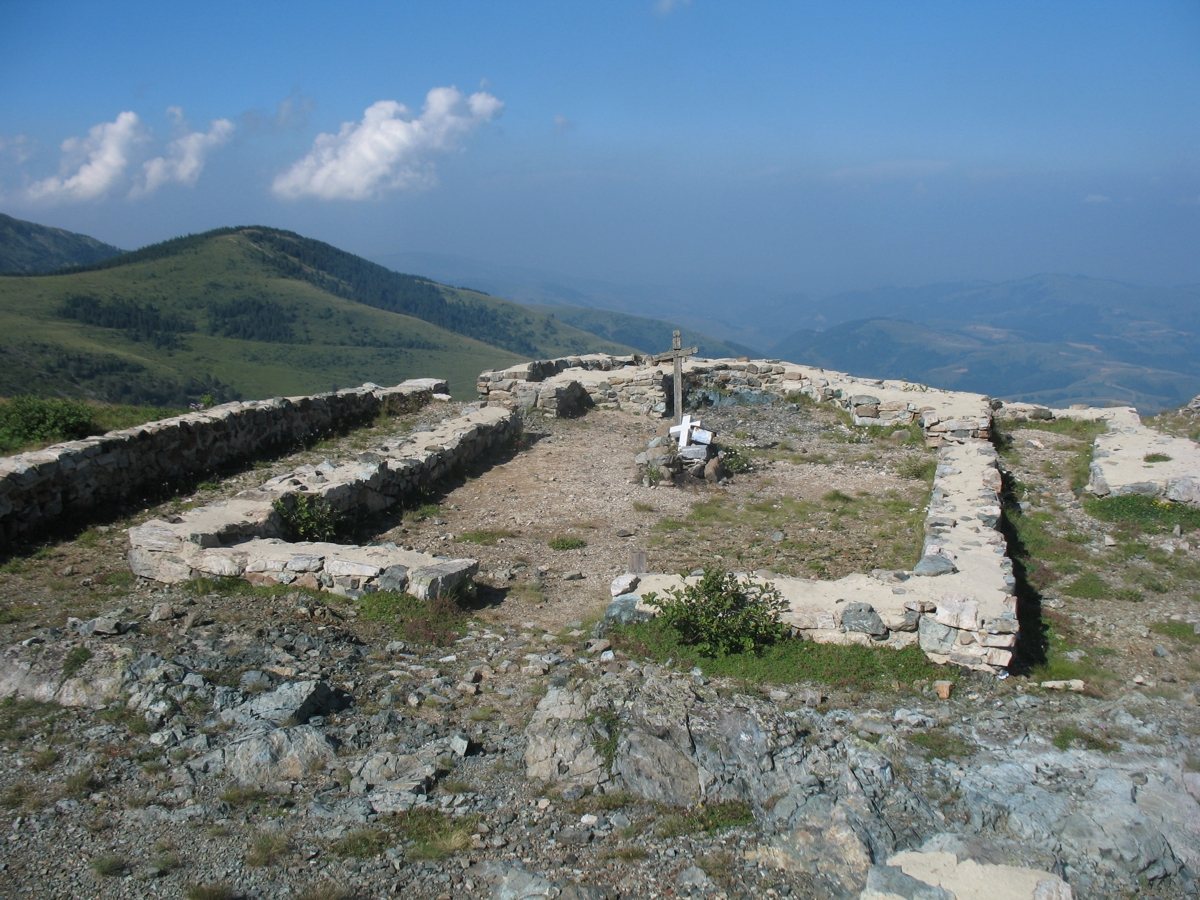
The church had a distinctive plan comprising a double altar apse, a main worship space called the naos, a north aisle, a south annex and an entrance vestibule called the narthex. The building was erected in a single phase. Bedrock shaped its construction and remains visible within the narthex and apse. Today, the conserved fabric consists of foundations and the ground-level portion of a wall.
Interior and lighting
Wall paintings and a mosaic decorated the interior. Glass fragments came from the church windows, and a perforated cross belonged to a chandelier that lit the space.
Mosaic pavement
The mosaic was made from small individual pieces. Only a peripheral section, measuring 2.70 by 0.51 metres, was recovered from the northeastern part of the naos. The pavement may have had a complex central design surrounded by a decorative band divided into smaller panels with animal and geometric images. One panel depicted a bird, an image with spiritual meaning in early Christian art. The fragment dates the pavement to the late fifth or sixth century.
Age and exposure to fire had left the fragment in very poor condition. It was removed during archaeological work and transferred for conservation.
Coin finds
Coins from the site span several centuries. They include issues from the third-century crisis and the reigns of Constantine I (306–337), Constantius II (337–361), Valentinian I, Valens and Gratian. Other coins date from 378 to about 441, and one belongs to the sixth century.