Akhnoor Fort: A Historic Fort on the Chenab River
Site at a Glance
- Popularity
- High
- Country
- India
- Primary era
- Early Modern
- Eras represented
- Classical, Early Modern, Modern
- Civilizations
- Kushan
- Site type
- Military
- Remains
- Castle
On this page12 sections
History
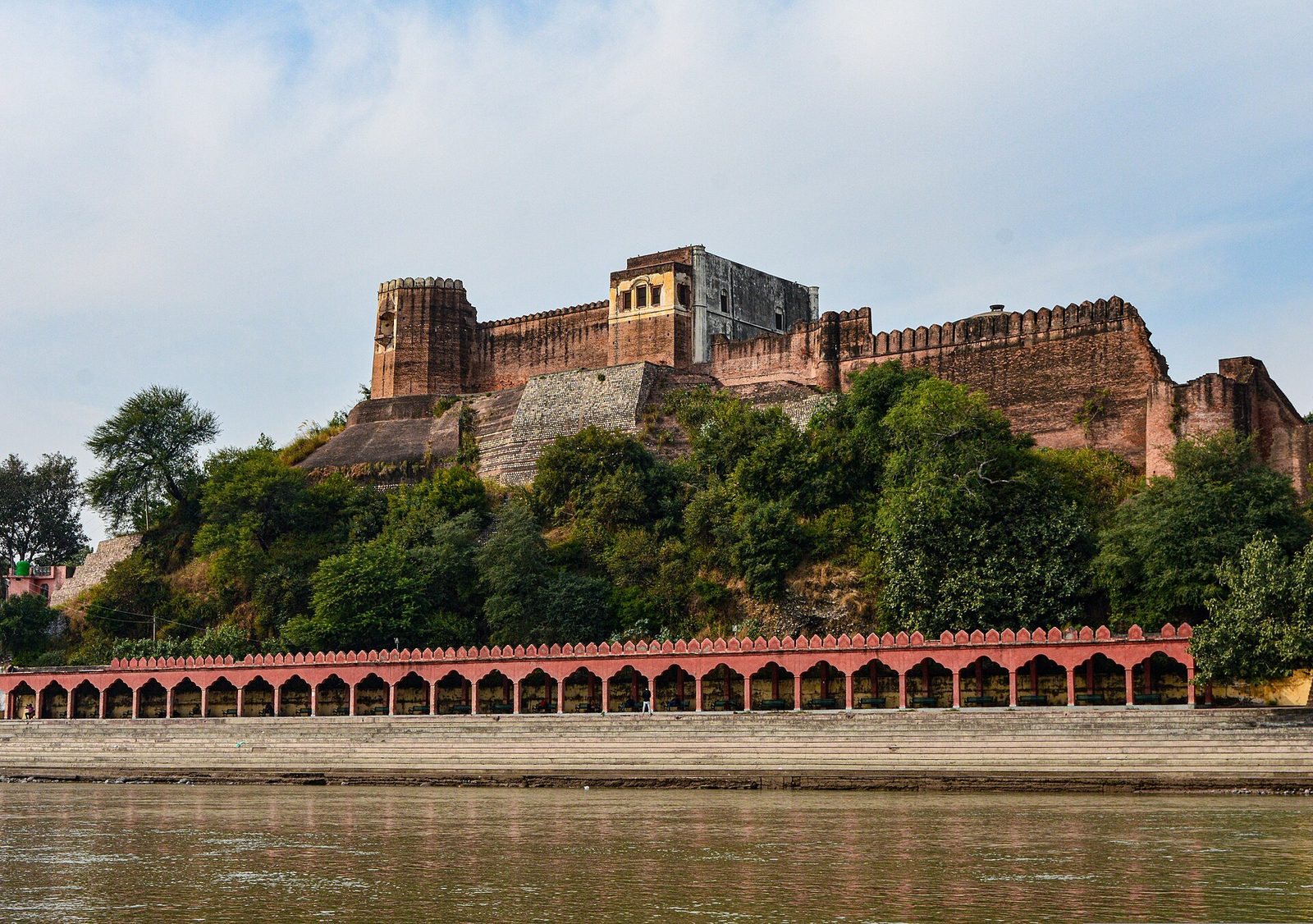
Akhnoor Fort is a riverside fort at Manda in India, on the right bank of the Chenab River, about 28 km from Jammu City. Construction began in 1762 under Raja Tej Singh and was completed in 1802 by his successor, Raja Dhian Singh. On 17 June 1822, Maharaja Ranjit Singh, the Sikh ruler who established the Sikh Empire, crowned Gulab Singh at the fort’s Jia Pota ghat. Gulab Singh was a Dogra ruler who later founded the princely state of Jammu and Kashmir. A hunting garrison at Akhnoor is also associated with Ranjit Singh.
Manda before the fort
Manda’s history extends back more than 5,000 years. Excavation has identified three cultural periods at the site, whose finds include material from the Harappan, early historic and Kushana periods.
Protection and conservation
In 1982, Akhnoor Fort was declared a National Monument under the Ancient Monuments and Archaeological Sites and Remains Act of 1958, the Indian law for protecting and managing ancient monuments and archaeological remains. The Archaeological Survey of India, the national agency responsible for archaeological research and monument protection, has jurisdiction over the fort.
A large part of the fort had fallen into ruin, and conservation work is in progress.
Remains
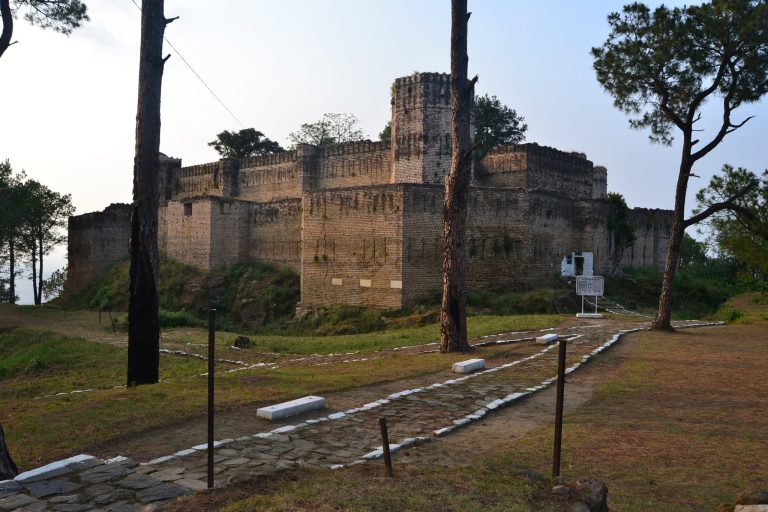
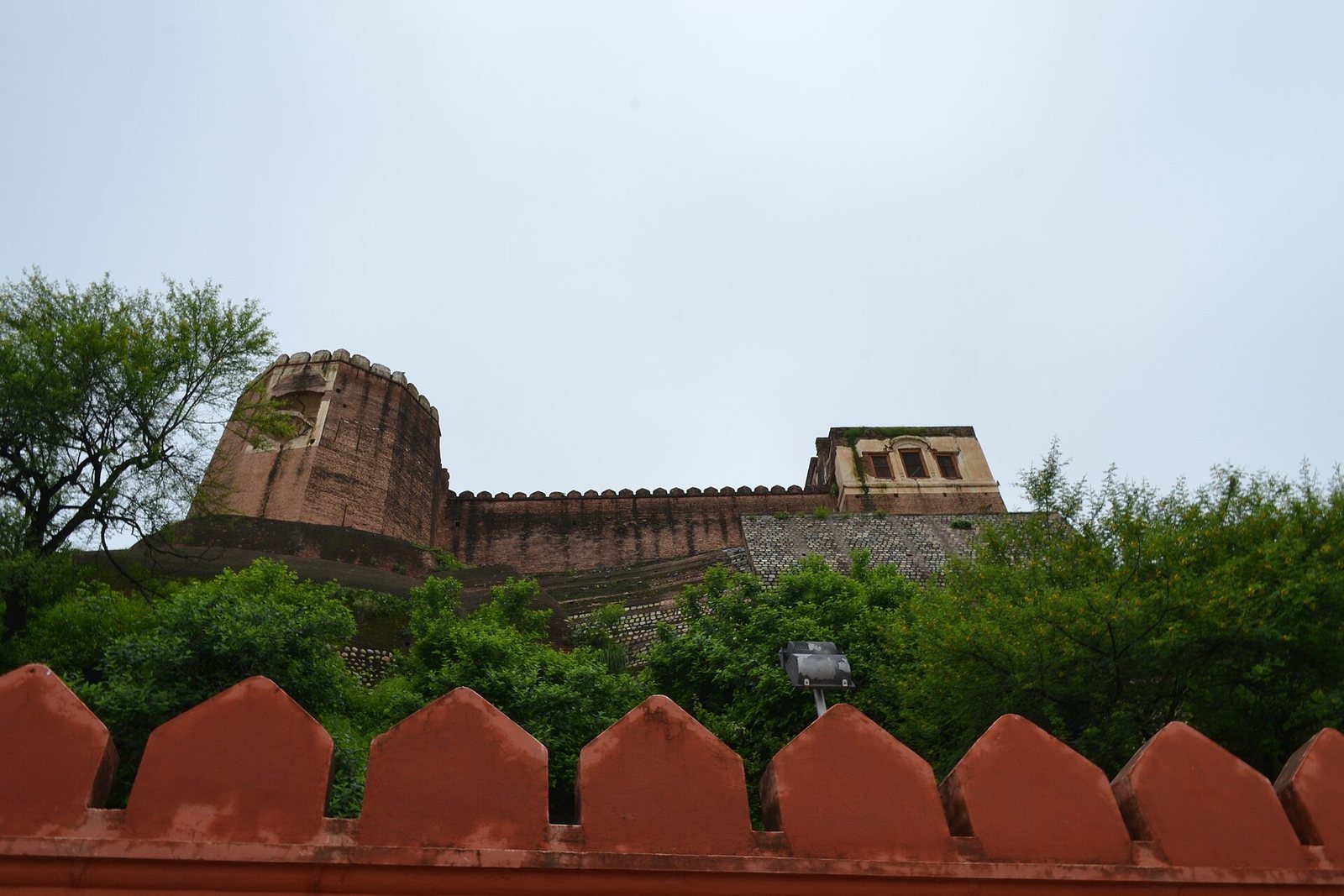
The fort is divided by an internal wall into two parts, with its palace in the southern section. High defensive walls, corner watchtowers and access from the river sides and the north form the broader layout.
Fortifications and palace
Walls and watchtowers
High fortification walls have projecting bastions, or defensive structures, at regular intervals. Defensive parapets with openings run along their tops. Two-storey watchtowers stand at the corners, with similar parapets and raised solid sections between the openings.
Southern palace
A gate in the dividing wall leads to the two-storey palace on the south side. Decorated arches face its courtyard, and some of the arches contain mural paintings.
River access and Jia Pota ghat
The fort can be approached from the river sides and from the north. Jia Pota ghat, a landing or steps beside the water, lies on the Chenab bank. A Jia Pota embankment is also situated near a river landing.
Archaeological remains at Manda
First cultural period
Manda’s first cultural period includes finds associated with the Harappan civilization, an ancient urban civilization of South Asia. They include red and grey pottery in forms such as jars, dishes raised on stands, beakers and goblets, as well as copper pins, bone arrowheads, fired-clay cakes and pottery fragments bearing Harappan graffiti.
Second cultural period
Pottery from Manda’s second cultural period belongs to the early historic period, an archaeological label for a historical phase.
Third cultural period
Objects associated with the Kushanas, a dynasty whose rule shaped parts of Central and South Asia in antiquity, represent Manda’s third cultural period. Its remains include rubble walls built in a diagonal stone pattern, flanking a street 3 metres wide.