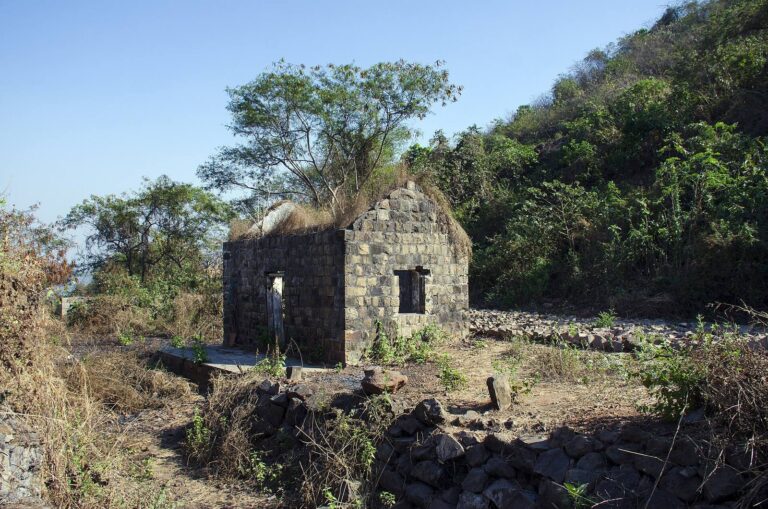
Shirgaon Fort: A Coastal Fortification in Maharashtra
Site at a Glance
- Popularity
- Medium
- Country
- India
- Primary era
- Medieval
- Eras represented
- Medieval, Early Modern
- Civilizations
- Unclassified
- Site type
- Military
- Remains
- Fort
On this page8 sections
History
Yadava and later rule
Shirgaon Fort is a sea fort in Shirgaon village, Palghar district, Maharashtra, India, built in 1225 under the Yadavas of Devgiri, a medieval Indian ruling dynasty. In 1432, it came under Gujarati Muslim rulers. It later passed to the Bahmani Sultanate, a Deccan-based Muslim state, and then to the Ahmadnagar Sultanate, another Deccan-based Muslim state. Control records place Ahmadnagar in possession from 1521 to 1594, when Portugal took control.
Maratha capture and British control
Forces of the Maratha Empire, a major Indian polity, tried to capture the fort in November 1737 but withdrew in December. Following the siege of Vasai Fort, they took Shirgaon on 22 January 1739. The Marathas repaired the fort in 1772, before British forces captured it in 1818.
From 1818 to 1857, the fort was under the East India Company, a British trading company that became a governing power in India. It then came under the British Raj, the period of direct rule by the British Crown, which lasted until 1947. Since that year it has been part of India; the Government of India is identified as its owner.
Remains
Plan and defensive works
Layout and entrance
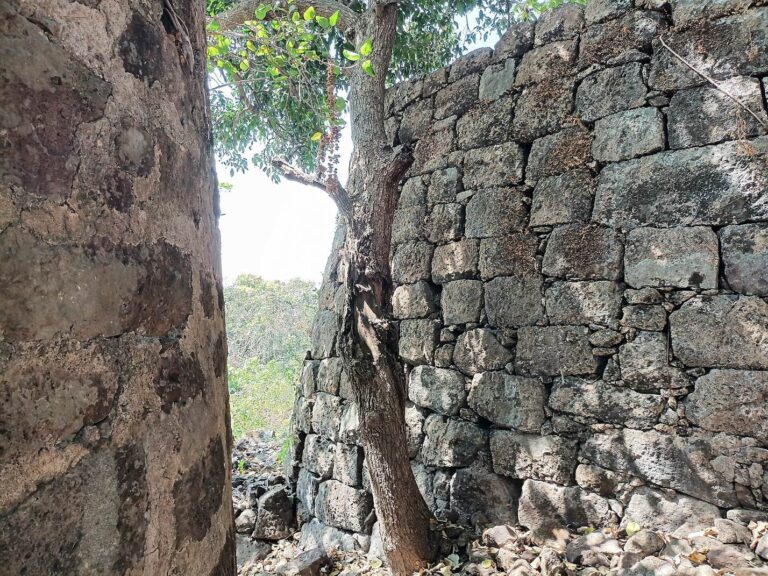
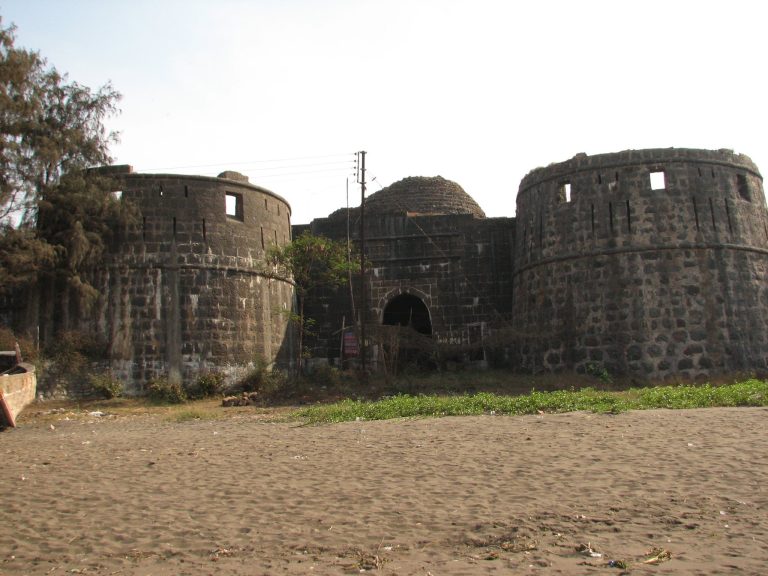
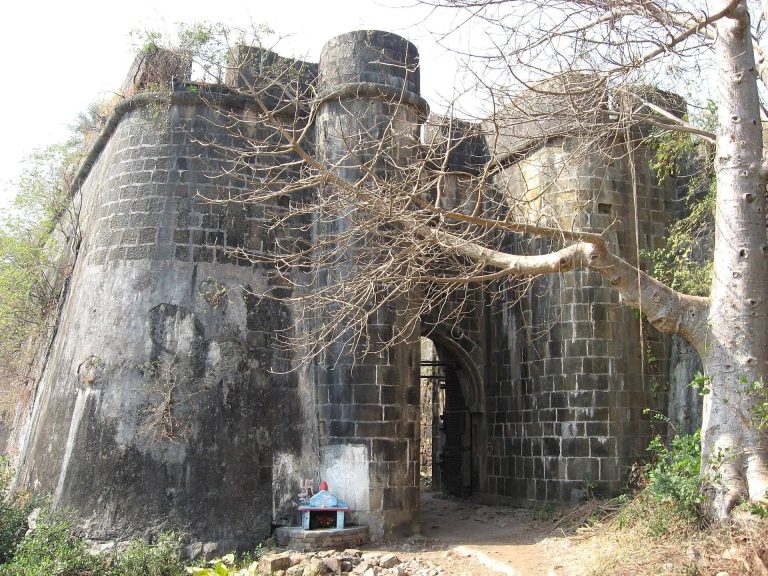
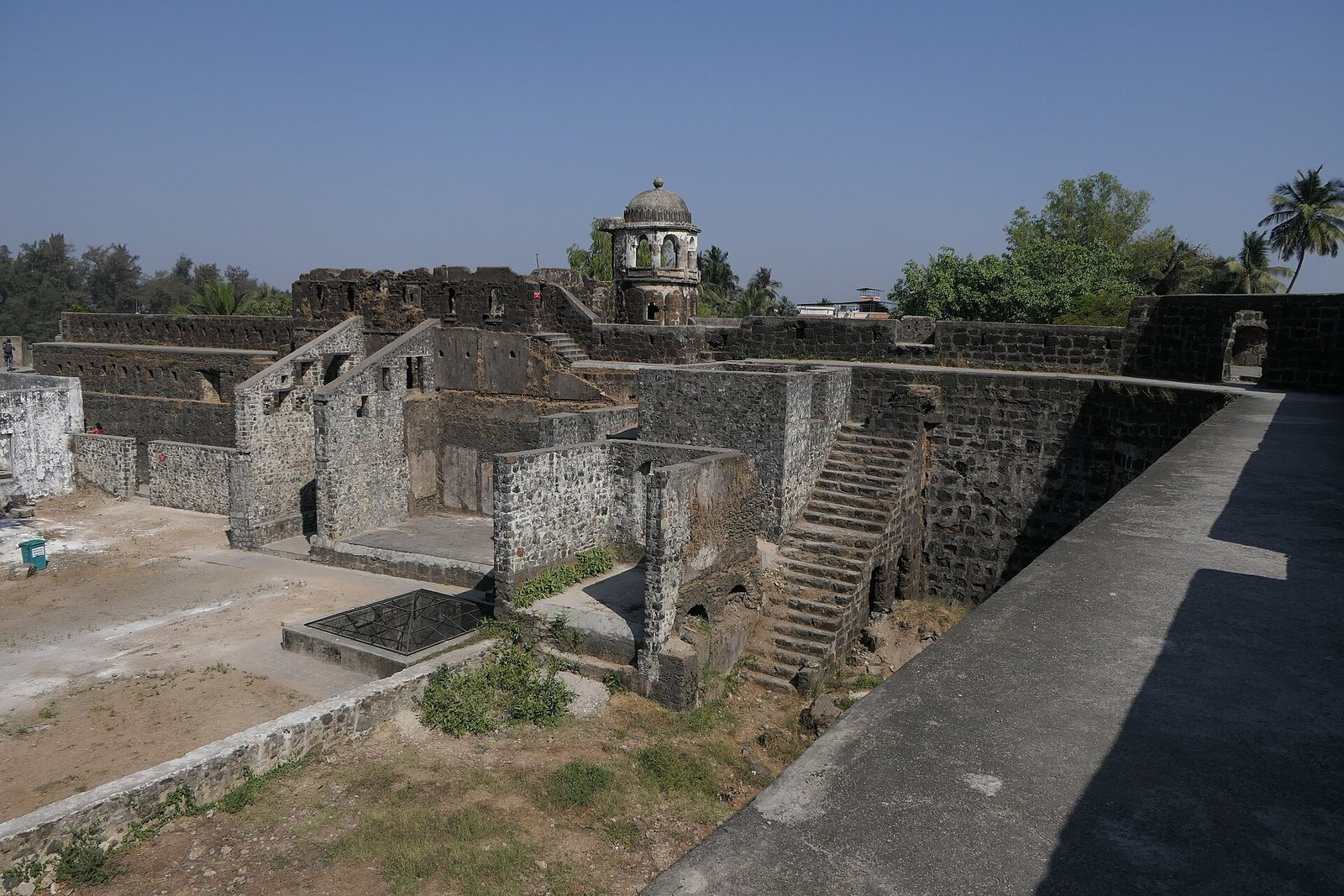
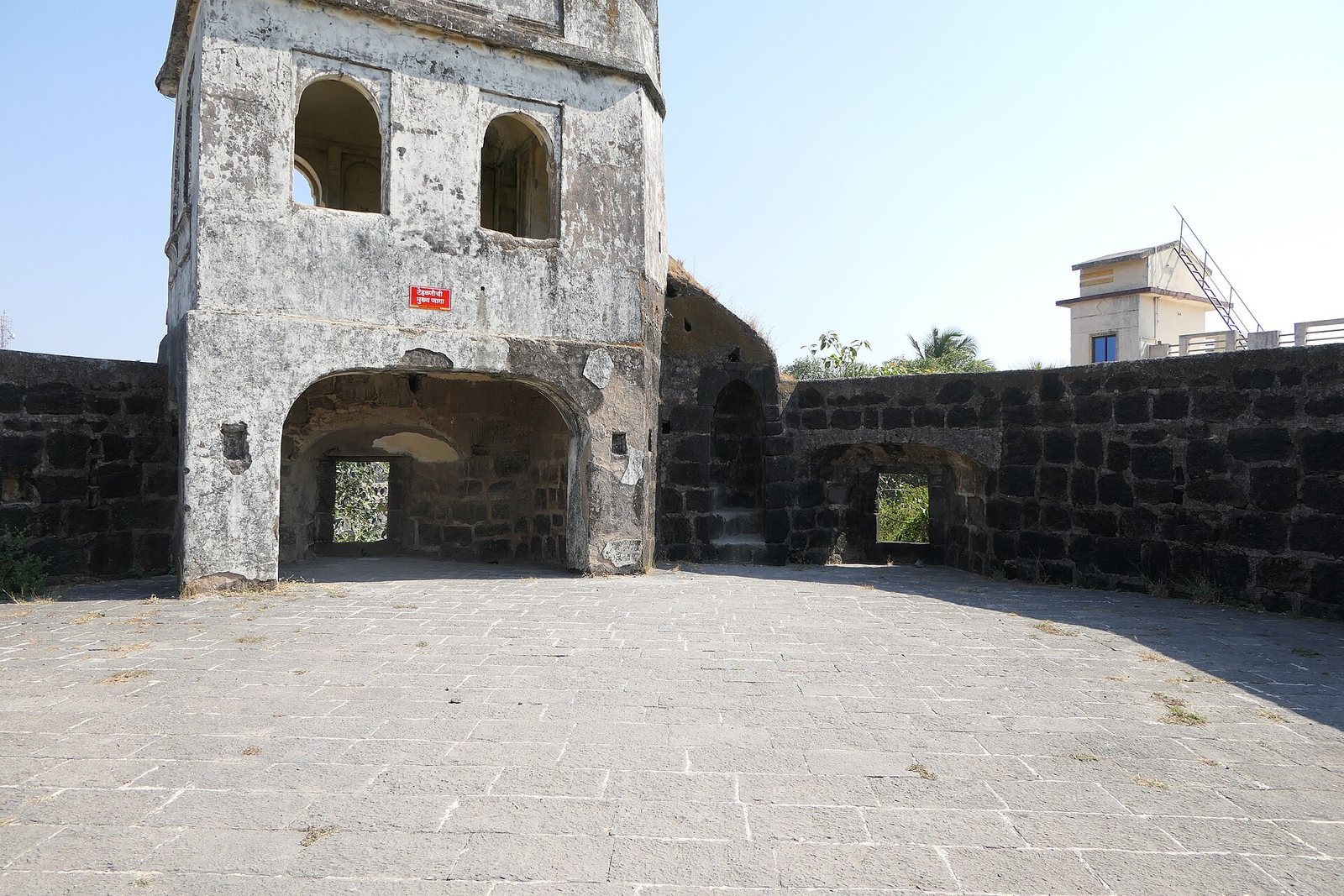
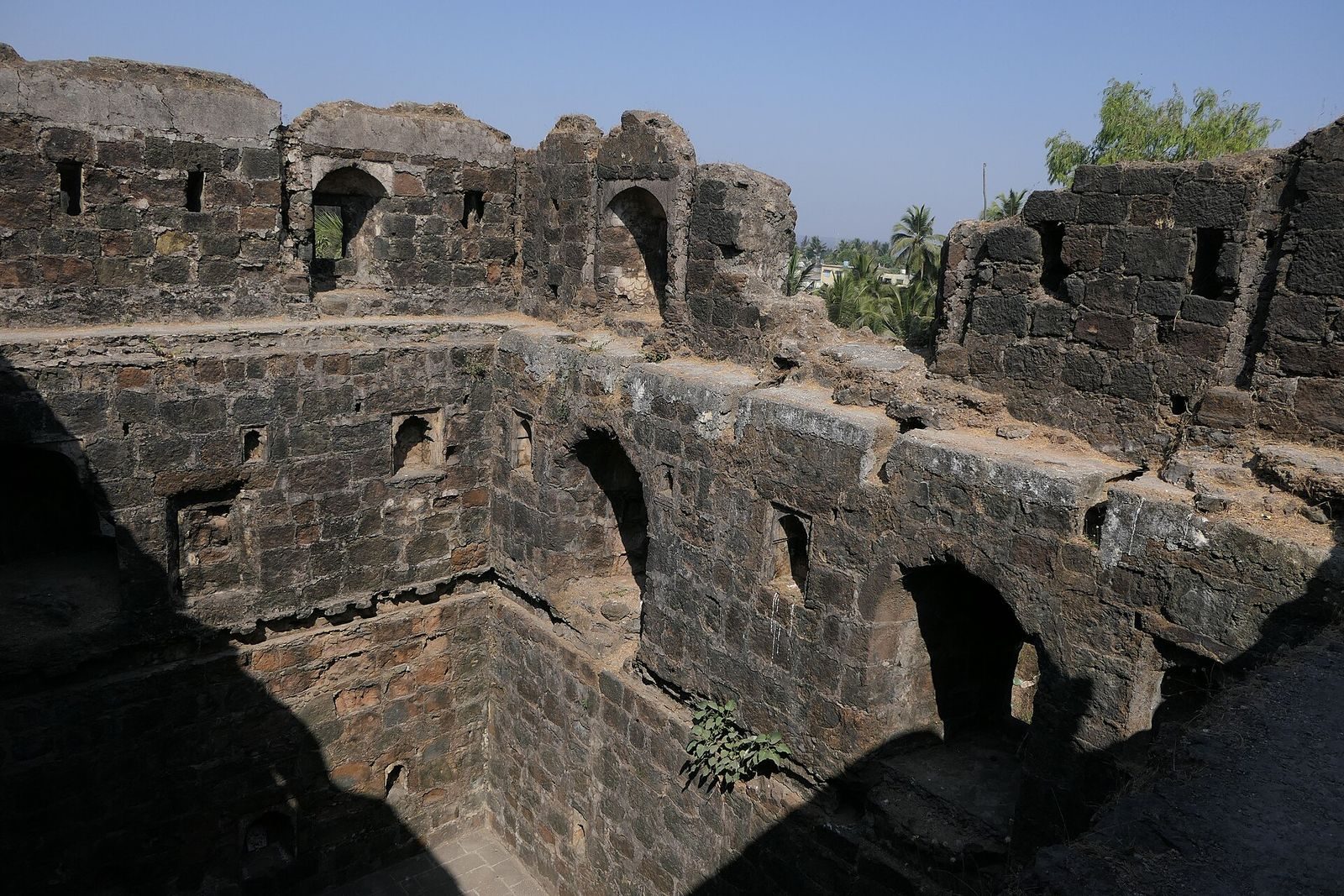
The fort has a rectangular plan and is built of black basalt. Its entrance faces east and leads to a second gate positioned at a right angle. The year 1714 is inscribed near this inner gate. Guard vestibules, or entrance passages, beside the entrance are in good condition.
Bastions
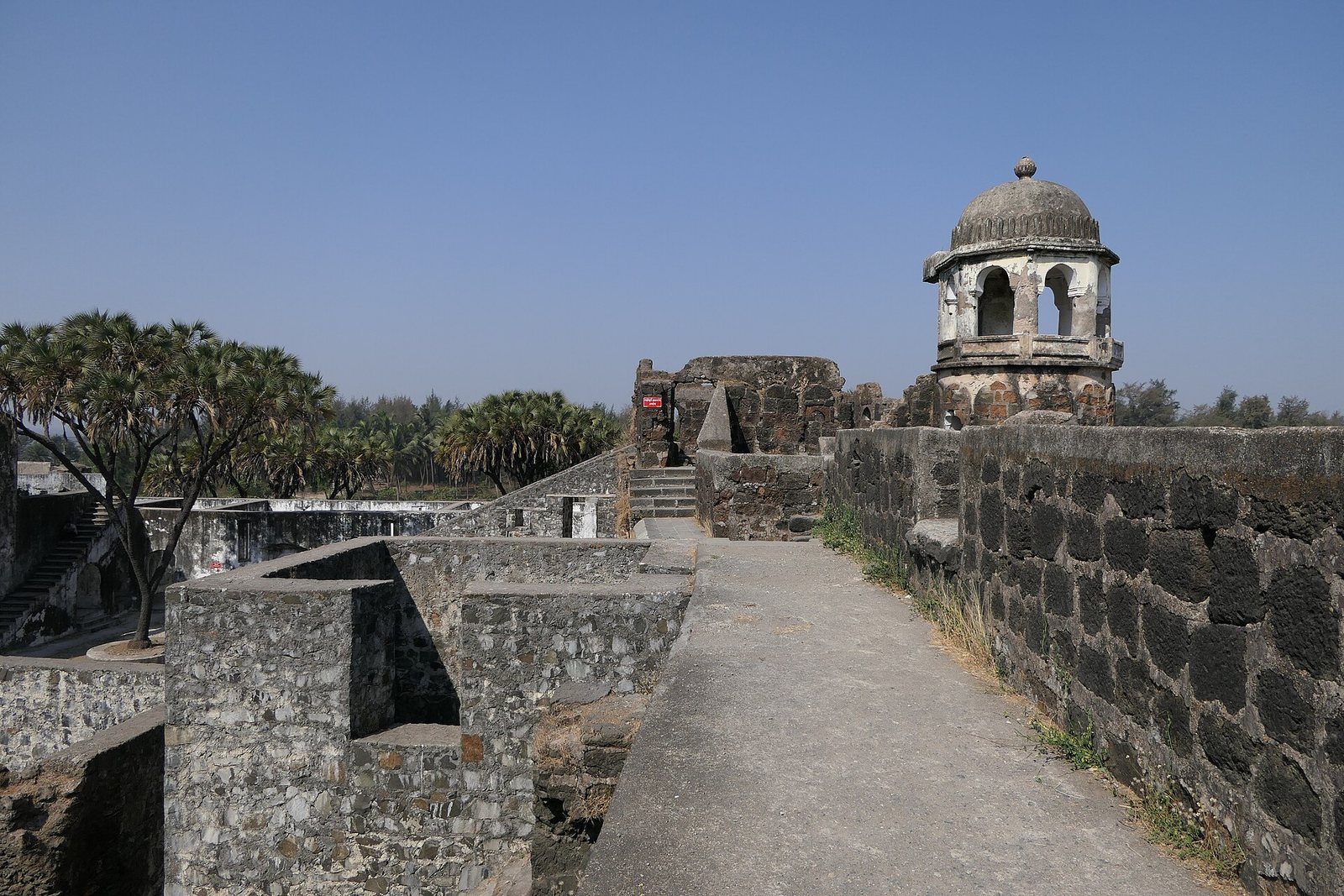
Five bastions, projecting sections of a fort wall used for defence, reinforce the fort. The four at the corners are octagonal, while the one beside the entrance is circular.
Walls and steps
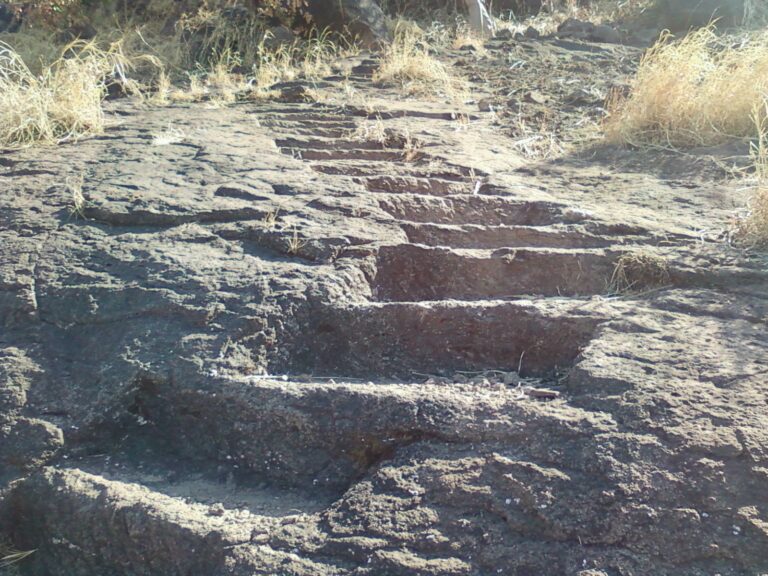
The fort is classified as being in ruins, but its outer walls, steps, parapets, or protective walls along a rampart or walkway, and bastions are described as solid masonry in excellent order.