Dannemora Mine: Sweden’s Historic Iron-Ore Mine
Site at a Glance
- Popularity
- High
- Country
- Sweden
- Primary era
- Modern
- Eras represented
- Medieval, Early Modern, Modern
- Civilizations
- Swedish
- Site type
- Economic
- Remains
- Mine
On this page13 sections
History
Dannemora Mine is an iron-ore mine in Sweden, where mining may have begun in the 13th century and was recorded by 1481. Iron became its principal resource after a brief period of silver extraction, and until the early 20th century the mine was among Sweden’s most important iron-ore producers.
Medieval beginnings and royal investment
The mineral deposit was associated with iron, silver, lead, and copper, although iron ore came to dominate production. In 1532, the German mining entrepreneur Joachim Piper renewed Dannemora’s mining rights and invested in developing the operation. Ownership was reorganized in 1545 among about a dozen investors, including German partners and King Gustav Vasa. The partnership had 86 shares, eight claimed by the king.
The German investors favored exporting pig iron, but Gustav persuaded them to make wrought iron, which was worked into bars. The venture soon faced bankruptcy, and the king took control. Production of wrought iron continued for several decades.
Export trade and water management
Dannemora iron was prized in England, where it was made into steel for tools, weapons, springs, and other specialized goods. Large shipments went to Sheffield and contributed to the city’s steelmaking reputation. Around 1700, about 60 mine workers lived in poor-quality housing near the workings, while several hundred more people may have relied on the mine for their livelihoods.
Water was a persistent challenge because the ore field lay beside a lake. A dam was built in the 17th century, and water- and wind-powered pumps were used to drain the mine. Waste dumped into a lake damaged its bottom seal and allowed water into the workings. An early-17th-century granite wall, bonded with pozzolanic cement, a hydraulic cement made with reactive material such as volcanic ash, was built to seal the lake.
Fire-setting, a method of heating rock with fire so it could be fractured, remained in use until the 1730s. It persisted partly because gunpowder was considered expensive and partly because of concern about rockfalls. In 1728, engineer Mårten Triewald arranged a trial of a Newcomen engine, an early atmospheric steam engine used to pump water. Although the machine was demonstrated, it did not prove successful, probably because experienced operators were unavailable. In the 1750s, blasting away two waterfalls destroyed a blast furnace, a mill, and two sawmills.
Spring floods breached a dam in 1795 and inundated the mine. A 10-horsepower Watt-type steam engine, using improvements associated with James Watt, was installed in 1805, but the workings were not fully drained until 1815. It was the first Watt-type engine used in Sweden.
Industrial expansion and modern operation
Annual production was about 15,000 to 20,000 tonnes between 1770 and 1870, then rose to around 40,000 tonnes in the 1870s. Over time, roughly 80 separate mines were consolidated or closed. Fourteen were still operating in 1879, about ten around 1900, and six in 1918. The Dannemora-Hargs Railway opened in 1878 to carry ore to Hargshamn. Output reached about 50,000 tonnes in the early 20th century, but a strike stopped operations in 1927. Mining resumed in 1935.
In 1937, the four remaining owners, Fagersta Bruk, Iggesunds Bruk, Hargs Bruk, and Stora Kopparberg, formed AB Dannemora Gruvor. Stora Kopparberg became the sole owner in 1974. A new processing facility later helped raise annual production to 600,000 tonnes. During the late 1970s, the mine produced about one million tonnes of crude ore a year, most of it for export. Syndicalism, a labor movement emphasizing union organization and direct action, was strong among workers; 90 percent of underground workers belonged to the local branch of Sweden’s syndicalist union, the SAC.
SSAB took over the mine during the Swedish steel-industry crisis of the late 1970s. It announced closure in 1987, and extraction stopped in 1992. Preparations to resume mining began in 2008, followed by test mining in early 2009. King Carl XVI Gustaf formally reopened the mine on 13 June 2012. The first ore train had left on 3 May, and the first ore ship departed from Hargshamn on 28 June. Dannemora Mineral AB went bankrupt in March 2015 after world iron-ore prices fell sharply from their peak, and the bankruptcy estate was purchased in 2016.
Remains
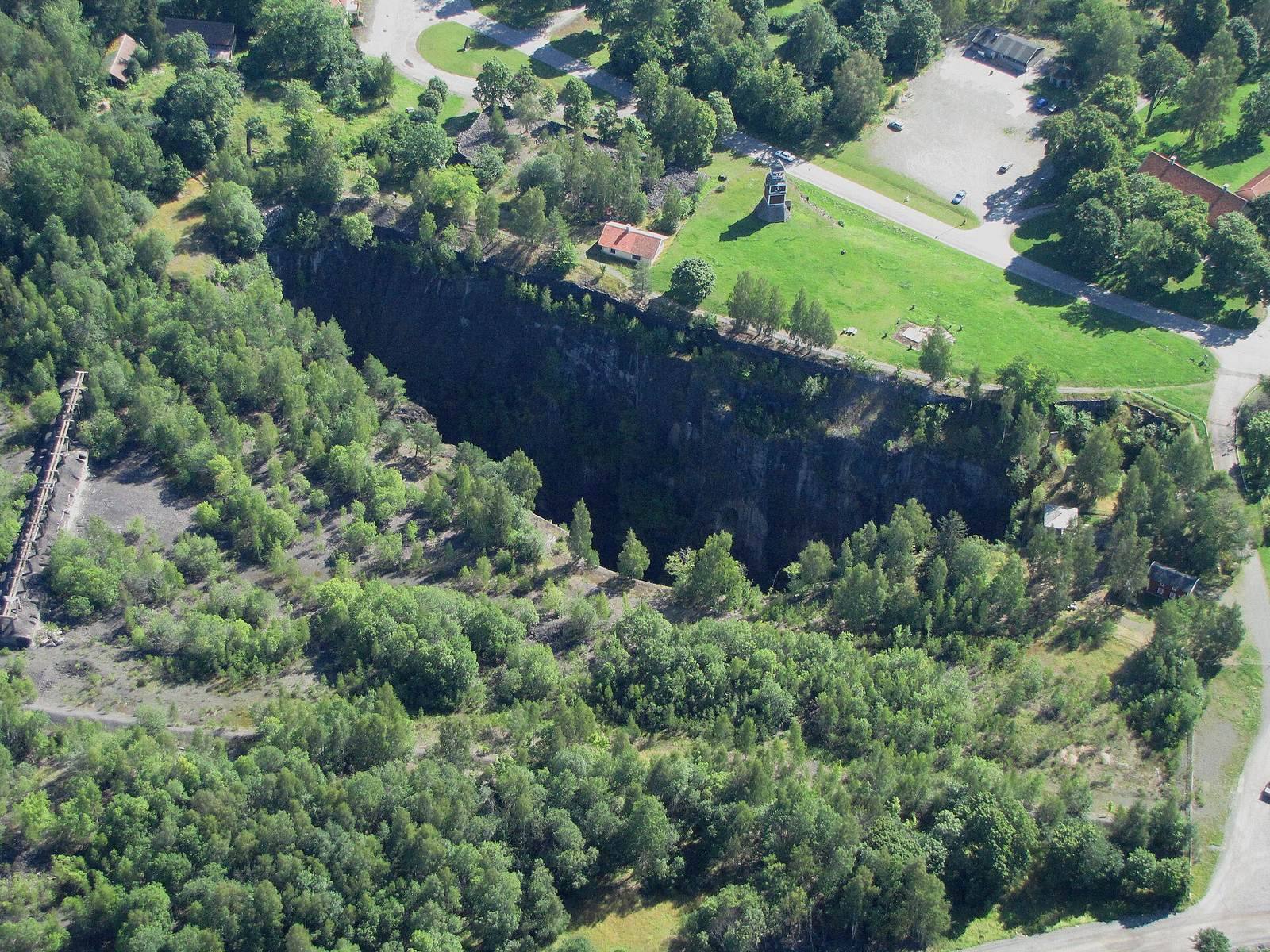
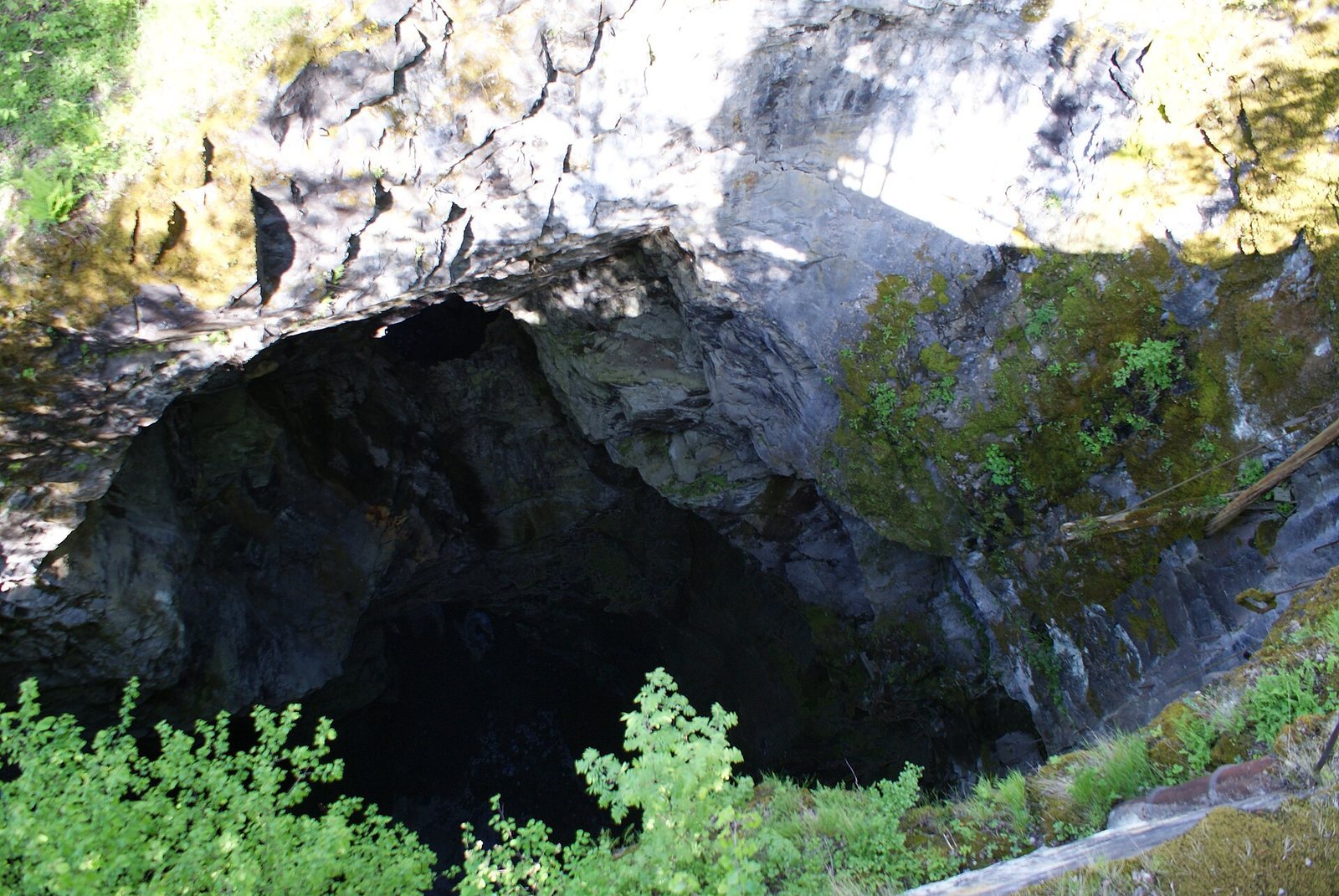
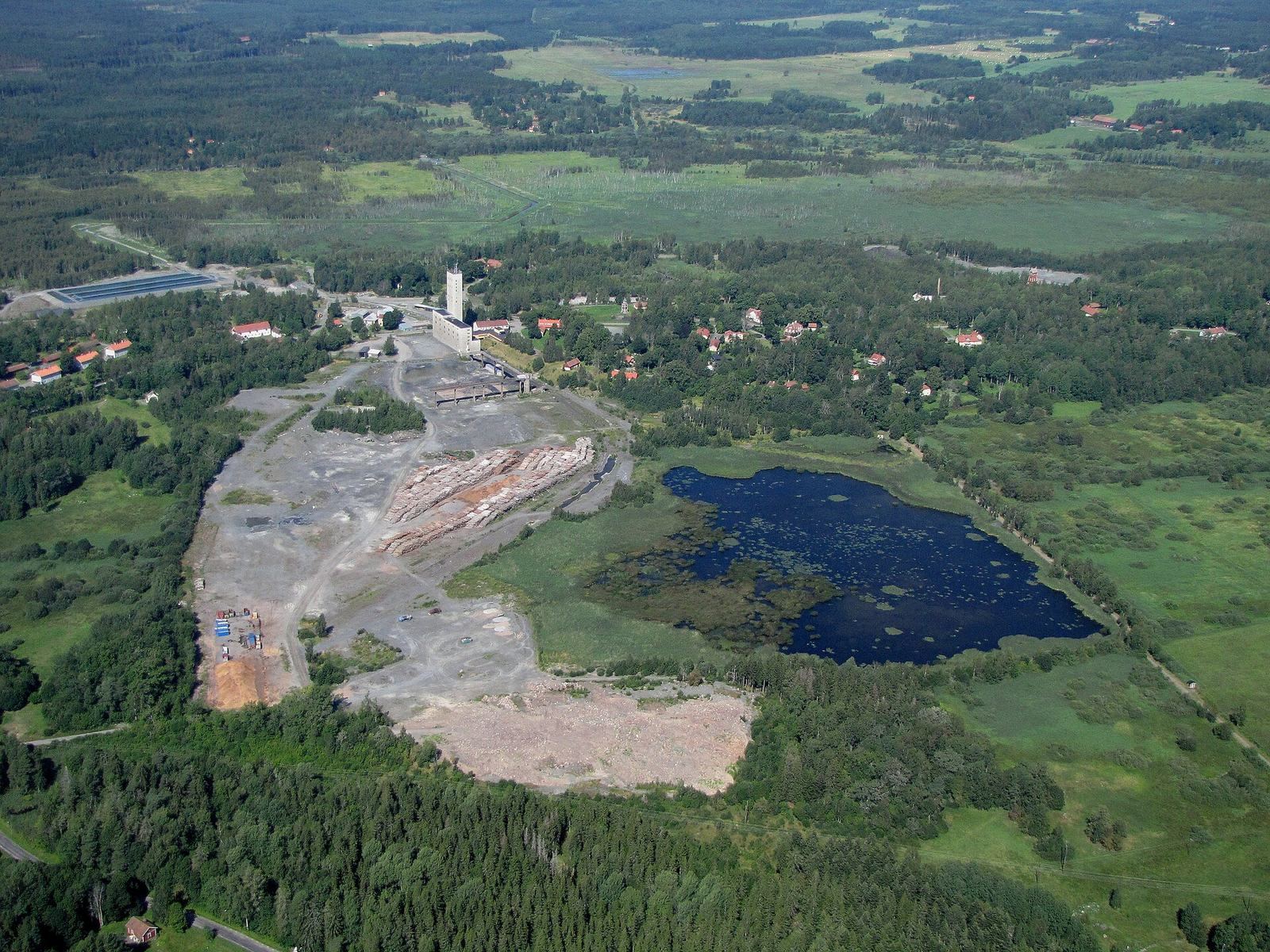
The mine landscape includes open workings, deep underground shafts and ramps, processing installations, and industrial and residential buildings dating from the 18th to the 20th centuries. The mine reaches roughly 600 metres below ground. Its ore body lies within ancient rock formations and is expressed at the surface in open workings as well as in the mine’s industrial infrastructure.
Ore body and geology
The deposit lies in rocks about 1.9 billion years old, including limestone, iron ore, and volcanic material altered by metamorphism, changes caused by heat and pressure. The ore body is strongly deformed and dips steeply northwest at about 55 to 70 degrees. It follows a northeast trend of roughly 30 degrees, extends about three kilometres along that direction, and varies in thickness from a few metres to as much as 100 metres. It consists of separate, lens-shaped ore bodies.
The ore is magnetite, an iron-oxide mineral, with an iron content of about 50 percent. It has low phosphorus and relatively high lime and manganese; some areas also contain sulfide minerals. Dannemora garnet is among the deposit’s rare minerals.
Open workings and hoisting structures
Open workings
Storrymningen is an open pit of medieval origin that may date as far back as the 13th century. Borrymningen is another of the surviving mine workings.
Shafts and headframes
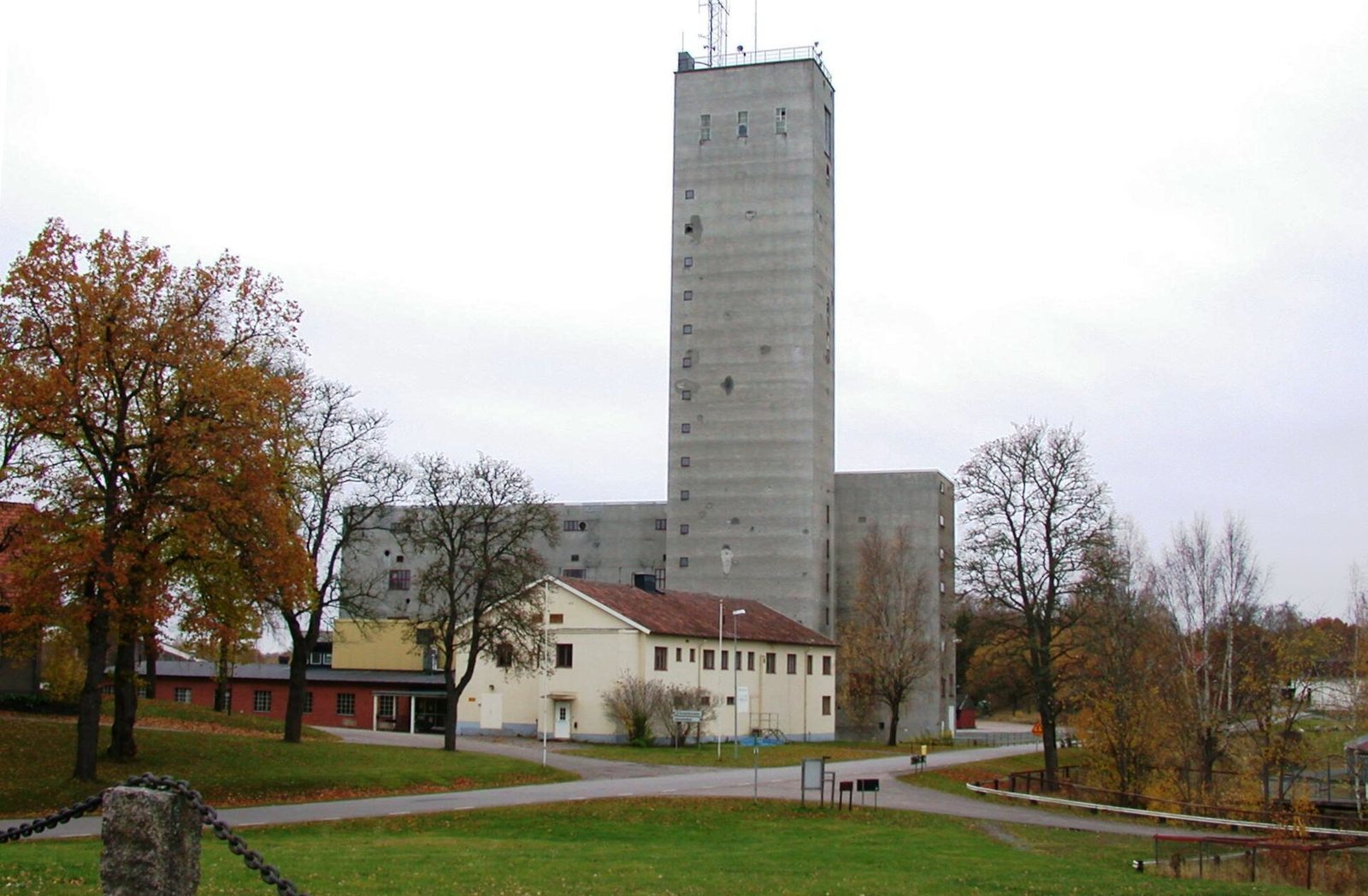
A hoisting tower at the central shaft dates to 1952. The mine area also includes a 72-metre headframe, the structure above a shaft that supports hoisting equipment. A new hoist was later fitted to the old headframe.
Processing and water systems
Ore processing
A processing plant with ore-sorting and concentration facilities was completed in 1955. Later installations included a new sorting plant and a loading terminal. The underground main ramp reaches the 350-metre level, and new ventilation shafts were added. Extracted magnetite is crushed above ground and separated dry with magnetic separators.
Pumping and water management
Renewed operations were supported by a permanent underground pumping system designed to handle natural water inflow of about 10 litres per second. An industrial-water system uses underground reservoirs and above-ground settling basins.
Industrial and residential buildings
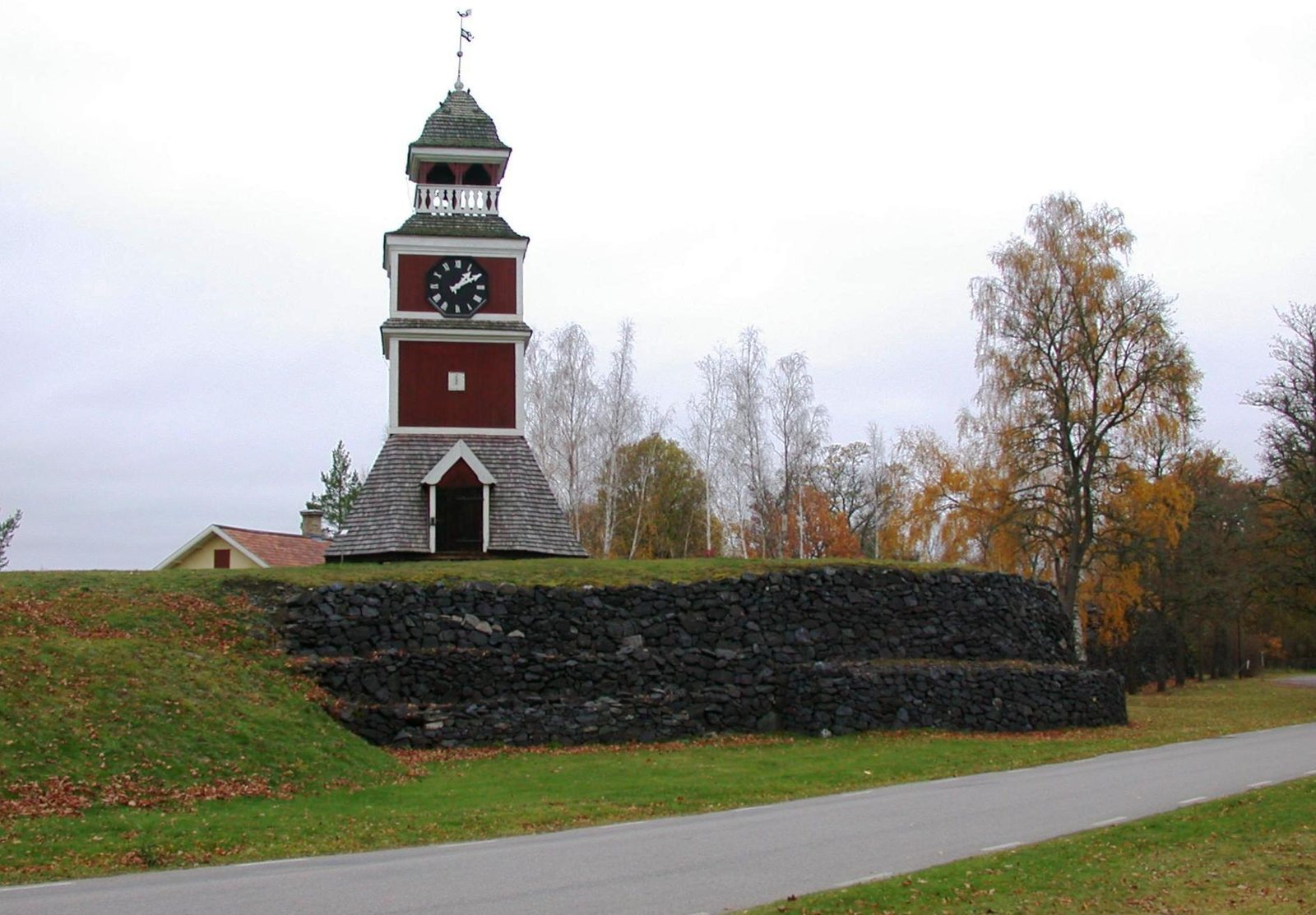
The mine area contains industrial and residential buildings from the 18th through the 20th centuries, including a clock tower, a mine office, and a miners’ cottage.