Films kyrka: A Medieval Church in Sweden
Site at a Glance
- Country
- Sweden
- Primary era
- Medieval
- Eras represented
- Medieval, Early Modern, Modern
- Civilizations
- Swedish
- Site type
- Religious
- Remains
- Church
On this page11 sections
History
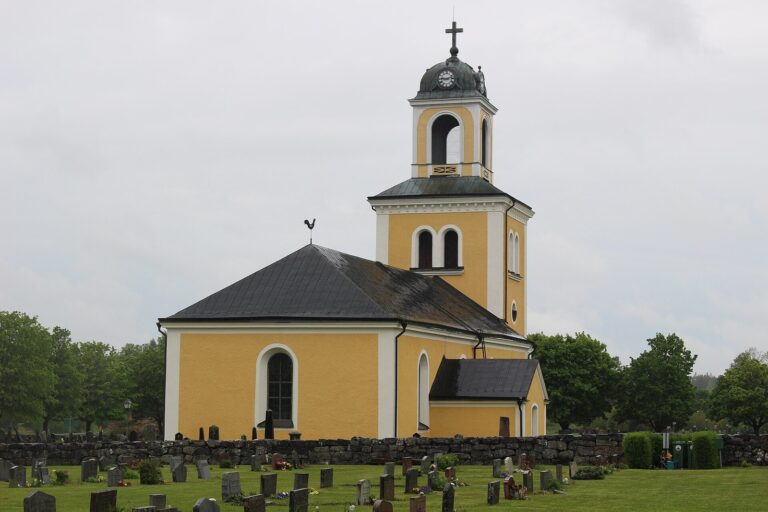
Films kyrka is a medieval church in Films kyrkby, Sweden. Consecrated in the fifteenth century, its oldest parts probably date from the second half of that century. It belongs to the Church of Sweden, within Uppsala Diocese, a regional church district, and Dannemorabygden parish, its local congregation.
Medieval church and 1767 extension
In 1767, a large addition called Österbykyrkan, or the New Church, was built to accommodate population growth at the ironworks. The extension enlarged the church while retaining the older building as part of the complex.
Renovations
A major renovation in 1895–97 uncovered medieval wall paintings, added wallpaper-style painted decoration to the walls, and introduced paintings in Österbykyrkan. The fixed furnishings were replaced and given a dark-brown finish. Work in 1954 conserved the medieval paintings and restored the older church toward an eighteenth-century character, including the return of lighter furnishings. The campaign also altered the interior of Österbykyrkan.
Organ history
Jonas Ekengren built an organ for the church in 1777. In 1858, organist M. Wesslin of Lövsta replaced one of its stops, a group of pipes, with another called Vox candida 8′. The instrument was moved to the church school in 1872, sold to the Nordic Museum in 1908, and eventually placed in Seglora Church at Skansen, an open-air museum in Stockholm.
Anders Victor Lundahl built a new organ in 1896. It was inaugurated on Easter Eve, 4 April, and received very favorable remarks during its inspection. Grönlunds Organ Builders made the present organ in 1973.
Remains
The church stands in a wooded area near Filmsjön, a little over five kilometres north of Österbybruk. Its buildings combine the medieval church with the large southern extension, and a separate red-painted belfry stands nearby.
Church buildings
Medieval church
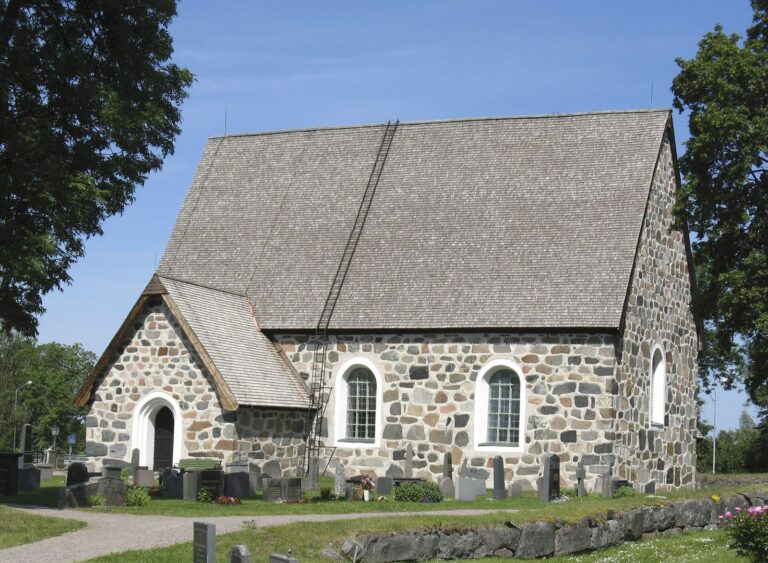
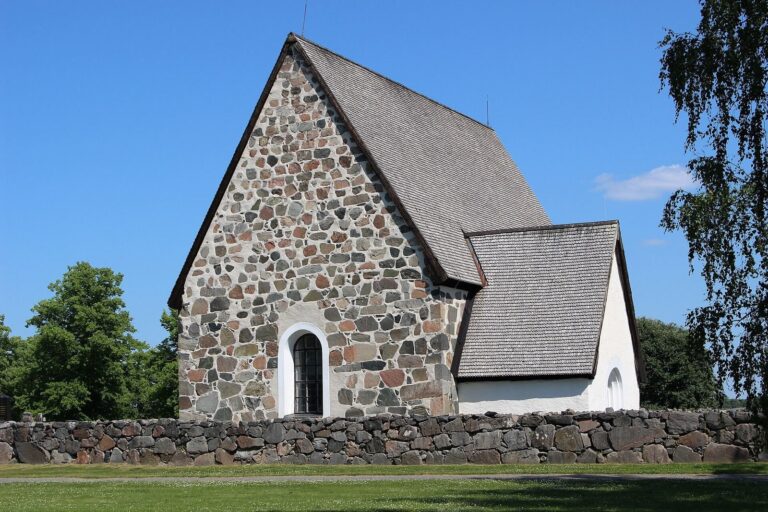
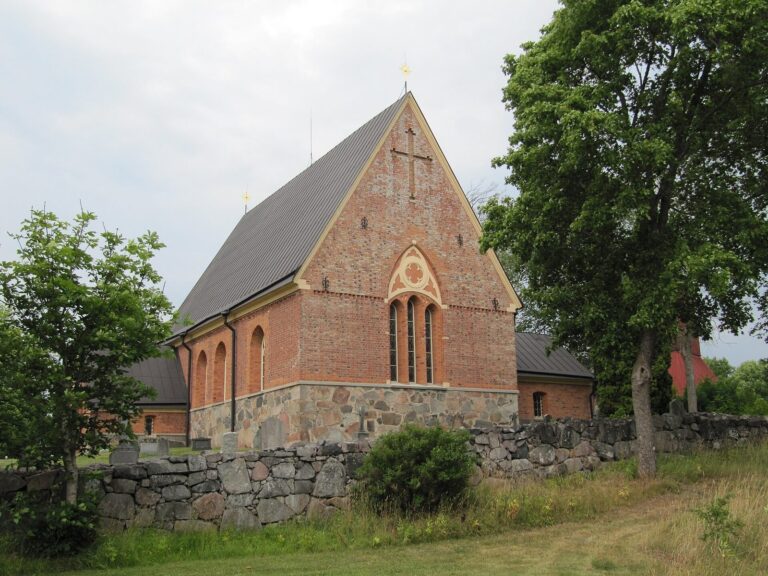
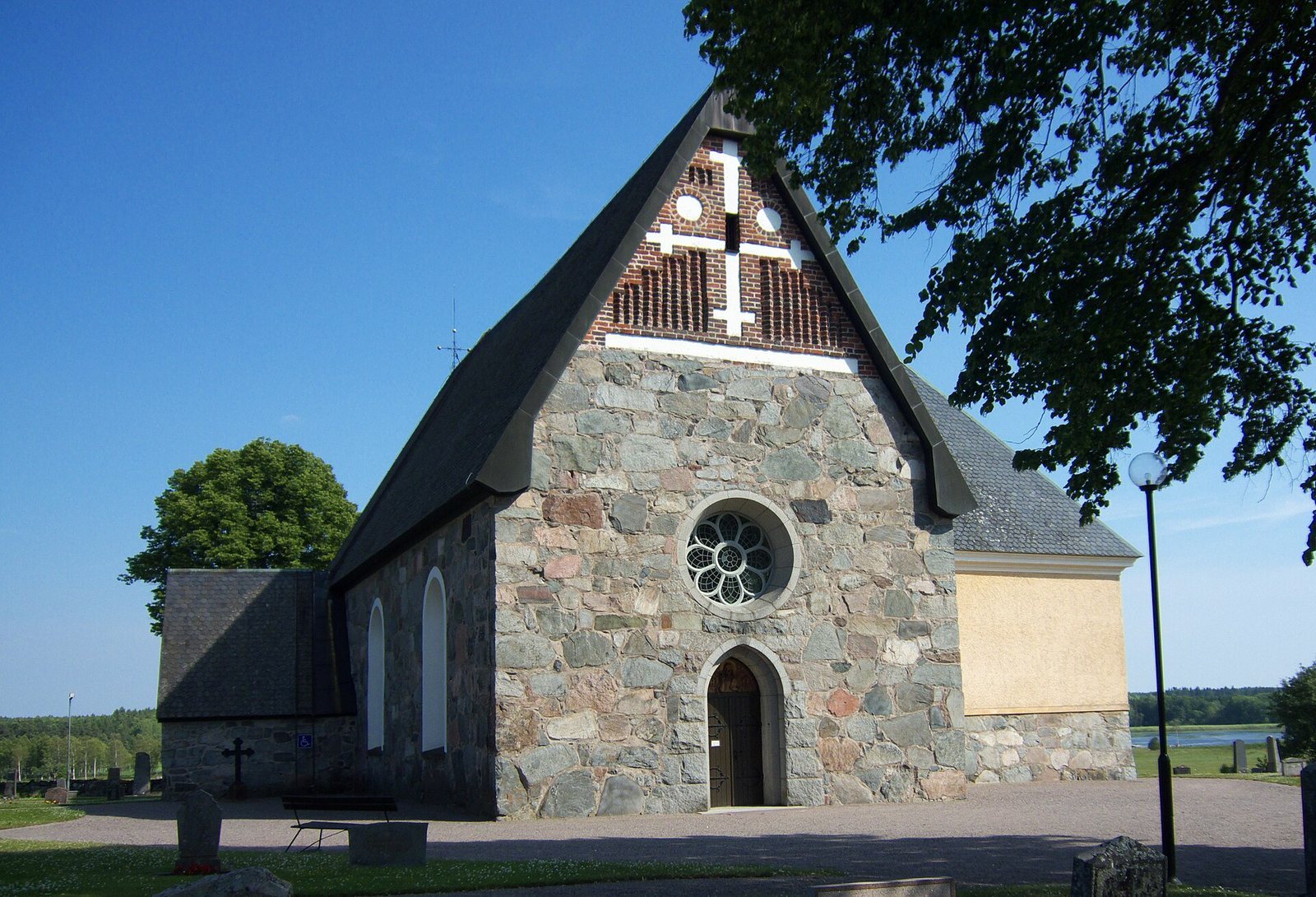
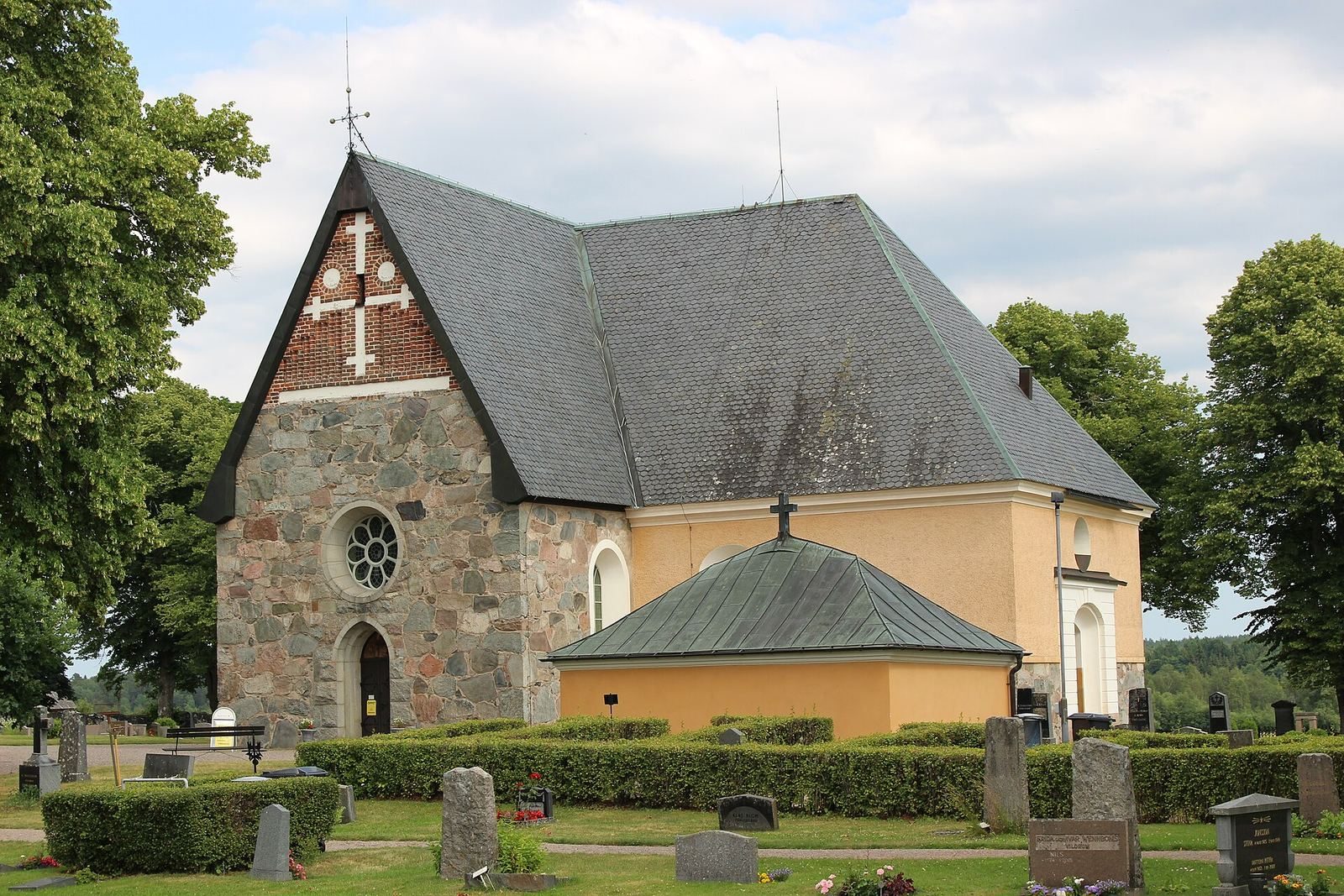
The older church has a rectangular nave, a chancel as wide as the nave with a straight eastern end, and a sacristy, a room for preparing services and keeping church objects, on the north side. Fieldstone walls rise to brick gables beneath a steep, shingle-covered roof. The current entrance is in the west gable; a medieval porch once stood on the south side. Windows in the older church were enlarged when the extension was built.
Österbykyrkan
The extension meets the nave midway along its south wall. Built from fieldstone and brick and covered with plaster, it has a hipped roof at the same height as the older church’s roof. Much of its fieldstone came from the demolished medieval porch. A separate sacristy stands to the left of the extension’s south entrance.
Belfry
The freestanding belfry dates from the seventeenth century and was originally an open structure. It is painted red.
Interior and furnishings
The medieval church’s cross vaults, ceilings formed by intersecting arches, are probably original. Paintings added to them around 1500–15 include a particularly well-preserved image of the local saint St. Kakwkylla. The church also retains a medieval triumphal crucifix, a crucifix traditionally placed near the boundary between nave and chancel, above the sacristy entrance on the chancel’s north wall. Its Baroque pulpit, in the elaborate European style prominent in the seventeenth and eighteenth centuries, was made in 1732, and its altarpiece followed in 1734. Both are by Olof Gerdman, a Swedish sculptor and church-art craftsman who trained under Baroque sculptor Burchard Precht. A wooden baptismal font designed by Ove Leijonhufvud was acquired in 1946. Closed pews occupy the older church. In Österbykyrkan, the 1895-era benches remain, while the paintings added during that renovation are covered with plaster; a vestment room and cloakroom lie beneath its gallery.
Organs
The Lundahl organ used a tubular-pneumatic system, in which air travels through tubes to operate valves controlling the pipes. Lundahl was the first to introduce this system in Sweden. Air transmission instead of mechanical connections made the organ easier to play, while couplers linking parts of the instrument allowed its sound to be varied. The present organ stands on the side gallery and retains the facade of Lundahl’s instrument.