Dannemora Church: A Medieval Church in Sweden
Site at a Glance
- Country
- Sweden
- Primary era
- Medieval
- Eras represented
- Medieval, Early Modern, Modern
- Civilizations
- Swedish
- Site type
- Religious
- Remains
- Church
On this page9 sections
History
Dannemora Church is a church in Österbybruk, Sweden, consecrated in the 15th century and now part of the Church of Sweden’s Diocese of Uppsala and Dannemorabygden Parish.
Medieval origins and construction
Older furnishings point to an earlier church at Dannemora dating to the 13th century. The present church was consecrated in the 15th century.
The main body and sacristy, a room for clergy vestments and liturgical objects, were probably built in the late 15th century. A porch was added in the early 16th century.
Wall paintings and later changes
The wall paintings date to the 1520s and are associated with the Tierp School, a conventional name for Swedish church painters linked to the area around Tierp in Uppland. The paintings were never covered with whitewash, but later restorations substantially altered them.
Several extensive interior renovations took place during the 19th century. Work in 1957 was intended largely to reverse those changes.
A west-gallery organ was begun in 1941 by Johan Vesterlund and completed in 1943 by Åkerman & Lund. After that organ broke in the 1960s, the church acquired a choir organ made by Gebrüder Jehmlich Orgelbau in Dresden, originally installed at Börstil Church. It was dismantled in 2020, and its parts were given to parishioners.
Remains
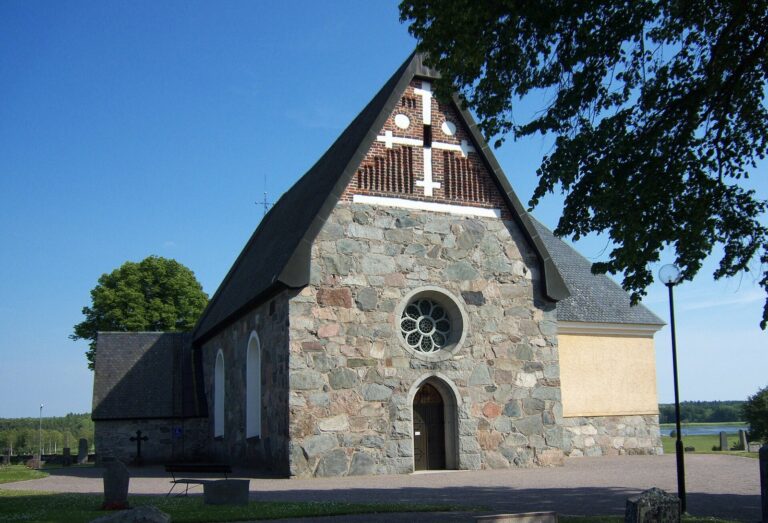
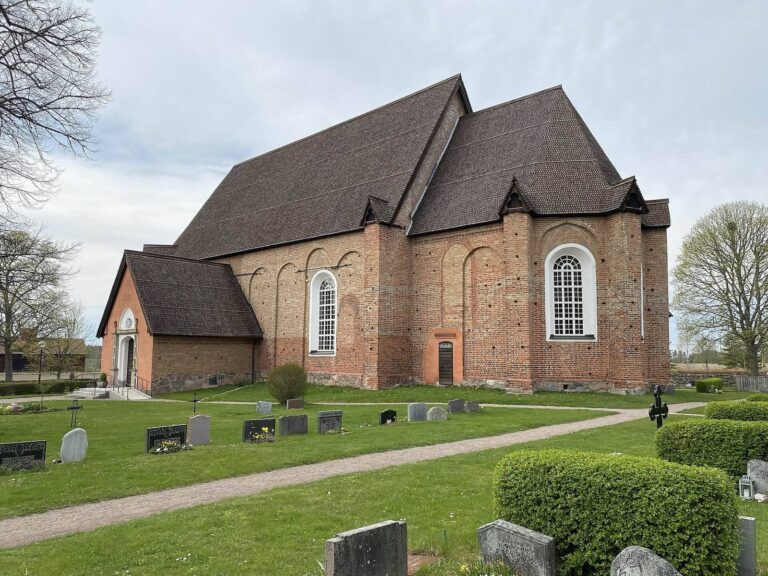
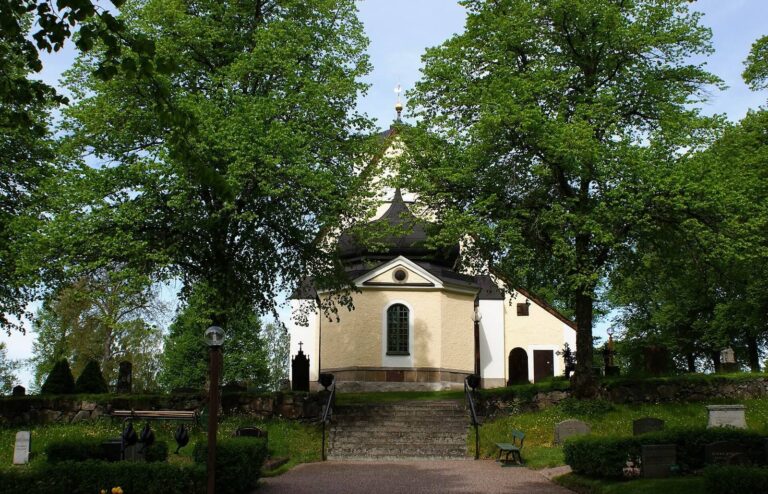
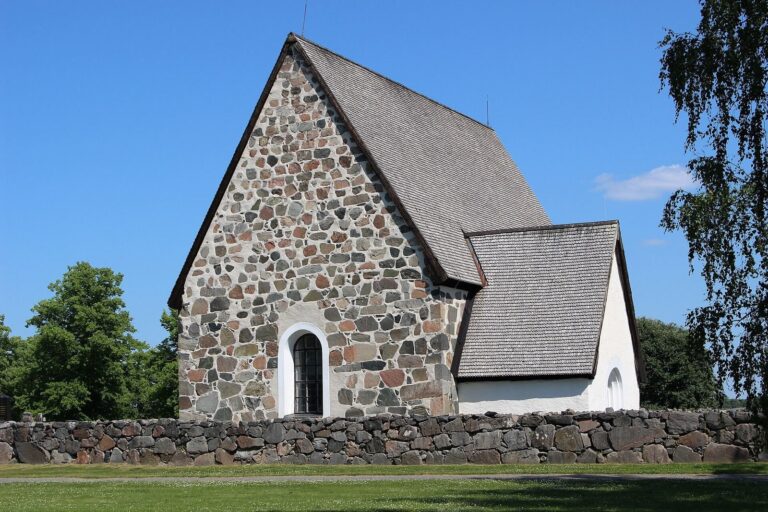
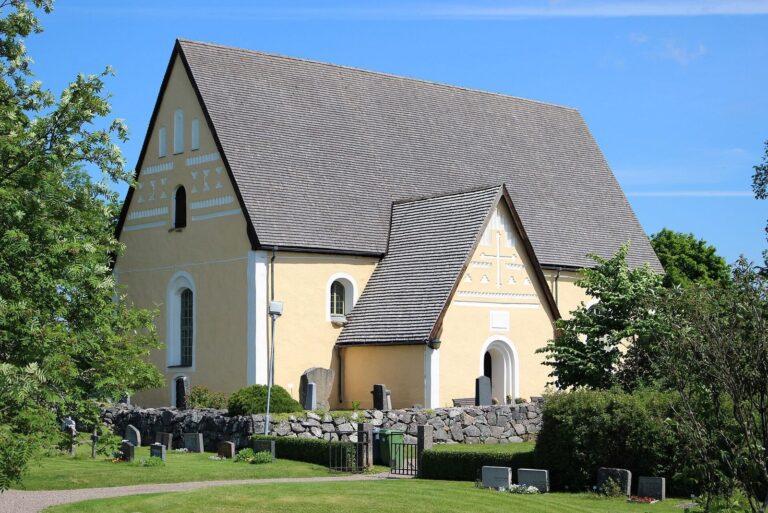
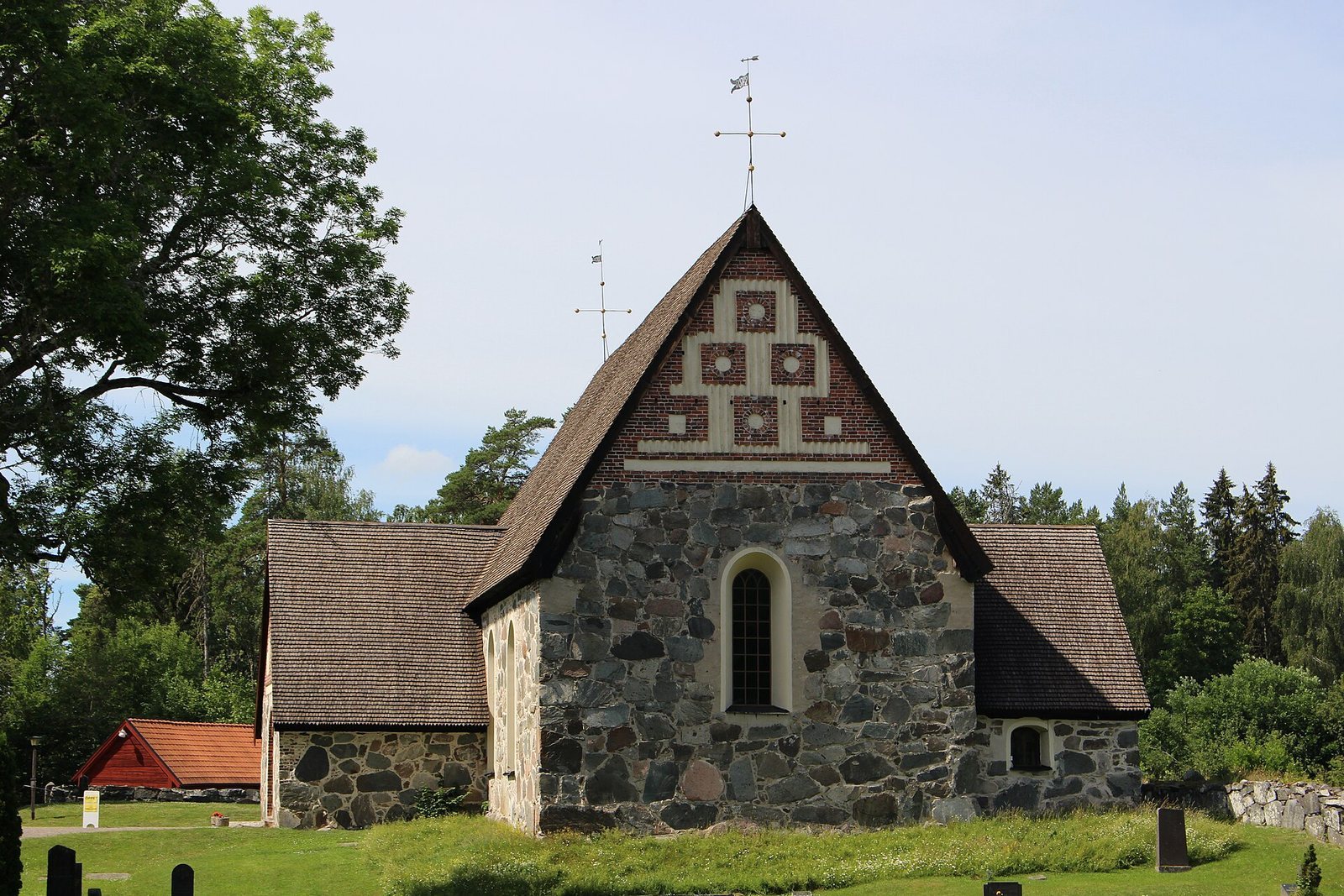
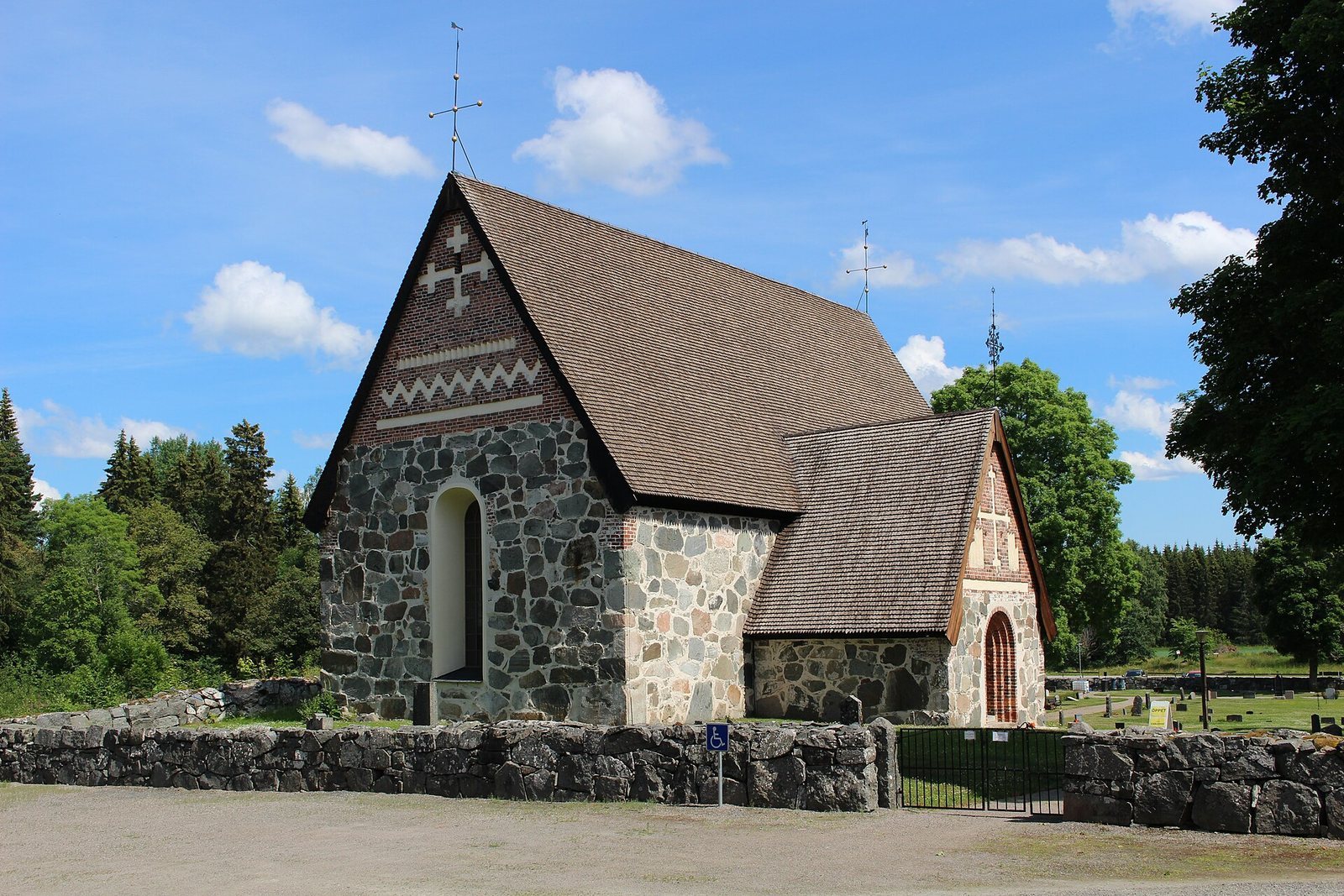
The church stands outside Dannemora, just west of Lake Dannemora. Its bell tower, built in 1753, is on a rise southeast of the church. The building has one main worship space, with the sacristy on the north and a porch containing the main entrance on the south. Its altar area is as high and wide as the main space. The walls are unplastered gray stone, while brick is used for the vaults, surrounds, and gable fronts. Shingled roofs retain broad original wooden boards along the sloping gable edges. Whitewashed decorative arcades that do not open through the wall ornament the gables. The small bell was recast in Stockholm in 1790, and the large bell there in 1843.
Interior and furnishings
Vaults and wall paintings
Every part of the church is vaulted. The main worship space has elaborate star vaults, whose ribs form star-like patterns. The sacristy entrance widens through several stepped recesses, while the porch has a cross-vault made from intersecting vaulted sections. A tall pointed arch separates the main space from the chancel, the area around the altar. Colorful wall paintings cover almost the entire interior, including the chancel, main space, and porch.
Furnishings and pews
A distinctive ornament surrounds the window above the altar. Tall, pyramid-shaped ornaments are associated with the foremost rows of enclosed pews; both features date to the 1730s. The pulpit, from the 1680s, is in the Baroque style, a European style characterized by elaborate ornament. A 14th-century processional crucifix, designed to be carried in religious processions, crowns its canopy.
Medieval objects
The shaft and foot of a baptismal font survive from the 13th-century church. A triumphal crucifix, a large crucifix traditionally placed above the arch to the altar area, is mounted above the altar in the sacristy and also comes from the earlier church.
Gallery and organs
The gallery dates to 1892. The west-gallery organ, completed in 1943, is pneumatic, meaning air pressure operates its mechanism, and is unplayable. Its case and some pipes came from an earlier organ. The instrument currently in use is a digital organ made by Johannus.