Chèvremont Castle: A Frankish Political Center in Belgium
Site at a Glance
- Popularity
- Medium
- Country
- Belgium
- Primary era
- Medieval
- Eras represented
- Classical, Medieval, Modern
- Civilizations
- Belgian, Holy Roman Empire, Prince-Bishopric of Liège, Roman
- Site type
- Military
- Remains
- Castle
On this page10 sections
History
Chèvremont Castle, on a rocky promontory above the Vesdre in present-day Chaudfontaine, Belgium, became a Frankish seat of political authority and a residence of Austrasian mayors of the palace and early Carolingians. Its leading period extended from the seventh to the ninth centuries. Austrasia was the eastern Frankish kingdom, and its mayor of the palace was a senior official who could wield substantial political power. The Carolingians later succeeded the Merovingians as Frankish rulers.
Early occupation and Carolingian beginnings
Activity on the hill reaches back into prehistory and continued during the Celtic and Gallo-Roman periods. The Celtic connection rests chiefly on place-name history: the name Nemetum, meaning “sanctuary,” developed into Namont.
A later Life of Saint Begga credits Ansegisel with rebuilding the castle in the seventh century. Ansegisel, son of Arnulf of Metz, served at the Merovingian court in Austrasia. His wife Begga was the daughter of Pepin of Landen and sister of Grimoald. Their marriage gave rise to the family line that became the Carolingian dynasty.
Their son Pepin II, also called Pepin of Herstal, was probably born at Chèvremont. The Life of Saint Begga also says he was buried in the monastery dedicated to the Virgin Mary in 714. That burial notice is the earliest known written reference to the castle.
Royal estate and Frankish rule
In the early eighth century, the castle and its monastery were associated with the name Novum Castellum, meaning “New Castle.” Pepin the Short, son of Charles Martel, succeeded to the mayoral office and made it a kingship in 752, beginning Carolingian rule as kings. His son Charlemagne became emperor in 800. Charlemagne issued a document at Chèvremont in 779. Other royal or imperial acts are associated with the site in 844, 855, 897, and 902. Lothair I issued a document there in 855, and Lothair II did so in 862. In late 910, Louis the Child confirmed the monastery’s possessions.
The castle formed part of royal and then imperial estates before coming under the control of various counts of Liège and dukes of Lorraine. It provided refuge during a Norman invasion in 881 and was regarded as almost impregnable.
Contests for Lorraine
Giselbert, duke of Lorraine, rebelled against Charles the Simple, a West Frankish king, in 918. He was also count of Maasgau and a lay abbot of Stavelot, meaning a non-monk who held authority or revenues attached to an abbey. Charles failed to capture Chèvremont in a siege in 922. Giselbert married Gerberga, Otto I’s sister, in 928 and later joined the revolt of Otto’s younger brother Henry. Otto besieged the castle in June 939.
Count Palatine Immo, a high-ranking regional official with authority connected to the ruler’s court, held Chèvremont from 936 to 966. He also served as chief protector of the wealthy monastery within the fortress walls. Seeking to preserve Lorraine’s independence, Immo maintained ties with Gerberga and the king of France. Otto I later attacked again, but his forces withdrew toward Saxony in the face of the defenses. Otto and his brother Brun, archbishop of Cologne and acting duke of Lorraine, visited Chèvremont before 966.
Imperial campaigns and demolition
In 972, Otto I transferred the monastery and its possessions to the Marian chapter at Aachen, a body of clergy attached to a church dedicated to the Virgin Mary. The grant strengthened imperial authority, and the records of the two religious institutions were later brought together.
In 986, an imperial army led by Theophanu, regent for her young son Otto III, moved against Chèvremont to suppress rebellious forces in Lorraine. The following year, Notger, bishop of Liège and a political authority as well as a church leader, seized the castle and monastery by stratagem and ordered the remaining fortifications demolished. The destruction also forestalled the growth of a competing power center near Liège.
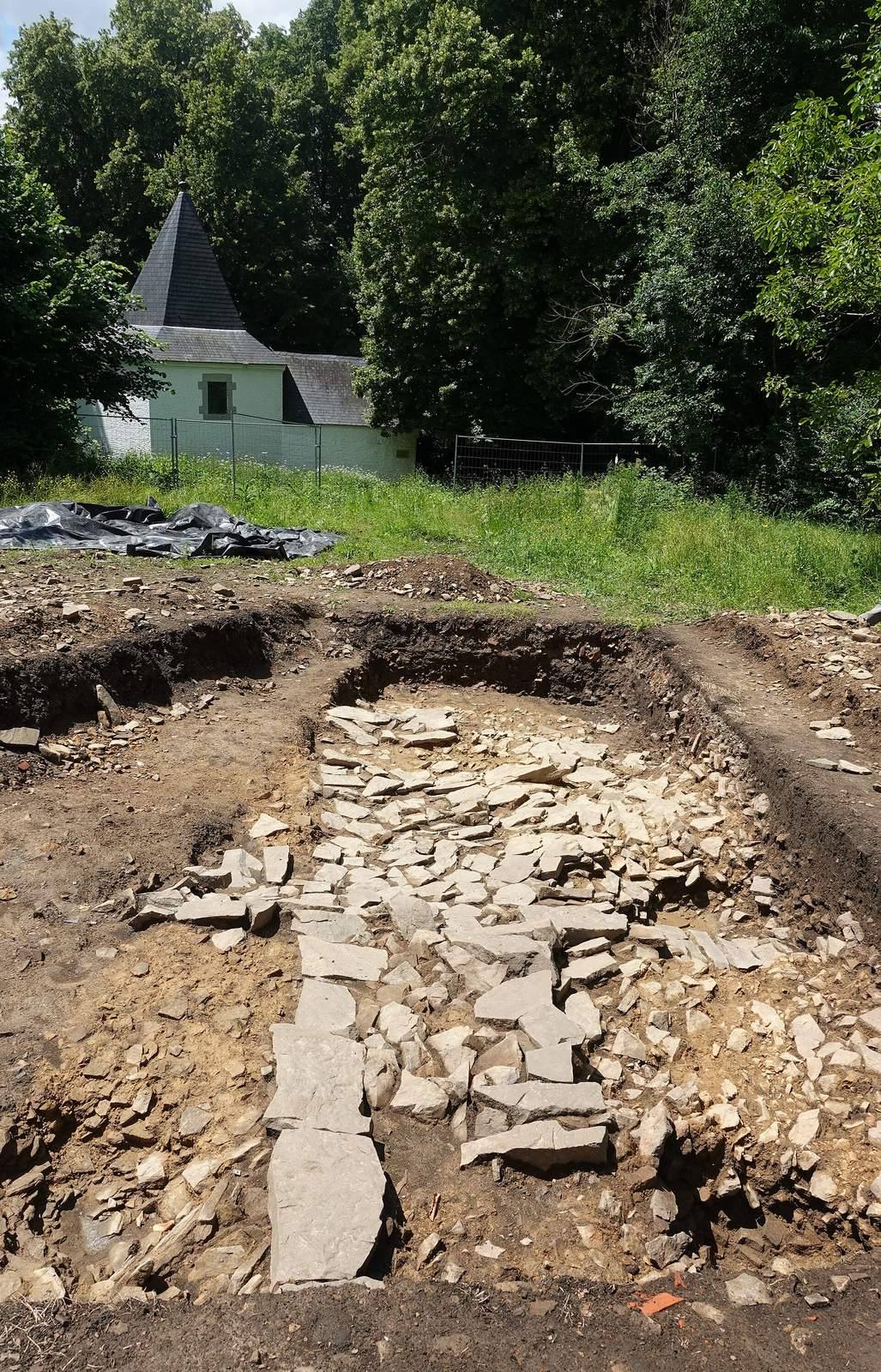
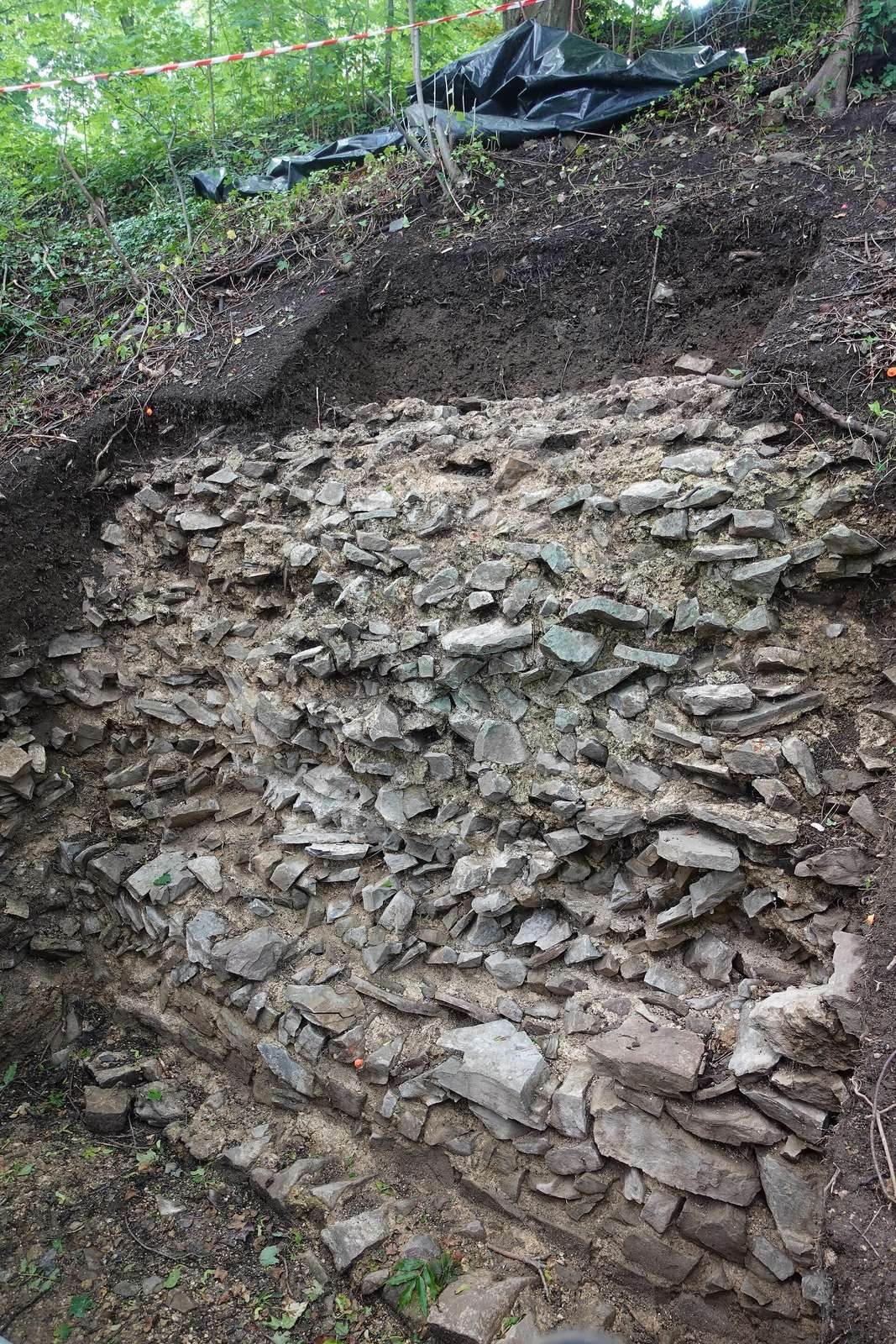
Investigations took place in 1852 and 1862, followed by work from 1877 to 1899 during construction of the basilica and Carmelite convent. Jacques Breuer led an investigation in 1943, and Joseph Mertens directed excavations from 1965 to 1967. Mertens identified fortress building phases from Late Antiquity, the transition from the Roman world to the early Middle Ages, and from the early medieval period, as well as earlier religious structures. A new excavation campaign began in 2024.
Remains
The castle occupies a steep rocky promontory above the Vesdre. Its surviving layout is traced by foundations of the core castle, built during the High Middle Ages, the central medieval centuries, sections of the upper enclosure and outer ring wall, and the bases of about ten defensive towers. A nineteenth-century basilica and convent were built over much of the castle remains.
Fortifications and later buildings
Castle defenses
Foundations mark the high-medieval core, while surviving sections of the upper enclosure and outer ring wall indicate the wider defended area. The bases of approximately ten towers also remain. These traces form the principal visible evidence of the castle’s defensive layout.
Basilica and convent
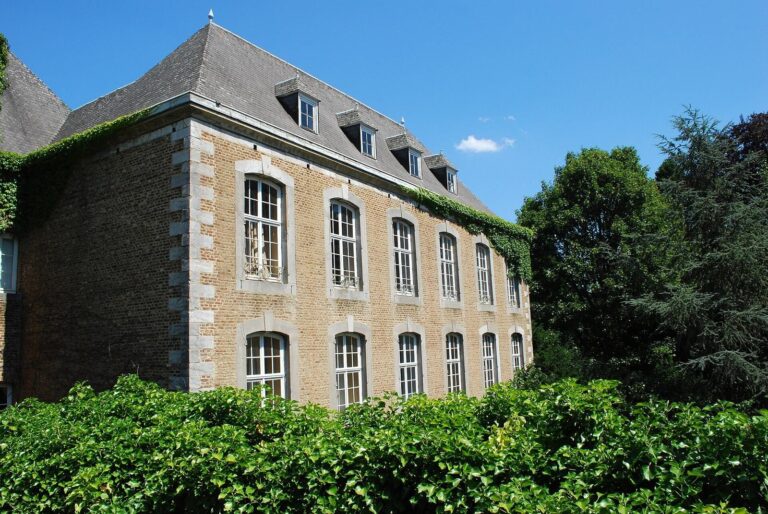
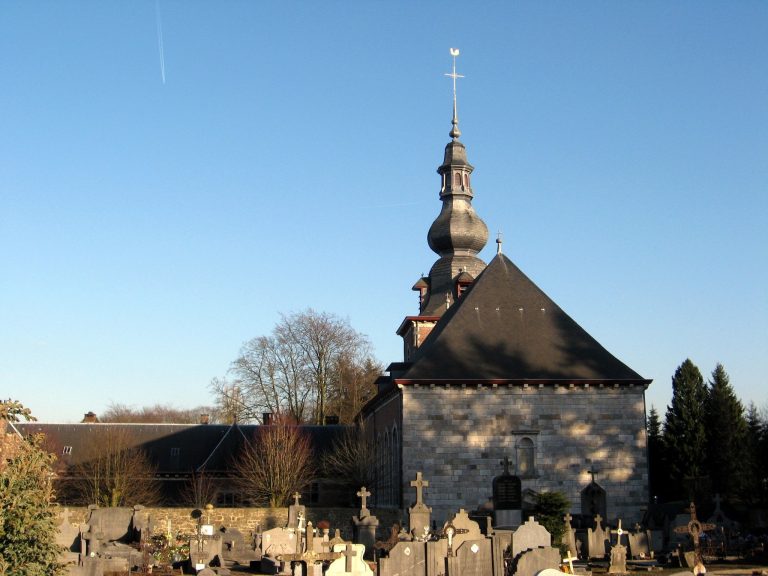
A pilgrimage basilica dedicated to Our Lady of Chèvremont was built over much of the castle site in the nineteenth century. It follows the neo-Gothic revival of medieval Gothic architecture and has an attached convent of Discalced Carmelites, a branch of the Carmelite order associated with stricter religious observance.
Archaeological finds
Mesolithic and Neolithic flint flakes have been found on the hill and in its surroundings, and a Bronze Age axe was discovered at the foot of the hill in 1980. Gallo-Roman finds include a stone monument dedicated to Mercury and part of a Late Roman defensive wall uncovered near a chapel. Only a small amount of the recovered archaeological material is preserved; historical finds are held in scientific collections in Liège.