Kumeda Pond: An Irrigation Reservoir in Osaka, Japan
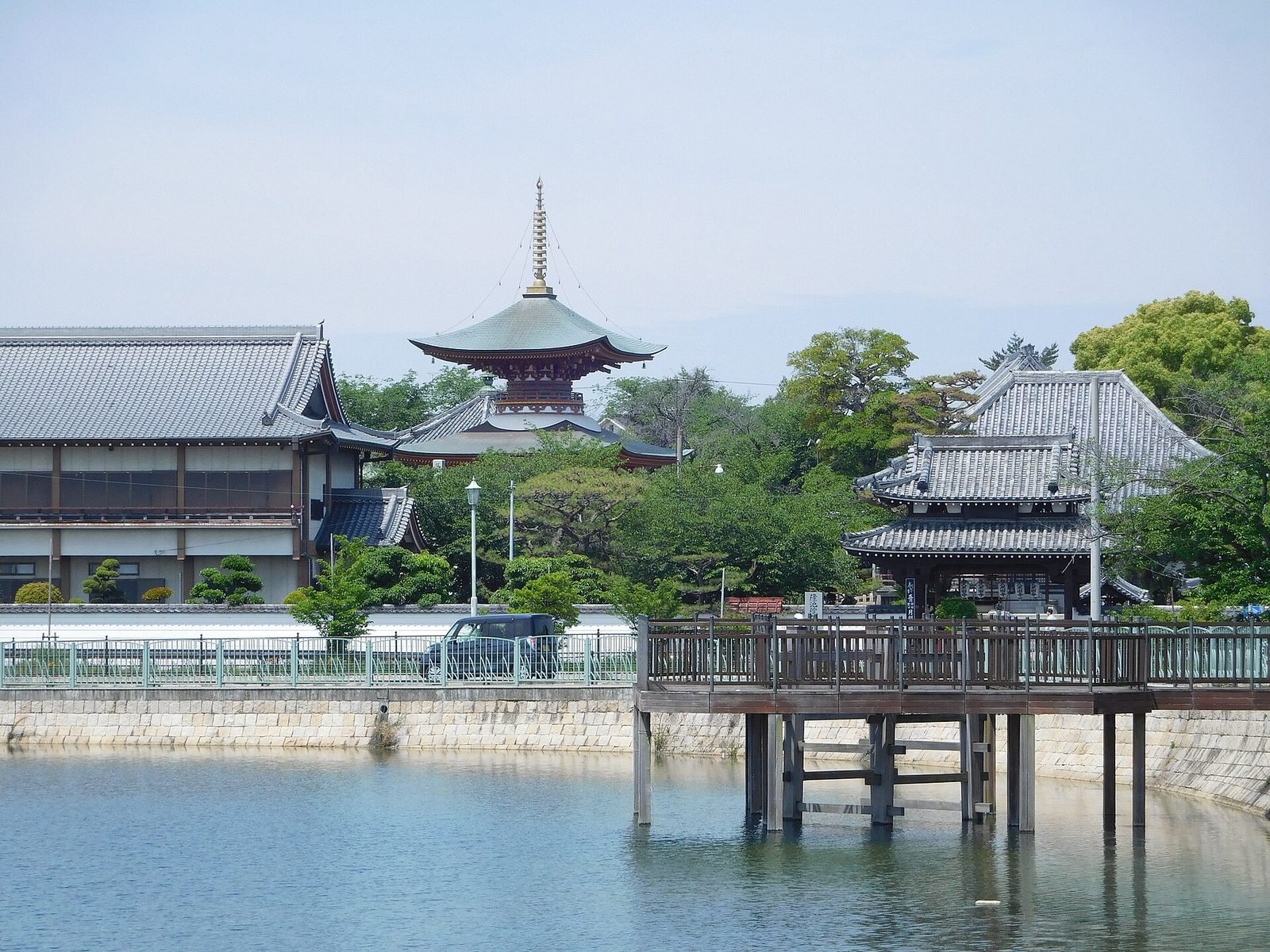
Site at a Glance
- Popularity
- Medium
- Country
- Japan
- Primary era
- Medieval
- Eras represented
- Medieval
- Civilizations
- Unclassified
- Site type
- Infrastructure
- Remains
- Dam
On this page6 sections
History
Creation and medieval repairs
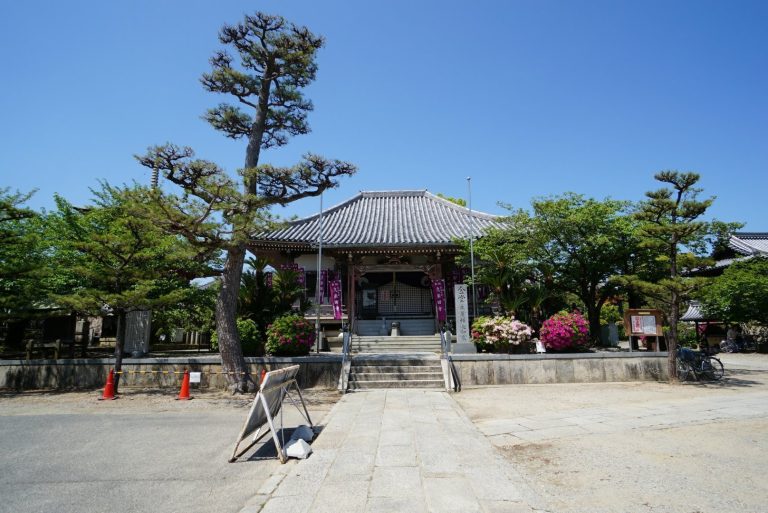
Kumeda Pond is an irrigation reservoir in Kishiwada, Osaka Prefecture, Japan. In the eighth century, Emperor Shōmu commissioned the Buddhist monk Gyōki to build it for the Yagi area and surrounding region, where water was scarce. Work took place from 725 to 738 and lasted 14 years. Shōmu also assigned a nearby temple responsibility for maintaining the pond. The temple is said to have received the additional name “Prosperous Pond Temple.”
While the temple managed the pond, its embankment was repaired in 1289 and again in 1361. During the Sengoku period, an era of political fragmentation and conflict in Japan, responsibility passed to an association formed by 12 villages in the irrigation area.
Modern management and recognition
In 1957, the village association was reorganized under Japan’s Land Improvement Act as the Kumeda Pond Land Improvement District, an organization for managing agricultural land and related infrastructure. The pond was selected for the Ministry of Agriculture, Forestry and Fisheries’ “100 Best Irrigation Ponds” in 2010. In 2015, the International Commission on Irrigation and Drainage registered it as a Heritage Irrigation Structure through a program recognizing historic irrigation works.
The origin of the name “Kumeda” has two proposed explanations. One links it to a change from “Yagi” to “Kume”; the other derives it from a term for water held in a rice field.
Remains
Setting and embankment
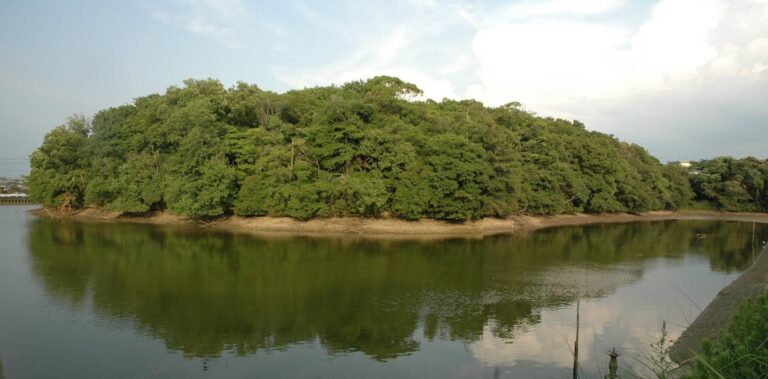
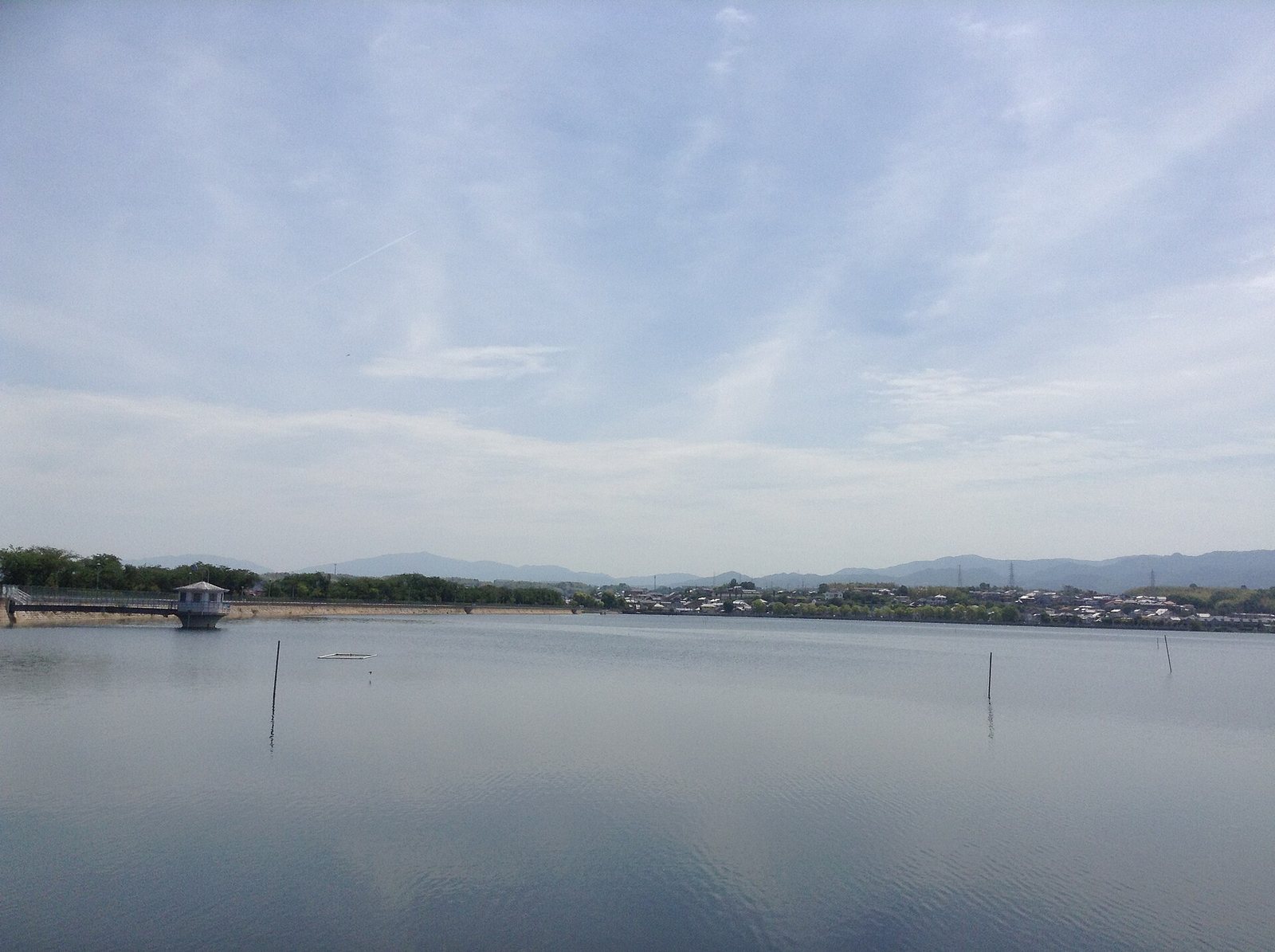
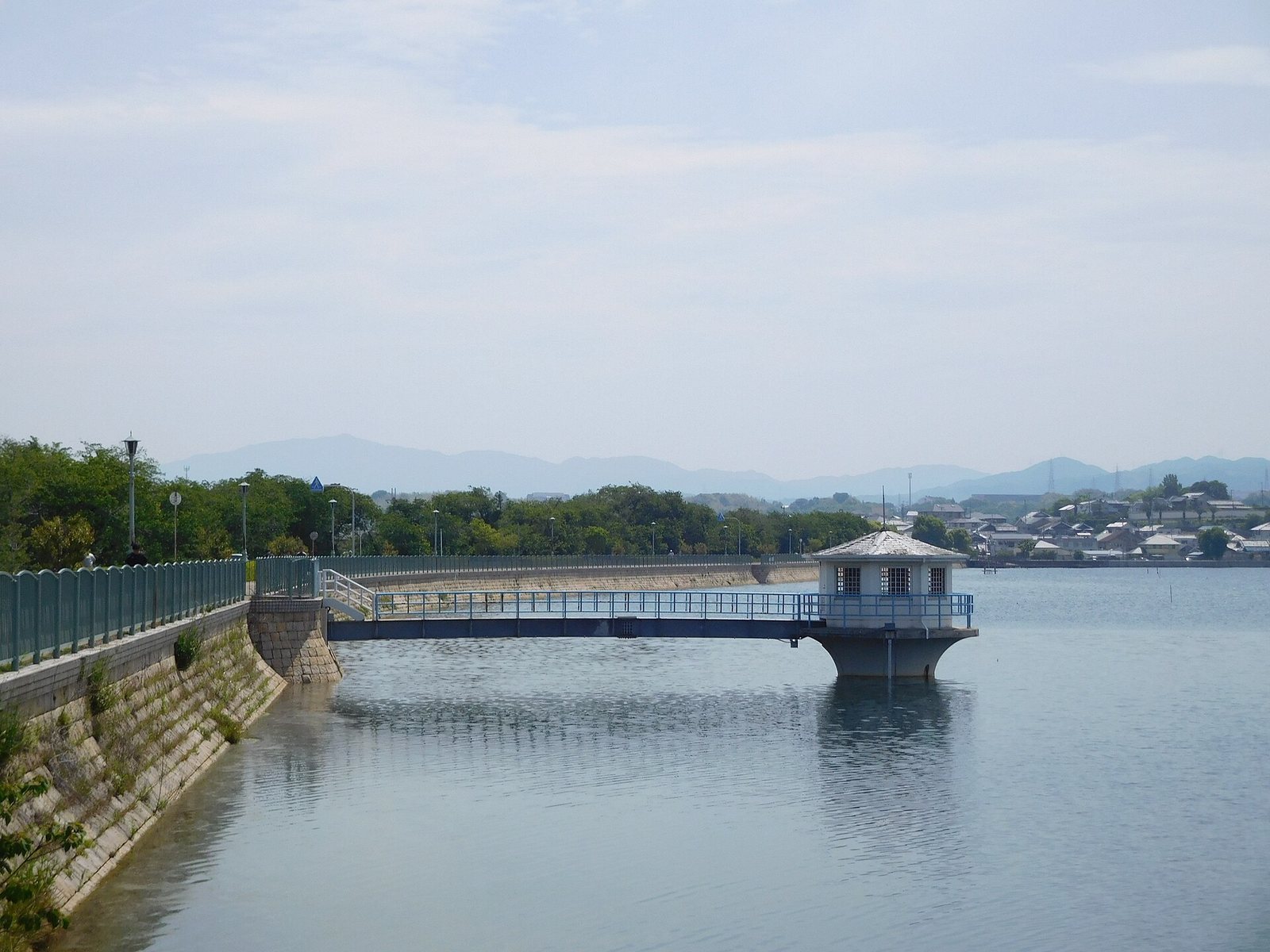
The freshwater pond lies southeast of Kumeda Temple and extends across two local districts. Its water surface covers 0.465 square kilometres, and its perimeter measures 2.6 kilometres. It has the largest water surface of any pond in Osaka Prefecture. Natural plateaus enclose three sides, while an embankment forms the fourth, between Kumeda Park and the temple gate. The bed of an old river can be seen at the pond’s centre; the reservoir was formed by damming that river.
Water supply and control
The current supply system takes water from one river and conveys it to the pond through another. An earlier intake is thought to have drawn from the river whose bed runs beneath the pond, but that intake is no longer used. Four outlets serve the reservoir: the first three mainly distribute water for agriculture, while the fourth is a rear outlet. A spillway carries excess water to a neighboring pond when the level rises above a set point.