Batthyány Mansion in Ikervár: A Historic Hungarian Family Residence
Site at a Glance
- Popularity
- Medium
- Country
- Hungary
- Primary era
- Modern
- Eras represented
- Early Modern, Modern
- Civilizations
- Austria-Hungary, Habsburg, Hungarian
- Site type
- Domestic
- Remains
- Manor House
On this page8 sections
History
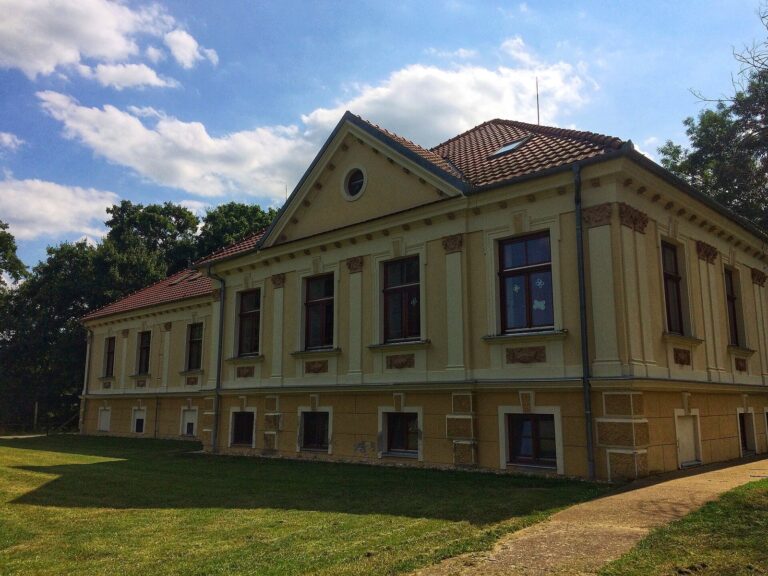
Batthyány Mansion in Ikervár is a historic residence in Ikervár, Hungary, remodeled in 1846–47 in the Neo-Renaissance style. Lajos Batthyány, Hungary’s first prime minister, spent part of his childhood there, and his wife, Antónia Zichy, made it her home after their marriage in 1834.
Batthyány ownership and Lajos Batthyány
Before the Batthyány family acquired Ikervár’s estates in 1789, they had belonged in turn to the Kanizsai, Nádasdy, and Draskovich families. Count Miksa Batthyány reshaped earlier buildings into a residence. After inheriting the estate in 1831, Lajos Batthyány supported the development of the village. He married Antónia Zichy at the mansion on 4 December 1834. At his estate in Péterfa, he established a sugar factory, dairy farm, and sheep farm, and planted mulberry trees to support silkworm cultivation.
Rebuilding and confiscation
The mansion’s rebuilding was designed by Hungarian architects Miklós Ybl and Ágoston Pollack. Inventories from the 1850s show that the work remained unfinished. Although the project was still considered modern at the end of the century, Lajos Batthyány did not live in the remodeled residence.
After the Hungarian Revolution of 1848–49 was suppressed, Lajos Batthyány was executed. A sentence issued in October 1849 ordered his execution and confiscated his entire estate. The imperial treasury leased the property from 1852 to Count János Zichy, Antónia’s younger brother, to raise revenue.
Return to the family and later enterprises
The Batthyány family bought the mansion and estates back from the treasury in 1859–60. In 1861, Antónia placed the Ikervár estate under the management of her elder daughter Emma and Emma’s husband, Count Géza Batthyány. They paid the young Elemér Batthyány an allowance while he owned the estate. The property was registered in Elemér’s name in 1871, and he sold it to his sister in 1877.
A later Lajos Batthyány, grandson of the former prime minister, founded a basket-weaving factory. His initiative also led to the creation of Vas County Electric Works Ltd. In 1895, the company built Hungary’s first hydroelectric plant, and Ikervár became the country’s first village with electric lighting.
Sale and public use
Debt incurred during the First World War and lenders’ demands for repayment by 1916 forced the family to sell the Ikervár estate. They moved to their mansion at Polgárdi, while the renovated and modernized Ikervár residence was sold to the Hungarian state in 1916. It first housed a home for people disabled by war and, from 1919, an institution for war orphans. It continued as a children’s home until 1999, then stood unused from the 2000s. After a period in private ownership, it returned to state ownership in 2016. The mansion’s park is protected.
Remains
The mansion
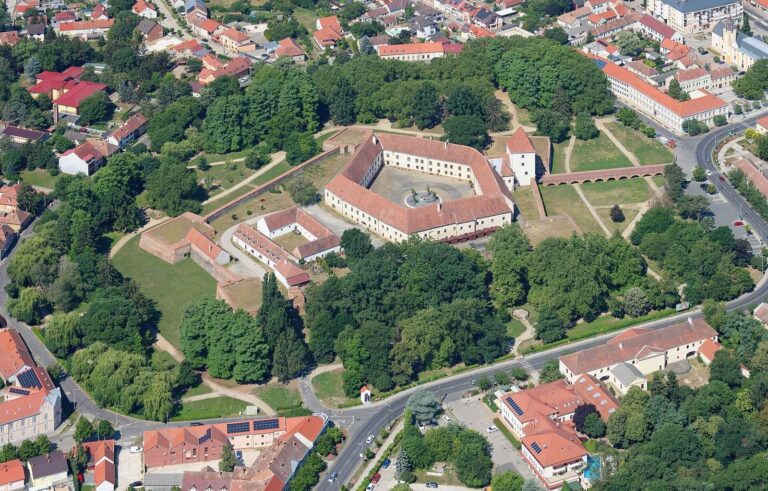
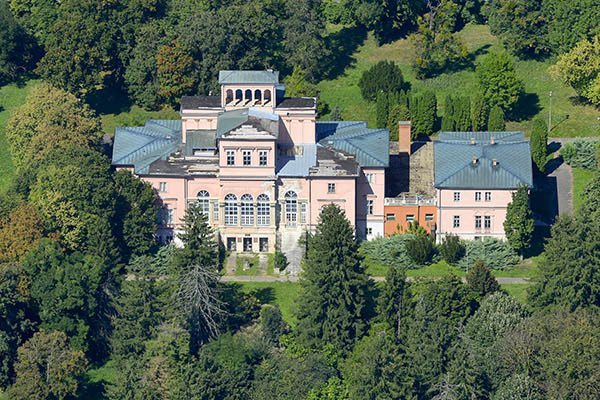
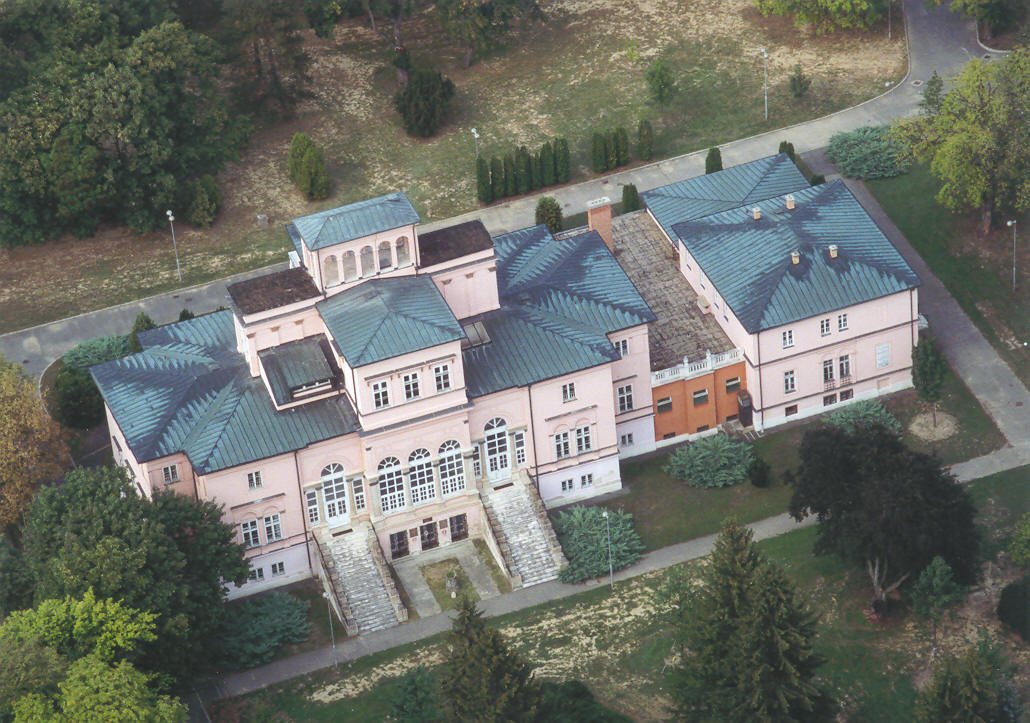
The three-story mansion stands in a park beside the Rába River, near the center of Ikervár. It incorporates earlier buildings, and its earliest form is thought to have resembled a rectangular fortified castle of the 16th or 17th century. A later phase produced a U-shaped late-Baroque residence. The complex includes a side wing and a connecting building; without the side wing, the main façade is symmetrical. Late-19th-century alterations gave the building an eclectic character, and interior Romantic-style wall paintings date from this period. Its design also reflects the influence of Andrea Palladio, an Italian Renaissance architect whose work shaped later European architecture. A plaque commemorates the formation of the Vas County National Guard, a local force established during the Hungarian Revolution of 1848–49, on 13 June 1848, and Antónia Zichy’s inauguration of its flag.
The park and memorials
The park contains trees associated with Lajos Batthyány and Lajos Kossuth, a leading Hungarian statesman and revolutionary figure. It also holds a full-length statue of Lajos Batthyány, made by Hungarian sculptor Jenő Bory in 1913. Residents of Ikervár funded the statue’s erection through public contributions.