Transfiguration Cathedral of Mirozh Monastery: A Medieval Orthodox Church in Pskov
Site at a Glance
- Popularity
- High
- Country
- Russia
- Primary era
- Medieval
- Eras represented
- Medieval
- Civilizations
- Novgorod Republic
- Site type
- Religious
- Remains
- Church
On this page10 sections
History
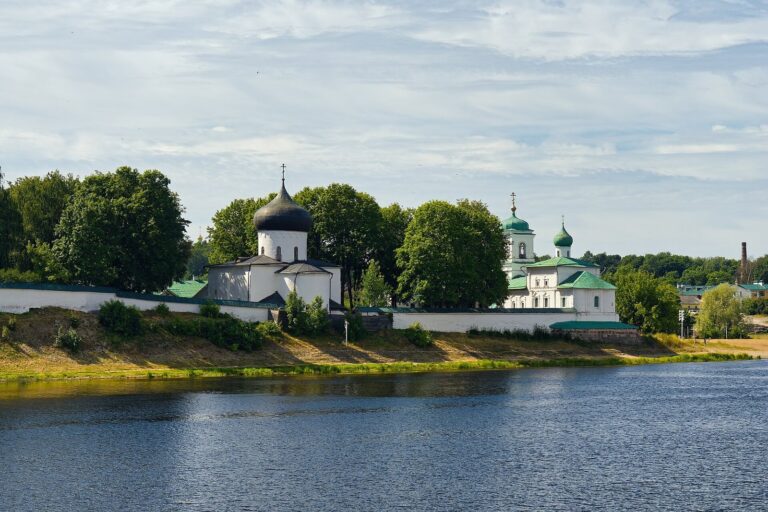
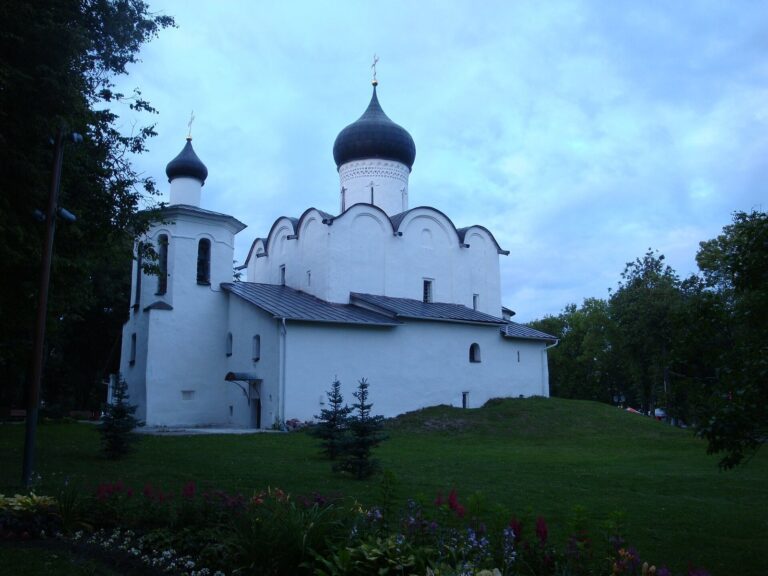
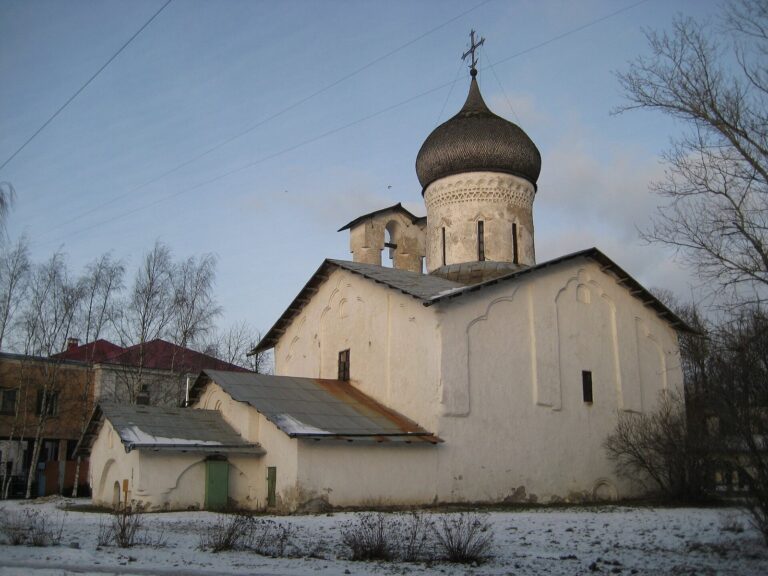
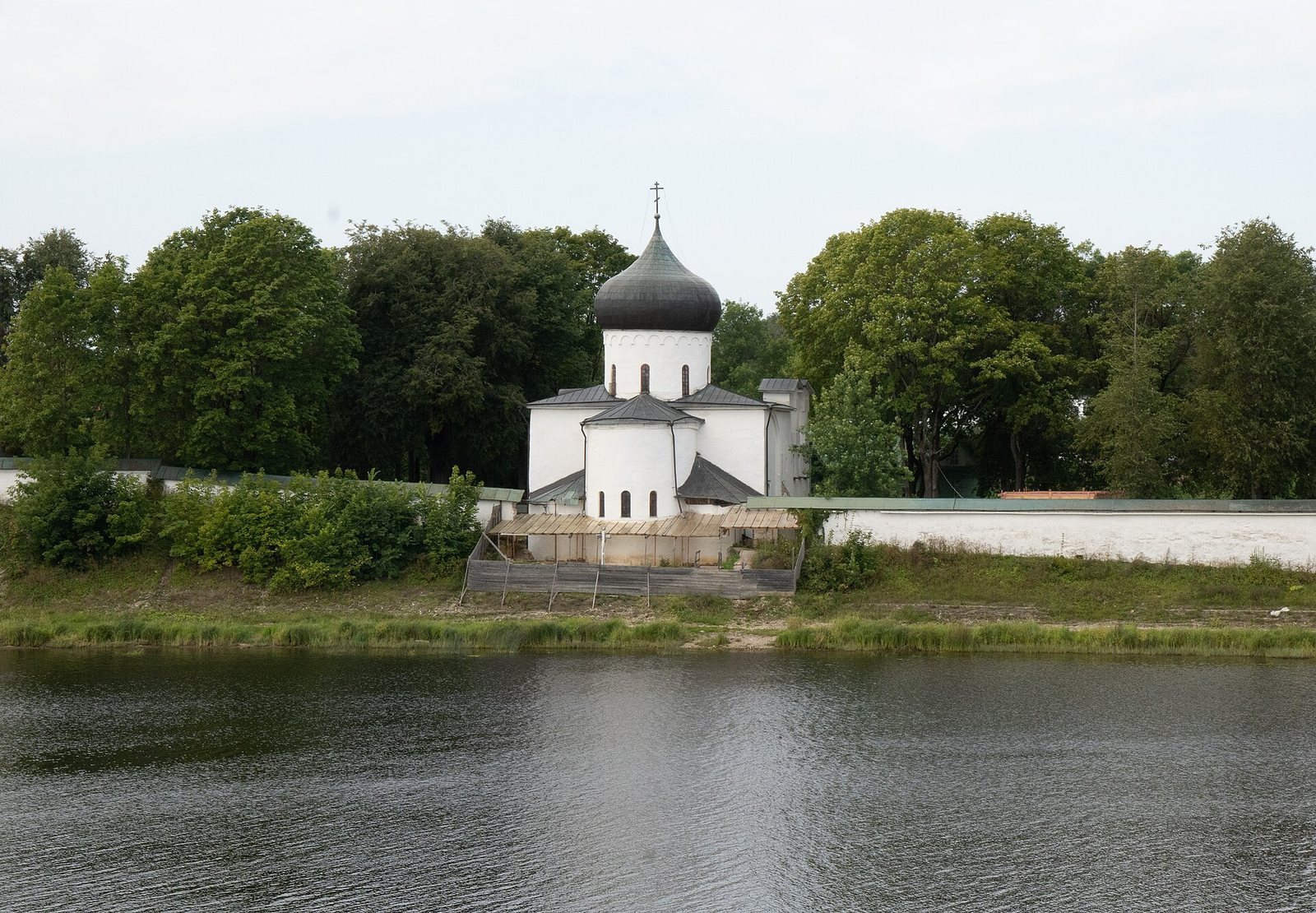
The Transfiguration Cathedral of Mirozh Monastery is an Orthodox church in Pskov, Russia. Built in the mid-12th century in the Pskov architectural tradition, it became the monastery’s principal church and is the oldest surviving church at Mirozh and in Pskov. Construction began in 1148–1149 and was completed by 1156. The church is dedicated to the Transfiguration of Christ, the revelation of his divine nature.
Construction and Medieval Changes
Archbishop Niphont of Novgorod, a Greek-born senior Orthodox leader, patronized the building and commissioned its fresco cycle. A Greek painter is thought to have headed the painting workshop, with artists from Pskov also contributing. Niphont pursued a pro-Greek policy that brought him into conflict with people in Kyiv and Novgorod. The cathedral’s distinctive design later served as a model for the Church of the Nativity of the Virgin at Snetogorsky Monastery.
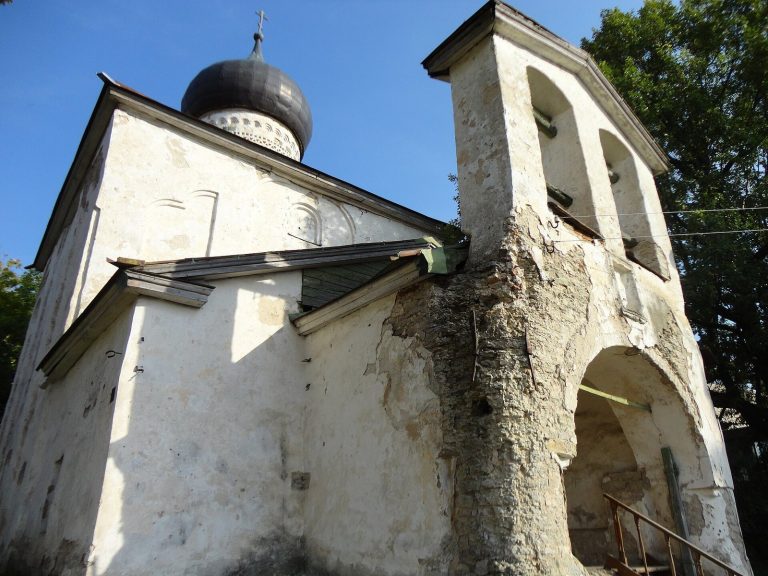
The building’s original design was changed by a later enlargement of its western part, probably in the 13th century. In the 17th century, the frescoes were covered with whitewash, which helped preserve them.
Uncovering and Repainting
Fragments of painting appeared in 1856 when whitewash fell during repair work. In the late 19th century, architectural researcher and restorer Vladimir Suslov and his students began uncovering paintings beneath plaster. Monastery clergy objected to the exposed worn paint and losses. The Holy Synod, the Russian Orthodox Church’s central governing body under the empire, removed Suslov from the work and halted its funding.
In 1896, provincial noble leader Nikolai Novosiltsev asked Konstantin Pobedonostsev, the Synod’s chief procurator and a senior government official, to seek permission for the work to continue. The emperor authorized restoration at the Synod’s expense on 2 August 1897. After professor Nikolai Pokrovsky presented a report on the paintings in 1898, the Pskov Archaeological Society urged their preservation without alteration. In 1900–1901, a group of Vladimir icon painters led by N. M. Safonov washed the old frescoes and repainted them in an ancient style, retaining the original subjects. The church was consecrated on 27 August 1902.
Further uncovering of the paintings began in the 1920s. The cathedral is now a museum and is not part of the Orthodox Church, although monastery brothers hold services there on certain feast days. It is a federally protected Russian cultural-heritage site and, since 2019, has been included in the UNESCO World Heritage listing “Churches of the Pskov School of Architecture” as part of the Mirozh Monastery ensemble.
Remains
Plan and Spatial Layout
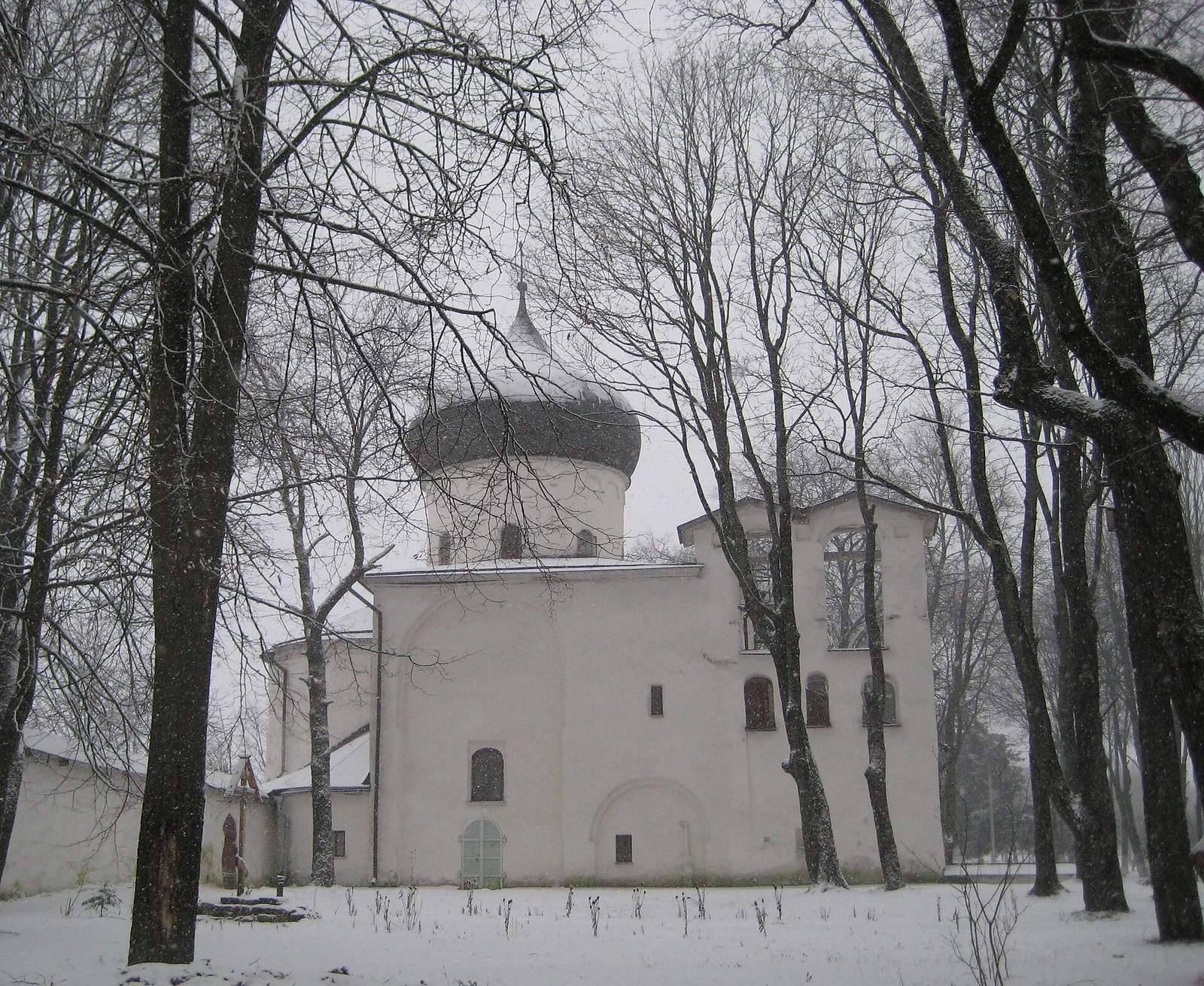
The cathedral is a cross-domed church, with interior bays arranged around a central dome, supported by four piers, or structural supports. Its central space forms an approximately equal-armed cross. The eastern arm ends in a semicircular altar apse, a curved sanctuary projection; two smaller apses occupy the eastern corners. Two rectangular compartments adjoin the western corners, and small passages connect these spaces to the central interior. The original exterior had a clearly defined cross-shaped outline, with additions above the western corners made during the initial construction.
Construction and Architectural Details
Local limestone and rubble made from tile form the main building materials. Some sections also contain roughly made archaic bricks, while the workmanship suggests that the masons were more accustomed to working dressed stone. In the later western enlargement, walls at the corners were removed, an upper level was added, and the western façade bays, arches, and vaults were raised to match the height of the others. The side apses remain lower than the central one. The cathedral is simpler than the monumental churches of contemporary Veliky Novgorod; its interior arrangement has been compared with Byzantine architecture and distinguished from that of Kyiv. The dome rests on a drum, the structure supporting it, which has narrow windows and a band of small arches. That band has been interpreted as reflecting Niphont’s personal taste. Icons have also been cited as grounds for proposing that a side stair tower may once have existed.
Fresco Cycle
Dome and Sanctuary
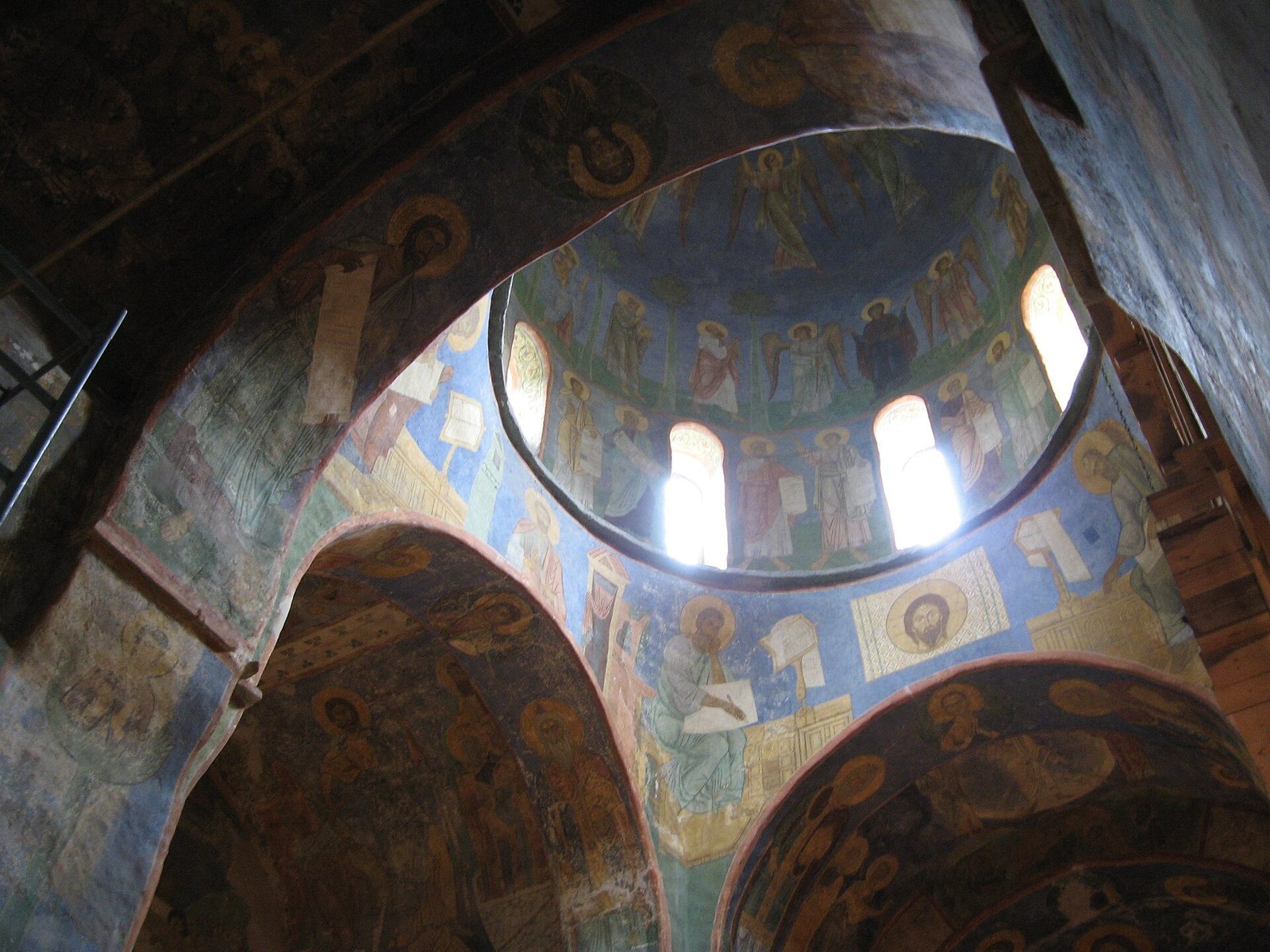
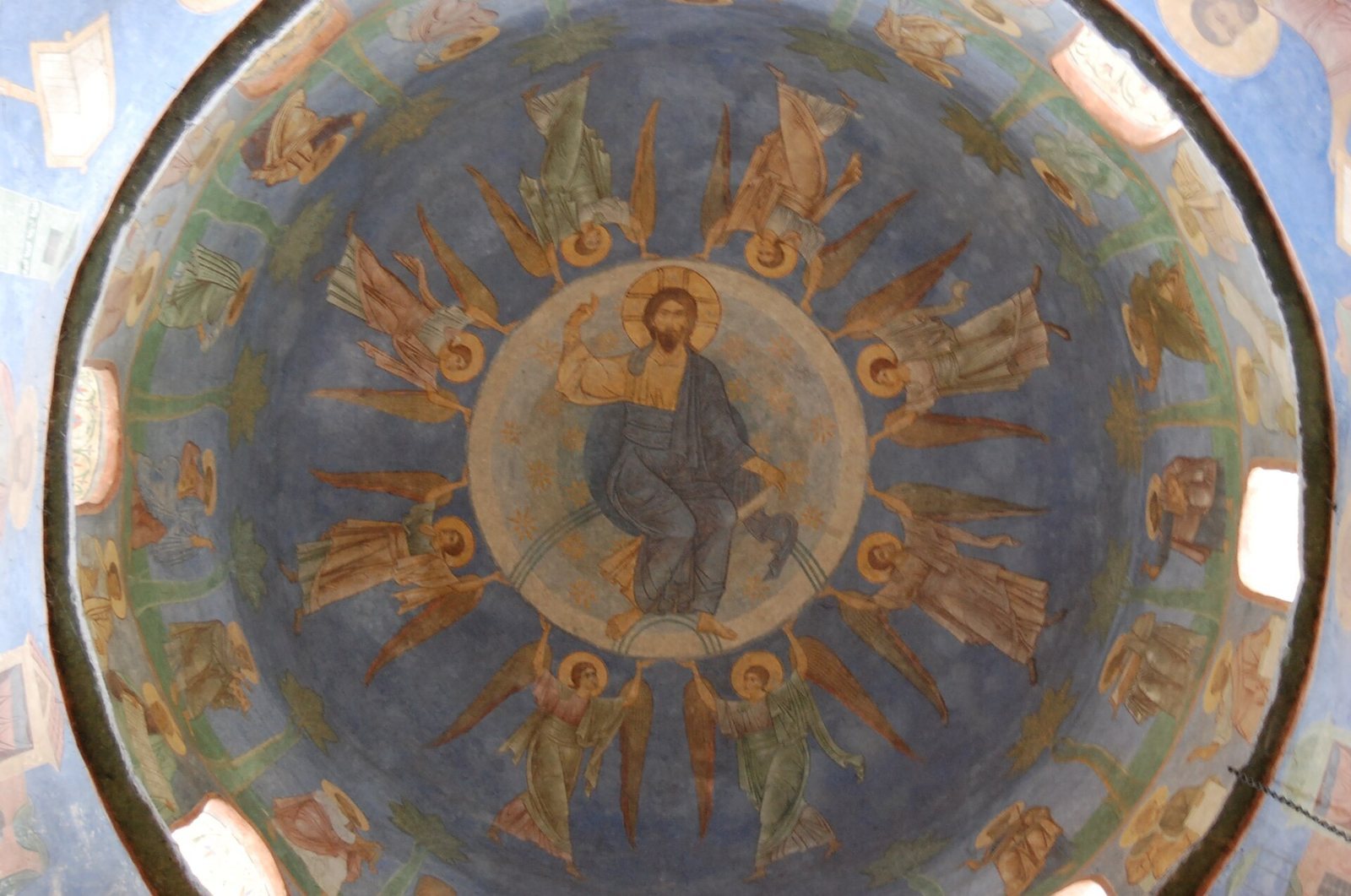
The frescoes cover nearly the whole interior, from the lower walls to the vaults, and date to the 1130s and 1140s. Their program centers on the union of divine and human nature in Christ and his redemptive sacrifice. The Ascension, Christ’s ascent to heaven, occupies the dome. In the curved half-dome above the apse, a Deesis shows Christ between the Virgin and John the Baptist in prayer; below it is the Eucharist, the Christian rite of communion. The Transfiguration appears on the altar vault.
Painted Scenes on the Walls and Vaults
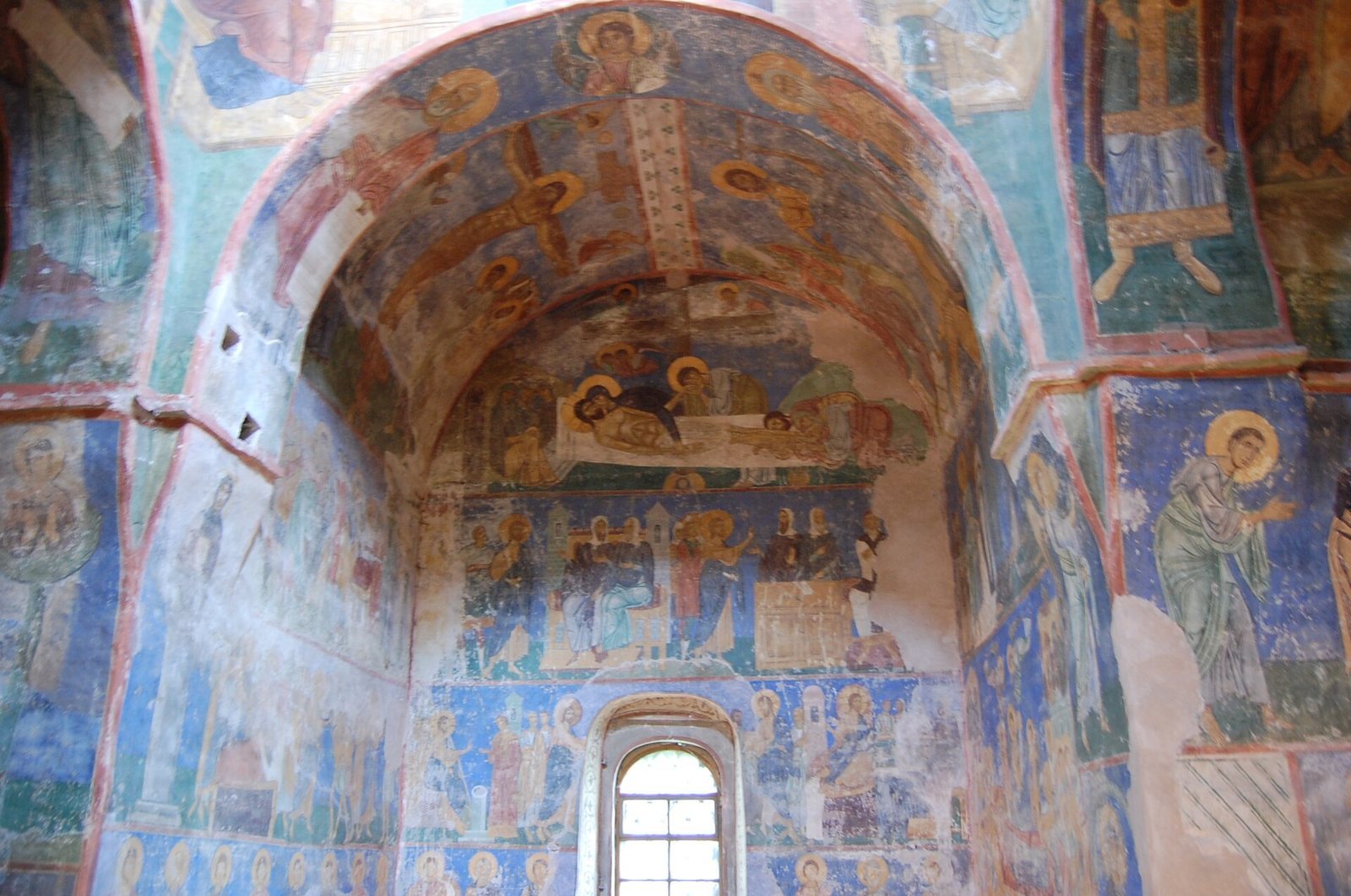
The Annunciation, the announcement to Mary that she would bear Jesus, is spread across the northeastern altar piers, with the angel Gabriel on one and the Virgin on the other. The north vault shows Christ’s Descent into Limbo, also called Hell. A major Lamentation scene fills the north wall. A large cross structures the composition: Christ lies on a white bed with his head slightly raised, the Virgin presses her face to his cheek, and John the Baptist holds Christ’s hand. Two disciples kneel at the foot of the bed, while the Holy Women stand at its head.
Biblical and Gospel episodes occupy three to five horizontal tiers, without vertical dividers, and proceed from right to left. The upper sequence runs from the Presentation in the Temple to the Descent into Hell. Lower tiers do not follow the same chronological order, and scenes of miracles fill available spaces. Frontal figures of martyrs, warriors, monastic saints, and stylites, ascetics who lived on pillars, appear on lower surfaces.
Figures, Style, and Condition
Figures identified in the paintings include the warrior saints Sergius and Bacchus; the healing saints Panteleimon, Cyrus, and John; the martyrs Romulus and Eudocia; the Persian saints Acepsimas, Aithalas, and Joseph; and the monastic saints Nikon and Euphrosynus. The style combines Byzantine and Pskov features and differs from Novgorodian fresco painting. Strong outlines define faces and clothing, while crisp highlights and carefully varied expressions contribute to a restrained, solemn effect. The treatment of garments has been linked to icon painting, and yellow sometimes takes the place of costly gold. The style has also been compared with Byzantine mosaics in Sicilian churches of the same century.
The cycle is exceptionally well preserved, though frequent flooding from the nearby Velikaya River destroyed its lowest band. Nearly half of the frescoes are covered by the repainting of 1901; the older paint is worn, and some areas have been lost.