Isartor: Munich’s Medieval City Gate
Site at a Glance
- Popularity
- High
- Country
- Germany
- Primary era
- Medieval
- Eras represented
- Medieval, Modern
- Civilizations
- Duchy of Bavaria, German, Holy Roman Empire, Kingdom of Bavaria
- Site type
- Military
- Remains
- Gate
On this page13 sections
History
Isartor is a medieval city gate in Munich, Germany, built in 1337 as the final gate in the city’s second line of walls. Munich expanded under Louis IV between 1285 and 1347 as its population grew, and the new fortifications defended the enlarged outer city. Isartor served as the eastern entrance, facing the Salt Road, a historic route used to transport salt.
Medieval and early modern use
The gate formed a prominent approach into Munich. Maximilian I entered through it in 1491, followed by Charles V in 1530 and Gustav II Adolf of Sweden in 1632. Louis IV, also known as Louis the Bavarian, was a Wittelsbach ruler who became Holy Roman Emperor. His victory over Frederick the Fair in 1322 later became central to the gate’s painted history.
Restoration and changing use
The Isartortheater, built beside the gate in 1811, presented musical plays combining songs and spoken dialogue, as well as spoken plays. By the early nineteenth century the gate was deteriorating, and Munich’s council had approved its demolition. In 1827, painter Peter von Cornelius appealed to King Ludwig I to save it, invoking a legend that Louis IV had entered Munich through the gate after his 1322 victory over Frederick the Fair. The story cannot describe an actual entry through Isartor, which was built fifteen years later. Cornelius proposed commemorating the victory with a fresco.
Ludwig I chose restoration rather than demolition. Work from 1833 to 1835 returned the gate to a historic form, and the restoration added heraldic images to the flank towers and historical frescoes above the entrances. The Isartor’s clock came from the central tower of the Karlstor, destroyed in a gunpowder explosion, and was installed on Isartor’s main tower in 1860. In 1888 the side passages were widened for trams; the horse-drawn Tal line began running through the gate on 16 June that year.
War damage and later conservation
The Isartortheater was destroyed during the Second World War, and the gate itself suffered severe damage, including from shelling in 1944. Repairs between 1946 and 1957 concentrated on securing the structure, while some damage received only temporary treatment. The gate’s main fresco was restored in 1881 by Paul Hermann Wagner and Gottfried Boss, with advice from chemist Keim and the use of mineral pigments. Further work followed in 1911, 1954, and 1971–72.
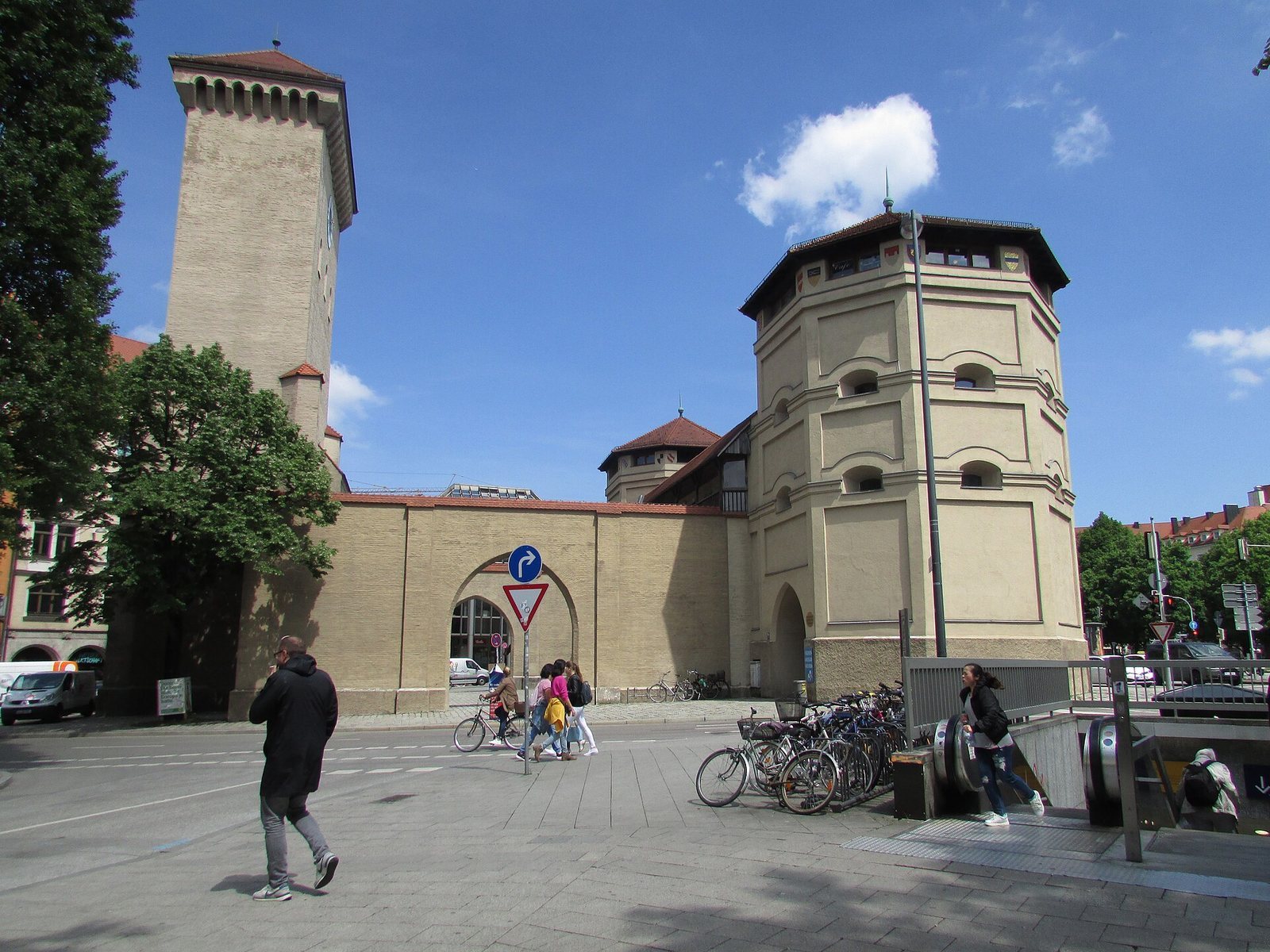
Since 1959, the flank towers have housed the Valentin-Karlstadt-Musäum, named for comedian and actor Karl Valentin and performer Liesl Karlstadt; a café also occupies a tower room. After tram traffic through the gate ended, restoration in 1971–72 emphasized its medieval appearance and revised some nineteenth-century decisions. The clock installation was removed and not replaced at that time. A large clock returned to the main tower on 4 November 2005, with one dial designed to run in reverse.
Remains
Layout and construction
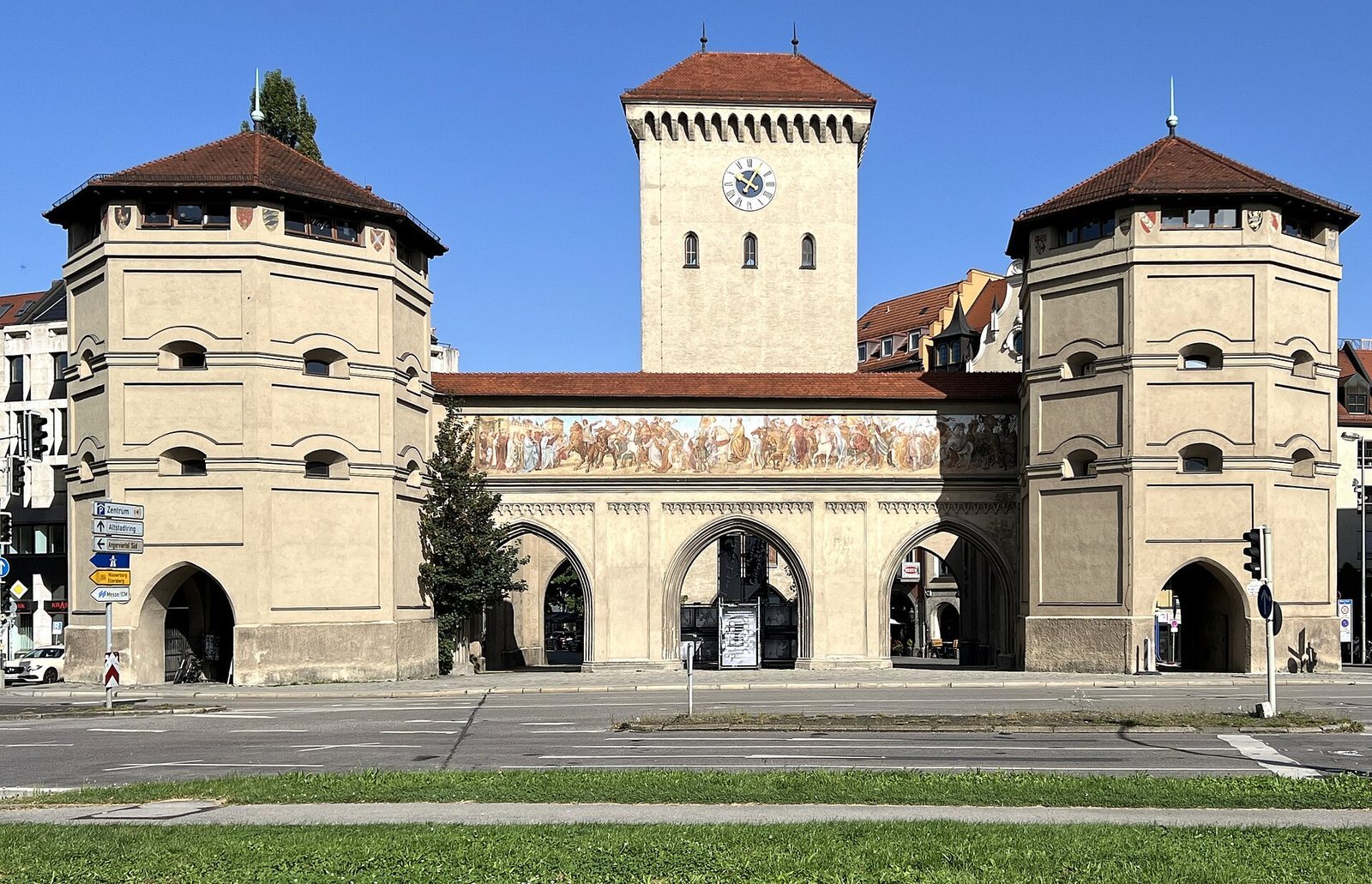
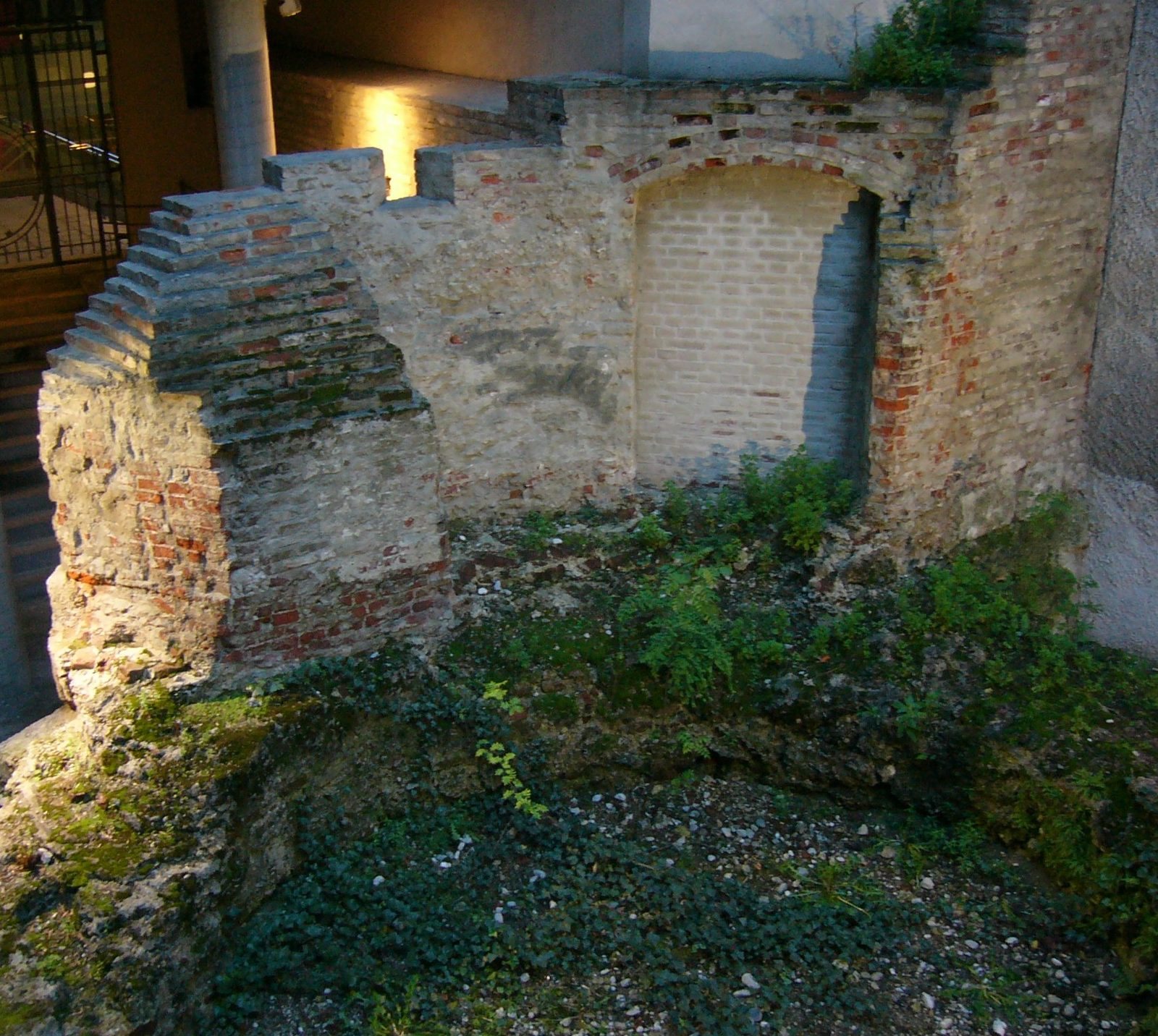
The gate stands at the eastern end of Tal, on the boundary between Munich’s Graggenauer and Angerviertel districts. It separates the historic centre from Isarvorstadt and Lehel, and the Isar River lies about 300 metres away. Isartorplatz is in front of the gate. The structure is almost completely preserved, and it is the only Munich city gate that retains its main tower.
Central tower and courtyard
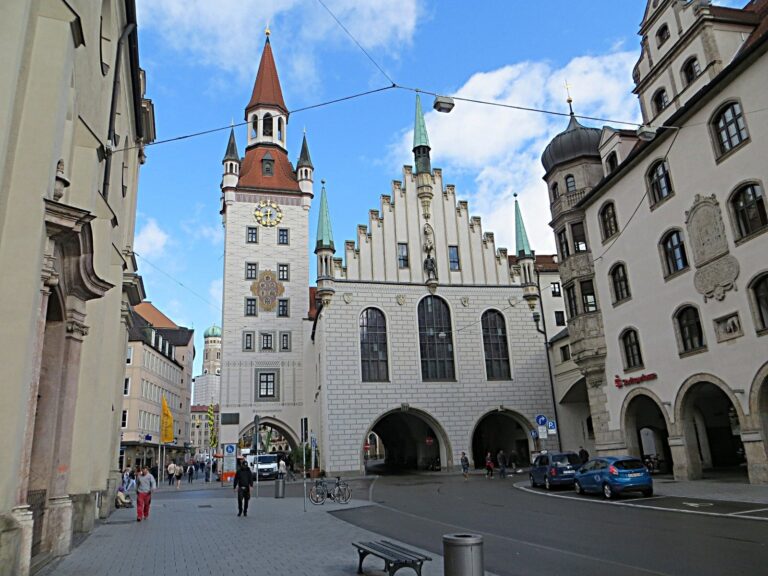
The central tower, originally about 40 metres high, has a quadrangular plan and rises above the rest of the gate. Two octagonal flank towers were added later when the outer defensive wall was built, forming a barbican, an outer defensive work protecting a gate. Walls link the three towers around a courtyard. The surviving structure’s dimensions and appearance remain close to those of the original gate.
Outer wall and entrances
The wall between the flank towers now has three entrances of equal size. They replaced an earlier arrangement with a large central arch and two smaller side openings. A balustrade runs along the eastern part of the wall facing the courtyard.
Painted decoration and clock
Historical fresco
Bernhard von Neher’s main fresco occupies the outer face of the inner wall above the entrances. It depicts a procession celebrating Louis IV’s victory over Frederick the Fair in 1322. Senior clergy and Munich officials appear at the left, followed by a mounted herald facing musicians and women and girls scattering flowers. An imperial banner-bearer leads Louis IV’s horse, with nobles and rulers riding behind. In the foreground are the defeated Frederick and members of his retinue; at the right, Munich bakers carry the captured king’s sword and helmet as trophies.
Heraldic images and Crucifixion fresco
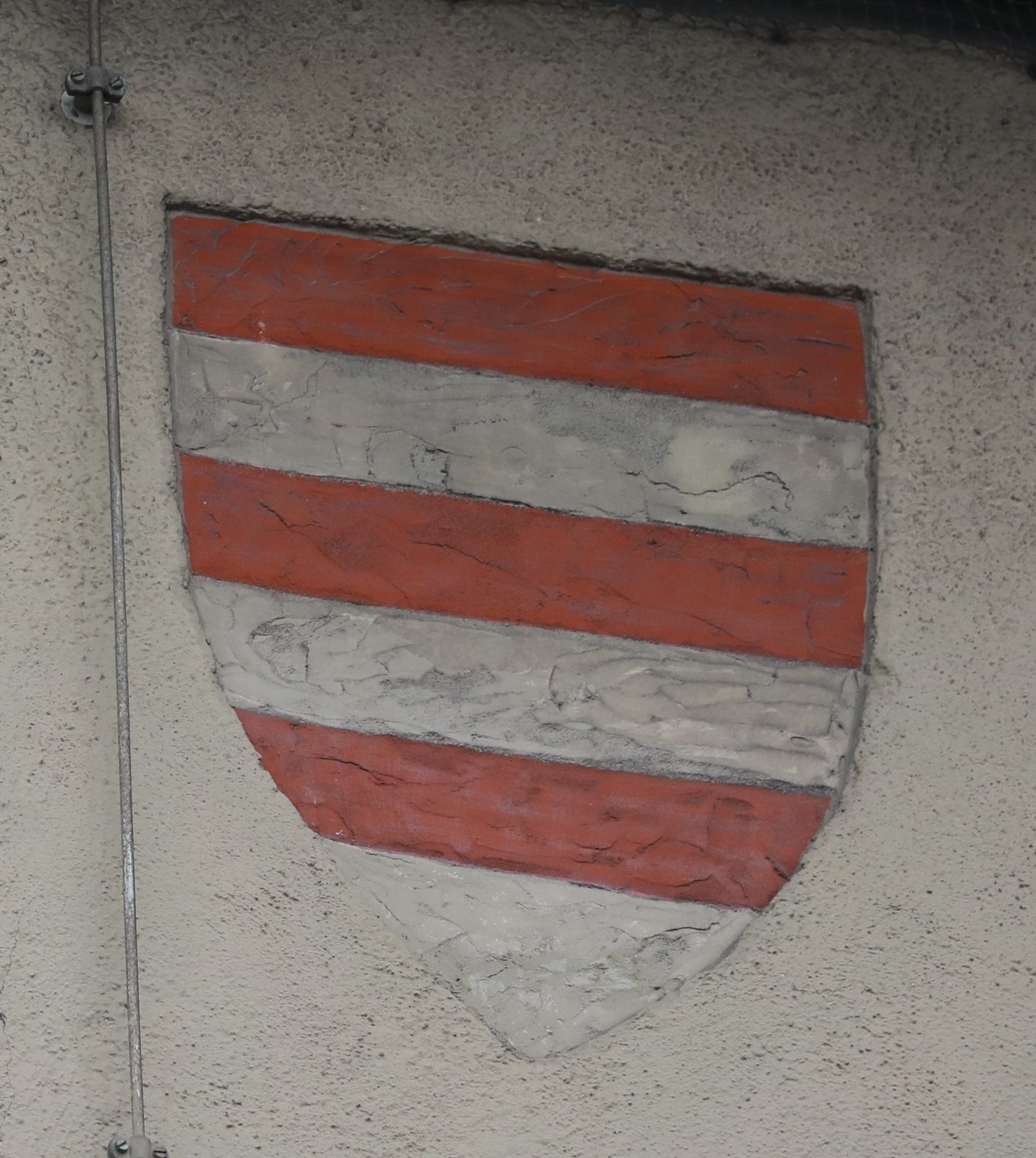
Painted coats of arms on the flank towers represent Louis IV’s allies in the 1322 battle. They were arranged in eight groups of three, making 48 emblems. In the postwar restoration, the central emblem in each group was replaced by a window. Fourteen families or places were probably represented by arms that are now lost: Kürn, Guteneck, Nabburg, Uttling, Eggmühl, Lengfeld, Raidenbuch, Pfeffenhausen, Hohenrain, Moosbach, Reicheneck, Lentersheim, Sparneck, and Rosenberg. A separate fresco showing the Crucifixion group is on the southeastern side of a tower.
Clock
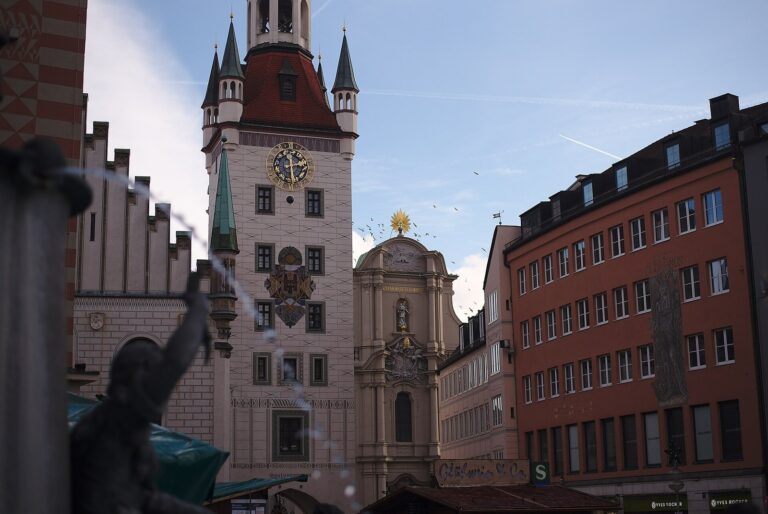
The main tower’s clock has two faces. Its west-facing dial is mirrored, and its hands move in reverse as an allusion to a saying attributed to West German chancellor Willy Brandt: “In Bavaria, clocks run differently.” The east-facing dial runs clockwise in the usual direction.
Other surviving city-wall remains
Construction of the Stadtsparkasse München administrative centre north of the gate uncovered city-wall remains and the foundations of the Prinzessturm in the mid-1980s. On Marienstraße, sections of the city wall and remnants of the Lueg ins Land watchtower are incorporated into houses. Some of those houses survived the 1944 air raids.