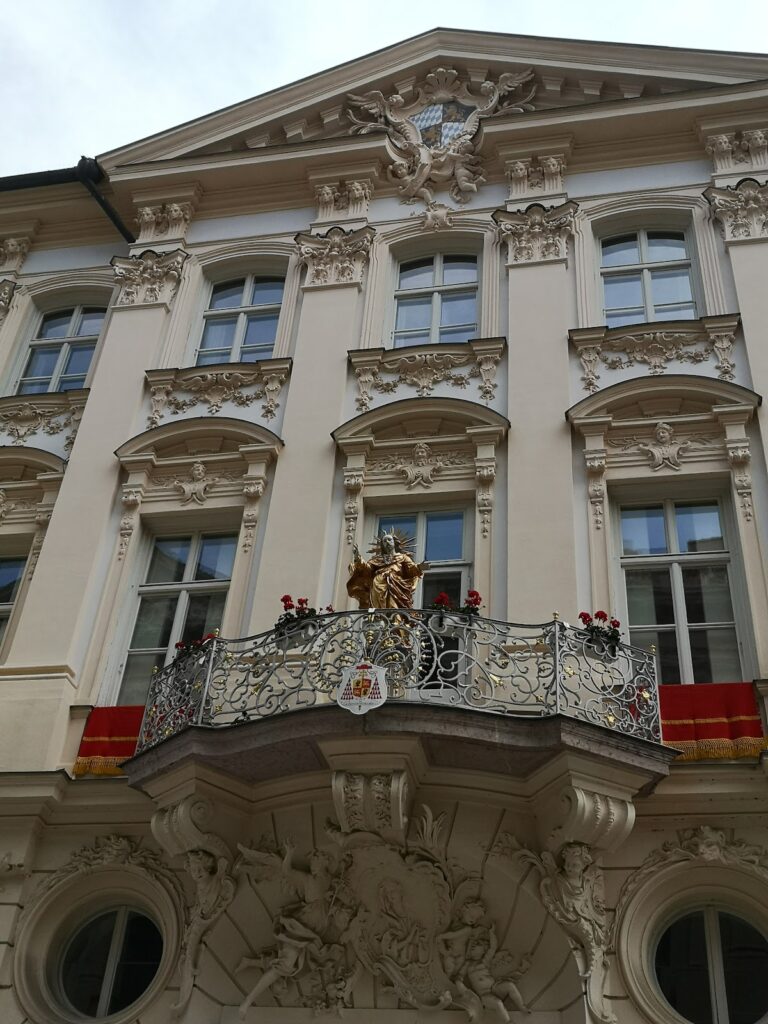
Alter Hof: A Medieval Wittelsbach Ducal and Imperial Residence in Munich



Site at a Glance
- Rating
- 4.4
- Popularity
- Low
- Country
- Germany
- Primary era
- Medieval
- External website
- Open
- Eras represented
- Medieval, Early Modern, Modern
- Civilizations
- Duchy of Bavaria, Electorate of Bavaria, German, Holy Roman Empire
- Site type
- Domestic
- Remains
- Castle
On this page21 sections
History
Alter Hof is a medieval Wittelsbach castle complex in Munich, Germany, which originated in the late twelfth century as a ducal urban castle. Archaeological evidence indicates that a castle already occupied the site, possibly founded by Otto of Wittelsbach and probably expanded by his son Ludwig the Kelheimer. The complex first appears in written records in 1319 and became one of the principal residences of the Wittelsbach dynasty, the ruling house of Bavaria.
Origins and ducal residence
From the thirteenth through the fifteenth century, Alter Hof served as a residence for the Wittelsbach rulers. At first it was one of several castles used during a period when rulers moved between residences. After the first division of Bavaria in 1255, Duke Ludwig II used Alter Hof more intensively. It then became the residence of the dukes of Upper Bavaria and later of the rulers of Bavaria as a whole.
Ludwig IV of Bavaria became the first Wittelsbach ruler to attain the Roman-German kingship in 1314 and was crowned Holy Roman Emperor in 1328. He chose Alter Hof as a fixed imperial residence, although he continued to travel frequently throughout the Holy Roman Empire, the political realm ruled by the emperor and its associated princes. The Munich town fire of 1327 affected the castle, and the imperial regalia, the ceremonial objects associated with imperial authority, were kept in the St. Lorenz Chapel until 1350.
Fortification and the rise of the Neuveste
During the fourteenth century, Munich’s expanding fortifications brought Alter Hof into the city’s protected core. Unrest in Munich prompted the Wittelsbach dukes to establish a replacement residence, the Neuveste, in 1385. That complex later developed into the Munich Residenz. Although Alter Hof continued to have a residential role, Duke William IV transferred the ducal residence there permanently during the first half of the sixteenth century.
Alter Hof was nevertheless developed extensively in the second half of the fifteenth century, especially under Duke Sigismund. Sigismund lived there near the end of the century and commissioned further changes, including painted lozenge patterns in the courtyard. These works belonged to the continued development of the complex as a princely residence even after the Neuveste had become the principal seat.
Administrative use and later alterations
After losing its residential function, Alter Hof remained an administrative center. The complex housed the Hofkammer, which managed court finances, as well as the court library, brewhouse administration, brewhouse, court council and chancery. Ecclesiastical and war councils, the inner and outer archives, the rent office, the tax-cadastre bureau, and the principal state treasury also occupied parts of the site. Sections of the Zwingerstock accommodated court guests and members of the ducal family who were not involved in government.
The St. Lorenz Chapel closed in 1806 and was demolished in 1816. The Lorenzistock was then erected on its site along the Hofgraben between 1816 and 1819. The gate tower was demolished at the beginning of the nineteenth century and later rebuilt, while the painted composition above its archway was lost and replaced. The Brunnenstock began as a building for the brewhouse and its administration in the first half of the seventeenth century. In 1831 and 1832, Georg Friedrich Ziebland replaced it on the old foundations with a building for the tax-cadastre commission.
War damage and modern reconstruction
Alter Hof was partially destroyed during the Second World War. After 1950, the north and east sides were initially rebuilt using simplified methods. The Burgstock and Zwingerstock, however, retained older roof structures and numerous historical details. The Free State of Bavaria later undertook comprehensive restoration of those two wings.
The postwar Lorenzistock, Pfisterstock, and Brunnenstock were demolished and rebuilt in 2001, with related redevelopment completed during the 2000s. Private investors participated in the interventions, which provoked strong public controversy. Alter Hof received the City of Munich’s facade prize in 2004, and the rebuilt structures received the city’s award for the care of the urban appearance in 2008. The complex is protected as a listed architectural monument and is also registered as an archaeological monument containing evidence from the High and Late Middle Ages and the early modern period.
Remains
Alter Hof consists of five principal wings or building sections: the Burgstock, Zwingerstock, Lorenzistock, Pfisterstock, and Brunnenstock. A northern gateway connects the complex with the Alte Münze, which formerly served the ducal art collection and as a stable. The former St. Lorenz Chapel stood along the north side as the castle chapel. Older roof structures and many historical details survive especially in the south and west wings, while the north and east wings were substantially rebuilt after wartime destruction and during the redevelopment of the early twenty-first century.
Castle enclosure and entrances
Early walls and ditch
The earliest castle was enclosed by a brick wall approximately 1.80 metres thick and an encircling ditch. Within this boundary were probably several single-storey timber buildings, each about 4 metres wide. The earliest entrance was probably on the west side, before the later southern access altered the arrangement of the complex.
Southern gate
A southern entrance was probably added after 1255 and later supplemented and replaced the western entrance. Excavation beneath the present southern gate tower revealed a gate structure dating from around 1255. The tower itself was demolished at the beginning of the nineteenth century and subsequently rebuilt. Its former painted composition above the archway was replaced after being lost.
Residential and ceremonial buildings
Early stone residence
The first identifiable stone residential buildings date from around 1300. A residential structure in the southeastern corner of the enclosed castle area survives with later additions. Vaults were inserted into it during the second half of the fifteenth century, when Alter Hof was being developed extensively as a princely residence.
St. Lorenz Chapel
St. Lorenz Chapel stood beside the north wall and was replaced by a larger church around 1324. An inscription records that rebuilding, while a founder’s panel dated 1324 shows Emperor Ludwig, his second wife Margaret of Holland, and the enthroned Virgin and Child. The panel is now held by the Bavarian National Museum. The chapel closed in 1806 and its site was occupied by the Lorenzistock from 1816 to 1819.
Gothic bay windows
The Burgstock contains a Gothic bay window popularly called the Monkey Tower. A legend claims that a monkey from the ducal menagerie carried away the young Ludwig of Bavaria and returned him only after prolonged persuasion. The bay window itself probably dates from the middle of the fifteenth century, later than the period associated with the story.
On the western Burgstock, another Gothic bay window carries two rows of five coats of arms linked to Wittelsbach genealogy. Most are paired with the Bavarian-Palatine arms. Duke Sigismund probably commissioned the display, reflecting his particular interest in heraldry. Two unidentified arms were renewed as the Bavarian-Palatine arms and the arms of the Free State of Bavaria. The Polish arms beneath the double-headed imperial eagle probably resulted from confusion with the arms of Tyrol.
Fifteenth-century expansion
Roof structures and mural decoration
The western side of the complex, particularly the Zwingerstock, retains large roof structures from the fifteenth-century expansion. The southern Burgstock preserves a polygonal bay window. Around 1465, a monumental mural cycle depicting Wittelsbach ancestors was installed inside the complex. Part of the cycle is now in the Bavarian National Museum. A separate fresco made after 1460 for an ancestral hall showed the ancestors of the Wittelsbach dukes together with their coats of arms.
Gothic cellar
The eastern Burgstock contains a Gothic cellar dating from around 1300. Its vault was added during the second half of the fifteenth century. The cellar now houses the Münchner Kaiserburg exhibition, which has occupied part of the eastern Burgstock since May 2007.
Renaissance and nineteenth-century wings
Pfisterstock
The Pfisterstock was built in 1591 and 1592. Its decorative gables reflect Renaissance architecture, which revived classical forms in Europe, and the building is attributed to the architect Wilhelm Egkl. The wing extends around the corner and joins the Brunnenstock on the east side of Alter Hof. In the modern reconstruction, the Pfisterstock contains offices and luxury apartments.
Lorenzistock
The Lorenzistock occupies the site of the former chapel and is separated from the Pfisterstock by a gateway. The nineteenth-century building was remodelled according to designs by Peter Kulka. Along with the rebuilt Pfisterstock and Brunnenstock, it now contains offices and luxury apartments.
Brunnenstock
The Brunnenstock was rebuilt according to designs by Auer+Weber+Assoziierte. Its earlier form had served the brewhouse and brewhouse administration, while Ziebland’s 1831 to 1832 building accommodated the tax-cadastre commission. The present structure belongs to the reconstruction and redevelopment carried out in the early twenty-first century.
Courtyard and external features
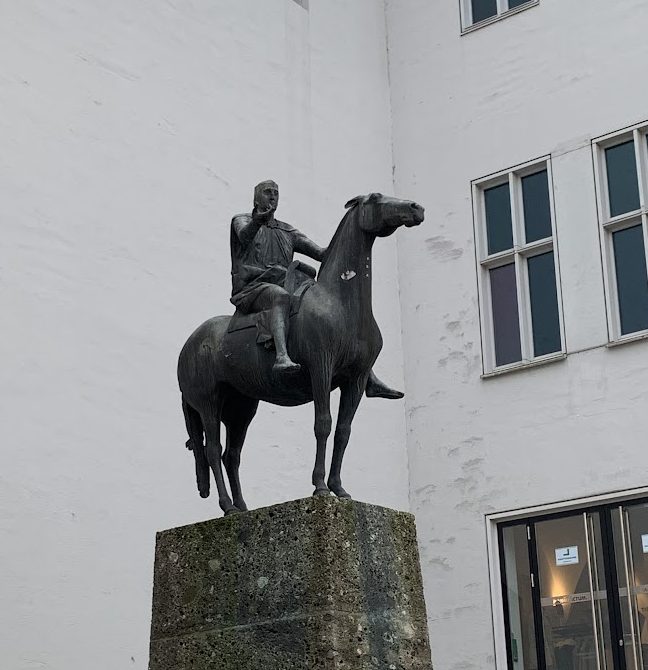
A courtyard fountain installed in 1785 survives as an early-classical feature. Behind the northern gateway, outside the buildings, stands a modern equestrian monument to Ludwig of Bavaria by the sculptor Hans Wimmer. The eastern building on Sparkassenstrasse has housed a post office since 2006, while the Zwingerstock contains a Munich department store operated by Manufactum.