Buštěhrad Chateau: A Baroque Residence in Czechia
Site at a Glance
- Popularity
- Medium
- Country
- Czechia
- Primary era
- Early Modern
- Eras represented
- Early Modern, Modern
- Civilizations
- Austria-Hungary, Austrian Empire, Habsburg, Habsburg Austria, Holy Roman Empire, Kingdom of Bohemia
- Site type
- Domestic
- Remains
- Elite Residence
On this page7 sections
History
Construction and Baroque remodeling
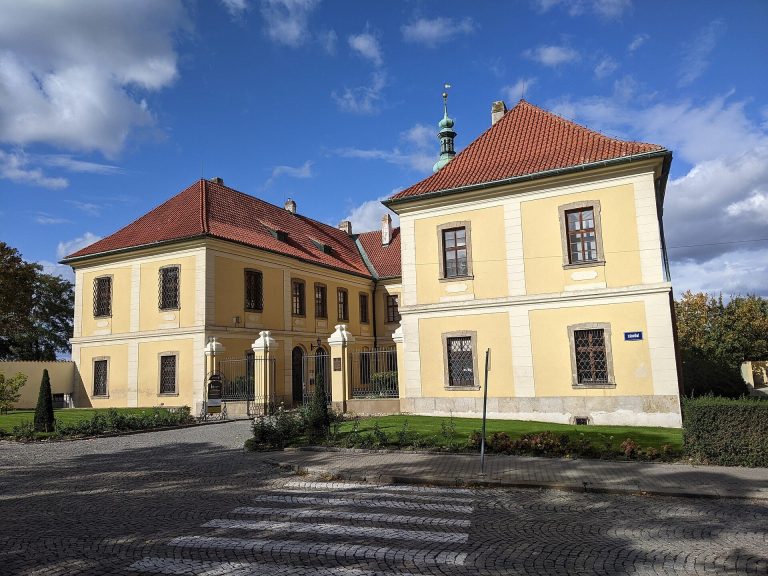
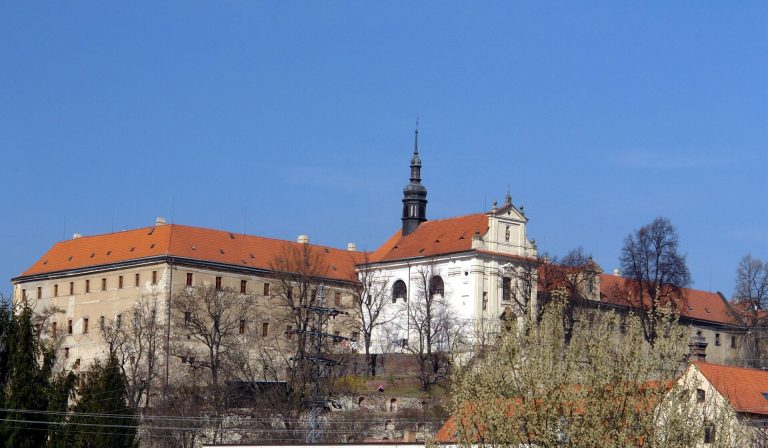
Buštěhrad Chateau, in Czechia, is a Baroque residence begun in 1699. Anna Maria Francisca, Princess of Saxe-Lauenburg, Countess of Neuburg, and Grand Duchess of Tuscany, promoted its construction, which took place from 1699 to 1705 on an existing manorial farmyard east of a partly ruined castle complex. Prague builder Jindřich Klingenleitner directed the work.
A major remodeling followed in 1747–1754, during the period of Clement Francis of Bavaria, a member of Bavaria’s ruling Wittelsbach dynasty. Prague builder František Keymel carried out the work to designs by Kilián Ignác Dientzenhofer, active at Buštěhrad in 1747–1748, and Anselm Lurago, whose work there dates to 1751–1753. The building was extended on both sides.
Residence and changing uses
A rebuilding in 1814–1816 added west and east wings and gave the chateau approximately its present form. From 1832 to 1836, the exiled French king Charles X used it as his summer residence. The 1830 revolution had ended his reign and led to his exile. French geologist and paleontologist Joachim Barrande worked at the chateau as a tutor during this period.
In 1847, the chateau became part of an extensive complex of imperial estates. In 1918 it passed to the Czechoslovak Republic as part of a state estate. Its subsequent uses included a district orphanage, offices for a state farm and brewery, employee housing, an archive, schools, a kindergarten, a library, a music school, and a gendarmerie school. A gendarmerie was a state police force organized along military lines.
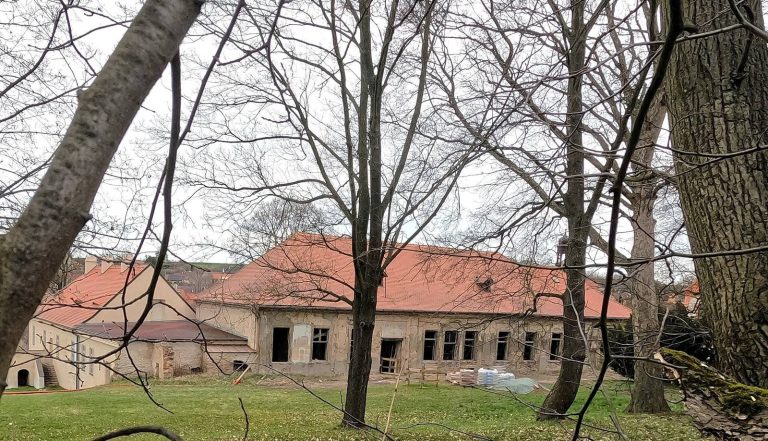
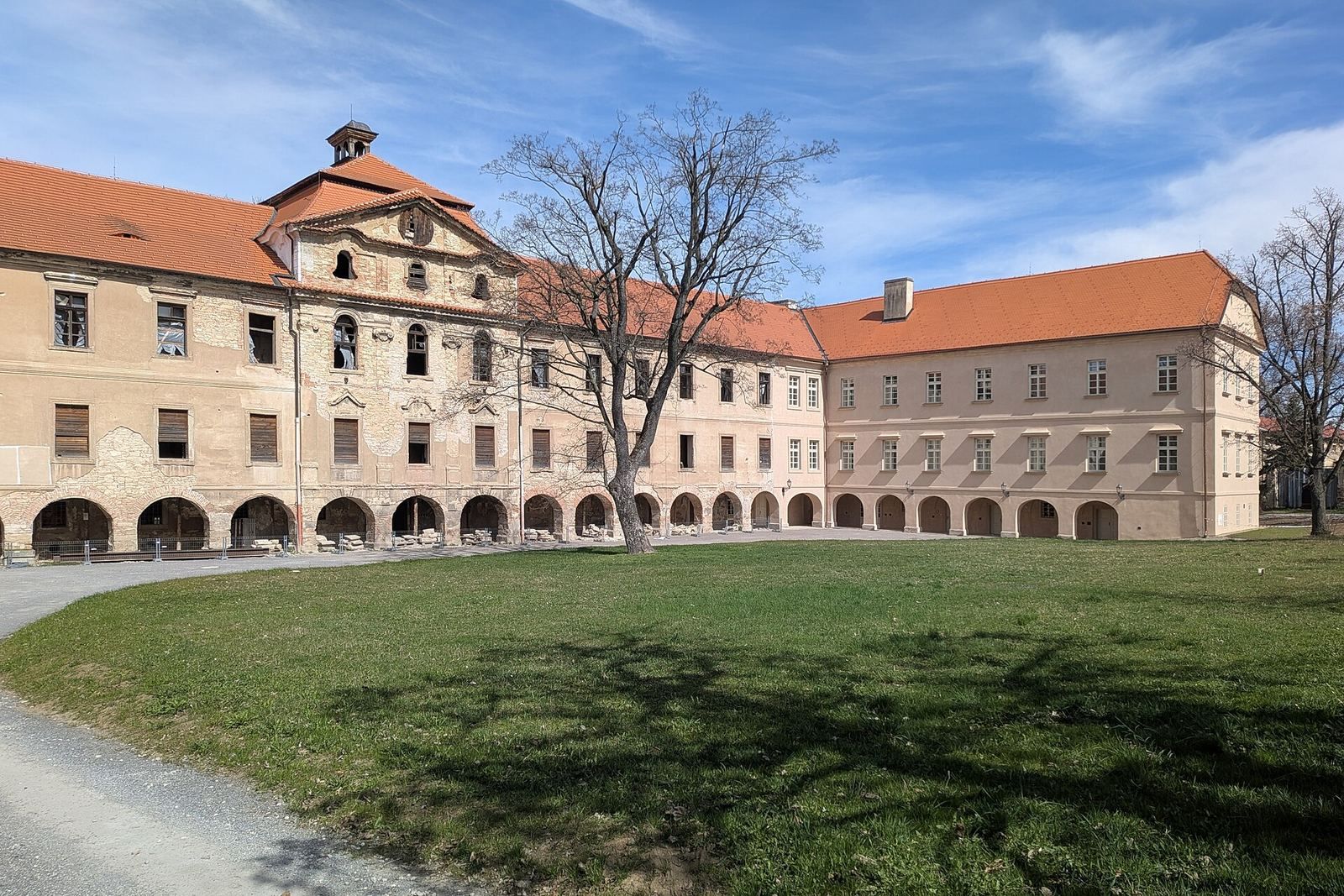
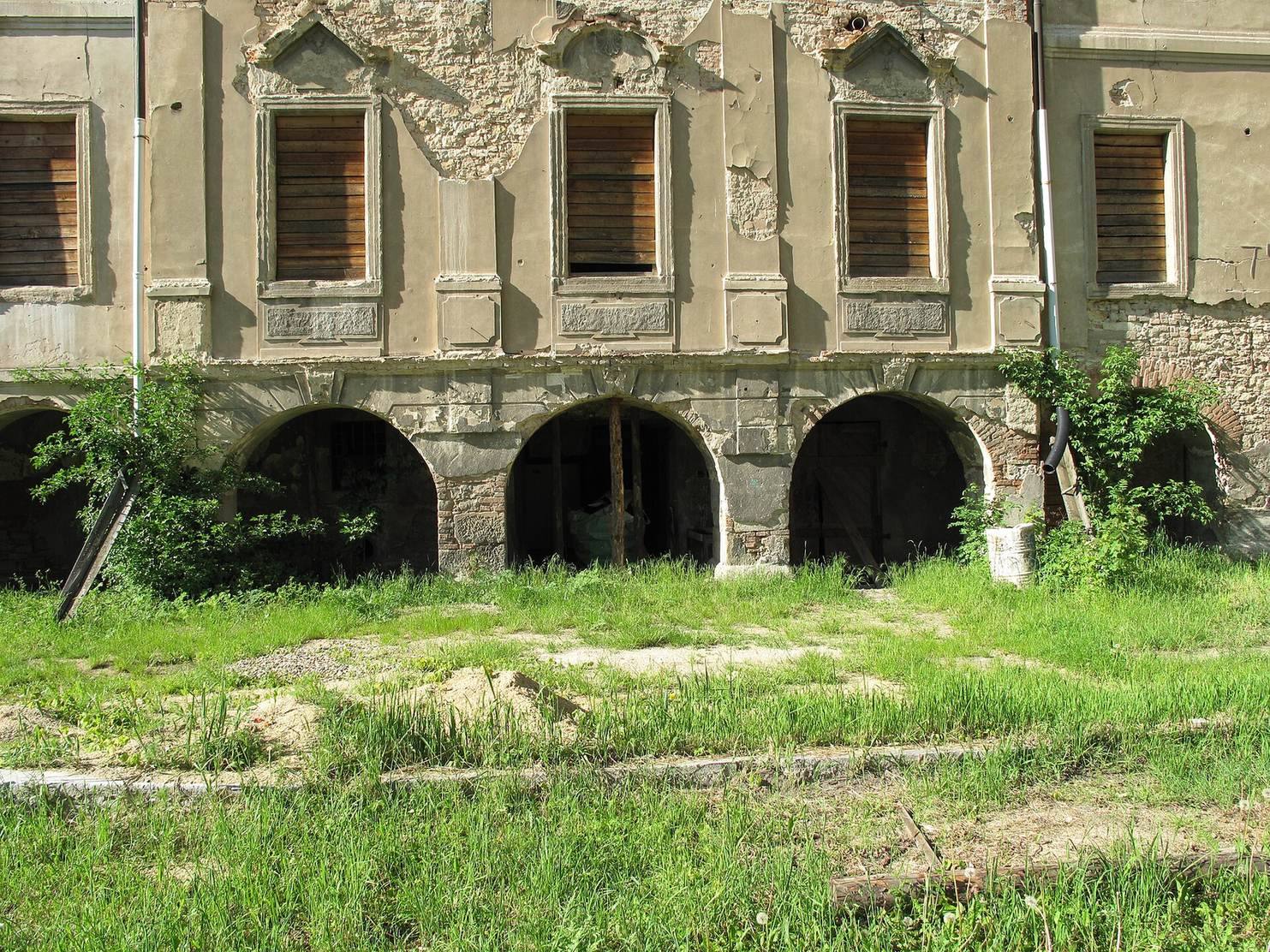
During the Second World War, the Wehrmacht, the armed forces of Nazi Germany, used the building. It returned to state ownership after 1945 and continued to accommodate various activities, while the chateau and park deteriorated. In the late 1980s it passed to the State Library of Czechoslovakia. Moravia Kontakt of Hodonín bought it in 1992, followed by Petersburg in 1995; deterioration continued during the latter company’s ownership.
The town of Buštěhrad bought the derelict chateau at public auction in 2003, after Petersburg went bankrupt. The town reconstructed the roof and stabilized the structure. In 2010, the Central Bohemian Region proposed taking ownership and renovating the building as a cultural and social center. The renovation project was canceled in May 2012, and the chateau was then intended to return to the town.
Remains
Architectural layout
Ranges and garden
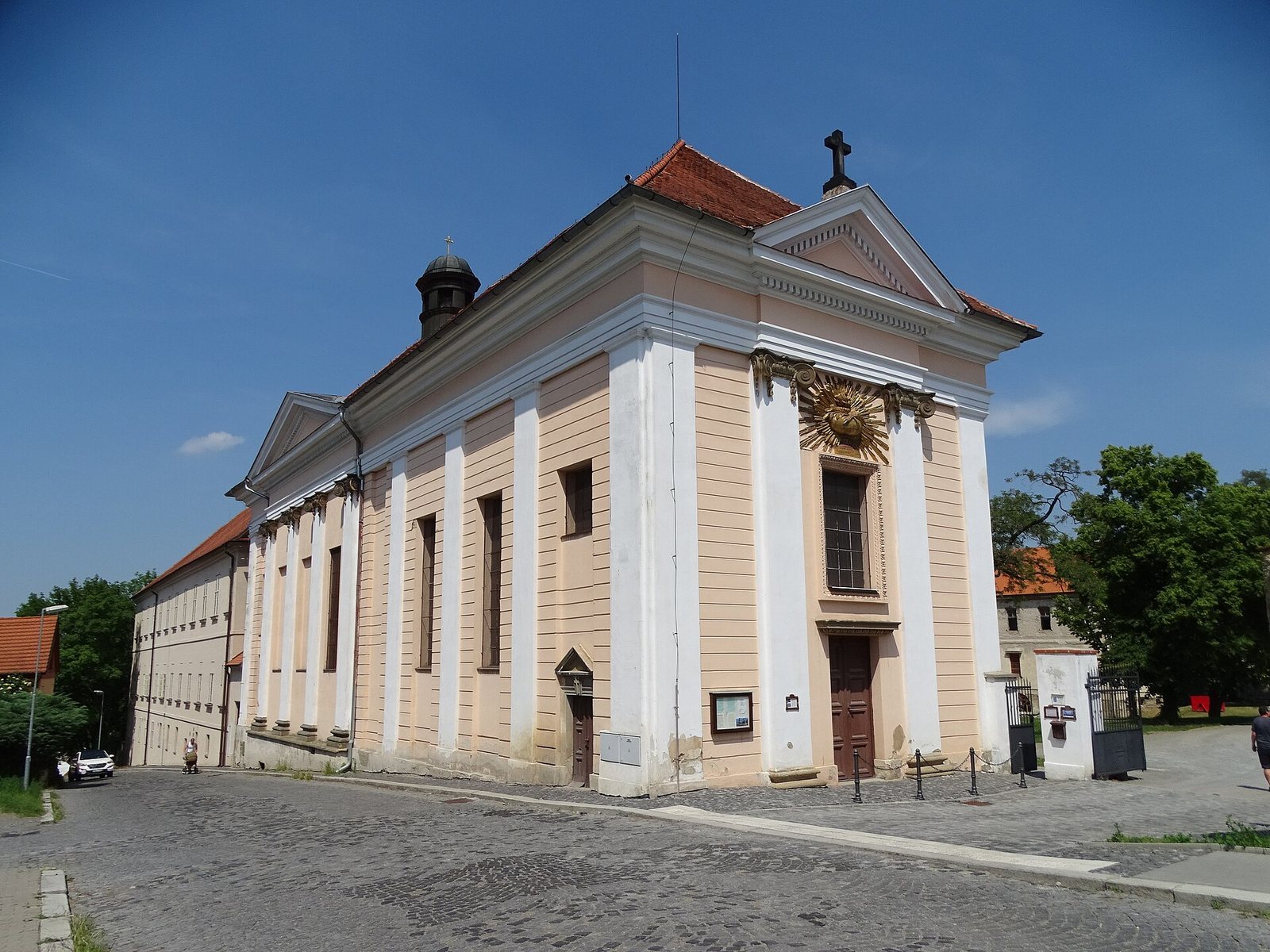
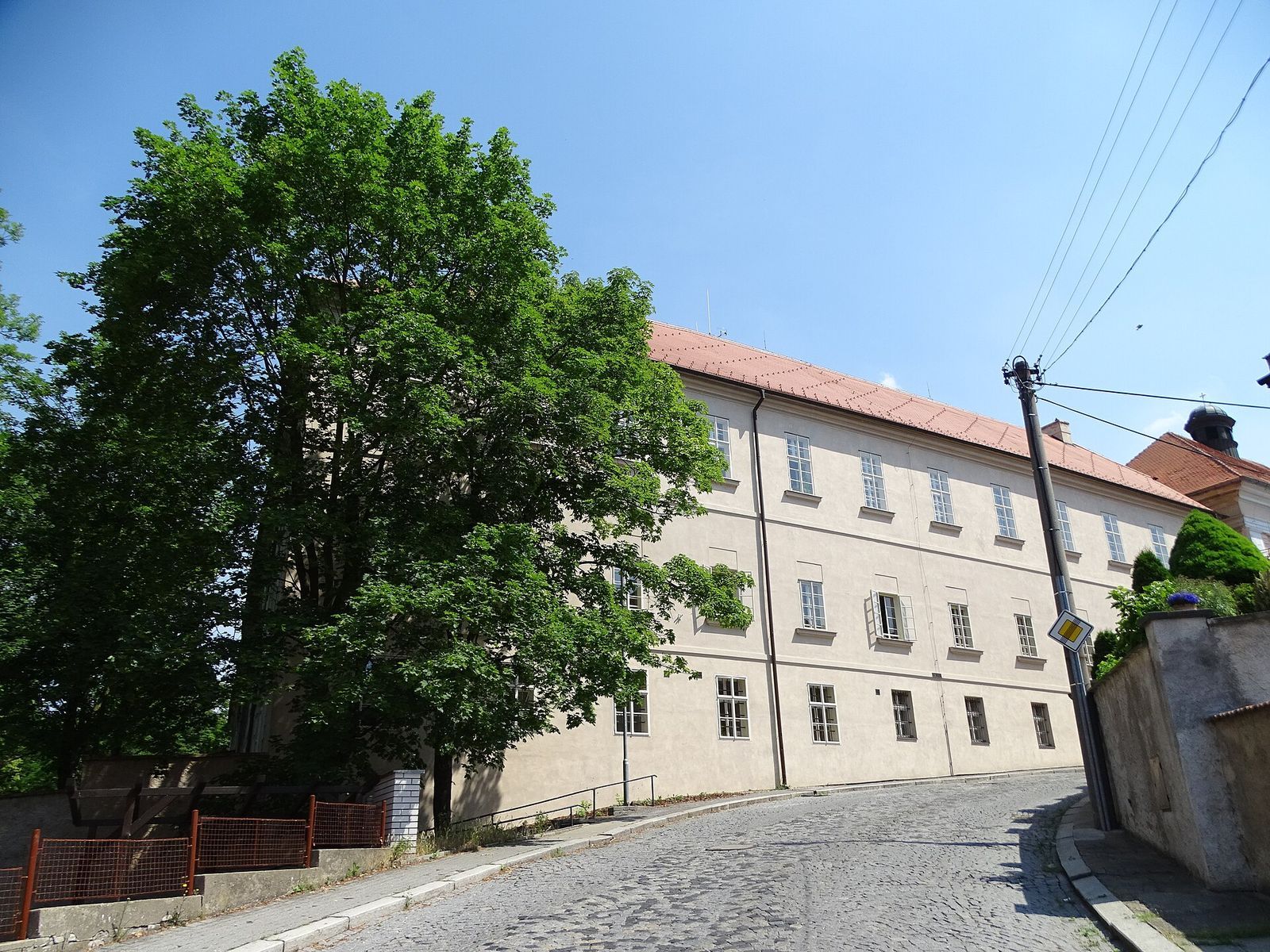
The Baroque complex is formed by a central range and west and east wings, arranged in an approximately horseshoe-shaped plan that opens to the south. The earliest building forms the central part of the present middle range. A chateau garden lies north of the main range.
Chapel of the Exaltation of the Holy Cross
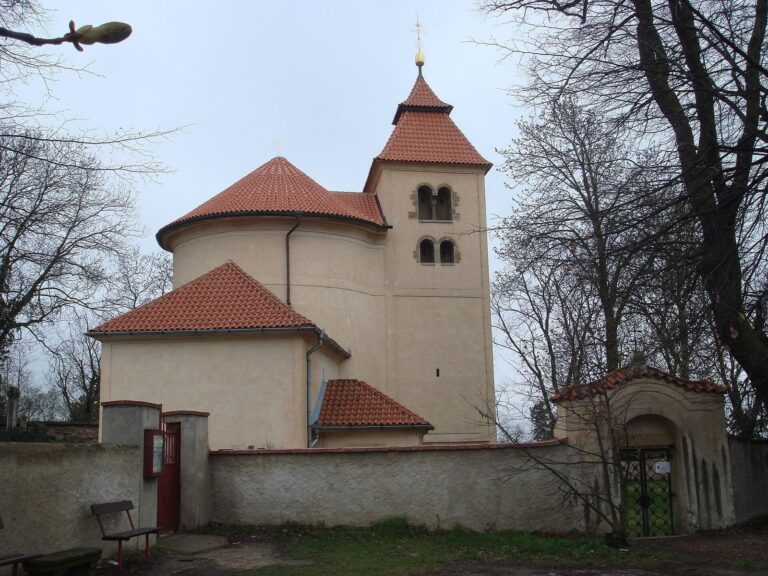
The west wing contains the Chapel of the Exaltation of the Holy Cross at the chateau’s southwest corner. The chapel is in the Empire style, a neoclassical style associated with the Napoleonic era. It was enlarged by a southward extension in 1897, and its west wall contains an Empire-style doorway.