Mileševa Monastery: A Serbian Orthodox Royal Foundation
Site at a Glance
- Popularity
- Very High
- Country
- Serbia
- Primary era
- Medieval
- Eras represented
- Medieval, Early Modern, Modern
- Civilizations
- Ottoman, Serbian
- Site type
- Religious
- Remains
- Monastery
On this page18 sections
History
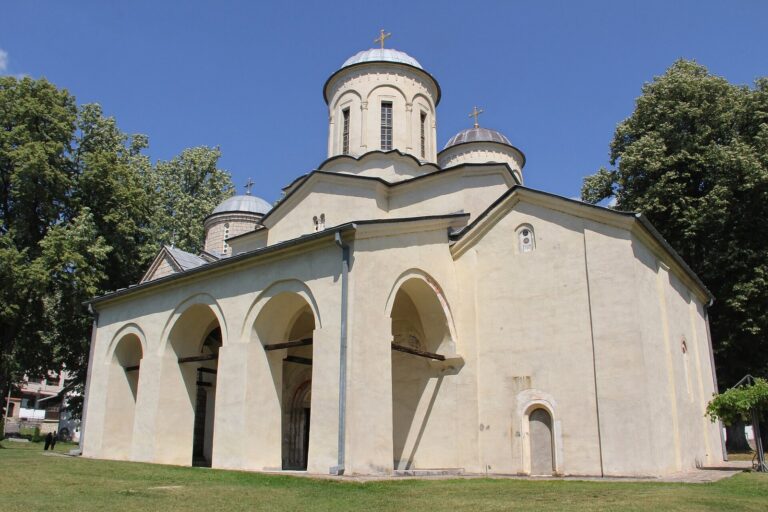
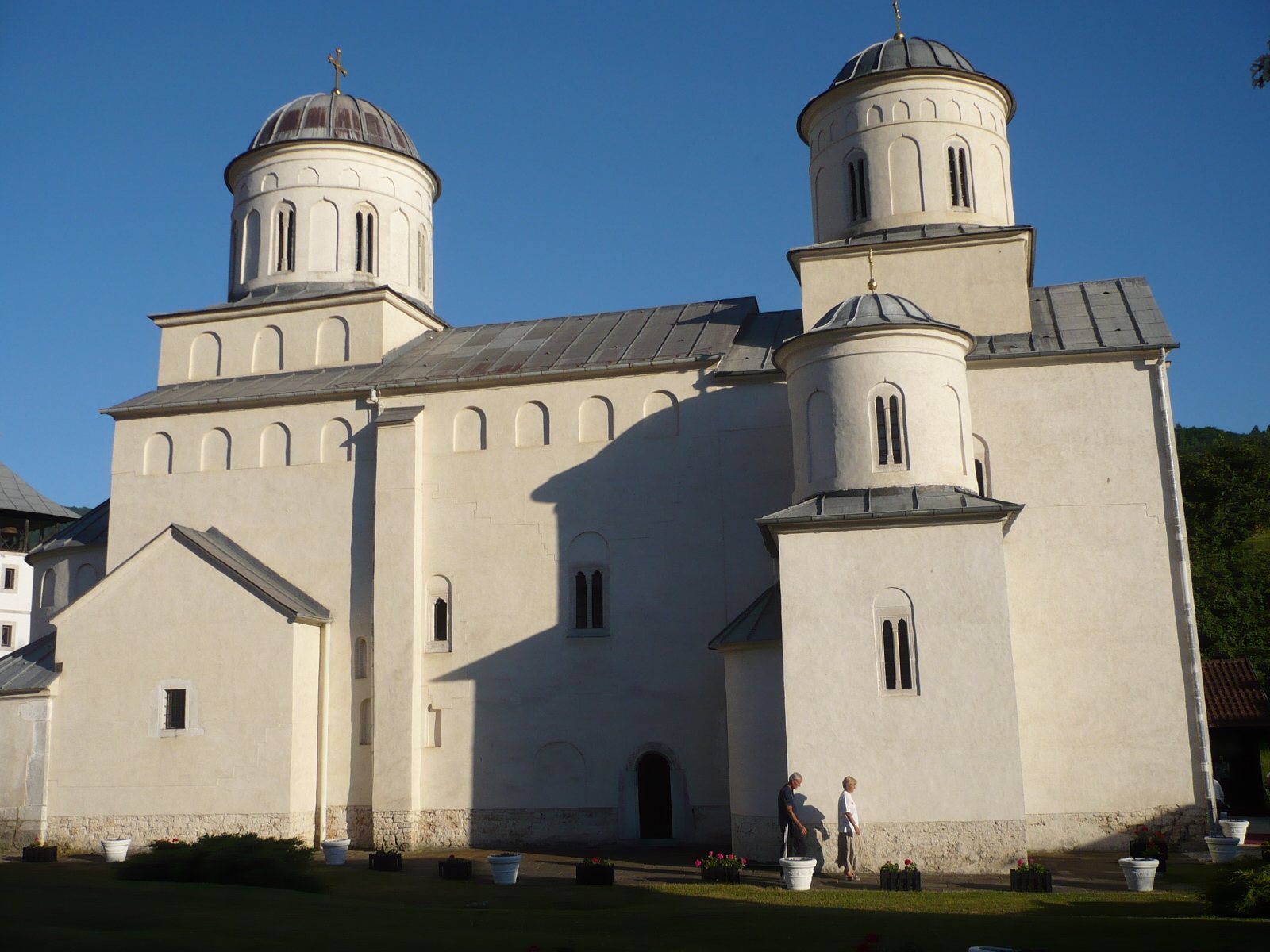
Mileševa Monastery, near Prijepolje in southwestern Serbia, is a Serbian Orthodox royal foundation built by King Stefan Vladislav I between 1234 and 1236. Its church is dedicated to the Ascension of Christ and belongs to the Raška School, a medieval Serbian architectural tradition; it is also described as Byzantine in style. Vladislav endowed the monastery and was buried there.
Foundation and royal memorial
Mileševa was founded during the era of the Latin Empire, a Crusader-ruled state centered in Constantinople. An artistic tendency emerging in this period favored monumental forms, restrained decoration, and inspiration from classical antiquity. Around 1236, Vladislav brought the relics of his uncle, Saint Sava, from Veliko Tarnovo and placed them in the outer narthex, the entrance area of a church. Sava was the first Serbian archbishop and a central figure in Serbian Orthodox tradition.
In 1594, Ottoman forces took Sava’s relics from the monastery and burned them publicly at Vračar in Belgrade, seeking to weaken Serbian morale. The episode became a major loss for the monastery and its religious community.
Medieval and Ottoman eras
Some historians place the 1377 coronation of Tvrtko I, a 14th-century Bosnian ruler, at Mileševa, where he may have been crowned king of the Serbs and Bosnia. In 1446, Bosnian nobleman Stefan Vukčić Kosača proclaimed himself herceg of Saint Sava at the monastery. The title, derived from a word for duke, gave rise to the name Herzegovina.
During the 15th century, Mileševa formed part of the Dabar-Bosnian Metropolitanate, a regional Serbian Orthodox church jurisdiction. Pilgrims and travelers came to the monastery, which also received gifts from Russian Tsar Ivan IV and the rulers of Wallachia and Moldavia. Ottoman forces burned the complex in 1459, but it was rebuilt soon afterward. Under Ottoman rule, the monastery maintained a school and a printing press that produced several finely made liturgical books in the 16th century.
The monastery underwent extensive renovation in the mid-16th century, during the tenure of Serbian Orthodox Patriarch Makarije. In 1446, Kosača’s self-proclaimed title had linked the site to Saint Sava’s name; the monastery’s wider religious and political associations continued to draw patrons and visitors.
Damage, restoration, and modern history
Mileševa suffered further damage from the late 18th through the 19th century and remained in ruins for an extended period. Restoration in the 1860s substantially changed the church’s architecture. During a local uprising in 1875, the monastery was threatened but spared after local Muslims intervened. On 24 August 1935, a large bell donated by King Alexander was consecrated there.
On 27 October 1941, Communist forces entered the monastery and killed its abbot, Nestor Trkulja. After the Second World War, workers cleaned and conserved the church’s wall paintings. In 1979, Serbia designated Mileševa a cultural monument of exceptional importance and placed it under state protection.
Mileševa remains an active Serbian Orthodox monastery and the seat of a diocese led by Bishop Atanasije Rakita. Its dependent monastery of Saints Cosmas and Damian at Vodena Poljana on Mount Zlatar was consecrated in 2007.
Remains
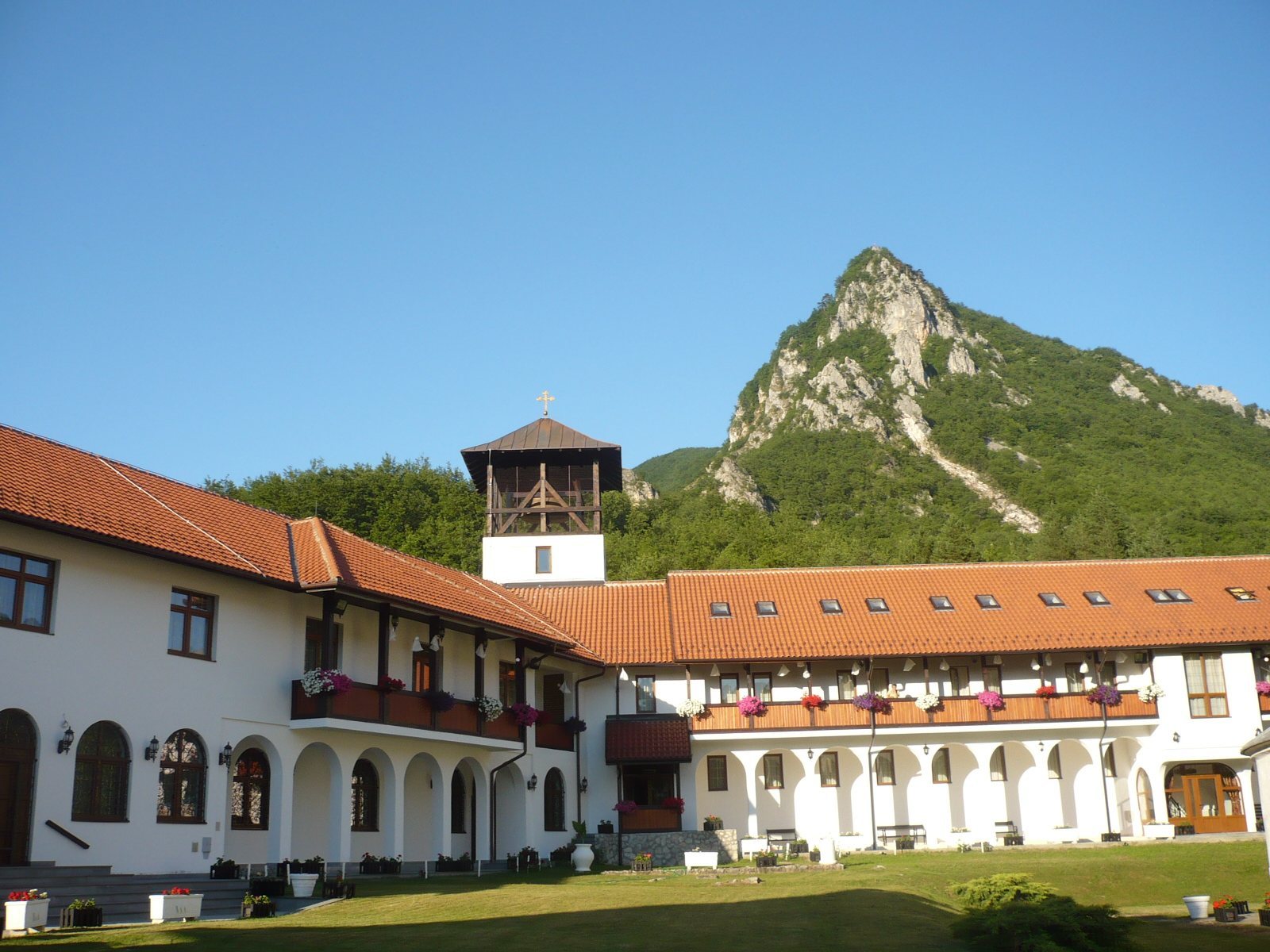
The main complex stands beside the Mileševka River in its valley. Its central church combines features associated with the Raška School and Byzantine architecture. The monastery’s surviving remains also include residential buildings, cliffside hermit cells, layers of wall paintings, icons, and a sarcophagus associated with Saint Sava.
Church of the Ascension
Main church plan
The church has a single nave that broadens toward the east, making that end wider than the west. Its plan leaves out the eastern bay, and three altar apses, projecting sanctuary spaces, sit directly against the eastern wall beneath the dome. The dome rises over a cubic central space supported by tiers of arches. Low, rectangular choir spaces lie along the sides.
Outer narthex and portals
A rectangular outer narthex was added at the west around 1236. It has a barrel-shaped vaulted roof and two small domed chapels at its sides. The 19th-century restoration raised the narthex and placed a dome above it. That work also altered the domes and windows and damaged the wall between the narthex and nave, along with older paintings on it. Two portals that combined Romanesque forms with Byzantine church architecture were destroyed; their doorframes had lion decorations. One lion survives in the museum in Užice.
Frescoes and painted decoration
Thirteenth-century paintings in the church
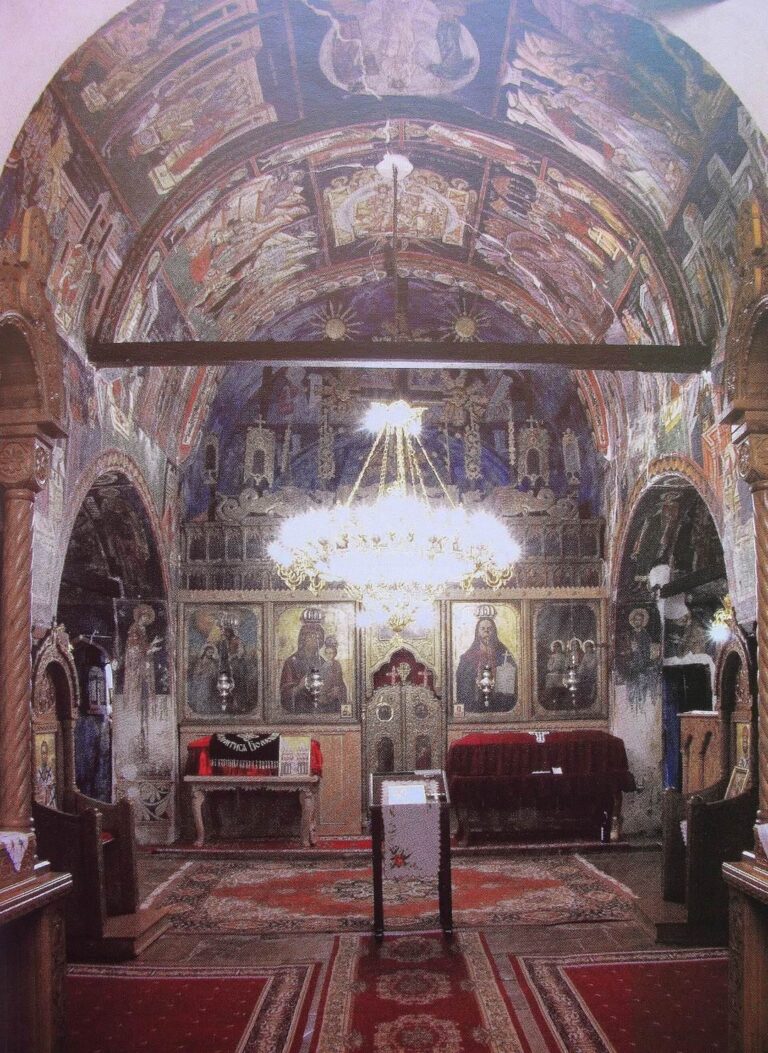
The best-preserved 13th-century wall paintings are in the nave and inner narthex. Standing bishops appear in the sanctuary, warrior saints and martyrs in the nave, and monks in the narthex. Large busts of holy monks fill the area above its lower register. Scenes from Christ’s earthly life cover the upper walls, while part of a scene showing David before Nathan remains in the south choir.
The paintings use large, carefully composed scenes and portray saints at a scale larger than life. Their modeled forms, delicately rendered faces, and fresh, harmonious colors give the work a lyrical, intimate quality. Elements of mosaic technique appear in the gold backgrounds, drapery, and treatment of the saints. The fresco of the Myrrhbearers at Christ’s tomb includes the White Angel, seated on the tomb. The Virgin of the Annunciation is another well-known work.
Portraits and inscriptions
Portraits form an important part of the painted program. Beneath the Resurrection on the south wall of the western bay, Vladislav presents a model of the church to Christ, led by the Virgin Mary. In the northeast corner of the narthex, members of the Nemanjić dynasty appear together: Stefan Nemanja as the monk Simeon, Sava as archbishop, Stefan the First-Crowned as king, and Stefan’s sons Radoslav and Vladislav. A faint portrait opposite them may represent either Byzantine Emperor Manuel III Komnenos or Bulgarian Emperor Ivan Asen. A badly damaged portrait of the first abbot survives near the passage from the south choir to the diakonikon, a service room adjoining the sanctuary.
Brief Serbian inscriptions in Cyrillic, using shortened saint names, appear beside images of George, Demetrius, Theodore Tiron, Theodore Stratelates, and some saints in the south choir. Once regarded as painters’ signatures, they are now understood as traces of the original wall-by-wall painting plan. They also suggest that six or seven of the painters may have been Serbian. The artists’ styles differ. The most accomplished work includes the Virgin of the Annunciation, the White Angel, the apostles in the Dormition, and Vladislav’s portrait with the church model.
Outer narthex and later paintings
Paintings in the outer narthex and its chapel show the Last Judgment and the lives of saints. They probably date to the 1230s or 1240s. Unlike the gold backgrounds in parts of the church and the blue ones in the narthex and sanctuary, most of the Last Judgment scenes have red backgrounds; the central scene on the east wall has a yellow one. The painters’ rougher drawing and coarser colors distinguish these works from those inside the church. Their style continues traditions associated with Balkan monastic workshops of the 11th and 12th centuries.
During the second half of the 16th century, a new layer of paintings covered earlier work in the church. Fragments that survive include the Last Supper beneath the dome and the Forty Martyrs in the north choir. Fire altered their colors, giving them an earthy appearance, while the later layer also shielded the 13th-century paintings beneath it. Small paintings were added in the diakonikon late in the 17th century; their drawing is unskilled, but their colors remain bright and lively.
Residential buildings and hermitage
Monastic residence
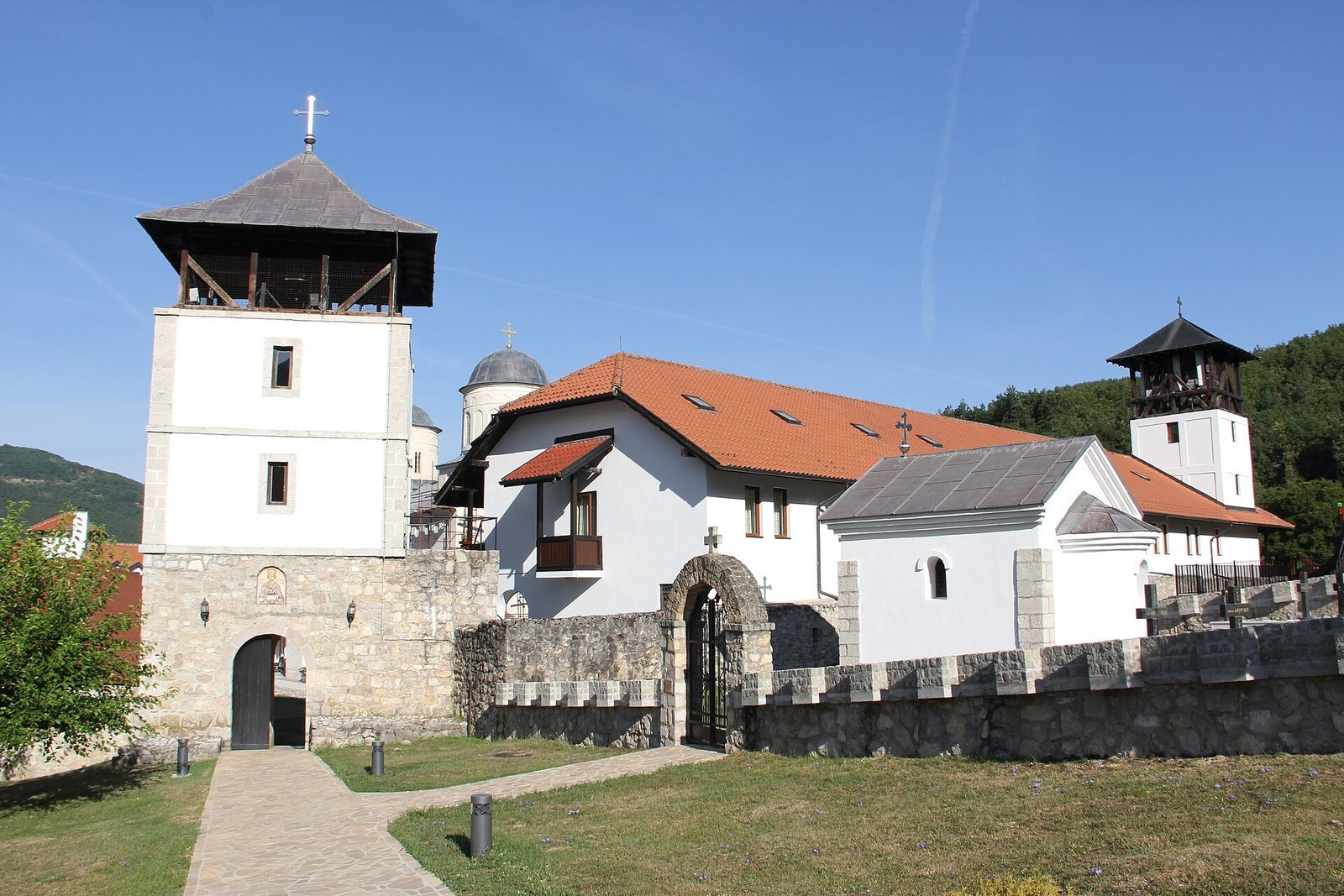
A two-storey residential building beside the monastery was arranged during the 1860s restoration. It contains 30 rooms for monks and guests.
Cliffside hermit cells
The remains of the monastery’s hermitage lie about two kilometers southeast of the main complex. They occupy a limestone formation at the exit of the Mileševka River gorge, beneath the medieval fortress of Mileševac. The hermit cells were formed by adapting natural overhangs in the steep cliff.
Icons and commemorative remains
Surviving icons
Among the surviving icons is a painting of Saint Spyridon by a Cretan icon painter, dating to the late 16th or early 17th century. Its style is closest to the work of Emmanuel Lampardos, a painter active around that time. Another icon, dated 1837, shows the Virgin and Child with John the Baptist at the Virgin’s right. It was painted and signed by Aleksije Lazović of Bijelo Polje.
Sarcophagus associated with Saint Sava
A stone sarcophagus associated with Saint Sava was restored in 2003 by sculptor Rajko Blažić.