Cherlieu Abbey: A Cistercian Monastery in France
Site at a Glance
- Popularity
- Medium
- Country
- France
- Primary era
- Medieval
- Eras represented
- Medieval, Early Modern
- Civilizations
- Duchy of Burgundy, French, Holy Roman Empire
- Site type
- Religious
- Remains
- Monastery
On this page13 sections
History
Cherlieu Abbey is a former Cistercian monastery in the hamlet of Cherlieu, within Montigny-lès-Cherlieu, Haute-Saône, France. Formally founded on 17 June 1131, it developed from an earlier religious house and became a mother abbey, a community that founded or supported other monasteries. Its church was built between 1150 and 1220 in a transitional style combining Romanesque-Byzantine and Gothic forms.
Foundation and expansion
An Antonine community, belonging to a medieval religious order of canons, was established on Saint Anthony’s Hill between Cherlieu and Marlay by 1127. A charter from that year names Germain as prior of Cherlieu. In January 1131, Guy arrived from Clairvaux with twelve monks to establish the Cistercian community. The nobles of Jussey and Renaud III, Count of Burgundy, supported the new house. Under Guy, its community grew to as many as 600 monks, and the abbey gained the protection of Popes Innocent II and Eugene III.
Cherlieu was affiliated with Clairvaux, a leading Cistercian abbey, and became the parent house of several new communities. It founded Hauterive in 1132, Acey in 1136, Le Gard in 1137, Notre-Dame des Gardes in 1139, Haut-Crêt in 1143, and Beaulieu-en-Bassigny in 1166. Acey later established Polisy in Hungary in 1180, followed by further foundations at Pasrot in 1190 and Beel in 1232. Guy’s position also brought conflict: Pierre de Traves and the abbot of Faverney opposed him, while Bernard of Clairvaux supported his case in Rome. Tradition linked Bernard’s visits to Cherlieu with miraculous healings.
Estates and economic life
By 1160, Cherlieu held land across numerous settlements, including Marlay, Agneaucourt, Montigny, Jussey and Purgerot. Its granges, or monastic farming estates, were largely self-sufficient and worked mainly by lay brothers. They produced wheat, oats, rye and sometimes beans, and kept oxen, pigs and sheep. The abbey had vineyards at Craies, between Montigny and Chazel, and at Purgerot. Its holdings also included woodland, pasture, mills and fisheries. By the fifteenth century, the abbey exercised authority over 32 villages.
The community’s activities extended beyond farming. It fished along the Saône and at Conflans-sur-Lanterne, operated mills and ferries, and worked iron ore from Mont de Noroy and Pouligney. At Agneaucourt, ore was crushed and processed into tools and metal fittings. The abbey obtained salt from Scey-sur-Saône, Lons-le-Saunier and Marsal in Lorraine, and Marlay had tile and brick works. Cherlieu traded at regional markets and held certain toll exemptions and rights of passage.
Donations increased in the late twelfth century, but discipline within the community weakened. The abbey continued to serve as a burial place for regional nobles. Among those interred there were Henry I de Vergy and his wife Elisabeth de Chalon, Alix, Countess of Burgundy, and members of the Chauvirey and Rupt families. Othon IV, Count of Burgundy, who died in 1303, was buried at Cherlieu on 5 March 1309 alongside his brother Jean de Bourgogne. Othon’s widow, Mahaut d’Artois, the Archbishop of Besançon, bishops, representatives of several religious orders and regional princes attended the ceremony.
Raids and destruction
Pestilence, famine and warfare afflicted the abbey during the 1350s, including attacks by mercenary bands. The Écorcheurs, armed bands active in France during the fifteenth century, raided Cherlieu in 1437–1439. Abbot Étienne was captured in 1439 and released for ransom. In 1475, fighting involving French forces under Pierre de Caron, German troops and Swiss forces brought killings, looting and fires to the abbey. German forces captured Abbot Gilles de la Cour in 1476 and released him for ransom.
In April 1569, German forces associated with William of Nassau arrived to support French Protestants under Wolfgang of Zweibrücken. The Baron of Savigny burned the cloister and tombs were desecrated. By May, only the burned church remained standing; the surrounding fields had been devastated, and farmers were reduced to begging. The monastery lay deserted for thirty years. In February 1595, the Lorrainer Tremblecourt ravaged it, and seven monks from Cîteaux arrived in 1598.
Abbot Ferdinand de Rye recovered most of Cherlieu’s titles and possessions, beginning a more stable period. Rebuilding is associated with his tenure, although its date is uncertain; a cross erected in 1613 commemorated the recovery. During the Ten Years’ War, a regional conflict in Franche-Comté within the wider Thirty Years’ War, French forces attacked the monastery in 1636. Swedish troops under Bernard of Saxe-Weimar occupied it in 1637, and French forces under Du Hallier attacked again in 1641. The abbey was devastated, leaving only eight religious members.
Rebuilding and suppression
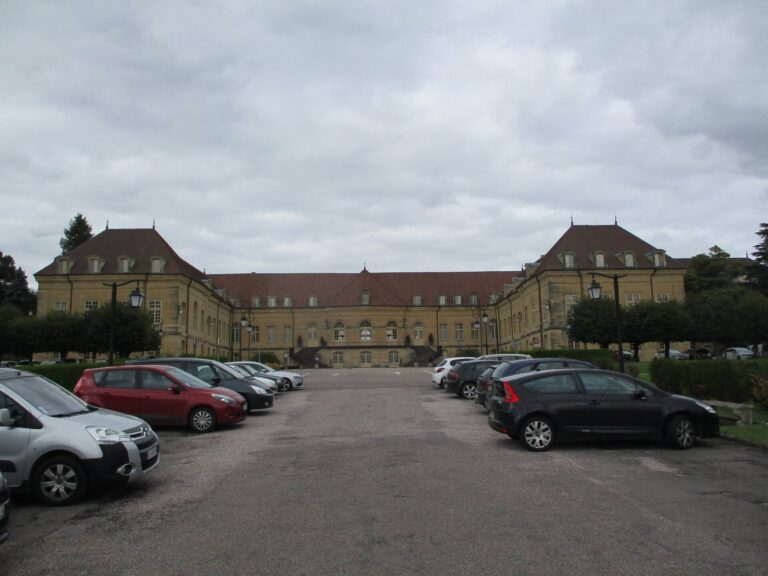
A new cloister was built in 1701 and a monastic palace in 1773. By this period Cherlieu was the wealthiest religious community in the province, although observance had declined. In 1789, inhabitants of thirty dependent villages demanded records concerning seigneurial dues. At Montigny, the monks were forced to renounce their rights under threat of violence, and the abbey archives were burned.
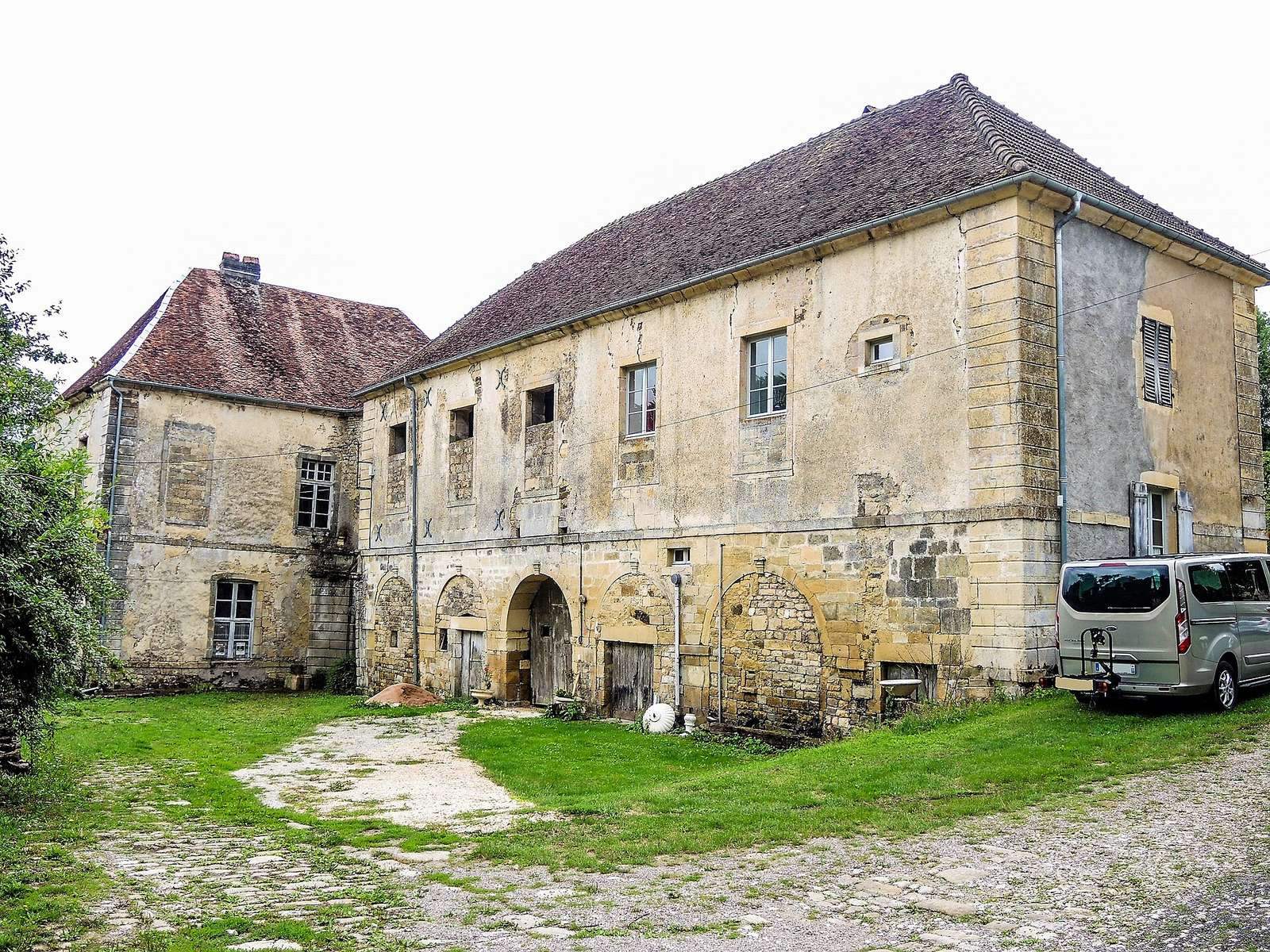
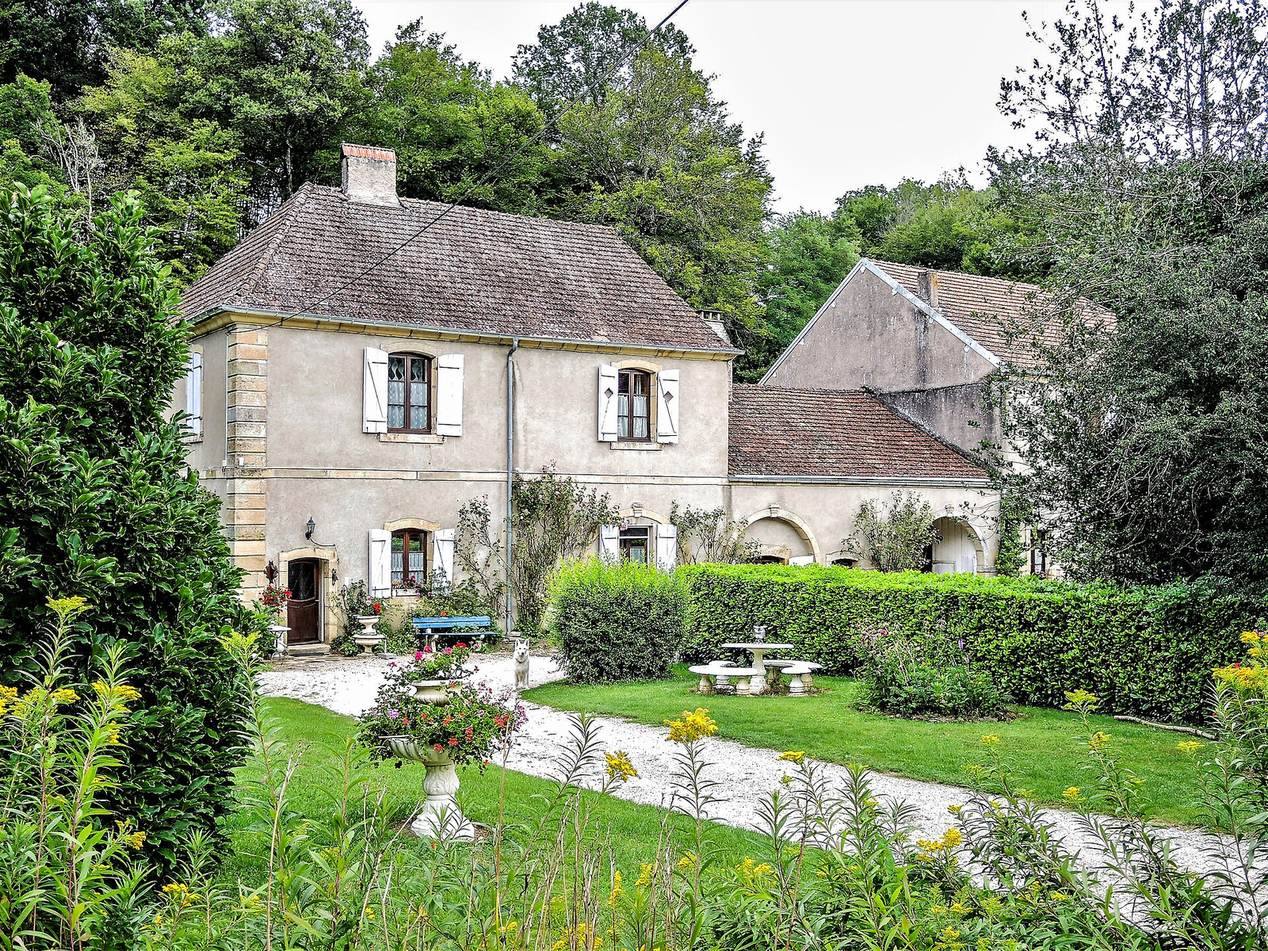
The abbey was suppressed in 1790 during the French Revolution. Its property was sold beginning on 14 June 1791 in a process lasting eleven days. The cloister was demolished, and the church was dismantled for building stone for more than thirty years. Tombs, including Othon IV’s, were broken up, and the tower near Chauvirey Castle was also demolished. The church ruins and Calvary monument were classified in 1984, as were the conventual buildings’ façades and roofs; the abbey grounds received protected-site status in 1997, and the gatekeeper’s lodging was listed in 1998.
Remains
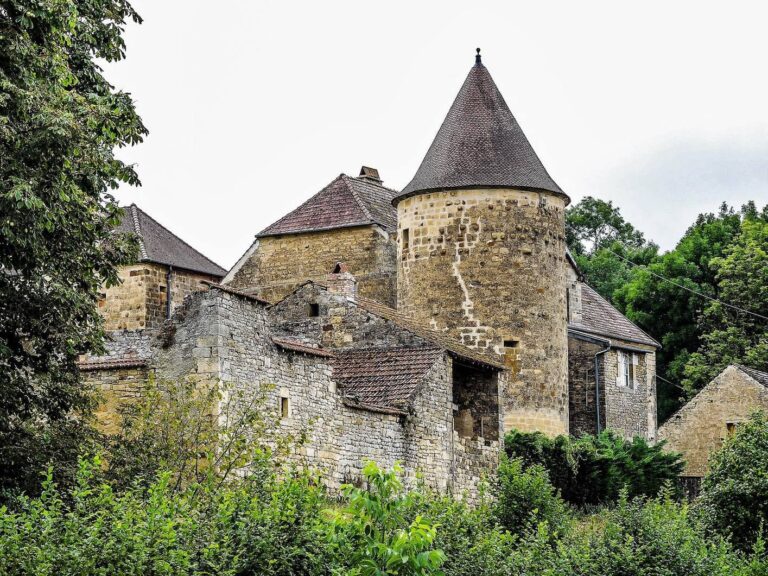
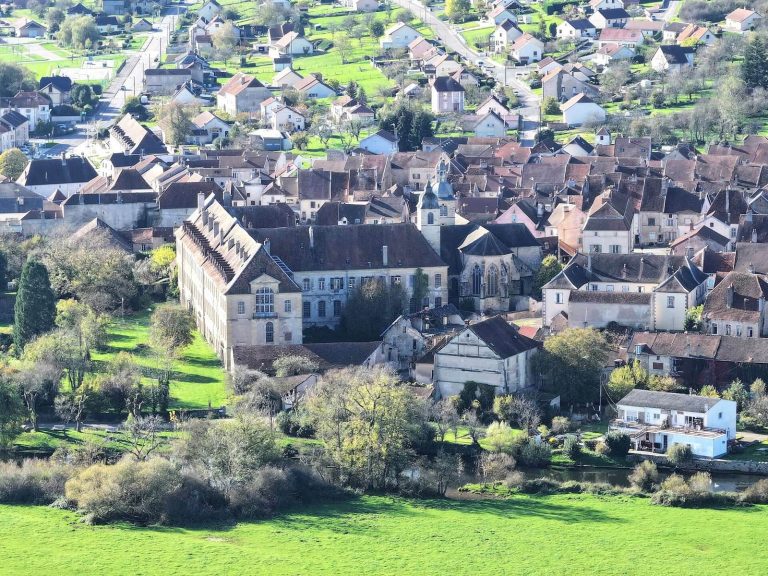
The surviving complex preserves parts of the church, cloister and shared monastic buildings, while other remains relate to the abbey’s wider farming and industrial estates. The church’s scale and cross-shaped plan reflect its medieval construction; later conventual buildings belong chiefly to the seventeenth and eighteenth centuries.
Abbey church
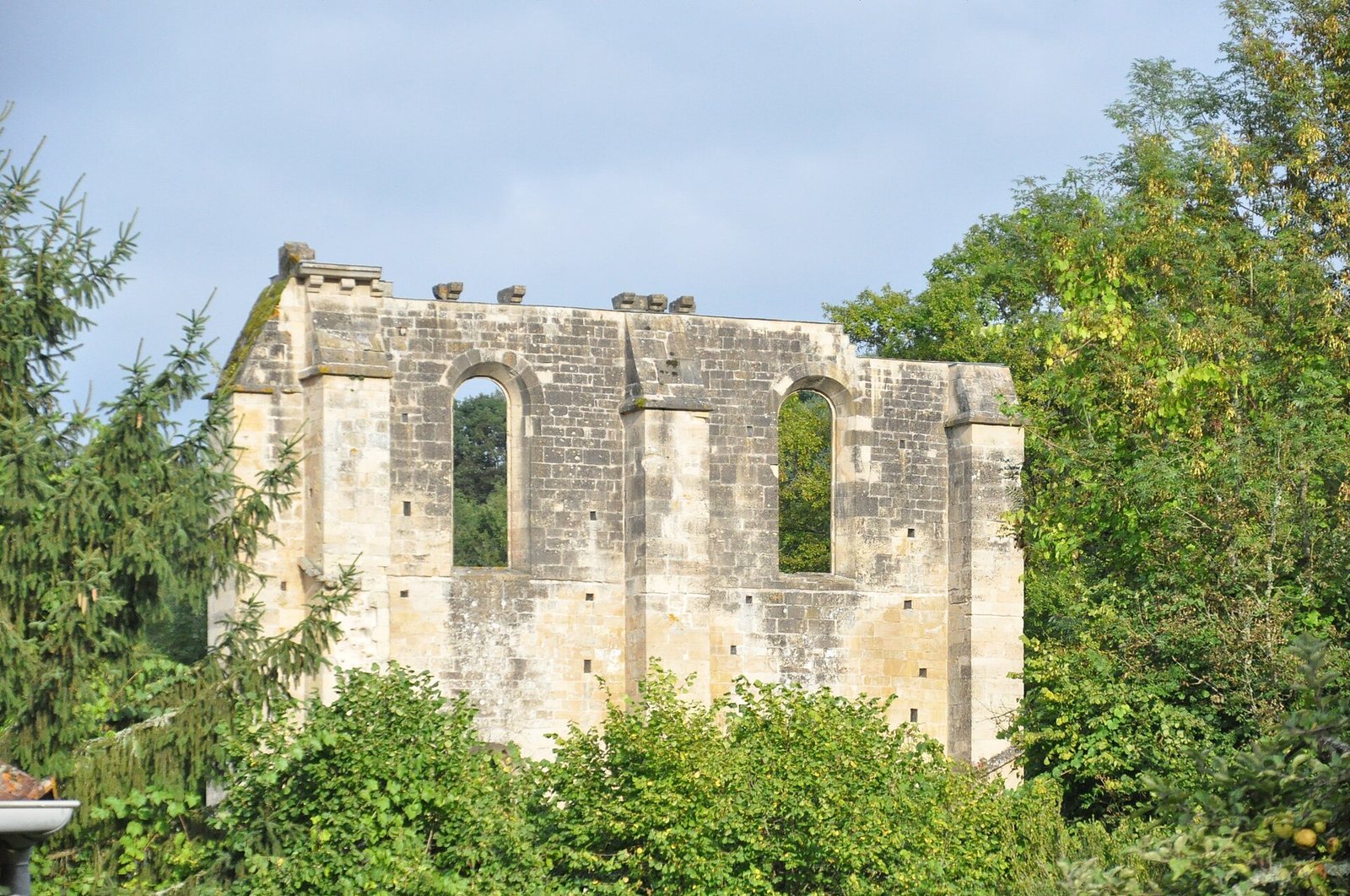
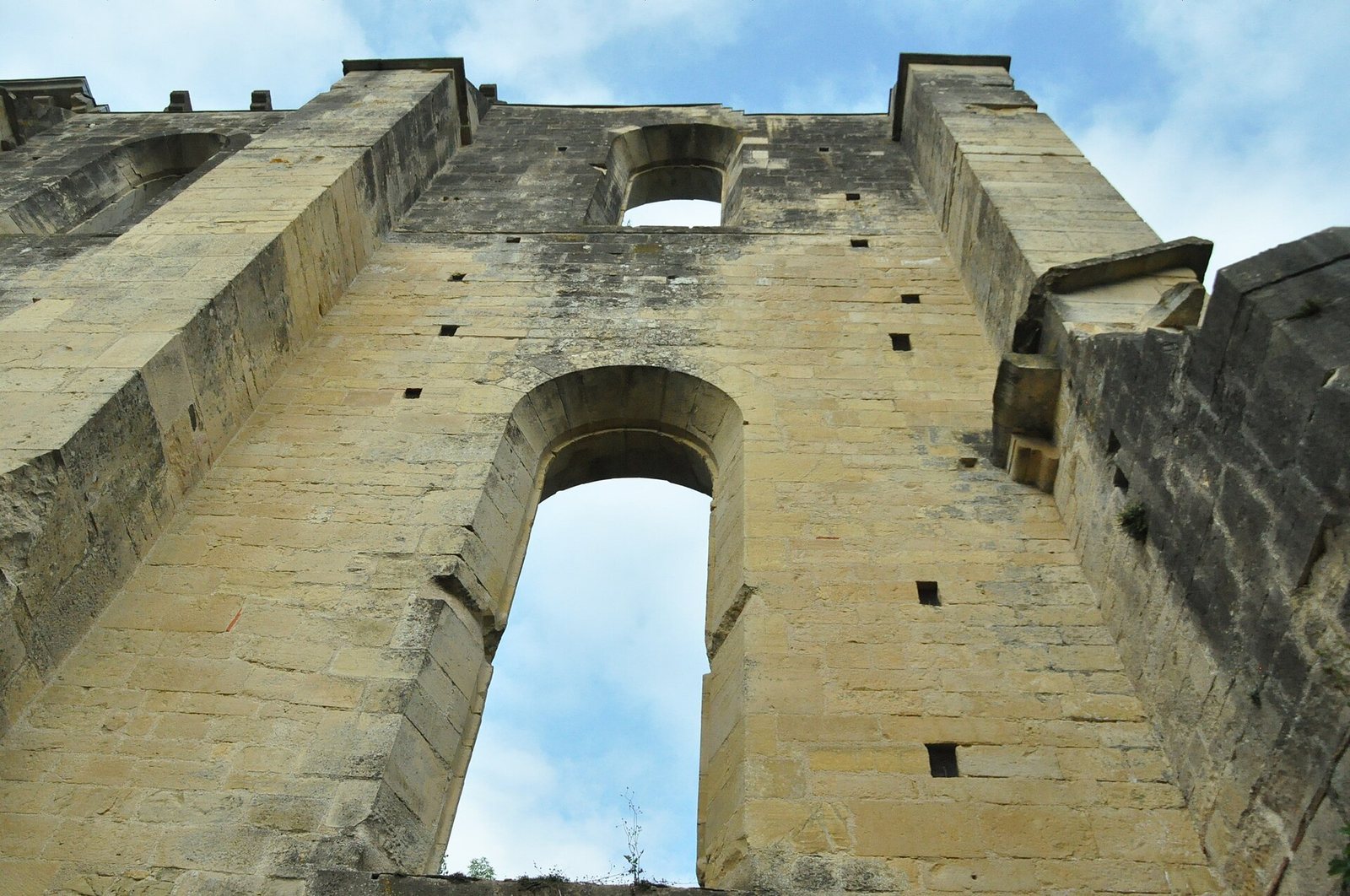
The church had a Latin-cross plan, with three naves (lengthwise spaces) and a transept (crosswise arm). It measured 105 metres long and 54 metres across the transept, and its vault rose 22 metres. Rosettes decorated the façade and transept, while fifty windows admitted light. A central tower stood above the transept. Seven chapels surrounded the high altar, separated from it by eight columns and oak woodwork four metres high. A substantial section of the north transept wall survives; rubble covers the church floor.
Cloister and conventual buildings
Cloister
The earlier cloister was square, with four ranges of ten arcades. Some remains of the fifteenth-century cloister survive. The later cloister, built in 1701, was demolished after the Revolution. A cloister is a covered walkway enclosing an open courtyard.
Living and service buildings
Kitchen and refectory remains from the seventeenth and eighteenth centuries survive without their vaulting. Other conventual buildings from those centuries were converted into a farm, and the gatekeeper’s lodging also remains. The monastic palace was built in 1773. Conventual buildings were the shared living and service spaces of the community.
Outlying estate features
Farms and mills
Cherlieu’s granges generally combined farm buildings with a chapel, dormitory, refectory and heated room. Mills associated with the abbey’s estates included Battant and Ferry on the Écrevisses stream near the abbey, as well as sites at Agneaucourt, Jussey, Conflans-sur-Lanterne and other nearby settlements. The holdings also included communal ovens and fisheries, among them fisheries at Miévillers, Purgerot and Conflans-sur-Lanterne.
Industrial and devotional features
At Marlay, remains of a tile works and lime kiln survive beside associated buildings dating from the sixteenth century. At Agneaucourt, remains show where iron ore mined at Noroy was crushed. A seventeenth-century Calvary monument, representing the Crucifixion, stands at Ferry farm.