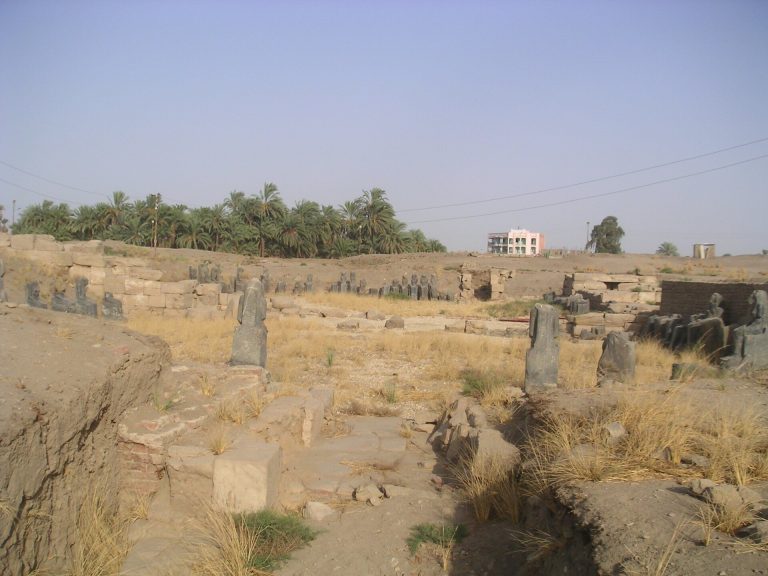
Akh-menu: Festival Hall of Thutmose III at Karnak
Site at a Glance
- Popularity
- Medium
- Country
- Egypt
- Primary era
- Bronze Age
- Eras represented
- Bronze Age
- Civilizations
- Egyptian
- Site type
- Religious
- Remains
- Temple
On this page9 sections
History
Akh-menu is an Egyptian ceremonial complex at Karnak in Luxor, Egypt, commissioned by the Eighteenth Dynasty pharaoh Thutmose III and built in the mid-fifteenth century BCE. He ordered its construction in the twenty-third year of his reign, and the building was completed seven years later.
The complex was intended for Thutmose III’s Heb-Sed, a royal jubilee ceremony associated with renewing a king’s authority and vitality. It later served as part of the annual Opet Festival, a religious celebration in ancient Thebes. These uses are known, but the building’s precise overall purpose remains uncertain.
Akh-menu is also called the Festival Hall of Thutmose III and the Temple of Millions of Years, a royal temple intended to sustain a king’s cult over the long term. Its name is commonly translated as “the most glorious of monuments.” Another interpretation, “monument to the living spirit,” reflects the possible meanings of akh, including glory and a blessed or living spirit.
Remains
Setting and overall plan
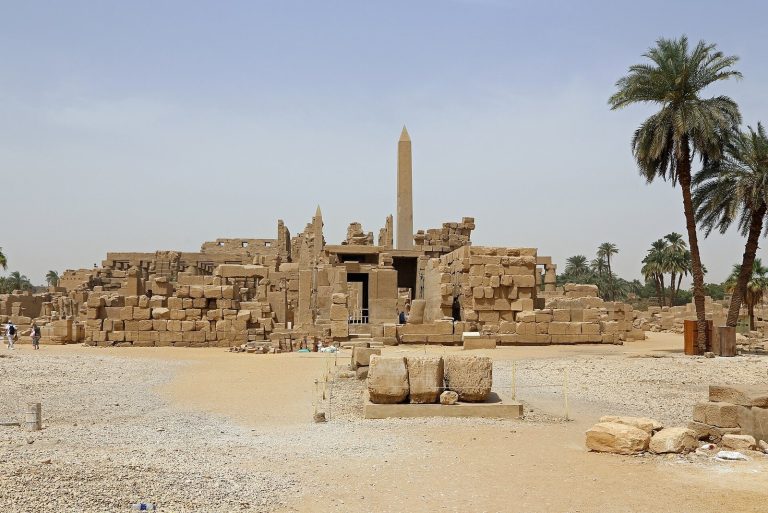
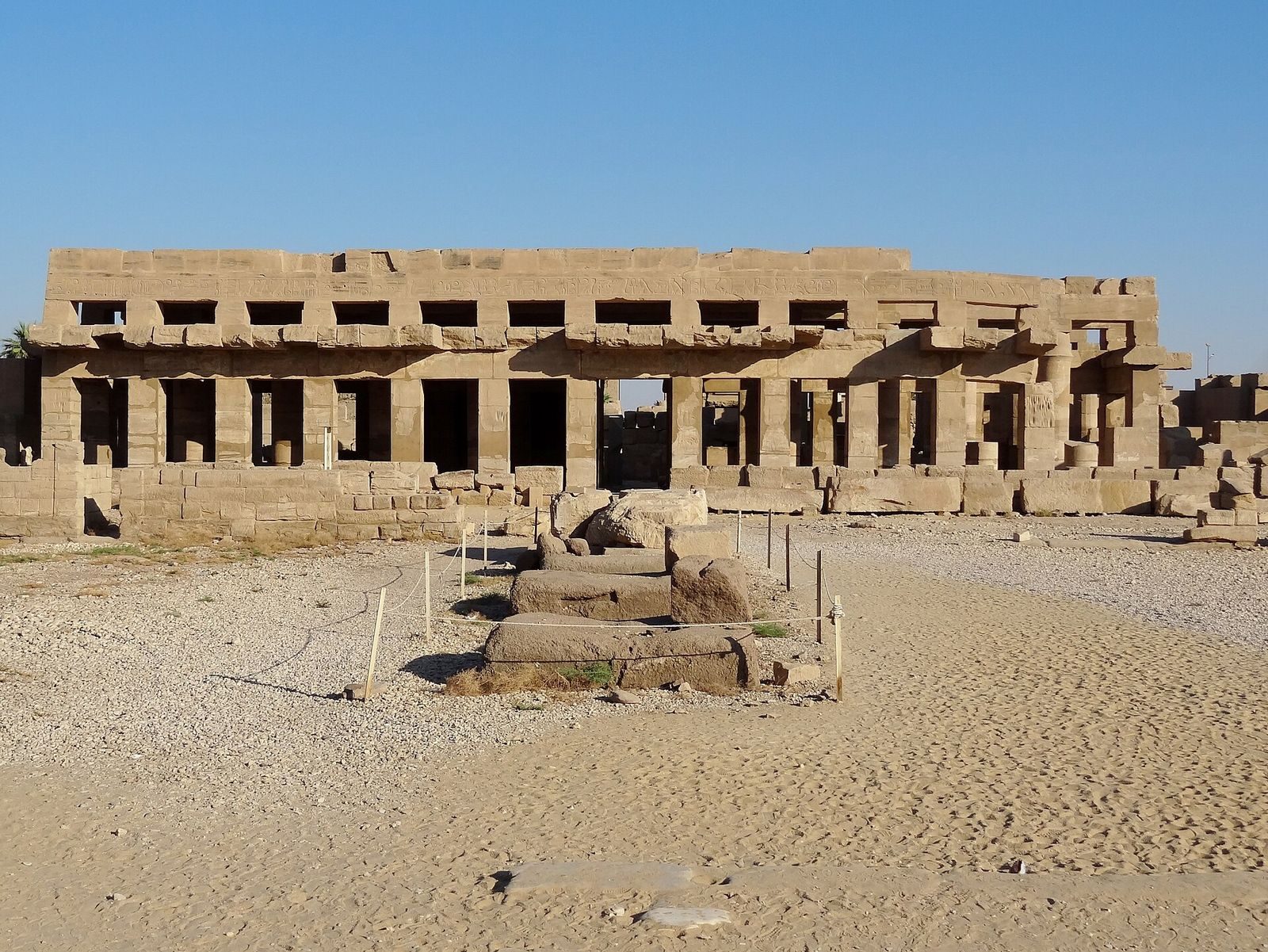
The rectangular complex stands at the eastern end of Karnak’s main temple axis, beyond the Middle Kingdom court. Its own axis lies at a right angle to the temple’s east–west axis, and a separate wall encloses the building. Three principal areas make up the complex: rooms for Sokar in the southeast, a solar-worship complex in the northeast, and the festival hall, which connected to other parts of the building. The design was described as Hry-ib, meaning “that which is at the heart of it.”
Entrance and storerooms
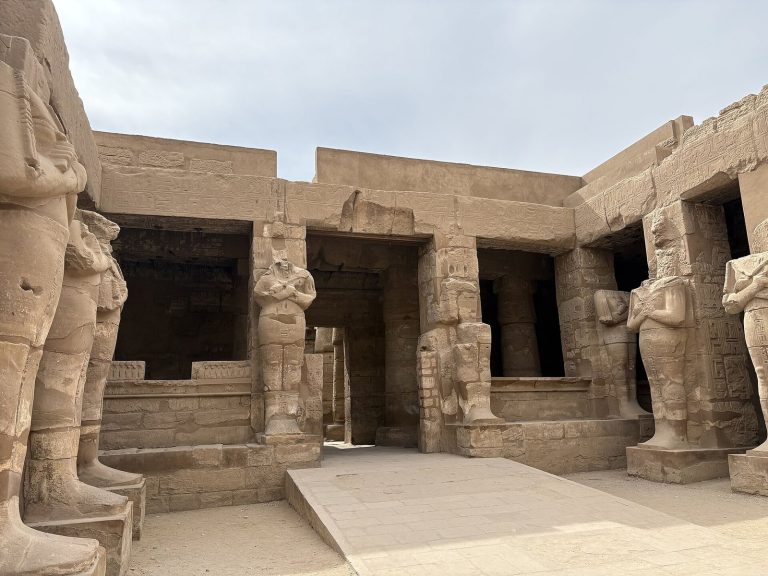
The original entrance opened at a corner of the Middle Kingdom court, not along the temple’s main axis. Two sixteen-sided columns and two Osiride colossi, monumental royal figures in a form associated with Osiris, stood beside its doorway. From there, a long passage led to nine small storerooms for offerings and the priesthood’s ritual equipment. Wall reliefs depict items such as bread, ritual vessels, and wine, while scenes of the royal jubilee decorated the passage’s north side.
Great Hall of Heret-ib
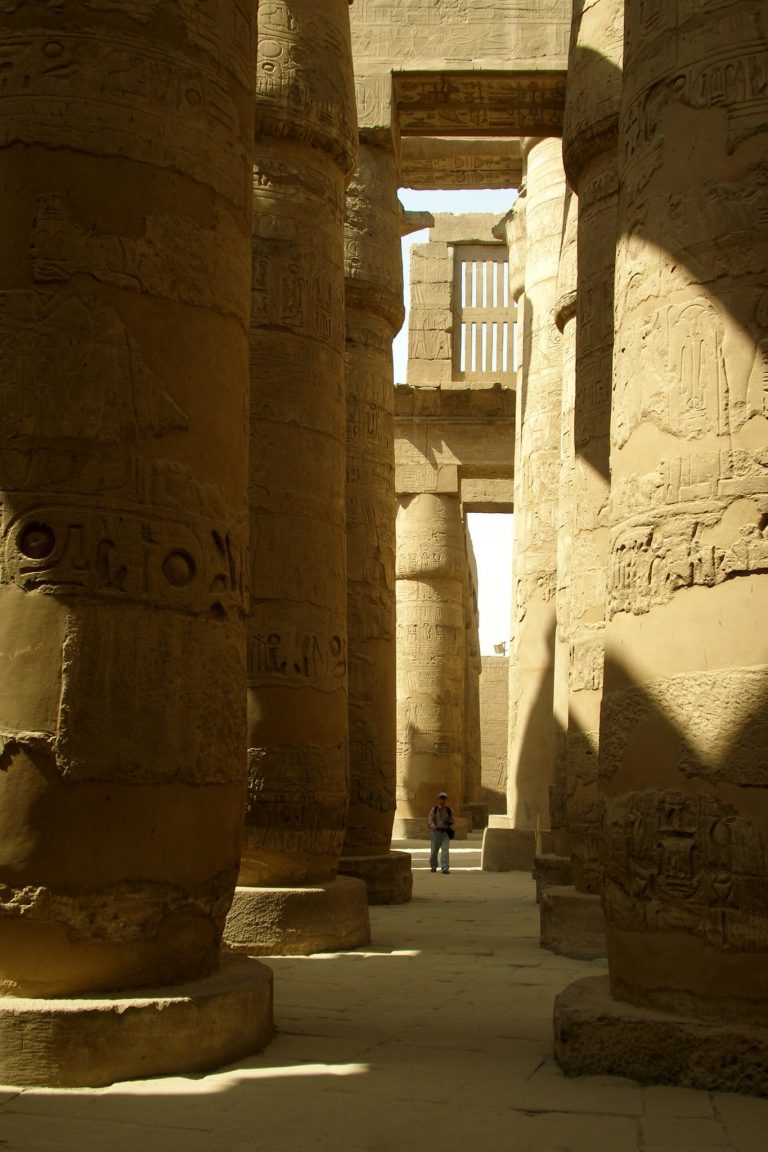
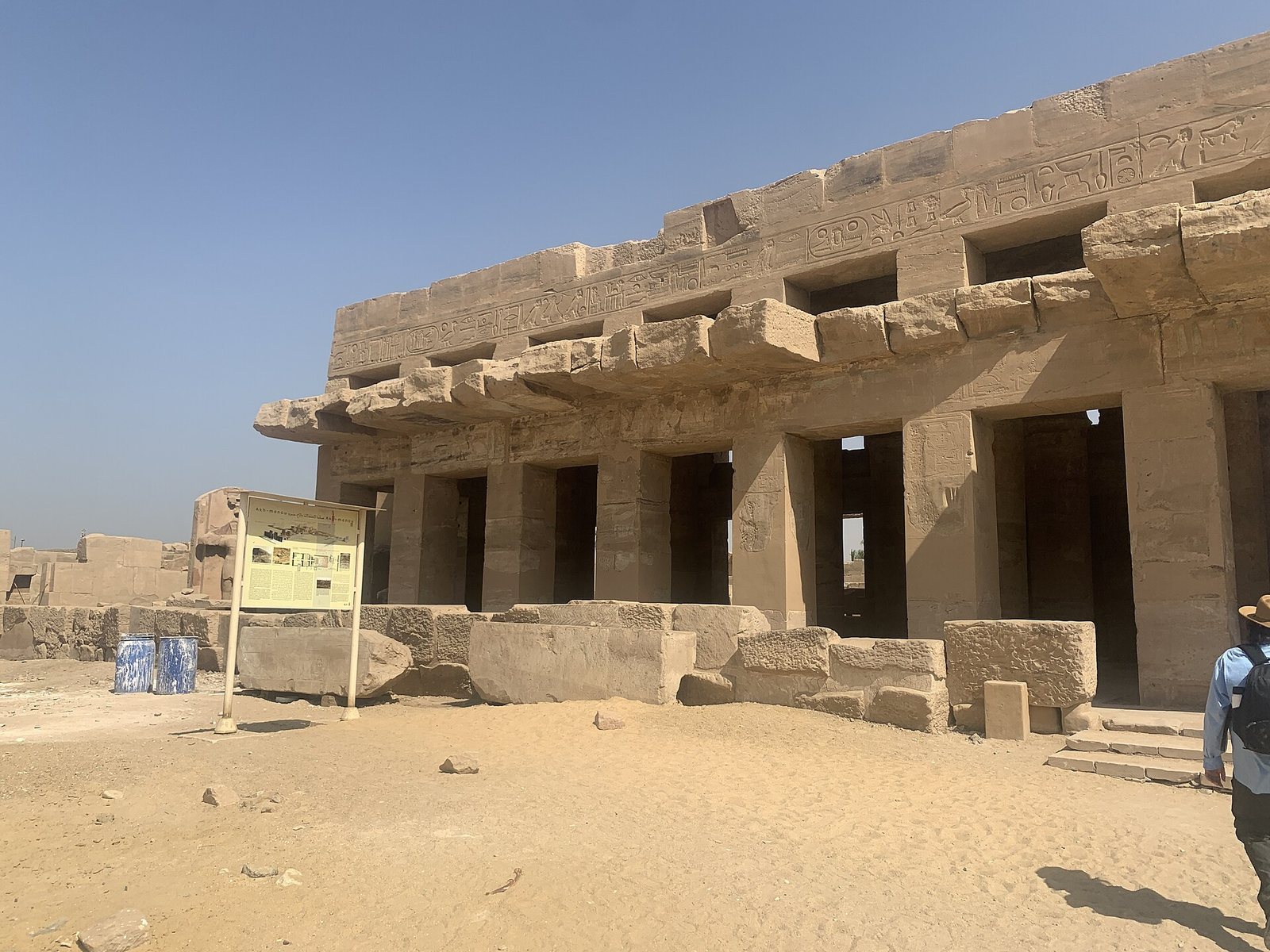
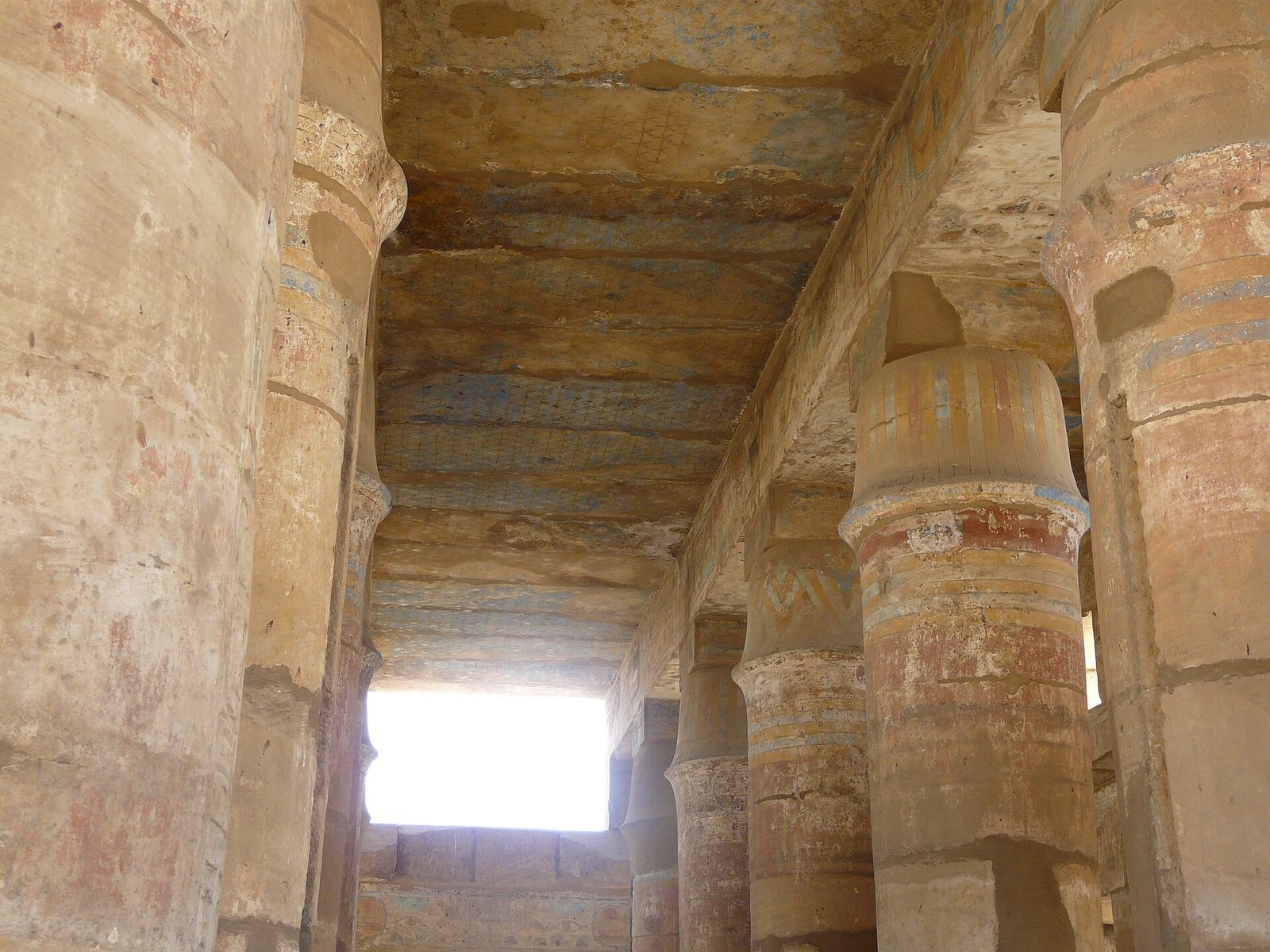
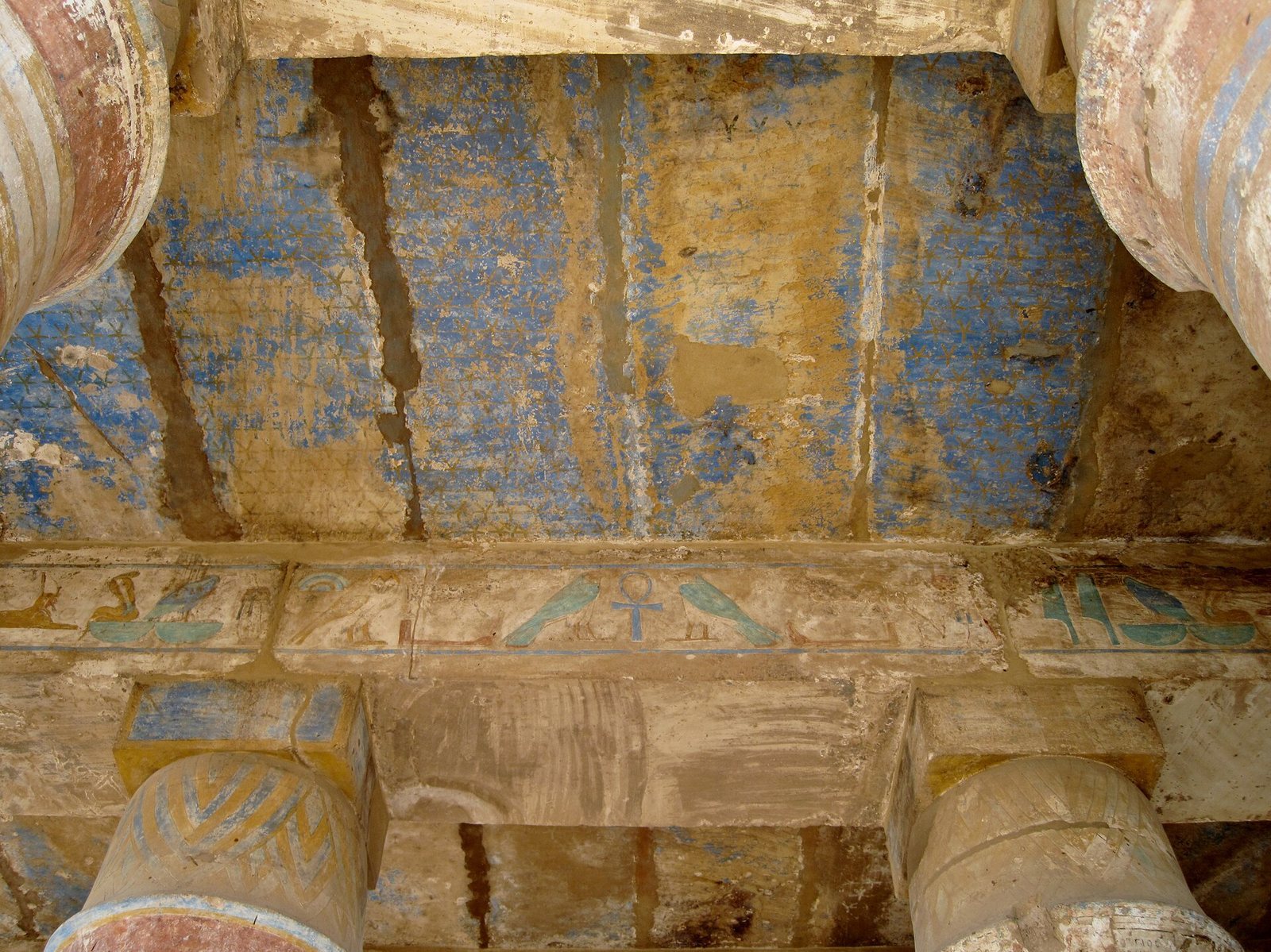
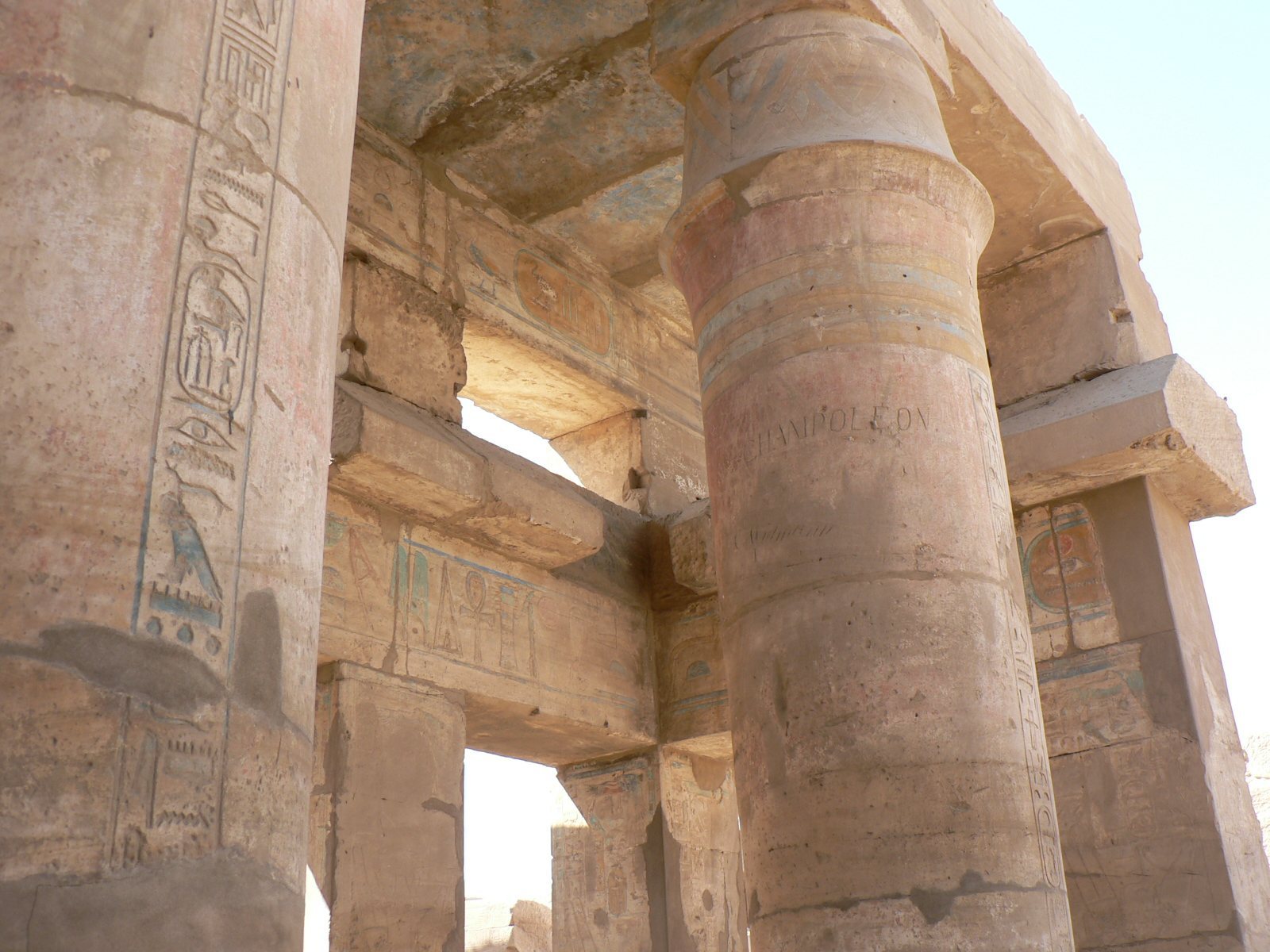
The Great Hall measures 44 metres across and 16 metres in length. It contains 32 pillars and two inner rows of ten columns. The columns support a central roof set higher than the roof carried by the pillars, allowing light into the hall. The columns taper toward their bases and have unusual tops. Their red finish recalled wooden tent poles, and the arrangement evokes a large tent shrine with awnings. Blue paint and gold stars decorated the ceiling. Images of the king with various deities on the columns were systematically destroyed.
Ritual chapels and Sokar rooms
A group of chapels lies north of the Great Hall. Their reliefs show rituals, offerings, and processions with royal statues. In one corridor, the king presents offerings to Amun shown with an erect phallus. A side doorway leads to an eight-column room dedicated to Sokar, a funerary deity associated with the underworld. A fragmentary statue of Thutmose III with Amun and Mut, a goddess closely associated with Amun, also survives among the chapel features.
Botanical chamber
In the northeast solar complex, the botanical chamber, also called the Chamber of Wonders, has four columns shaped after the papyrus plant. Its low-relief carvings depict exotic plants and animals associated with Thutmose III’s campaigns in Asia and eastern Africa, including Syria and Palestine. Some images are partial. The chamber’s imagery has been interpreted as presenting Amun’s power as extending beyond the Nile Valley.
Sanctuary and water clock
The botanical chamber provided access to a sanctuary. Eight niches in its walls may have held statues of the Theban Ennead, a group of nine deities associated with Thebes; a larger niche was intended for a naos, a shrine for a divine image. A separate small room housed a water clock for measuring the length of rites.
Chamber of Ancestors
A small room off the main hall contained the Karnak king list, which showed 61 earlier kings seated as Thutmose III made offerings to them. The list began with Sneferu, a ruler of Egypt’s Fourth Dynasty, and was not arranged in chronological order. Its presentation has been interpreted as affirming Thutmose III’s sovereignty. In 1843, Émile Prisse d’Avennes removed the inscribed slabs and took them to France. The originals are now in the Louvre in Paris, and reproductions have been placed in the chamber.