Kloster Wörishofen: A Dominican Convent in Bavaria
Site at a Glance
- Popularity
- Medium
- Country
- Germany
- Primary era
- Early Modern
- Eras represented
- Early Modern, Modern
- Civilizations
- Electorate of Bavaria, German, Holy Roman Empire, Kingdom of Bavaria
- Site type
- Religious
- Remains
- Monastery
On this page14 sections
History
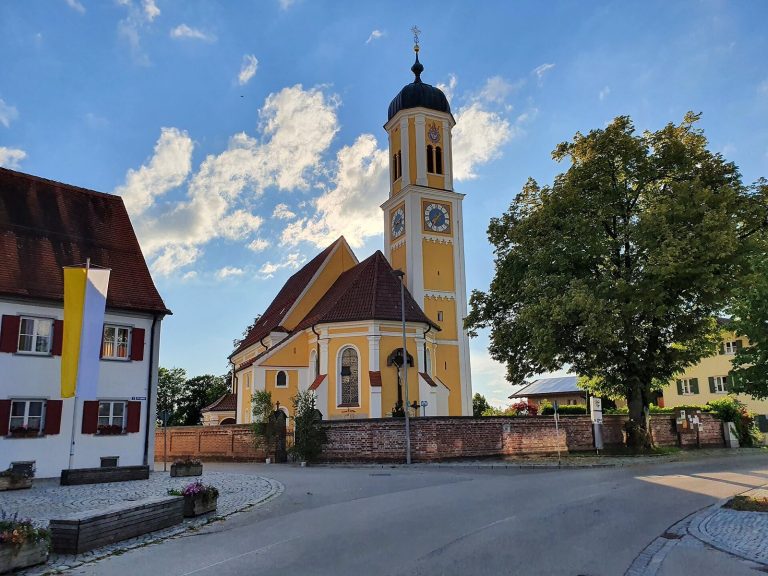
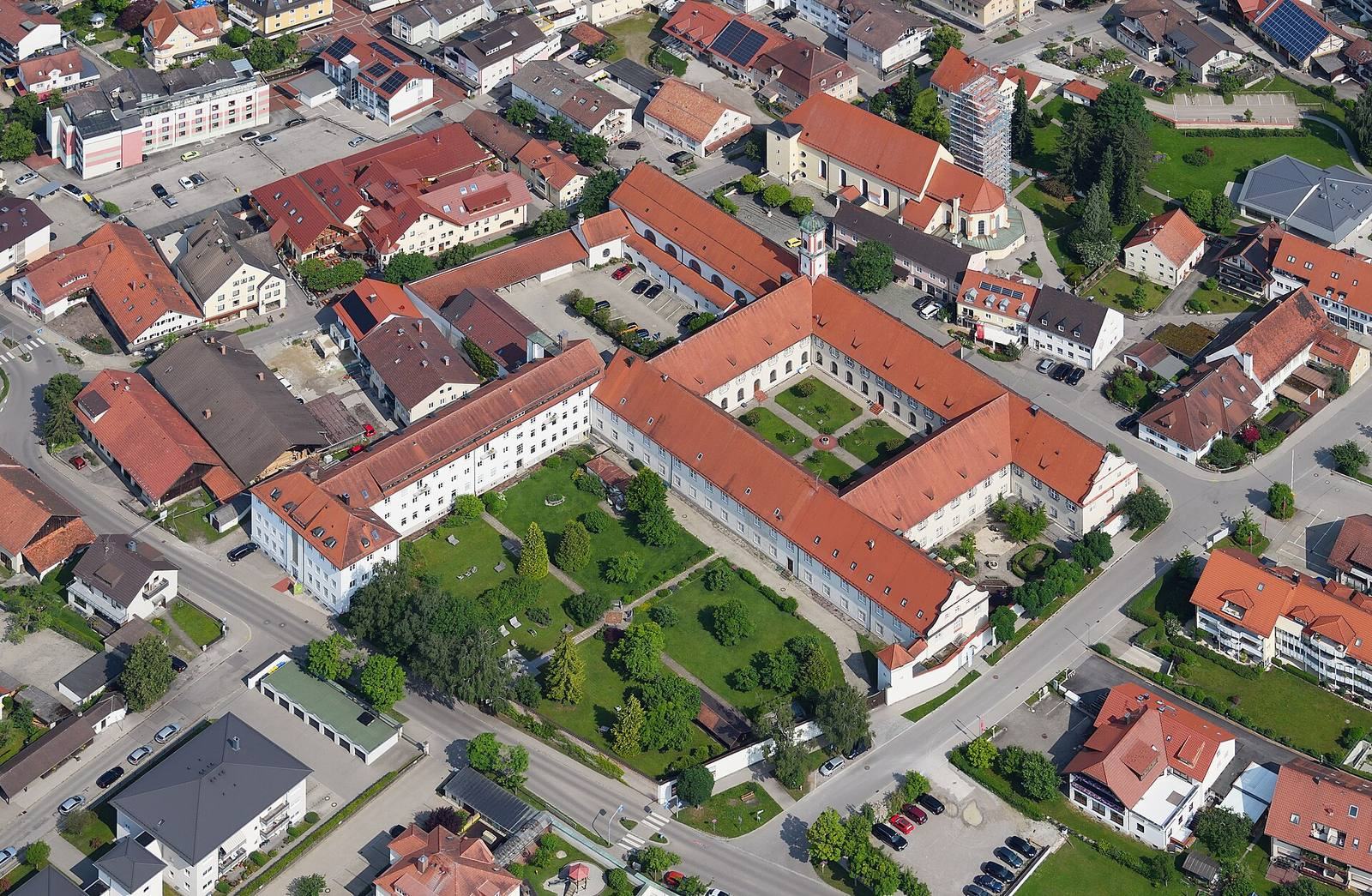
Kloster Wörishofen is a Dominican nuns’ convent in Bad Wörishofen, Bavaria, Germany. Its eighteenth-century development included a Baroque church, a European style associated with elaborate forms and ornament, dedicated to Mary, Queen of the Angels. The convent later combined religious life with schools and other responsibilities.
Foundation and construction
The convent’s foundation was linked to a condition attached to a donation to the Dominican Order in 1243. About five centuries later, the Dominican nuns of St. Catherine’s convent in Augsburg met that condition by sending sisters to Wörishofen. The first arrived on 24 July 1718 and initially lived in an official building of the order. They moved into the convent in 1721.
The foundation stone of the convent building was laid on 4 August 1719, then the feast day of Saint Dominic. The church was consecrated on 23 September 1773.
Occupation, secularization, and revival
French soldiers occupied the convent in May 1800 and destroyed sacred objects among other possessions. On 29 November 1802, the convent was secularized, meaning its property was transferred to state control. The sisters could stay, but they were barred from accepting novices, or prospective members in religious formation.
King Ludwig I of Bavaria ordered the convent’s revival in 1842. Pope Clement XI had wanted the sisters to live in strict enclosure, a discipline limiting contact with the outside world, and to observe silence and abstain from meat. The motherhouse at St. Catherine’s would not accept these conditions. As part of the revival, the Wörishofen community took charge of the parish girls’ school and had to establish an institution for girls considered difficult to educate. These responsibilities gradually displaced the contemplative life set out in the order’s rules.
Sebastian Kneipp and community work
Sebastian Kneipp, a Bavarian Catholic priest known for promoting water-based treatments and a broad approach to health, was assigned to the convent as confessor and chaplain in 1855. The community later built a school and boarding-school building, founded a domestic-science school in 1885, and opened a kindergarten in 1899. Kneipp’s knowledge of plants and animal products also helped improve the convent’s agricultural productivity.
Change in the twentieth century
As fewer new members joined, the number of sisters declined during the twentieth century, and the convent discontinued its own enterprises. The school and boarding-school building became a health resort in 1981. Since 2005, the Kolping association, a Catholic social organization, has operated it as the Kuroase im Kloster, or Spa Oasis in the Monastery. The convent’s agricultural operation is now leased out.
Remains
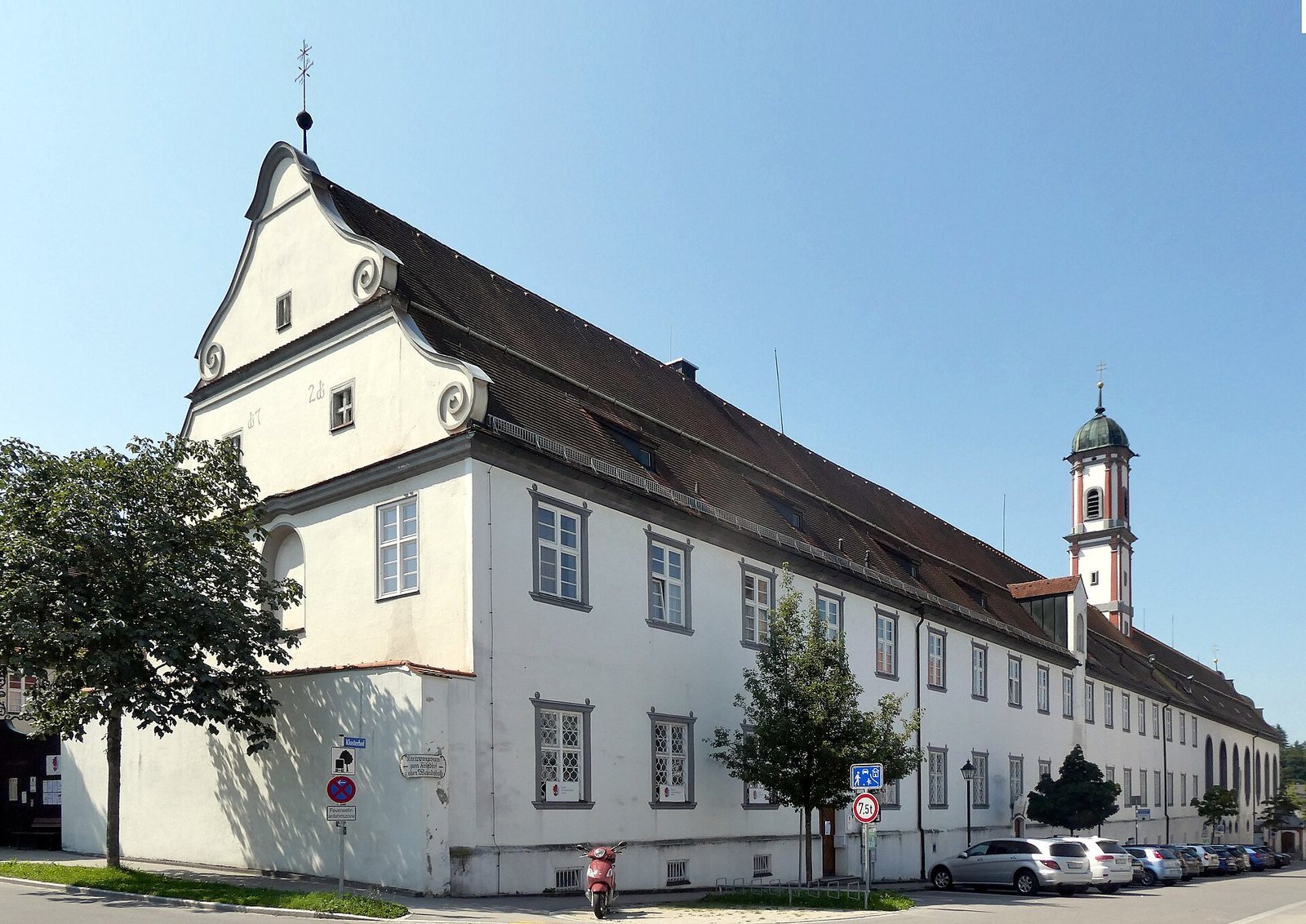
The church occupies the northern part of the convent complex and forms its western closure. A Marian Chapel is attached to its southwest, while the Kneipp Museum is housed in the east wing.
Convent church
Plan and altars
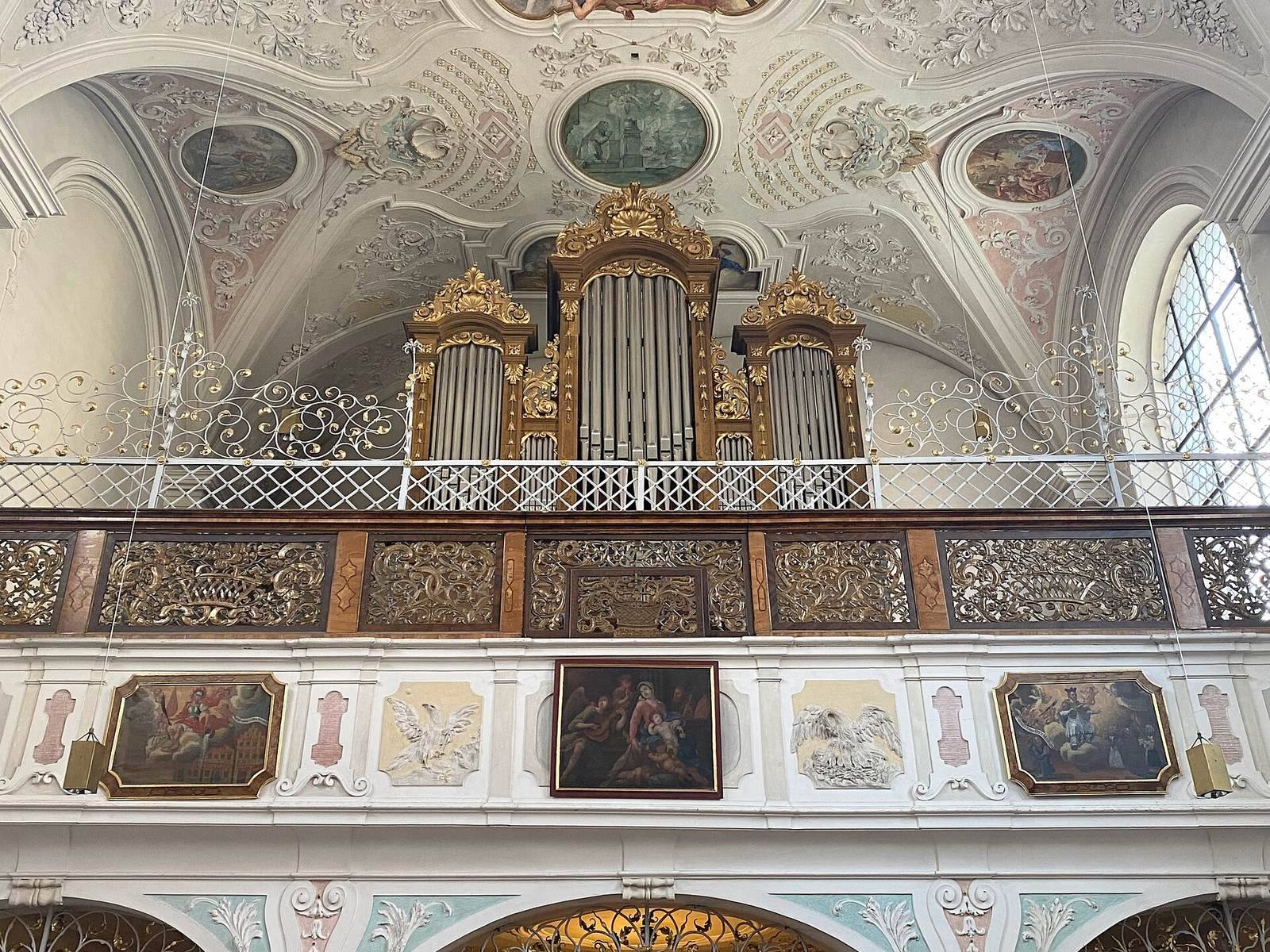
The church is a rectangular hall divided into seven bays, or structural sections. Its high altar stands near the middle. The raised area behind it is the sisters’ choir, while the two-bay nave in front accommodates the congregation. The organ occupies a gallery in the western bay. An iron grille door from the vestibule opens into the nave.
The sanctuary has a high altar and two side altars, finished with veneers of different woods and Boulle marquetry, decorative inlay combining materials such as wood and metal. The high-altar painting shows Mary crowned as Queen of the Angels, with the convent below. The left side-altar painting depicts the death of Saint Mary Magdalene; the right shows Saint Dominic and Saint Catherine of Siena receiving the rosary, a Catholic devotion of repeated Hail Mary prayers and meditations on Jesus and Mary. The upper paintings depict Saint Catherine of Alexandria and Saint Teresa of Ávila.
Carving and altar imagery
A gilded frame surrounds the high-altar painting, flanked by three columns on each side. Angels support the columns and encircle the central image; smaller angels gather around a shield bearing a Marian monogram above it. Between the columns, a statue of Pope Pius V, a Dominican friar who became pope, faces a statue of Saint Antoninus Pierozzi, a Dominican archbishop of Florence. Above the tabernacle, a small wooden pelican tears at its breast to feed or revive its young with its blood, representing Jesus’s sacrifice for humanity.
Valentin Zindter, a woodcarver from the Dominican convent in Augsburg, and his assistants made the high altar, side altars, and other carvings. Franz Haagen painted the altar pictures.
Paintings and plaster decoration
Dominikus Zimmermann created the church’s stucco, or ornamental plaster, on its walls and ceiling. His brother Johann Baptist Zimmermann painted eight large frescoes, or paintings on plaster. Four decorate the sisters’ choir ceiling, and a painting above the choir depicts Mary as queen among Dominican saints. Farther west in the nave, images show the Trinity and the Archangel Michael with his angels casting Lucifer into hell. A painting of heavenly music is positioned above the organ.
In the spaces between the curves of the vaulted ceiling, an unidentified artist painted scenes of the rosary’s mysteries and additions to the Hail Mary prayer. Small green monochrome paintings between the large frescoes depict episodes from the Dominican Order’s history.
Paintings on the south wall of the nave show the Holy Family, the Holy Spirit as a dove, and Saint Margaret of Città di Castello, a religious figure associated with the Dominican tradition. Beside the pulpit is an image of Saint Margaret of Hungary, who became a Dominican nun. Images of Saint Thomas Aquinas and Saint Leonard of Limoges hang below. The north wall depicts Saint Wendelin and Saint Raymond of Penyafort.
Organ
The organ includes the neo-Baroque case and some pipes from an instrument made in 1899 by Munich builder Franz Borgias Maerz. Around 1915, Heinrich Koulen enlarged it to 22 stops, controls that select groups of pipes and alter the sound. The Offner firm renovated the organ in 1954 and again in 1994.
Marian Chapel and east wing
Marian Chapel
Worshippers pray in the chapel for Mary’s intercession and light votive candles before the Black Madonna, a dark-toned image of Mary. The late Gothic statue is said to copy the devotional image at Einsiedeln; tradition credits Sister Maria Michaela Gonaien with bringing it to Wörishofen in 1721. The chapel also contains a late-medieval Pietà, depicting Mary mourning the dead Jesus, and a figure in textile clothing resembling the Infant Jesus of Prague.
A fire struck the chapel in 1955, but the Black Madonna was rescued. The chapel was subsequently redesigned, and Sister Donatilla von Eckardt painted its ceiling as a sky filled with flowers and plants.
East wing
The Kneipp Museum occupies the convent’s east wing and is devoted to Sebastian Kneipp.