Mogiła Abbey: A Cistercian Monastery in Kraków, Poland
Site at a Glance
- Rating
- 5
- Popularity
- Low
- Country
- Poland
- Primary era
- Medieval
- Eras represented
- Medieval, Early Modern
- Civilizations
- Kingdom of Poland, Polish–Lithuanian Commonwealth
- Site type
- Religious
- Remains
- Fortified Monastery
On this page11 sections
History
Mogiła Abbey is a Cistercian monastery in Kraków’s present-day Nowa Huta district, Poland, founded in 1222. The Cistercians, a Catholic monastic order rooted in the Benedictine tradition and centered on communal religious life, built a church combining Romanesque and Gothic styles, successive European architectural traditions. The foundation served religious purposes and the prestige of its patrons. Concern for the monks’ safety in a region only partly Christianized also shaped plans for a secure, self-sufficient monastery.
Foundation at Kacice and Mogiła
Cistercian monks were present around Kraków by the 1210s. In 1219, a group from Lubiąż Abbey arrived at the invitation of Iwo Odrowąż, Bishop of Kraków, during the rule of Henry I the Bearded, Duke of Silesia. Iwo and his brother Wisław initiated the foundation. The community first settled at Kacice, near the Vistula, around 1218–19, on land provided by Iwo. Work on the Mogiła foundation began in 1222. The monks acquired land there in 1225 and moved to the site around that time.
Iwo secured papal protection and confirmation of the abbey’s donations. On 9 June 1228, Pope Gregory IX formally confirmed the monastery by papal decree. Its Latin name, Clara Tumba, or “Bright Tomb,” echoed the meaning of Mogiła, “tomb,” and the place-name of nearby Wanda Mound. Mogiła was then a village separate from Kraków; it is now part of the city.
Rebuilding and medieval development
Mongol forces ransacked the abbey in 1241. The community rebuilt, and Bishop Jan Prandota of Kraków consecrated the abbey church in 1266. Before Wawel Cathedral was built, the church was described as the largest in Lesser Poland. Afterward, it was regarded as medieval Poland’s largest and most impressive church.
Renaissance growth and artistic patronage
A major fire badly damaged the abbey in 1447. During the 16th and 17th centuries, the monastery prospered and established a brewery, a paper mill, and a copper foundry. Erazm Ciołek, elected abbot in 1522, helped restore its standing and greatly enlarged its rare-book collection. He died in 1546 and was buried in the abbey cemetery. Ciołek employed the painter Stanisław Samostrzelnik, who worked at the abbey in his final years and died there in 1541.
Wartime destruction and restoration
During the Thirty Years’ War, Swedish forces burned and ravaged the abbey while Austrian troops under General Wirtz had been stationed there. All but two of the monks were killed. The church was later restored and reconsecrated in 1780 under the name Holy Cross.
Reopening and modern standing
The abbey closed in 1851 and reopened in 1925. It then became the mother abbey of active Polish Cistercian houses, and Szklane Domy has been identified as its daughter abbey since 1991. Mogiła has remained affiliated with the Cistercian Order and is a Catholic abbey in the Archdiocese of Kraków. Pope Paul VI raised the abbey church to the rank of minor basilica in 1970. In 1979, Pope John Paul II celebrated Mass in nearby Nowa Huta Meadows before an estimated 200,000 people. Poland designated the abbey a Historic Monument in 2023.
Remains
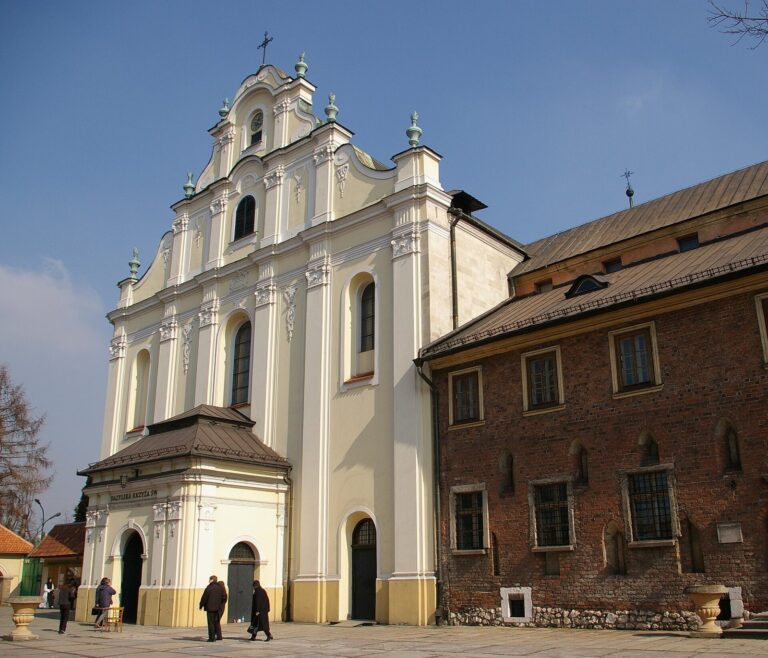
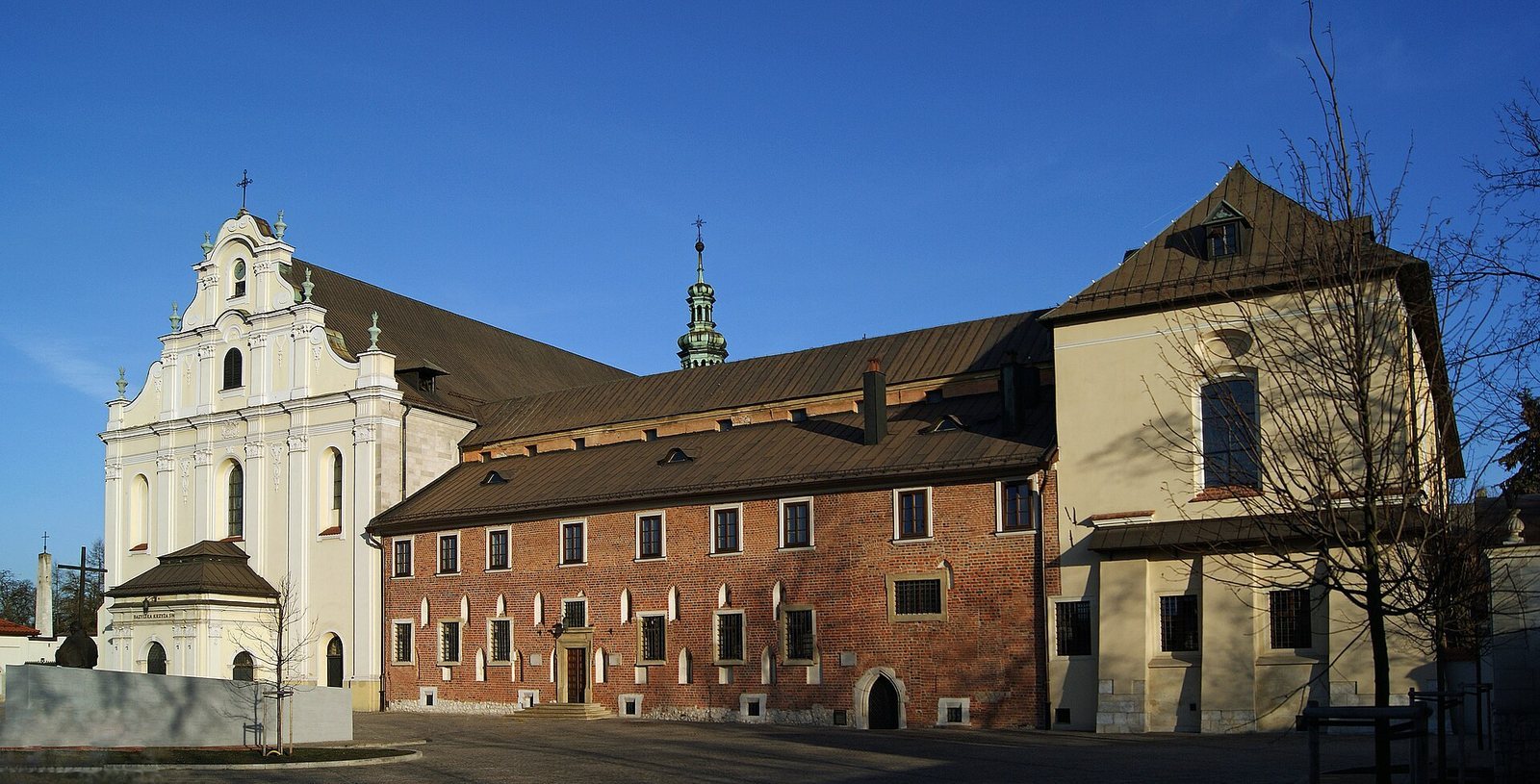
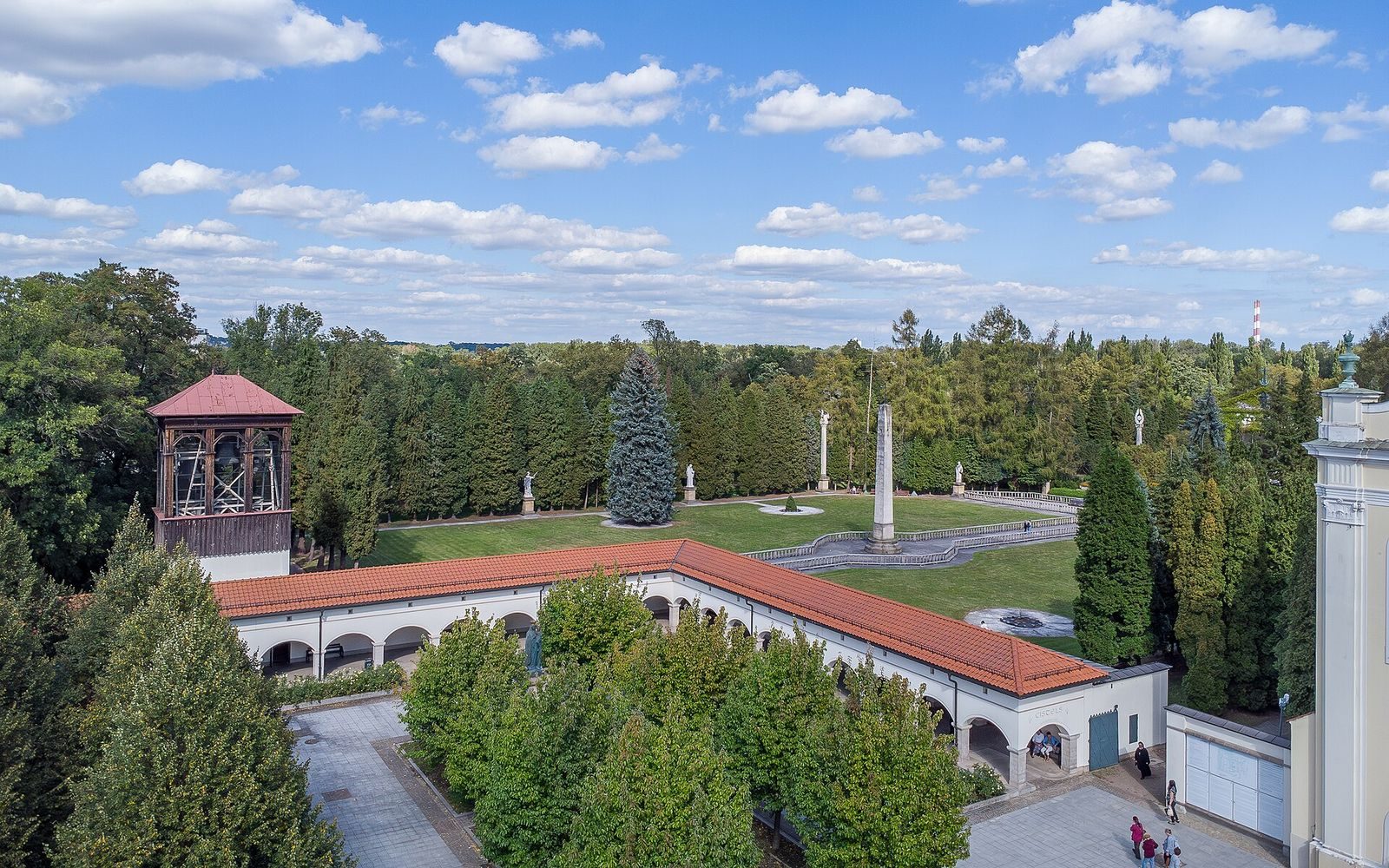
A perimeter wall and ditches enclose the abbey precinct. Within it, the red-brick monastery is arranged around a broad inner courtyard, alongside the abbey church.
Abbey church
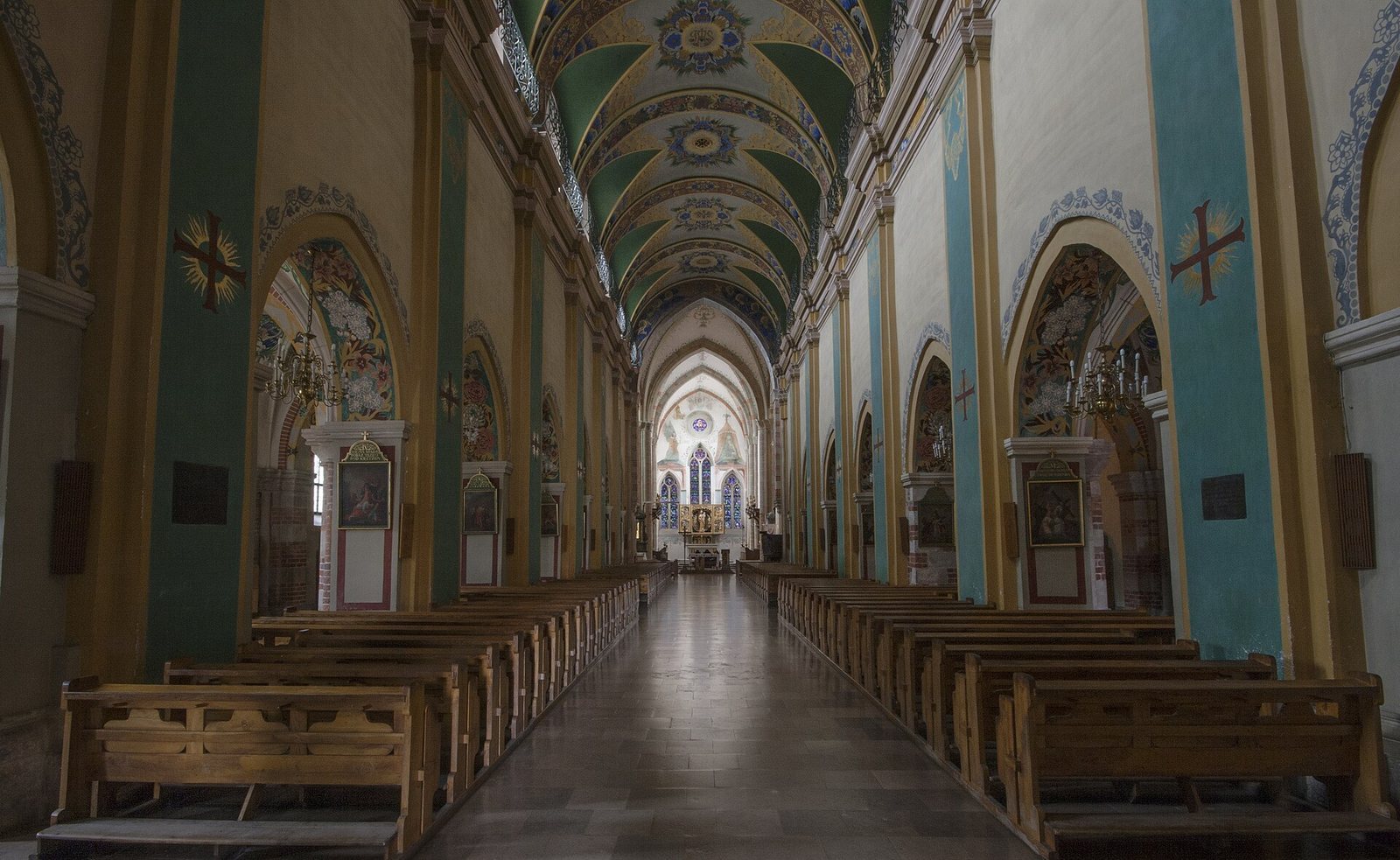
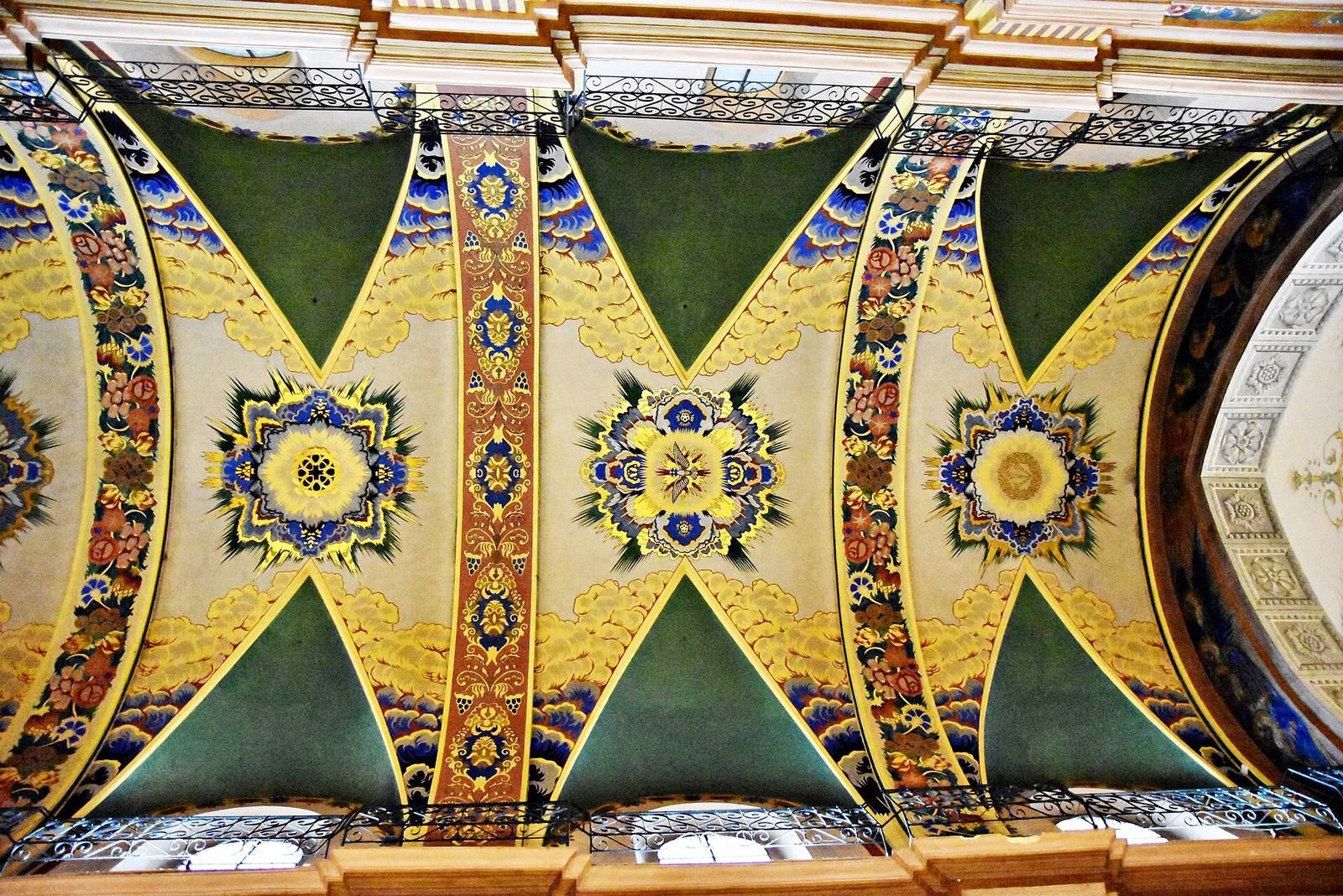
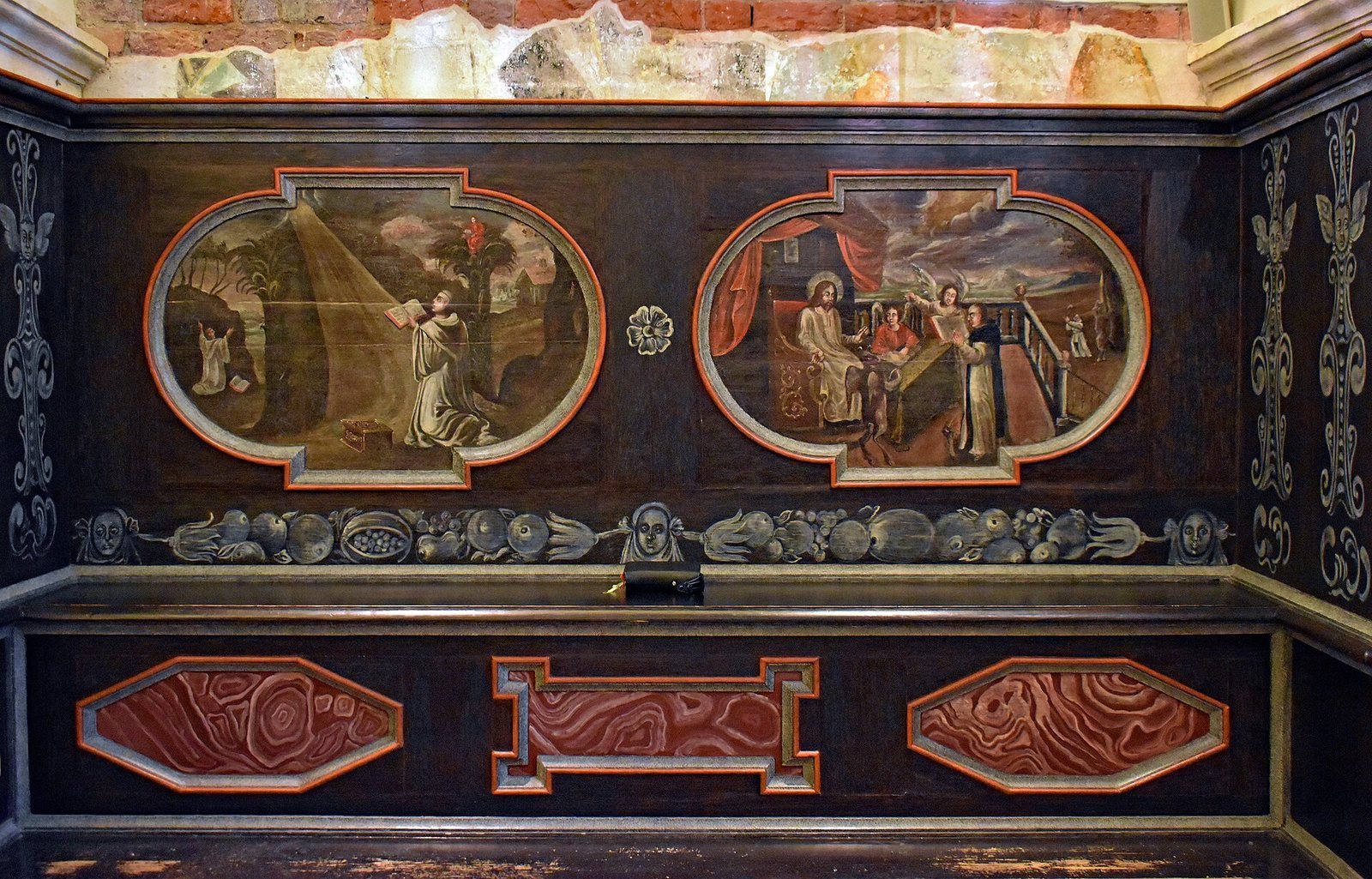
The church combines Romanesque elements with Gothic architecture, a combination described as Polish Gothic. Its Baroque façade, a later European architectural style, was added in 1779–80. Paintings by Samostrzelnik decorate the Gothic interior, particularly its vaulted ceilings. His wall paintings include works in the church’s right-hand crosswise section and a chapel, as well as a painting on the front wall of the altar area from around 1530. The church serves both the monks and the parish of Saint Bartholomew the Apostle.
Monastery and grounds
The precinct also contains outbuildings, a vegetable garden, a greenhouse, and the abbot’s palace. Dating to around 1569, the palace is in the Polish Renaissance style, a later European architectural tradition.
Cemetery
Seventeen graves of Odrowąż family members survive in the abbey cemetery.
Wanda Mound
Wanda Mound, an ancient burial mound, lies within about a mile of the abbey.