Forte Lorenese: An Eighteenth-Century Coastal Fort in Italy
Site at a Glance
- Rating
- 4.5
- Popularity
- Low
- Country
- Italy
- Primary era
- Early Modern
- Eras represented
- Early Modern
- Civilizations
- Grand Duchy of Tuscany
- Site type
- Military
- Remains
- Fort
On this page6 sections
History
Eighteenth-century coastal defense
Forte Lorenese is an eighteenth-century coastal fort in Forte dei Marmi, Italy, built by the House of Lorraine, a European ruling dynasty whose members governed the Grand Duchy of Tuscany. The fort was intended to defend and observe the grand duchy’s northern coast, and it also helped protect public health. It formed part of a coastal network that included forts at Castagneto and Bibbona; the fort at Bibbona is dated to 1788. Forte Lorenese could exchange light signals with the fortifications at Cinquale to the north and Fort Motrone to the south. Both were destroyed by bombing during the Second World War.
Port and civic uses
When Forte dei Marmi served as a port for marble shipments, the fort was used to store the stone. It stood opposite the wooden pier where marble was loaded. During Fascist rule in Italy, the building became the town’s Casa del Fascio, or local Fascist organization headquarters, also called the Palazzo Littorio, a term for a Fascist public or administrative building. It later housed the post office.
Museum use
After a period out of use, Forte Lorenese became the home of the Museum of Satire and Caricature. It currently serves as a museum.
Remains
Plan and construction
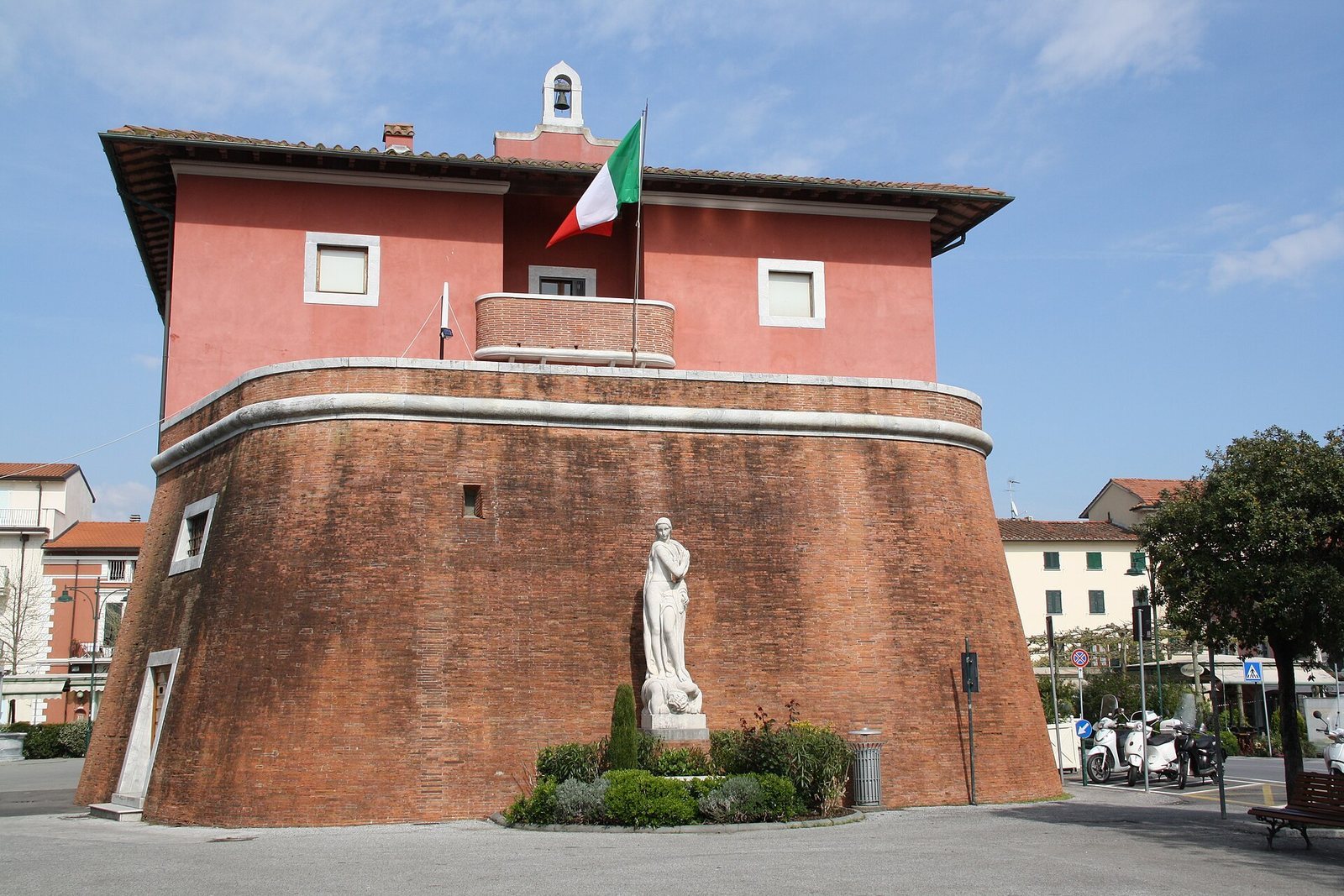
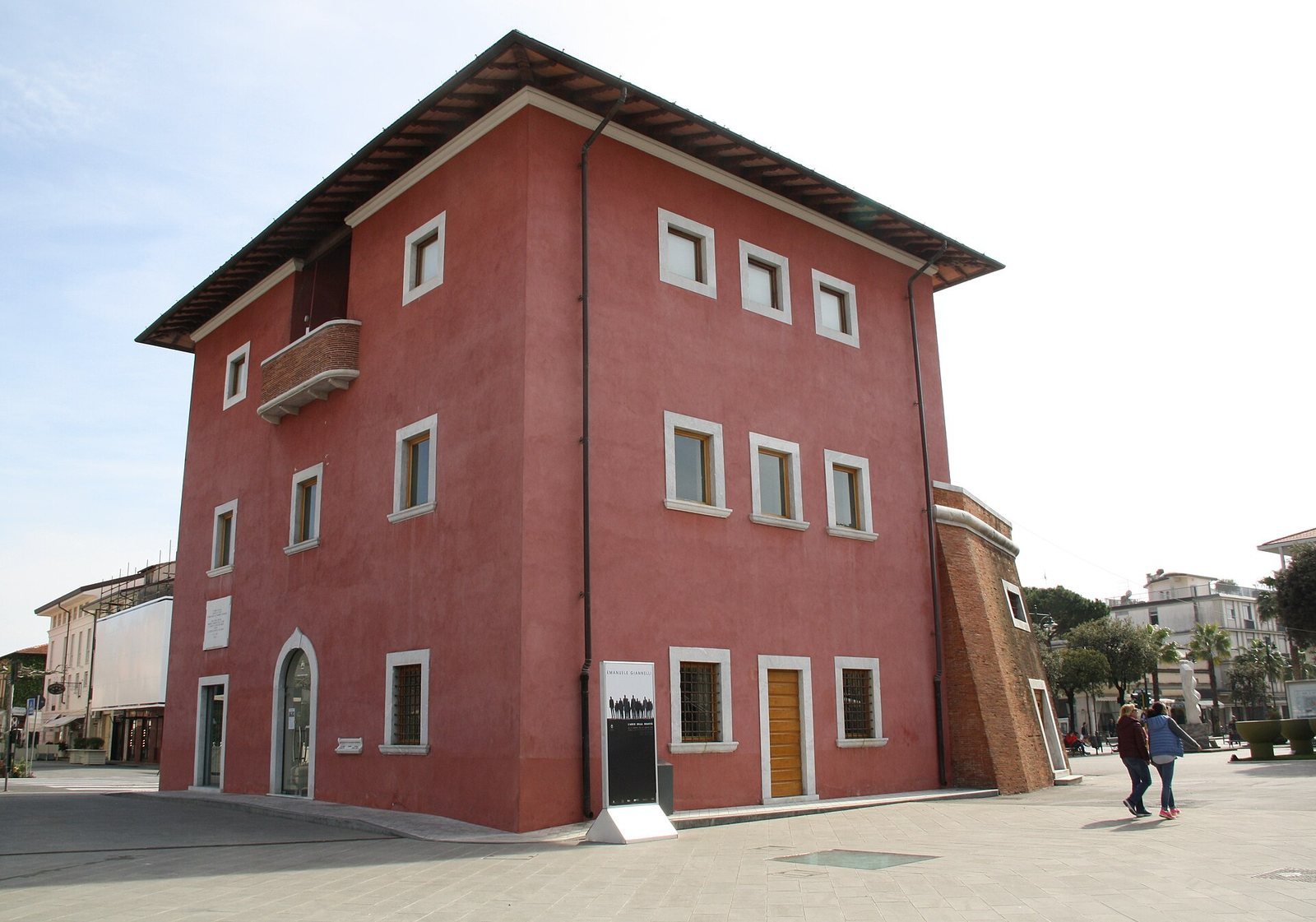
In the center of Forte dei Marmi, the fort forms a quadrangular complex of two adjoining buildings. The main building has a rectangular plan and also served as a residence. Its hipped roof, sloping on all four sides, is topped at the center by a small bellcote, a structure that supports a bell. A bastion, a projecting defensive structure, adjoins one of the building’s long sides. Its broad sloping base rises to a lookout terrace, reached from the main building’s raised ground floor. Brick faces the bastion’s masonry, while the main building has plastered walls.