Bürg Castle: A Late-Gothic Manor House in Germany
Site at a Glance
- Rating
- 5
- Popularity
- Very Low
- Country
- Germany
- Primary era
- Early Modern
- Eras represented
- Medieval, Early Modern
- Civilizations
- Holy Roman Empire
- Site type
- Domestic
- Remains
- Castle
On this page6 sections
History
Origins and Gemmingen lordship
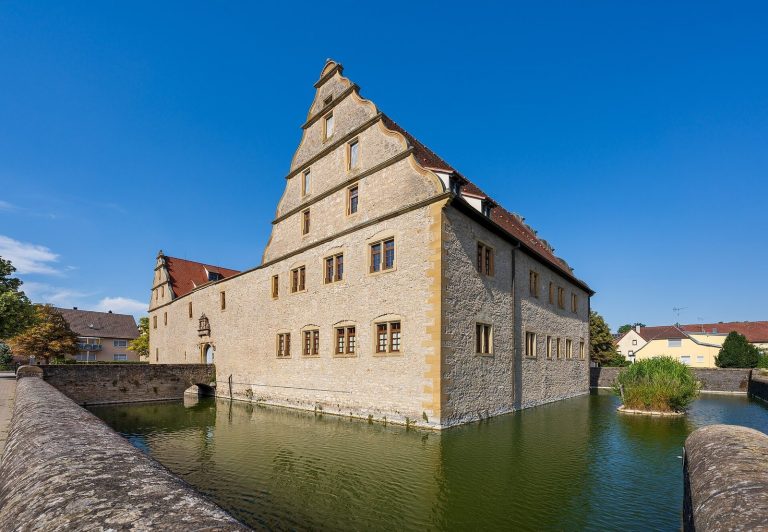
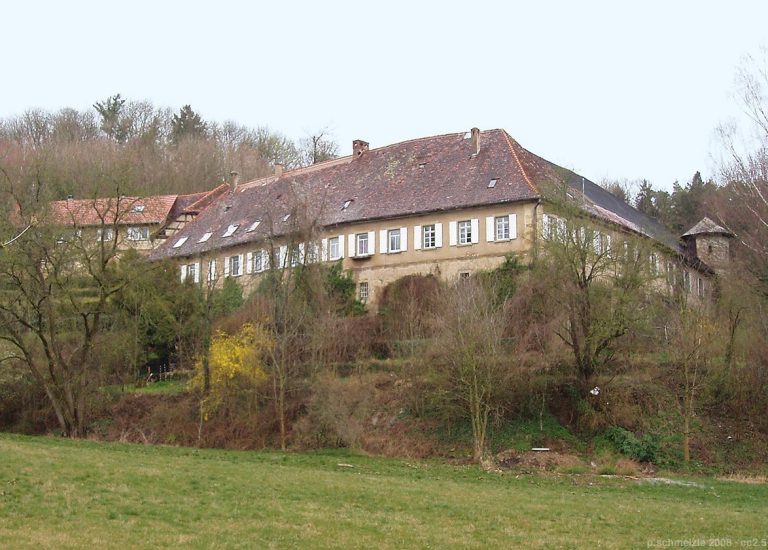
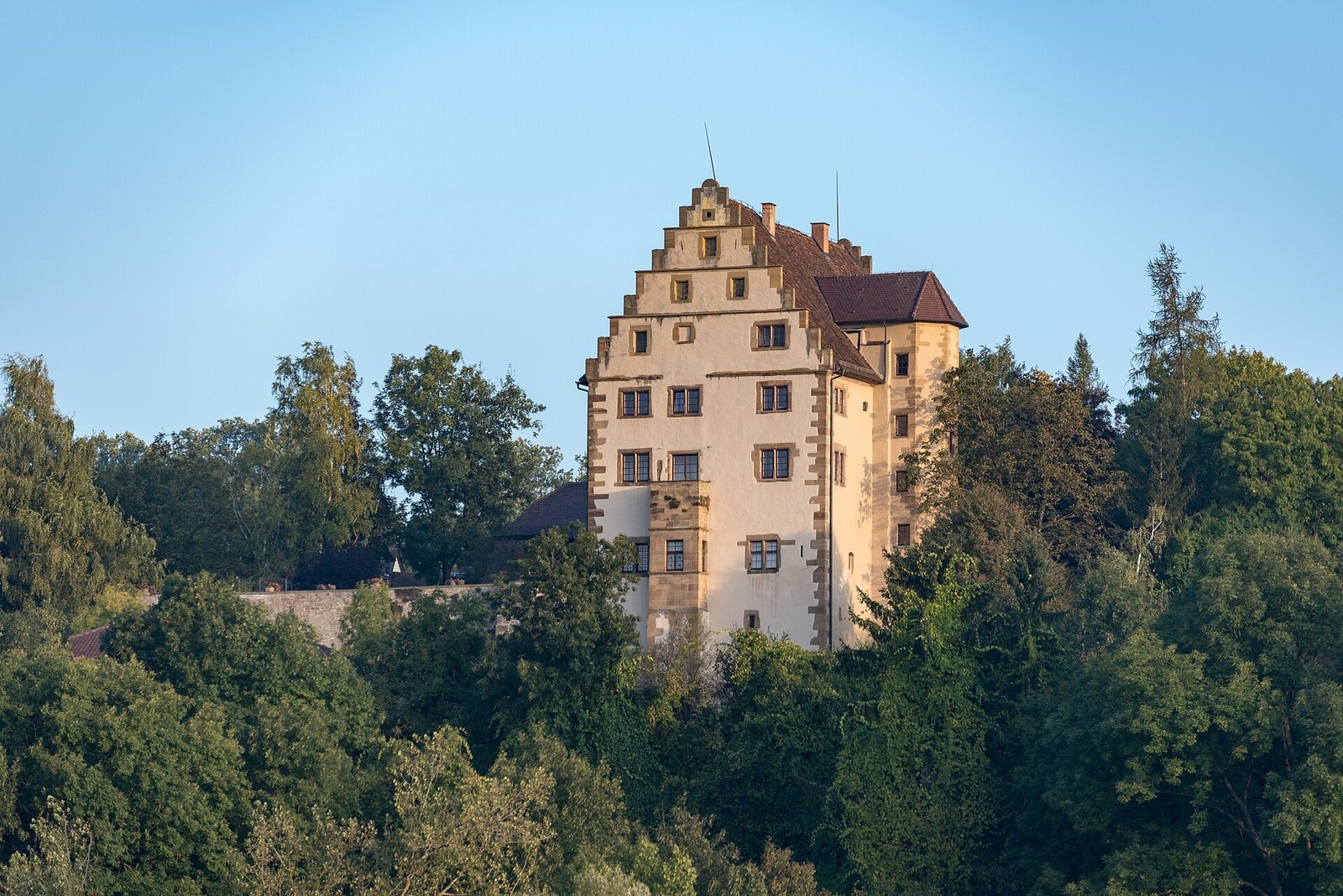
Bürg Castle is a late-Gothic stone manor house in Bürg, Germany, whose present building was erected in 1545 by the barons of Gemmingen. Its late-Gothic design belongs to the later phase of medieval Gothic architecture. Bürg’s settlement traces its beginnings to an 11th-century castle belonging to the Lords of Gosheim, also known as Gochsen. From 1334, co-heirs held the castle, including members of the Gemmingen, Aschhausen, Beutingen, Greck von Kochendorf, Talheim, and Weinsberg families.
The Gemmingen family gained sole possession in 1456. They established the settlement by placing people attached to the manor in the castle’s forecourt, and they held local lordship until 1806. Eberhard von Gemmingen zu Bürg introduced the Reformation, a 16th-century movement that brought religious change and established Protestant churches in Europe, in Bürg in 1541. Four years later, he patronized construction of the new manor house.
Wartime damage and later ownership
French forces burned the castle in 1646 during the Thirty Years’ War, a major European conflict fought from 1618 to 1648. The estate inventory of Achilles Christoph von Gemmingen records the fire.
During the Second World War, refugees were housed in the castle, followed later by soldiers. Near the end of the war, artillery fire from advancing American forces severely damaged the building. Looting followed the Americans’ entry. Hans-Weiprecht Freiherr von Gemmingen-Hornberg was later succeeded by his grandson, Nikolaus Freiherr von Mentzingen, the current owner.
Remains
Castle and moat
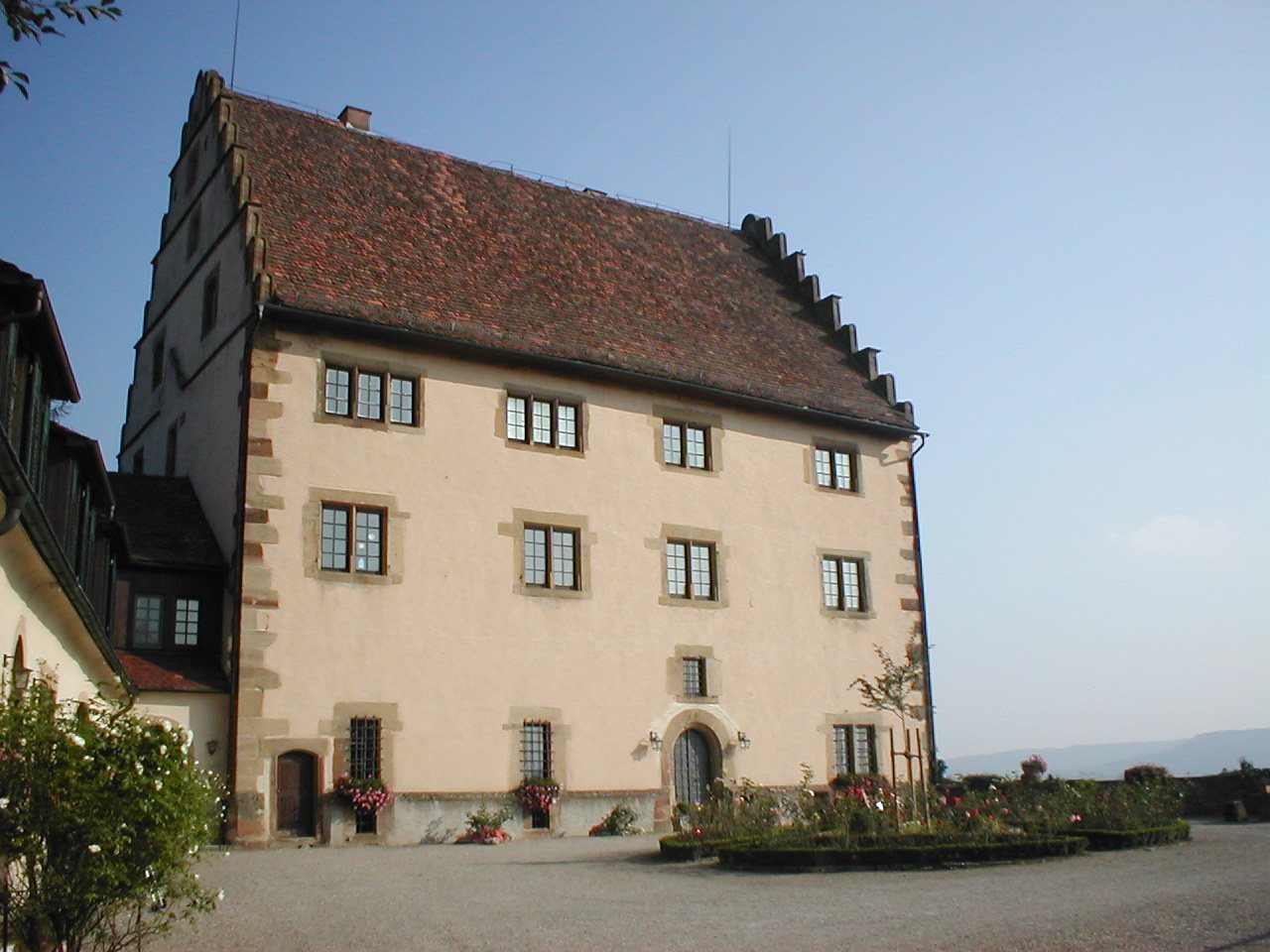
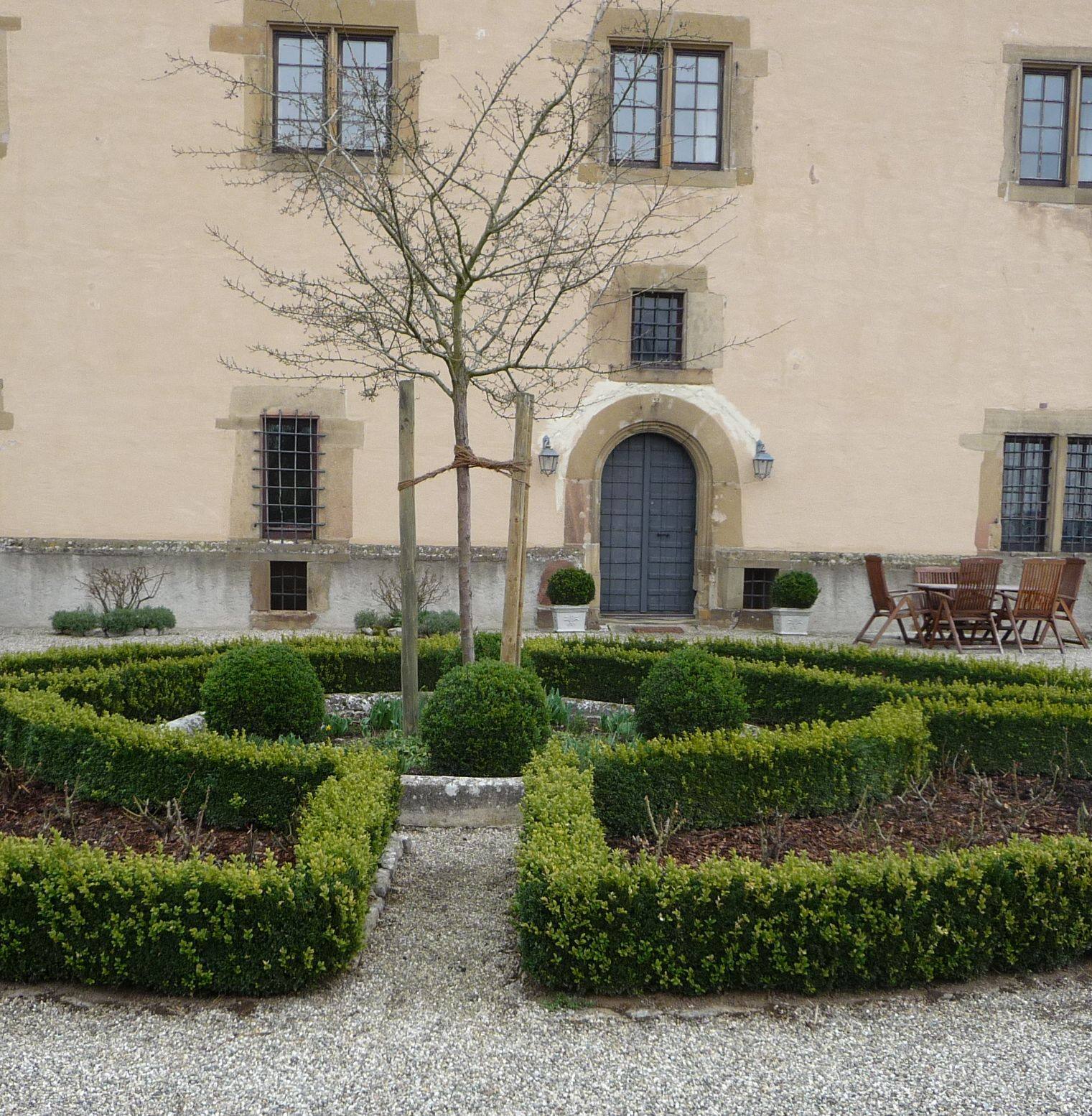
The stone castle stands on the northern slope of the Kocher valley, opposite Neuenstadt am Kocher and at the eastern edge of Bürg’s old center. Its stepped gable, a raised terrace attached to the south gable facing the valley, and a stair tower on the eastern side shape the exterior. Some interior rooms have vaulted ceilings, including the house chapel. A moat separates the castle from the settlement; two bridges formerly crossed it.
Garden grounds
The castle garden once extended northwest of the building, with avenues, a woodland park, and ponds. Its avenues were formerly open to the public, and the grounds became a popular excursion destination. The garden area is now built over.