Litzlberg Castle: A Historicist Residence on Lake Attersee
Site at a Glance
- Popularity
- Medium
- Country
- Austria
- Primary era
- Modern
- Eras represented
- Early Modern, Modern
- Civilizations
- Austria-Hungary, Habsburg, Habsburg Austria, Holy Roman Empire
- Site type
- Domestic
- Remains
- Elite Residence
On this page7 sections
History
Medieval and Early Modern Ownership
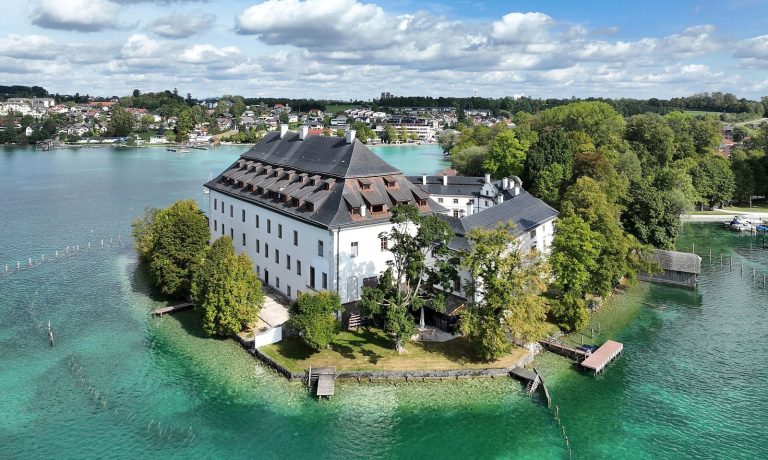
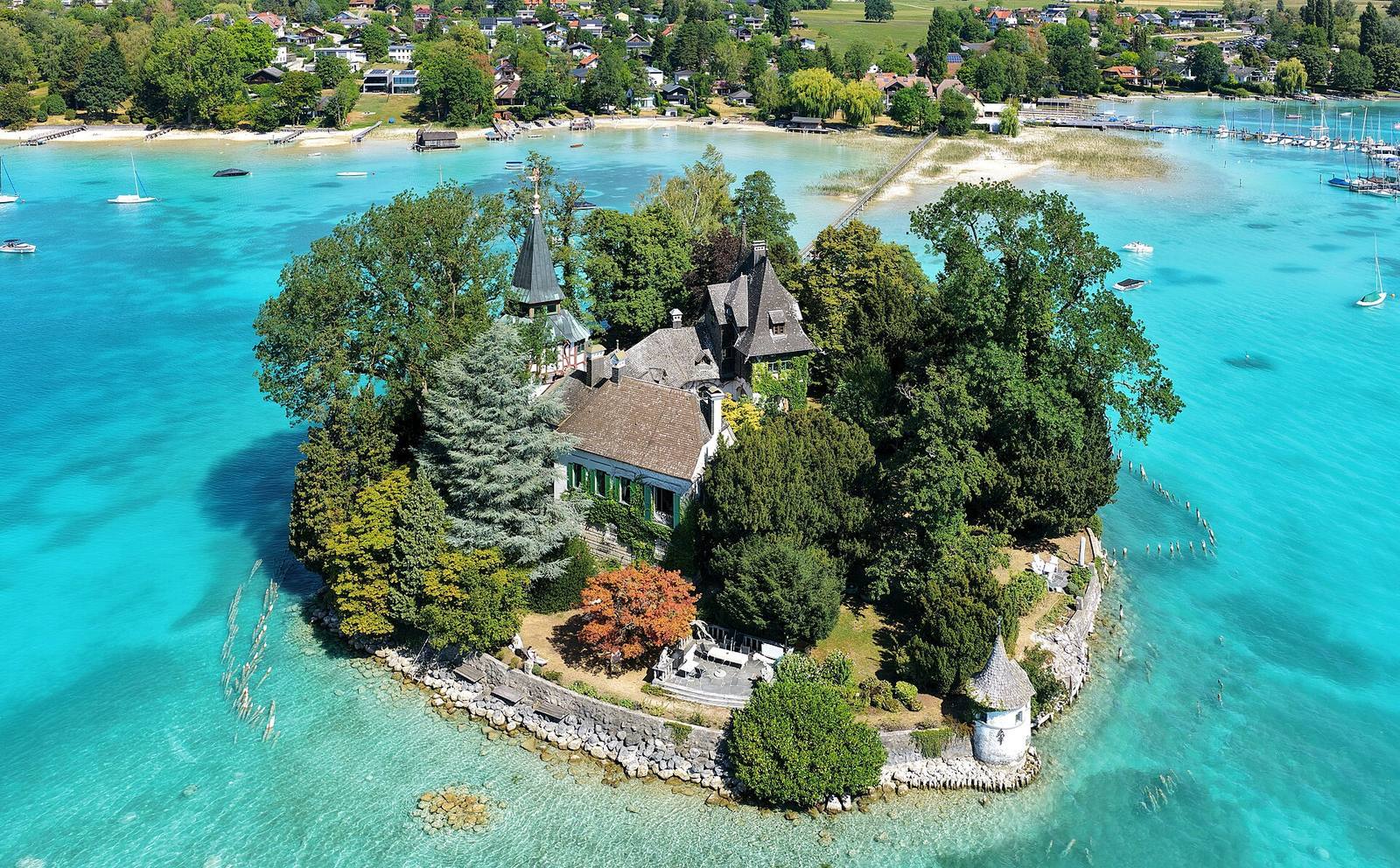
Castle Litzlberg stands on a small island in Lake Attersee, in Seewalchen am Attersee, Austria. Originally called Lützelburg, meaning “small castle,” it was first held as a fief from Mondsee, land granted under a feudal arrangement in return for obligations. Around 1313, it passed to Winter von Windern, also known as Windner von Slematig.
In 1498, Preunhuber sold the castle to Martin II von Polheim. Weikart von Polheim transferred it to Sigmund Engl von Wagrain in 1603. In 1655, it came into the hands of Johann von Khunitz, a revenue collector for the Upper Austrian provincial estates, and later the imperial forester Johann Christoph Staindl von Plötzened. Elias von Seeau bought the castle and its island in 1664.
Decline of the Old Castle
Around 1769, Litzlberg passed to Count Johann Gottlieb von Clam. By 1780, the old castle’s masonry had become ruinous, and the building was dismantled apart from one corner turret. Its stone was reused to rebuild the market town of Schörfling after a fire. The property passed to court advocate Dr. Josef Preuer in 1802 and to Josef Weichs in 1814.
The Country Residence and Later Owners
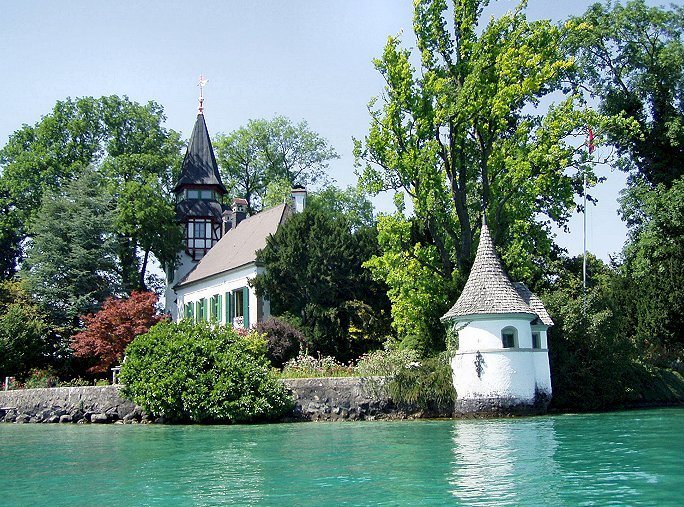
After 1896, a new country residence in the Historicist style, which draws on forms from earlier architectural periods, was built for Viennese banker von Springer. The property was also associated with Baron E. von Springer (1895–1897), before passing to steel industrialist Böhler and his descendants. In 1974, brick manufacturer Karl Leitl acquired the island, also known as Böhlerinsel. The island and castle remain in the Leitl family.
Painter Gustav Klimt spent several summers at Litzlberg and made a number of paintings depicting Lake Attersee.
Remains
The Island and Former Castle
The castle stands on an island covering 6,000 square metres. A 1674 engraving by Georg Matthäus Vischer depicts the former castle as a substantial group of buildings. It included a square tower with smaller watch turrets at its corners and a separate round tower capped by an onion-shaped dome. A wooden bridge connected the castle to the shore, while a palisade fence in the lake provided protection.
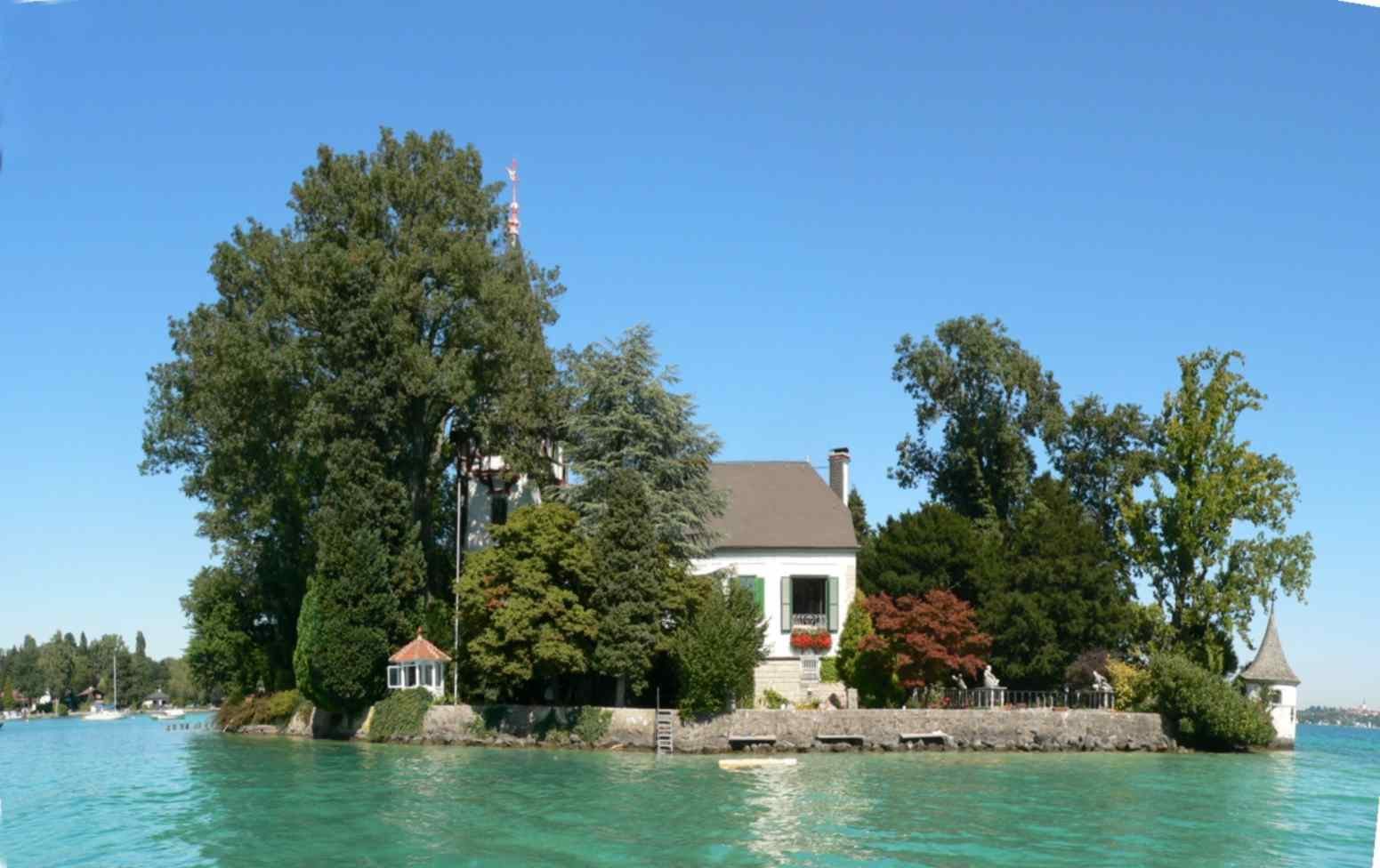
Dismantling the old castle left one corner turret standing. The engraving preserves a view of the earlier complex, while this turret was the exception to the removal of the old masonry.
Present Residence and Island Access
The present castle is the later country residence, built in the Historicist style after 1896 and since fully renovated. A new jetty connecting to the island was built in 1917.