Garsten Abbey: A Medieval Monastery and Benedictine Center in Austria
Site at a Glance
- Popularity
- Very High
- Country
- Austria
- Primary era
- Early Modern
- Eras represented
- Early Modern, Modern
- Civilizations
- Habsburg, Habsburg Austria, Holy Roman Empire
- Site type
- Religious
- Remains
- Monastery
On this page10 sections
History
Garsten Abbey is a former monastic house in Austria, founded between 1080 and 1082 by Ottokar II of Styria as a community of secular canons, clergy who lived together but were not members of a monastic order. It also served as a burial place for his dynasty. Together with his fortress, Styraburg, the abbey helped establish a center of Traungau rule. Its early endowment included extensive lands in Lower Austria’s Traisen and Gölsen valleys, probably received as part of the dowry of Ottokar’s wife, Elisabeth, daughter of Babenberg ruler Leopold II.
Foundation and Benedictine reform
In 1107–1108, the community became a priory, a religious house governed by a prior and dependent on Göttweig Abbey. In 1110–1111, it became an independent Benedictine abbey in the Diocese of Passau, a church territory overseen by a bishop. Ottokar imposed the change. When the canon Eberhard resisted, Ottokar had him bound and flogged until he submitted.
Berthold, the first abbot, led Garsten from 1111 to 1142 and promoted the Hirsau Reforms, a movement to renew Benedictine monastic life. Under his leadership the abbey became a center of religious practice, learning, and culture in the Eisenwurzen, an Austrian region historically associated with ironworking. Berthold was buried in the abbey church. Monks from Garsten established Gleink Abbey during the 1120s.
Land, parishes, and regional influence
After 1138, Sophie, widow of Leopold I the Strong, left her entire lordship of Gaflenz to Garsten. She was regent, governing on behalf of Ottokar III of Styria. Gaflenz had been dependent on Waidhofen an der Ybbs; it was raised to parish status, with limits identified by Neustiftergrabenbach, Bischofberg, and Frenzbach. In 1151, Bishop Konrad I of Passau exchanged his right to collect tithes in Gaflenz, a tithe being a church levy on produce or income, with the abbey.
Garsten held dependent parishes in the Enns and Steyr valleys. From the mid-1160s, St. Magdalena parish church in Linz was under the abbey’s control as a proprietary church, meaning an institution held authority over it. The abbey also owned a vineyard in Nußdorf, Vienna, and a bathing establishment in nearby Heiligenstadt. From 1625, it belonged to the Austrian Congregation, an association of Benedictine monasteries.
Rebuilding, dissolution, and reuse
A major rebuilding campaign began in 1677 under the Carlone family, starting with the church before extending to the monastery complex. Work on the complex continued from 1708 to 1726. In 1784, Garsten became part of the Diocese of Linz after Emperor Joseph II compelled Passau to give up its parishes in Upper and Lower Austria. Joseph II dissolved the abbey in 1787. Its last abbot, Maurus Gordon, had held office from 1764 to 1786 and also administered the dissolved Gleink Abbey from 1784.
In 1789, the abbey’s theatre was dismantled and transferred to Steyr. It was reassembled in a former church of the Celestine nuns and operated as a town theatre until 1958; the building now houses a music school. From around 1850, the former monastery buildings were adapted for prison use, while the former abbey church continued as a parish church.
Remains
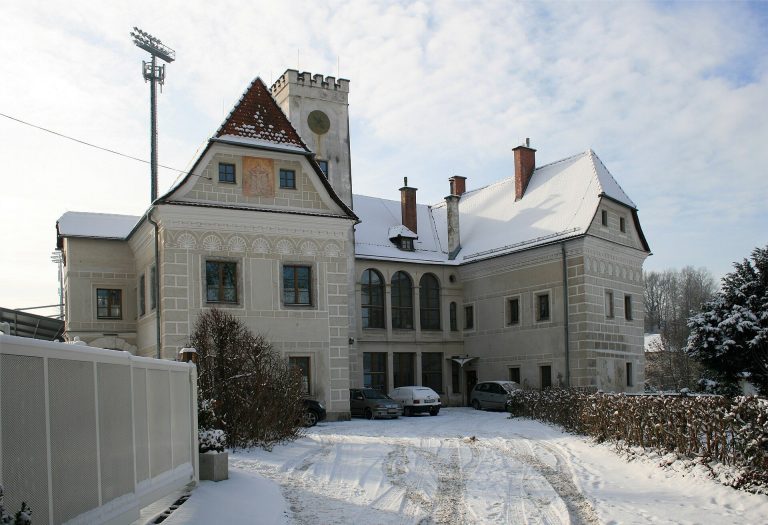
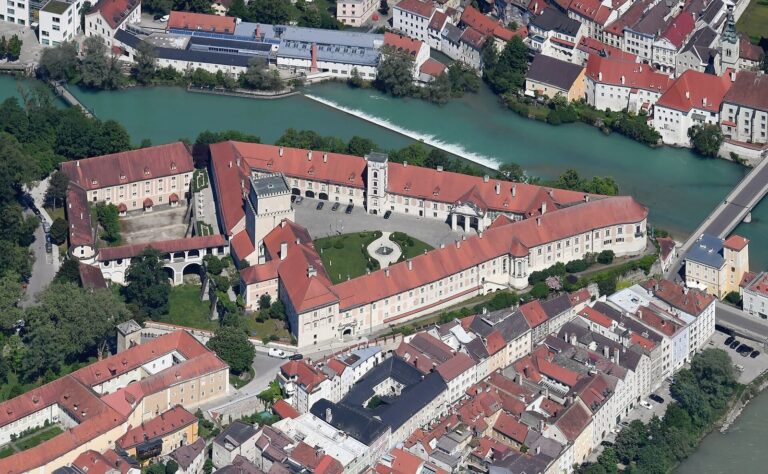
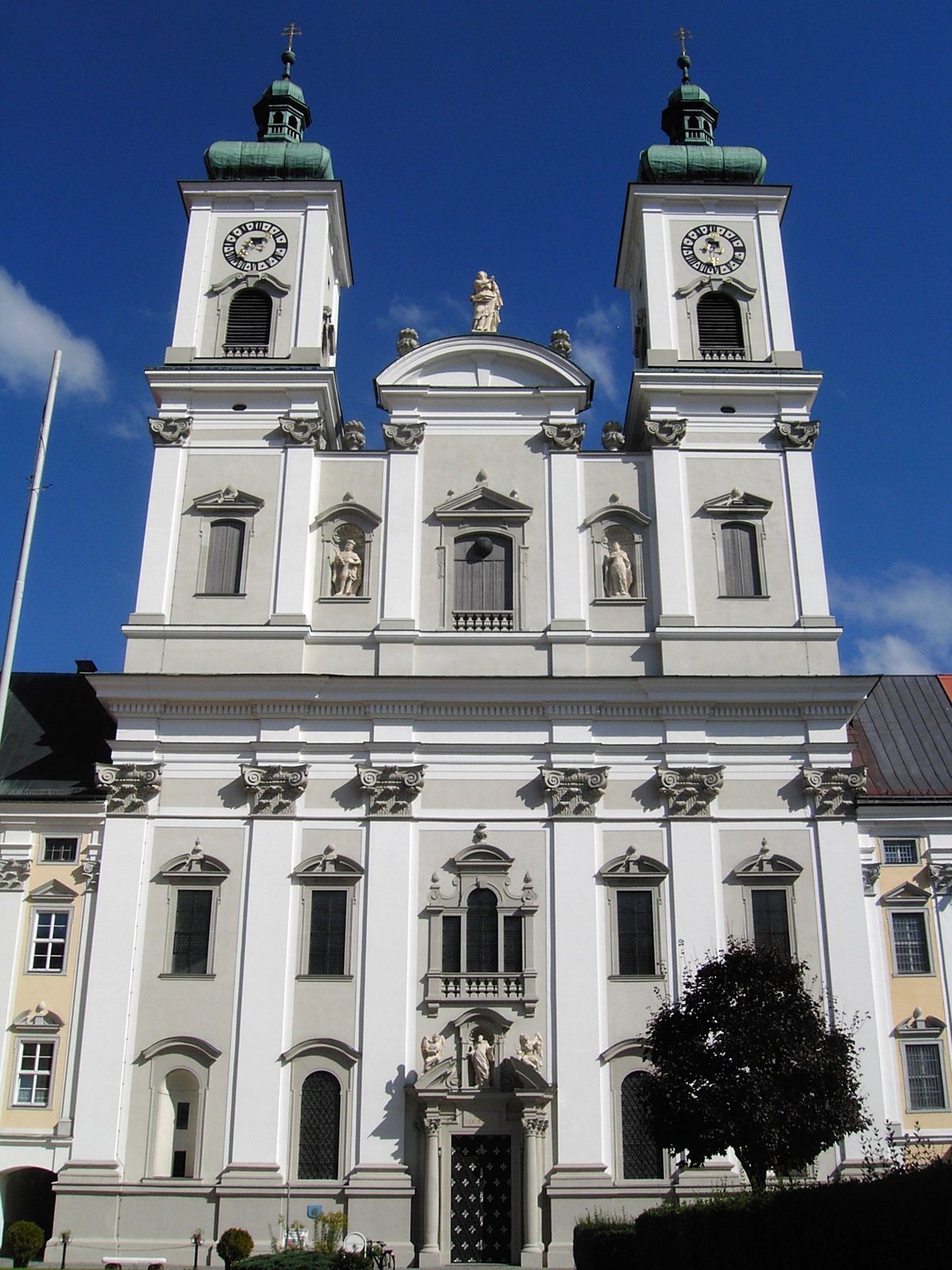
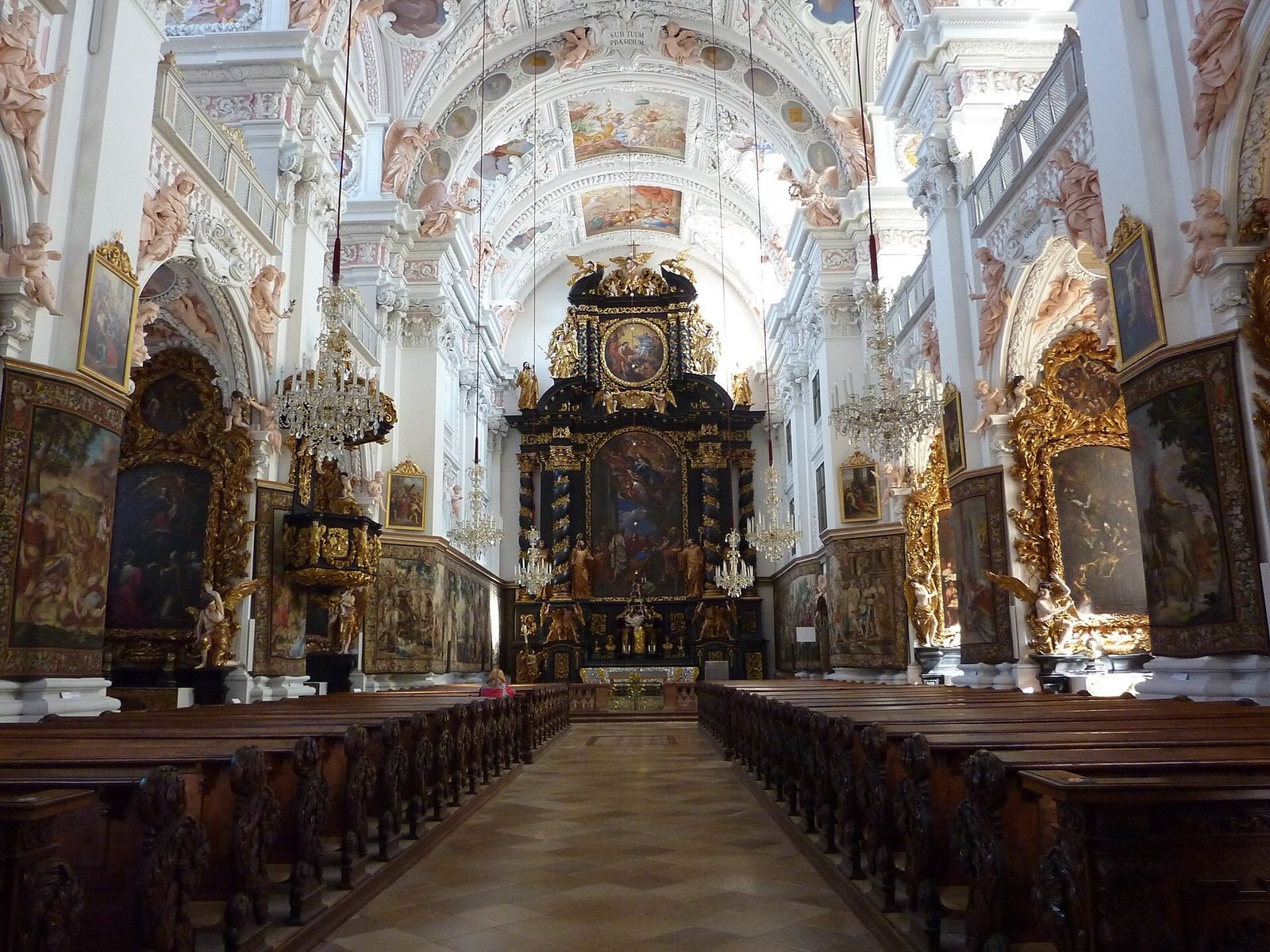
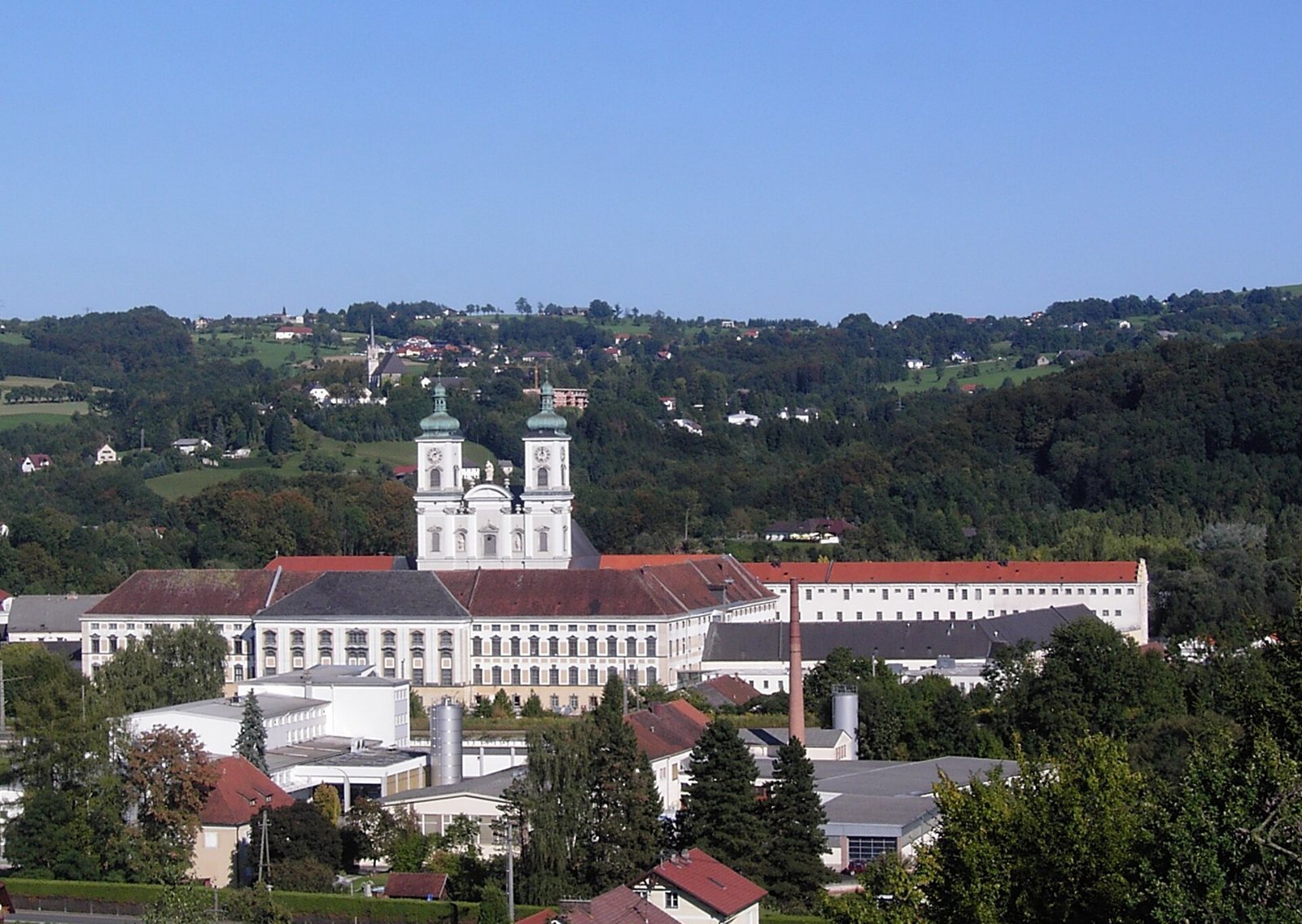
The surviving complex includes the former monastery buildings and the abbey church. The church is a High Baroque building, belonging to an elaborate phase of Baroque architecture.
Built remains
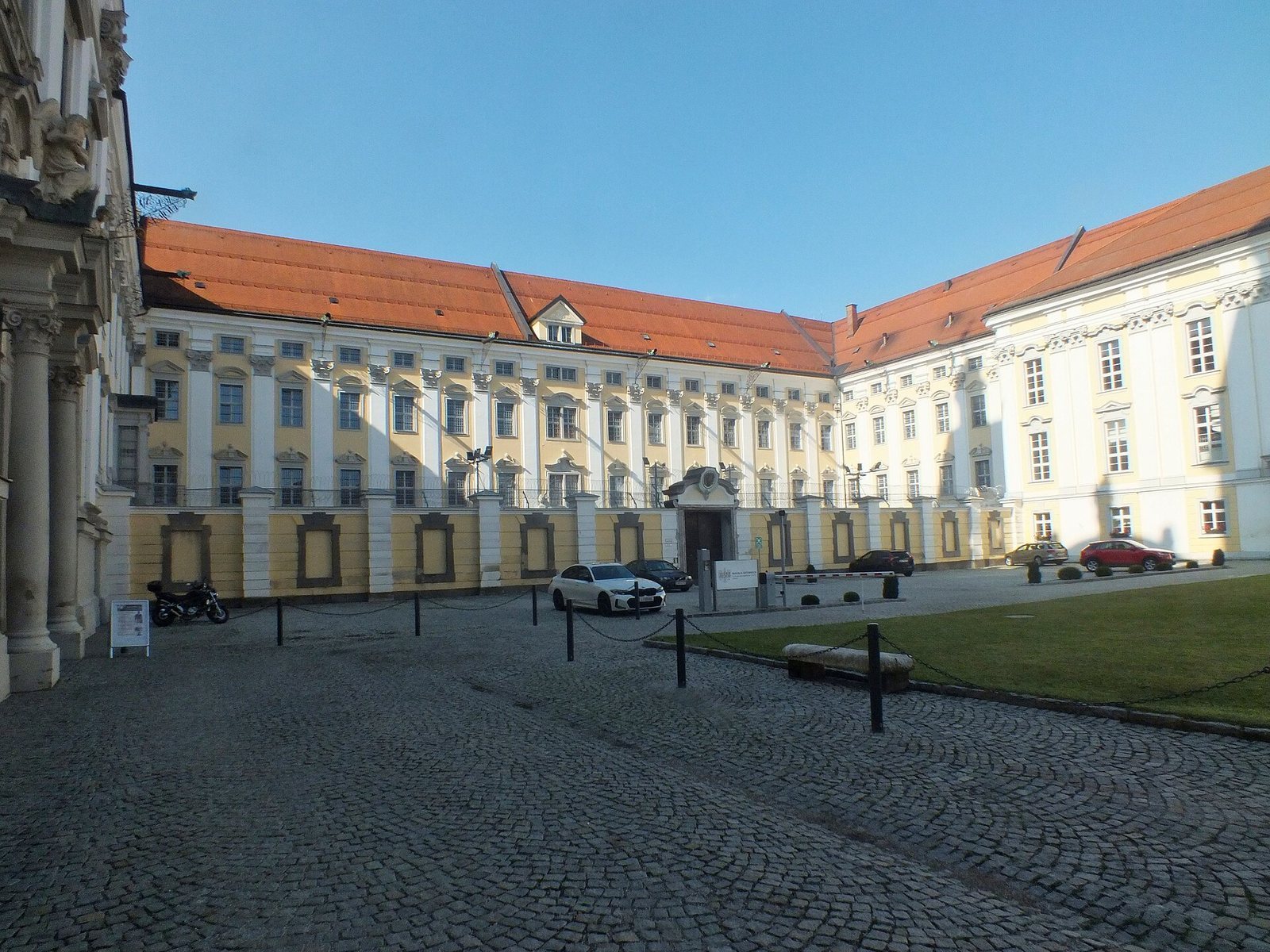
Former monastery buildings
The former monastic buildings remain part of the complex and now accommodate a prison.
Abbey church interior and fittings
Pietro Francesco Carlone designed the church on the model of the church of the Jesuits, a Catholic religious order, in Linz. His sons Carlo Antonio and Giovanni Battista completed it. The interior is noted for its decorative plasterwork and Dutch tapestries. During Advent and Lent, the tapestries are covered by Lenten cloths, fabric veils used to cover religious furnishings, designed by the Baroque painter Kremser Schmidt. The Losenstein Chapel is the burial place of the Losenstein family. Other features include the sacristy, a room used to prepare for worship, and a summer choir, an area designated for choir use during summer. A stone bearing a coat of arms is set above the church’s north doorway.
Berthold organ
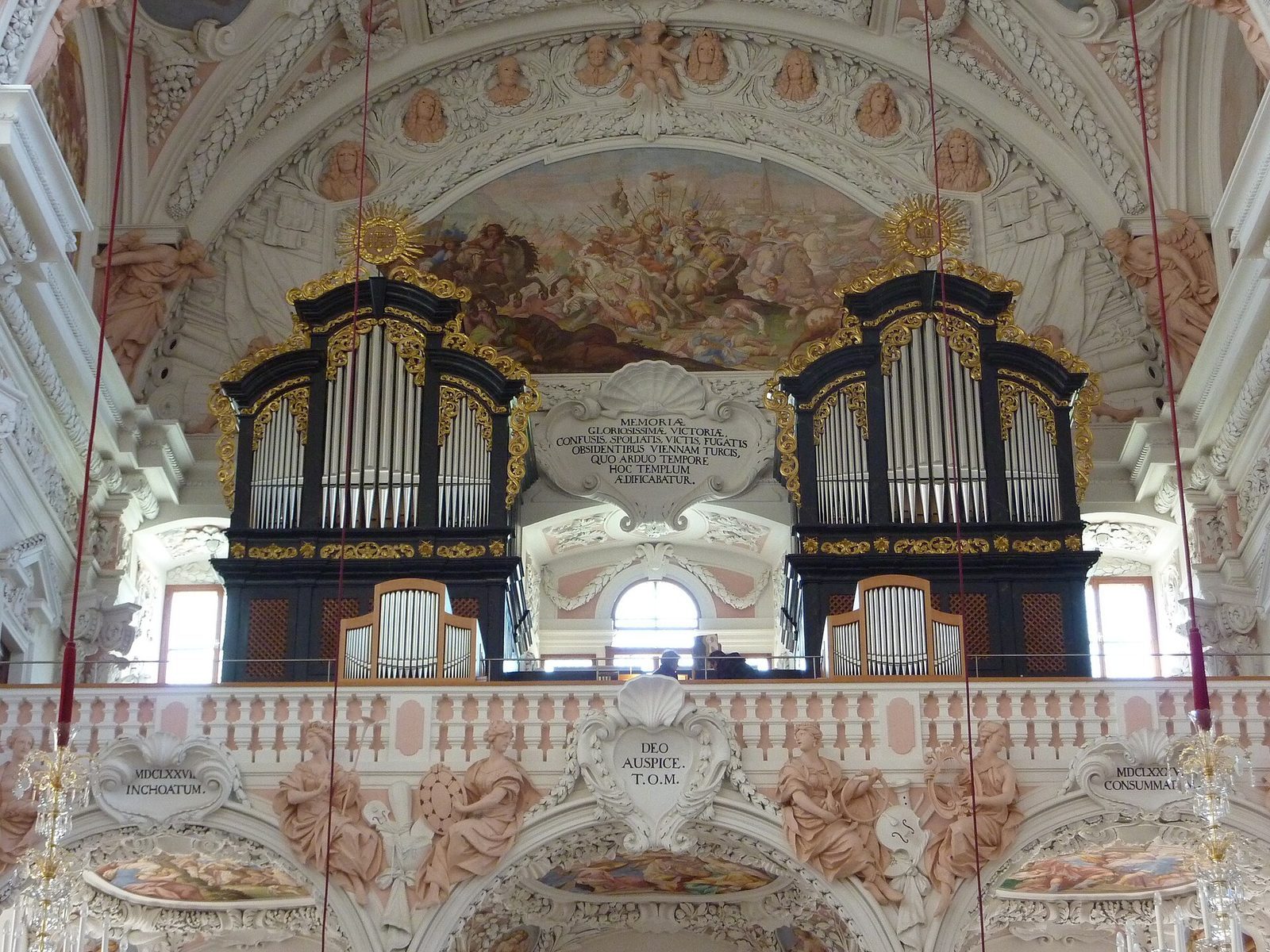
The church’s extensive renovation concluded with the dedication of the Berthold organ on 8 December 2009. Two organ cases made by Franz Hölzl about a century earlier were reused. Rudolf von Beckerath Orgelbau designed and built the rest of the instrument.
Monastic records
Partly surviving high-medieval monastic record books preserve brief notes on the abbey’s property history. They describe transfers of land and people, legal disputes, and accounts of past events.