Münchhausen Manor House: A Renaissance Estate Office in Bodenwerder, Germany
Site at a Glance
- Popularity
- High
- Country
- Germany
- Primary era
- Early Modern
- Eras represented
- Early Modern
- Civilizations
- Holy Roman Empire
- Site type
- Domestic
- Remains
- Manor House
On this page7 sections
History
Estate origins and construction
Münchhausen Manor House is a Renaissance estate building in Bodenwerder, Germany, constructed between 1603 and 1609 as an administrative seat for the von Münchhausen estate. The family’s property there had existed as a free manor estate since the 13th century.
Statius von Münchhausen, a wealthy merchant and mining entrepreneur who owned numerous estates and castles, commissioned the house. Johann Hundertossen of Hameln probably built it. Statius had Schloss Bevern built as his own residence.
The family and civic use
Statius’s great-grandson Georg Otto von Münchhausen (1682–1724), a lieutenant colonel in the cavalry, inherited the Bodenwerder estate as well as a manor in Rinteln connected with service at a castle. Georg Otto’s son Hieronymus was born in the house in 1720 and died there in 1797. Known as the “Baron of Lies” for the extravagant tales associated with him, Hieronymus spent part of his childhood and the last years of his life at the manor.
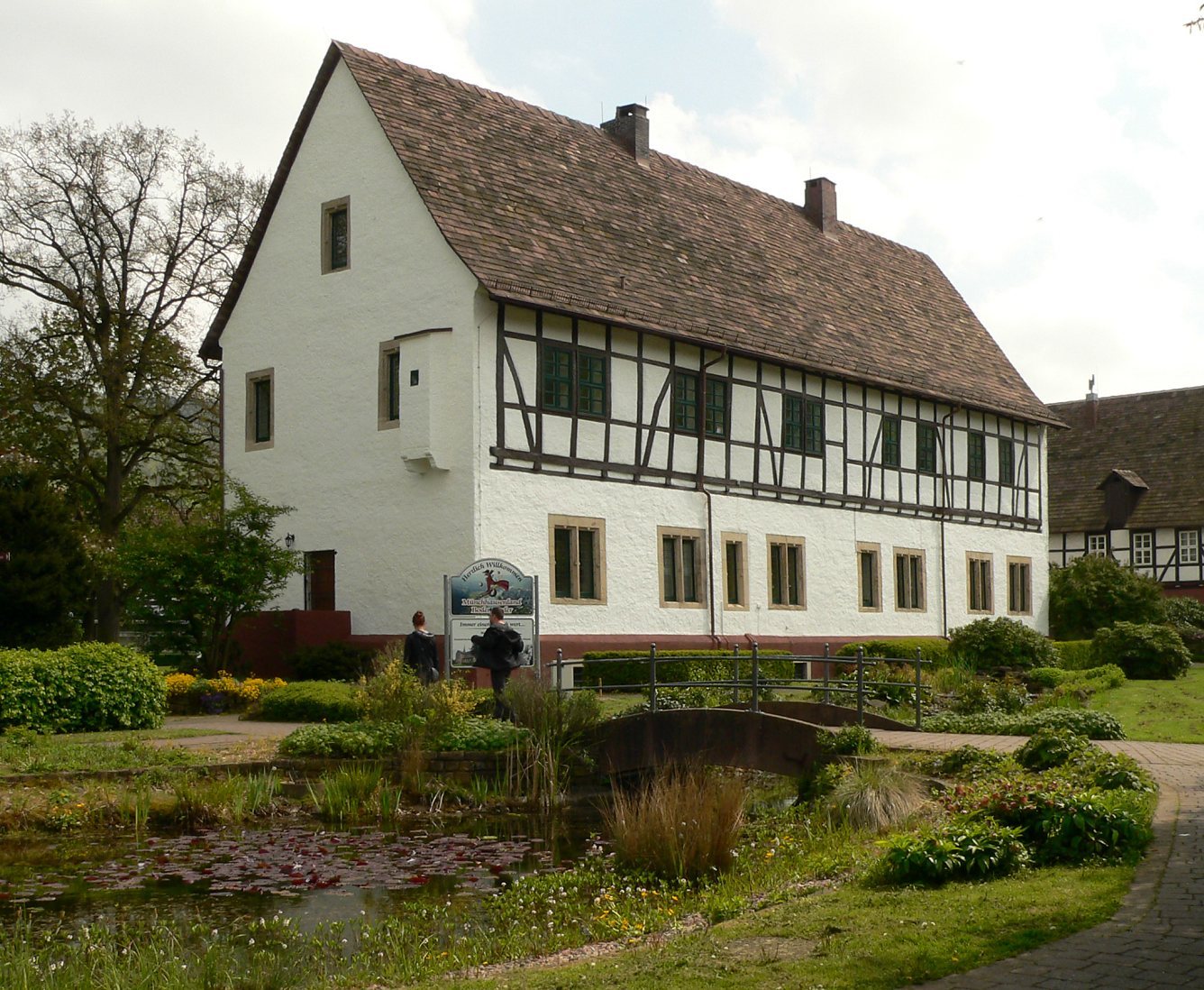
The municipality has owned the building and used it as its town hall since 1936. Renovations took place in 1986 and 2016.
Remains
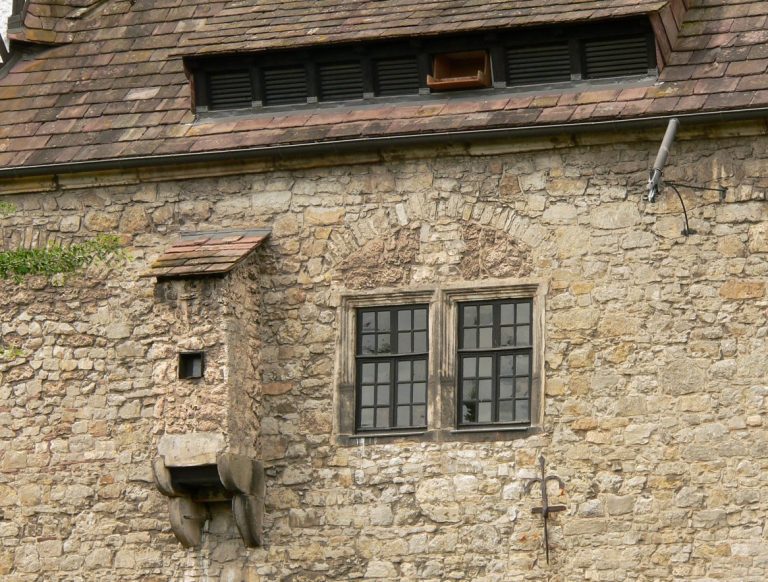
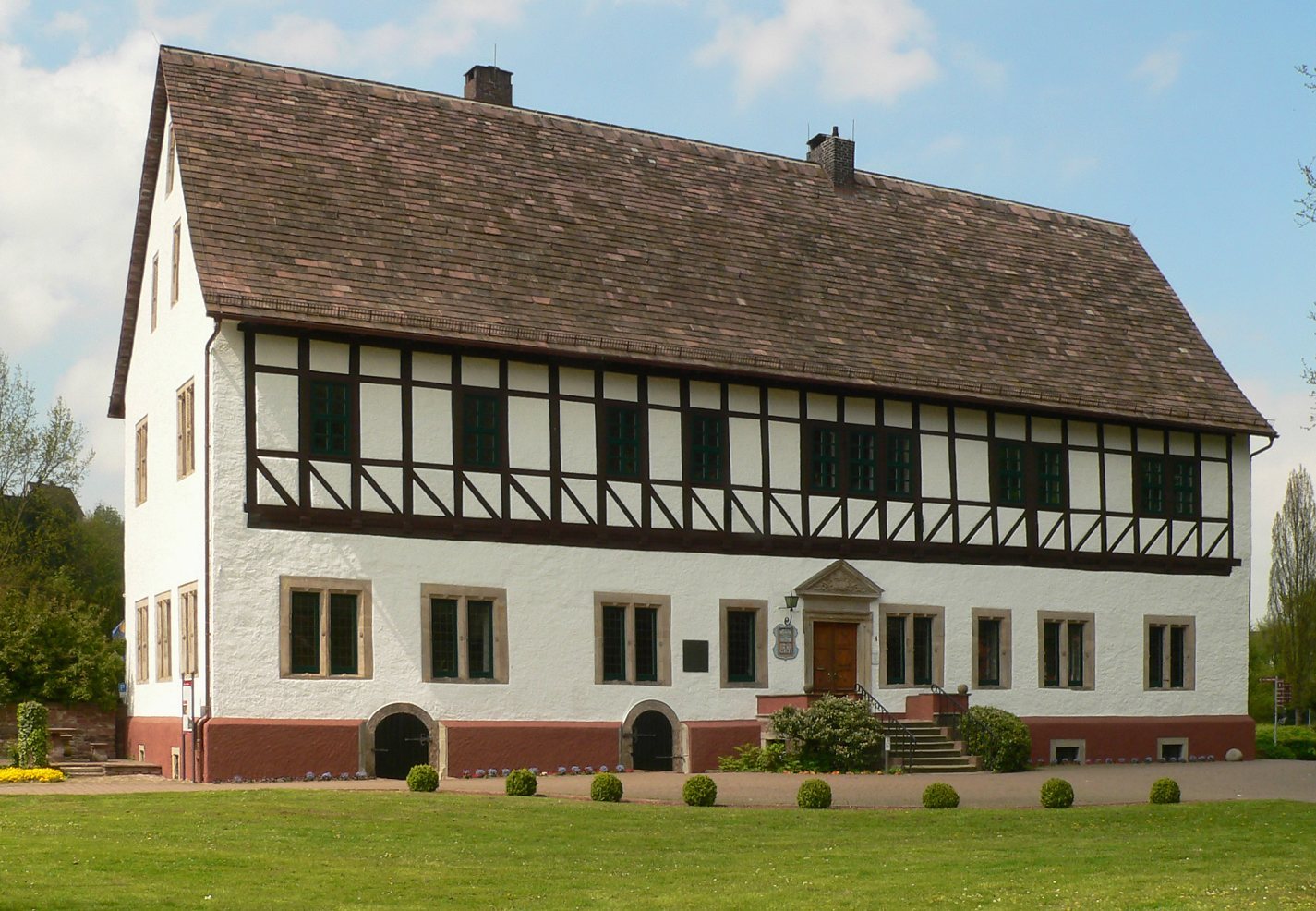
The former estate comprises three buildings. Its elongated, three-storey manor house has Renaissance ornament and a roof of stone slabs from the Solling, a hill region in southern Lower Saxony.
Estate buildings and architectural features
Other estate buildings
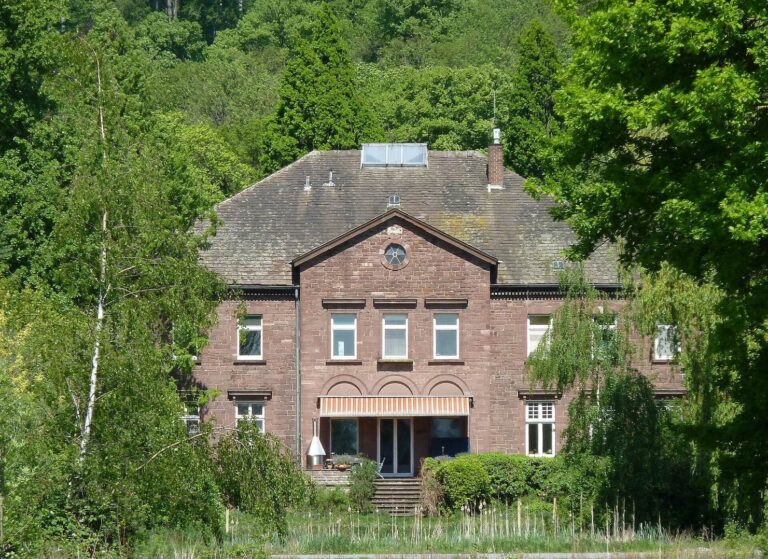
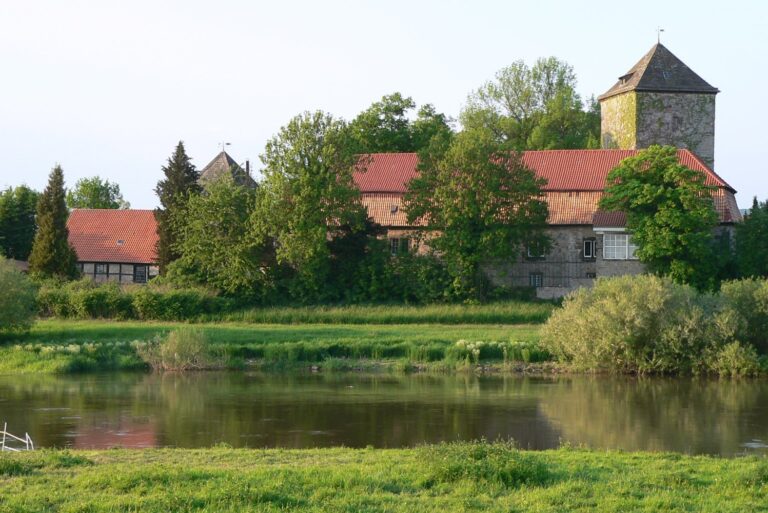
The manor house is one of the estate’s three buildings. The others are a stone residential tower associated with the German noble Schulenburg family and a former distillery.
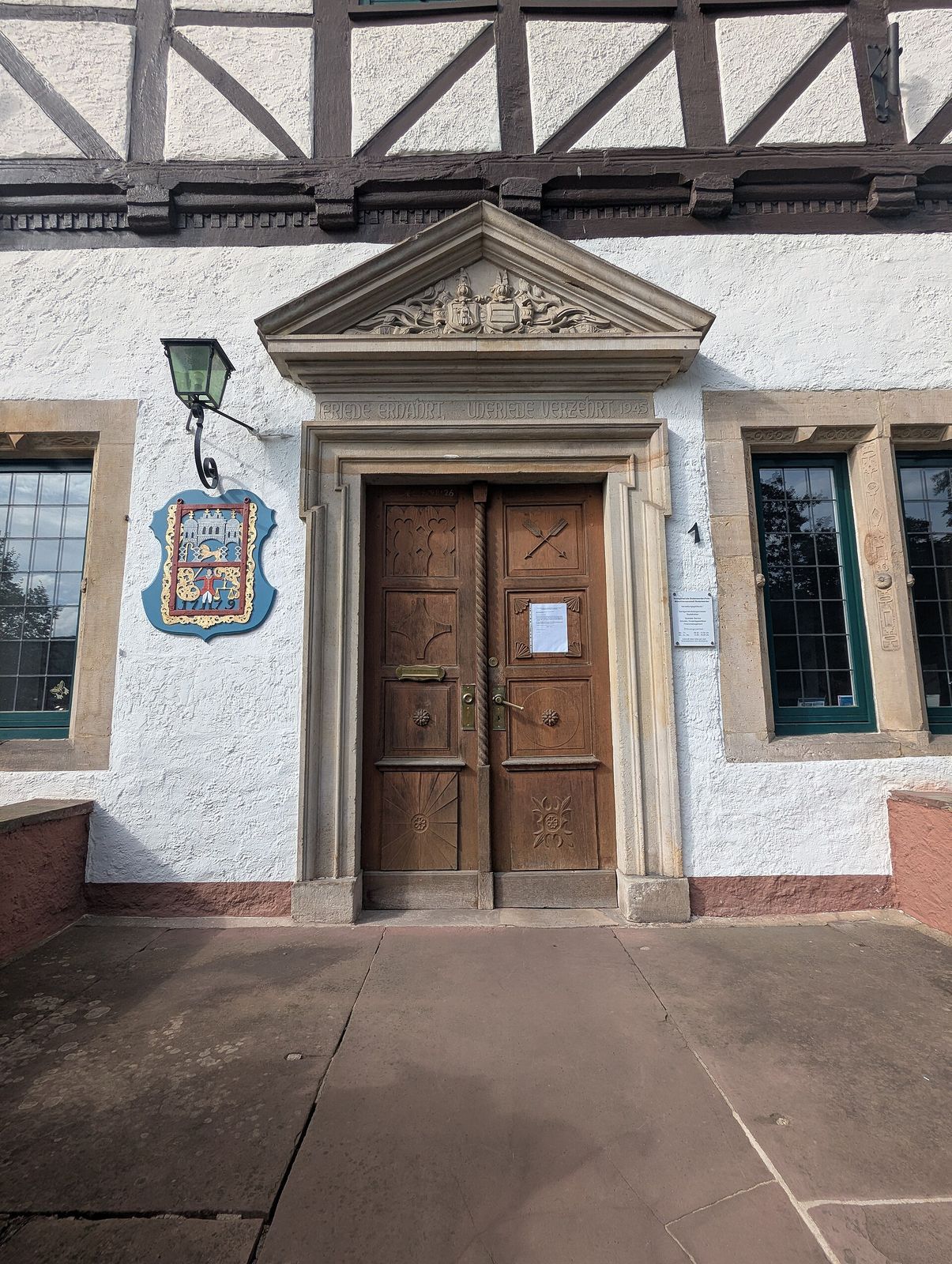
Manor house
Renaissance ornament frames the manor house’s features, including its entrance. Above the doorway is a carved sandstone coat of arms bearing Georg Otto’s initials, his wife’s initials, and the family motto, translated as “God is my fortress.” In its form and size, the house resembles an estate office building Statius built at Bolzum, on a knight’s estate he acquired in 1608.