Red Castle: A Ducal Residence and Research Library in Weimar
Site at a Glance
- Popularity
- Medium
- Country
- Germany
- Primary era
- Early Modern
- Eras represented
- Early Modern, Modern
- Civilizations
- Grand Duchy of Saxe-Weimar-Eisenach, Holy Roman Empire
- Site type
- Domestic
- Remains
- Castle
On this page8 sections
History
A ducal residence
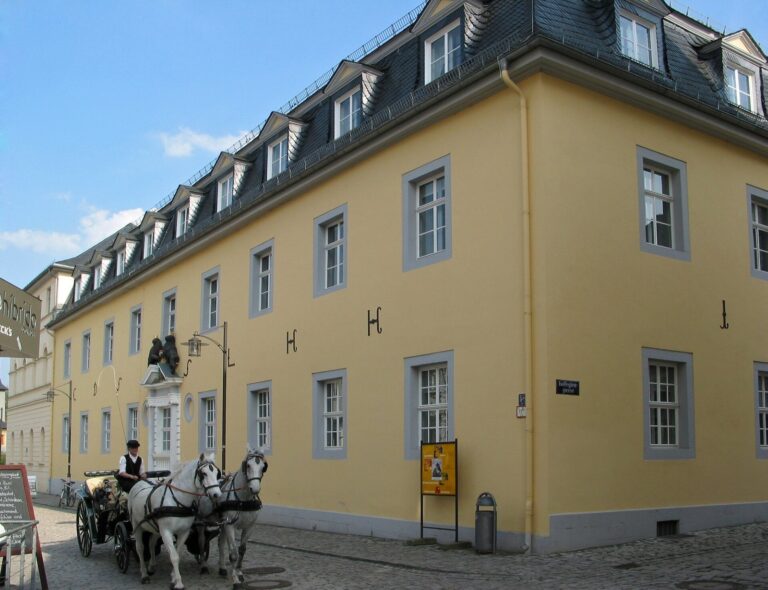
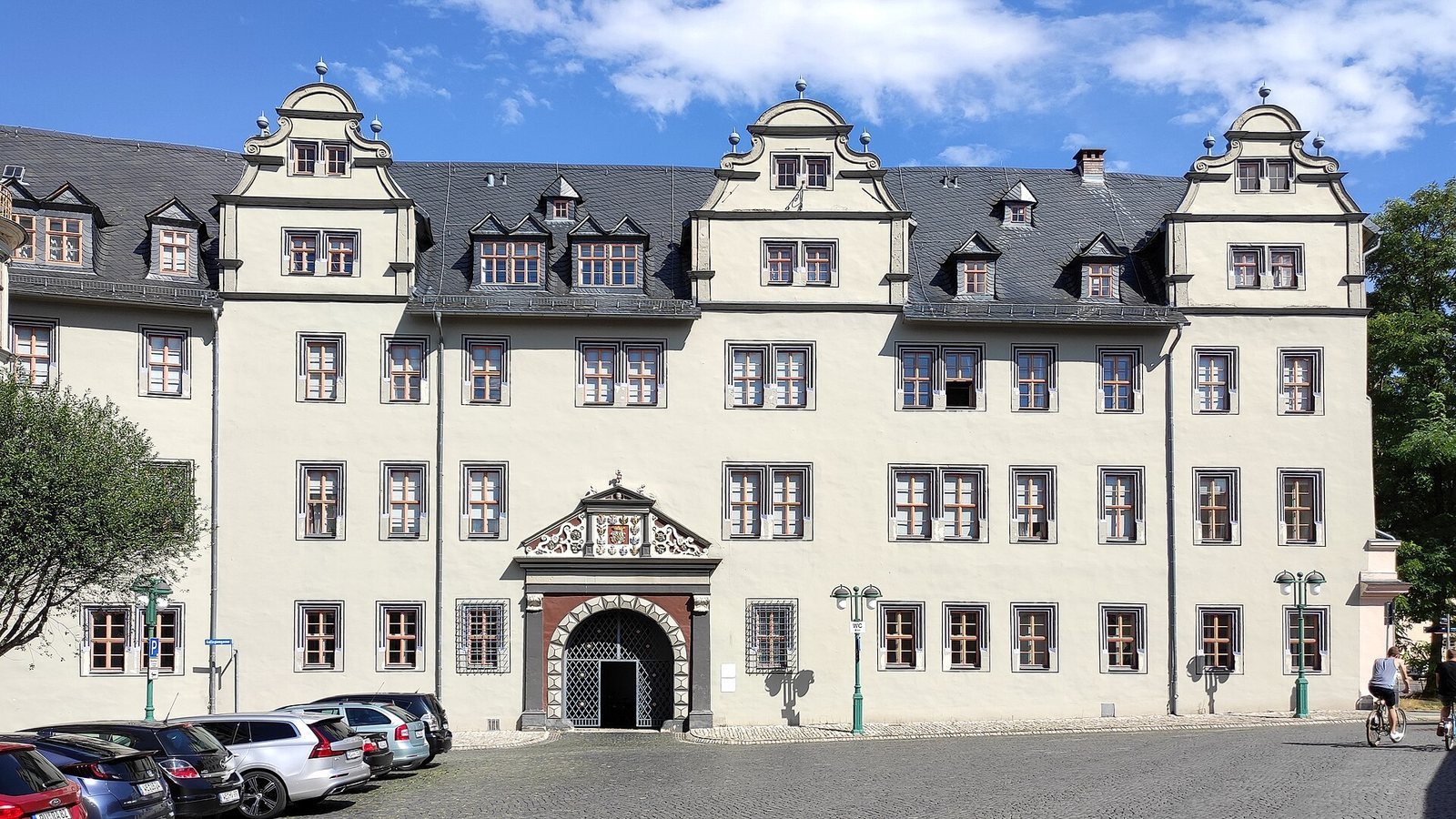
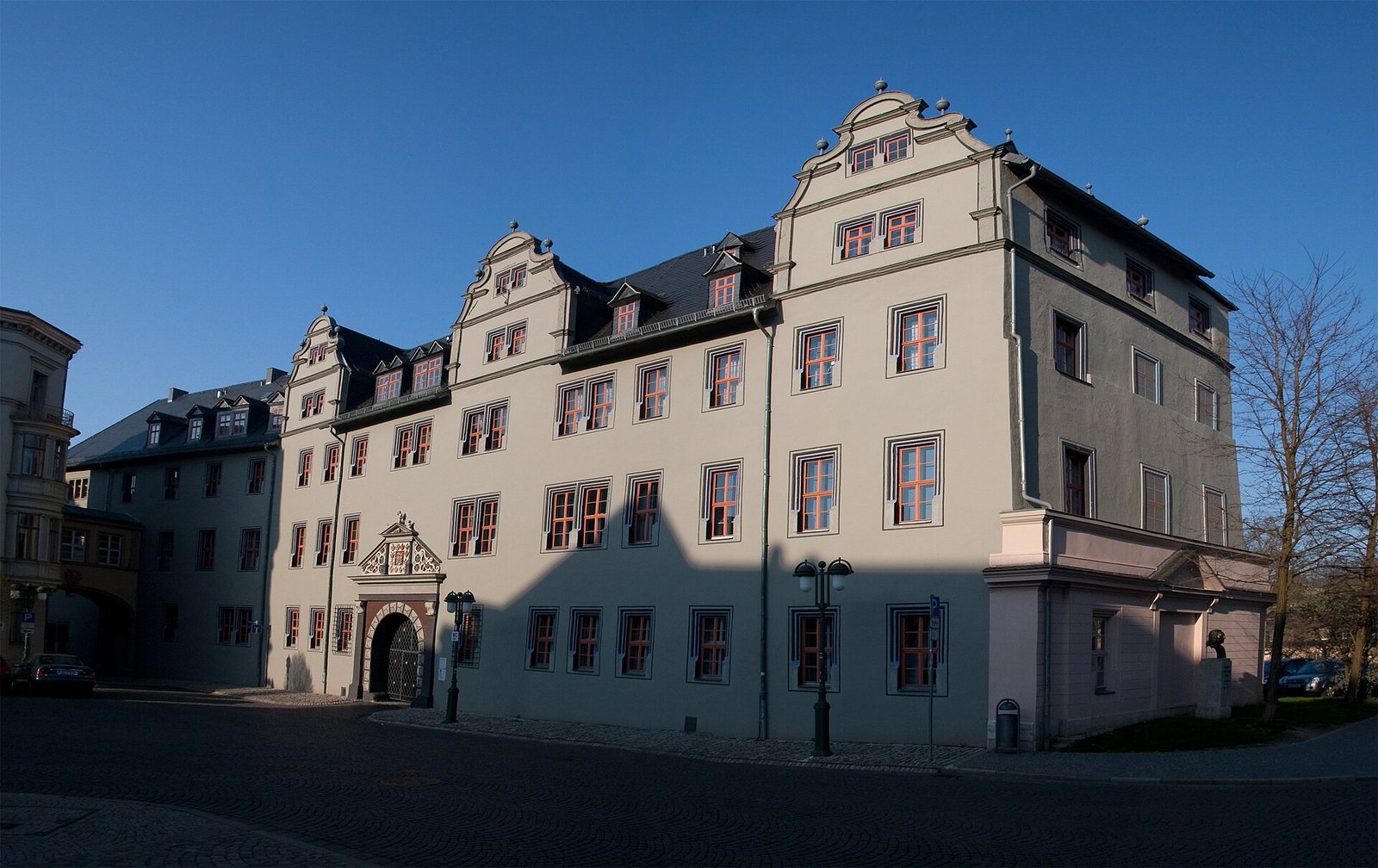
The Red Castle is a 16th-century ducal residence in Weimar, Germany, built from 1574 to 1576 as the widow’s home of Duchess Dorothea Susanne of Simmern. Her father was the Elector Palatine, a prince of the Holy Roman Empire entitled to participate in choosing its emperor.
Members of the princely family and the Weimar court later lived in the castle. Johann Sebastian Bach stayed there in 1702–1703.
Court and public institutions
The castle later housed several public offices. Its West Wing accommodated the Privy Council, a governing advisory body of which Johann Wolfgang von Goethe was a member, as well as the Court Marshal’s Office, the judicial administration, and the State Directorate. From 1781 to 1807, the East Wing housed the Princely Drawing School.
Redesign and present use
The redesign of Fürstenplatz in 1808, now Platz der Demokratie, led to the East Wing’s demolition. In 1820, arcades were built to close the resulting gap. The Red Castle now houses the research library and modern study center of the Duchess Anna Amalia Library.
Remains
Surviving architecture
Wings and arcades
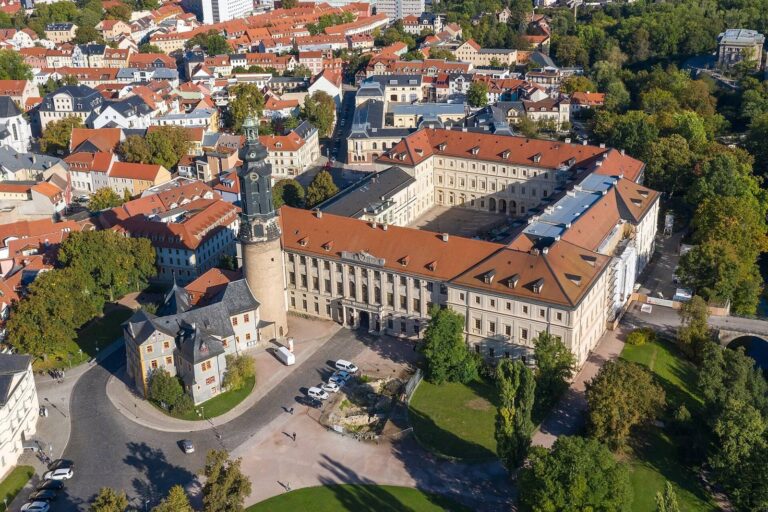
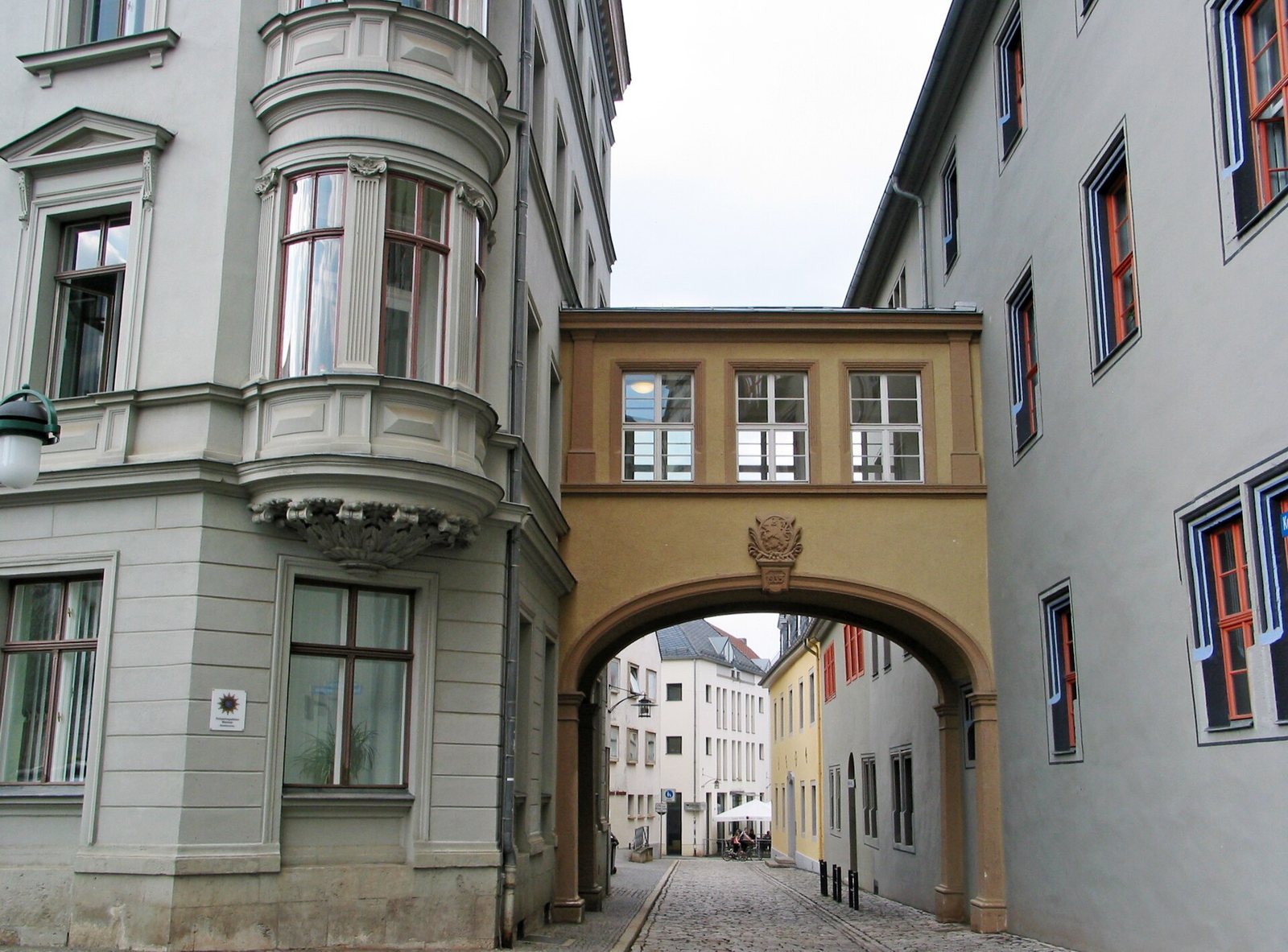
The castle’s layout included West and East Wings. The surviving complex includes the West Wing and neoclassical blind arcades, decorative arches without open passageways, which occupy the gap left by the former East Wing. The arcades form an ensemble with the Residence Palace, the Princely House, now the Franz Liszt School of Music, and the Duchess Anna Amalia Library.
Entrance portal
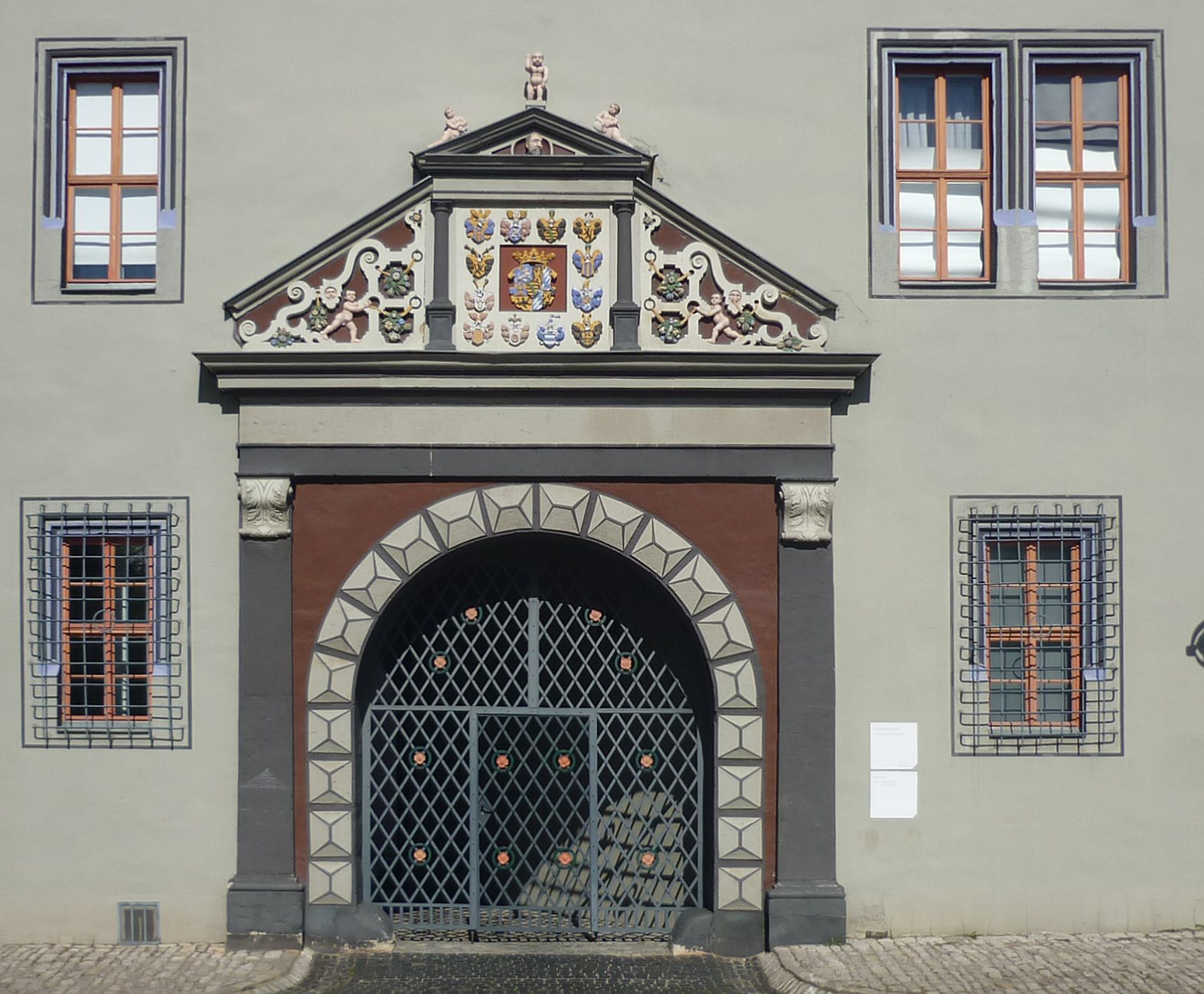
The portal bears the arms of the Electoral Palatinate and those of Duke Johann Wilhelm I, Duchess Dorothea Susanne’s late husband.