Tiefurt House: A Ducal Residence and Cultural Retreat in Weimar


Site at a Glance
- Rating
- 4.7
- Popularity
- Low
- Country
- Germany
- Primary era
- Modern
- External website
- Open
- Eras represented
- Early Modern, Modern
- Civilizations
- German, Holy Roman Empire
- Site type
- Domestic
- Remains
- Palace
On this page18 sections
History
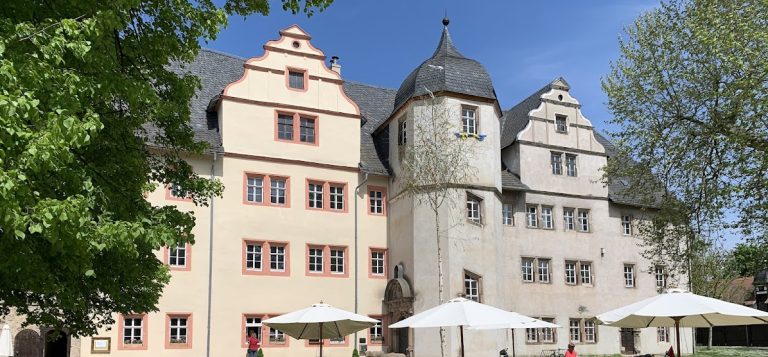
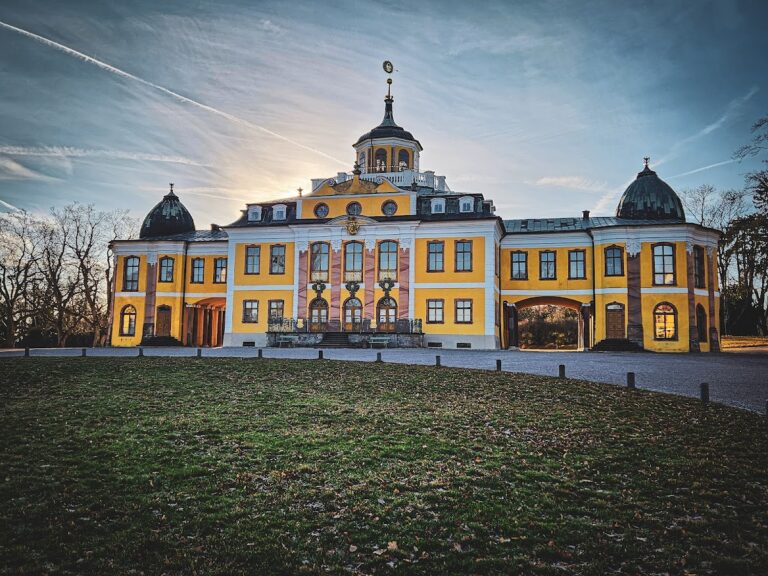
Tiefurt House is a small stately residence in Germany, located in Tiefurt, a quarter of Weimar about four kilometres east of the city centre. Built at the end of the sixteenth century as the tenant’s house of a ducal estate, it became a summer residence of Duchess Anna Amalia and a meeting place for the cultural circle associated with Weimar Classicism, the late-eighteenth- and early-nineteenth-century movement centred on Weimar.
From ducal estate to princely residence
The house began as the residence of the person who managed a ducal estate. Such an estate, known as a Kammergut, was property administered for the revenues and purposes of a ruling dynasty. The building was converted and enlarged in 1765, preparing it for a more formal role within the ducal household.
In 1776, Duke Charles Augustus granted Tiefurt House to his younger brother Constantine. Under the guidance of his tutor, Karl Ludwig von Knebel, Constantine established his own court there. Knebel was both a tutor and a literary figure in the Weimar court circle. Constantine left for his Grand Tour in 1781, after which the residence acquired a new importance for his mother, Anna Amalia of Brunswick-Wolfenbüttel.
Anna Amalia and the Weimar cultural circle
Anna Amalia selected Tiefurt as her summer residence and occupied the upper floor with two servants. Her courtier Luise von Göchhausen lived in the smaller auxiliary building. For approximately 25 years, the house and its grounds were Anna Amalia’s favourite residence and a gathering place for the Weimar court of the Muses, a circle of writers, artists, musicians, and court figures linked to her cultural milieu.
The visitors included the Humboldt brothers and the painter Charles Gore. The circle connected with Tiefurt also produced the Journal of Tiefurt. It first circulated in a limited number of handwritten copies. Bernhard Suphan and Eduard von der Hellen later prepared a larger edition in 1892 on behalf of the Goethe Society of Weimar, which published another edition in 2011.
The park provided a setting for Anna Amalia’s amateur theatre. Goethe’s The Fisherwoman, a singspiel combining spoken dialogue with songs, was first performed there on 22 July 1782. Corona Schröter took the leading role, while Johann Martin Mieding supplied the stage technology. Goethe associated the work with the woodland and water landscape of Tiefurt and emphasized its lighting effects.
Goethe also commissioned a monument in honour of Corona Schröter. Martin Gottlieb Klauer created the stone sculpture Amor Feeding a Nightingale in 1782. Other memorials in the park recall Anna Amalia’s brother, Prince Leopold of Brunswick-Wolfenbüttel, who died while helping to combat a flood disaster at Frankfurt an der Oder in 1785, and her son Constantine, who fell ill at Pirmasens in 1793 and died at Wiebelskirchen as a Prussian major general.
War, neglect, and nineteenth-century remodelling
French occupying forces plundered Tiefurt House in 1806. After Anna Amalia died in 1807, the property was neglected. Grand Duke Charles Frederick, the son of Charles Augustus, later initiated renovation during Goethe’s lifetime, and Eduard Petzold was placed in charge of the park. Petzold, a landscape gardener known for restructuring landscaped parks, redesigned Tiefurt between 1846 and 1850 for Maria Pavlovna according to plans by his teacher, Hermann, Prince of Pückler-Muskau.
Under the direction of the architect Clemens Wenzeslaus Coudray, the house was remodelled between 1821 and 1828 and acquired its present appearance. The park’s design also incorporated the view towards the nearby village church of Saint Christopher, at the latest during Petzold’s work. The church was associated with Johann Sebastian Bach, and Goethe and Franz Liszt frequently visited it because of its organ.
A surviving copy of Goethe’s Urfaust, an early version of his tragedy Faust, was found in a writing cabinet belonging to Luise von Göchhausen. Goethe had destroyed the original manuscript himself, while Göchhausen’s copy survived and was eventually printed. The discovery links Tiefurt directly with the literary history of Goethe and the cultural world of Weimar.
Museum and heritage ensemble
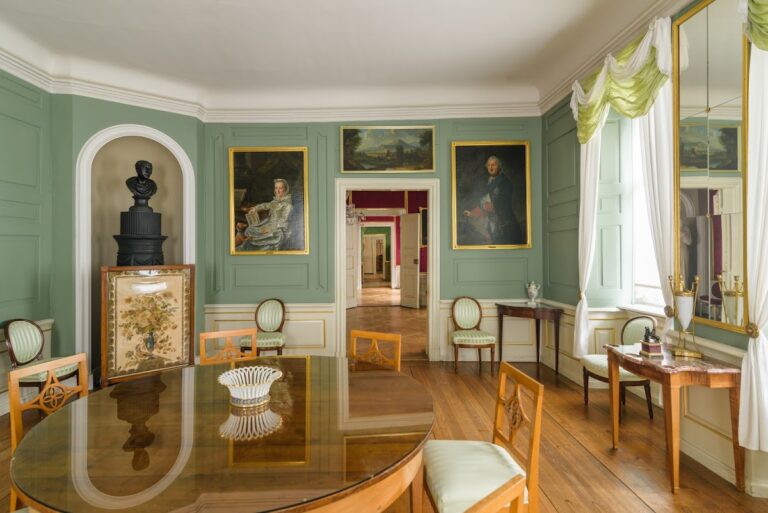
Tiefurt House became a museum and opened to visitors in 1907. A major restoration from 1978 to 1981 recreated the interiors in the style of around 1800 and restored the sequence of rooms associated with Anna Amalia’s period. Tiefurt House and Tiefurt Park have formed part of the UNESCO World Heritage ensemble Classical Weimar since 1998. The ensemble is recognized under cultural criteria concerning the representation of a cultural tradition and associations with ideas and artistic works of outstanding significance.
Remains
Tiefurt House consists of a main building and a smaller auxiliary building joined by a covered passage. The adjoining park occupies approximately 21 hectares of meadow enclosed by a loop of the Ilm and extends on both sides of the river. The Sheep Bridge and the Yellow Bridge connect the two sides, while the latter leads towards the tea house. Paths beside the Ilm link Tiefurt Park with the grounds of Kromsdorf House and the Park on the Ilm.
The house and its interiors
Main building and terrace
The upper floor of the main building contains seven rooms and includes a terrace with a pergola. Sculptural decoration on the terrace includes a girl, the Knucklebones Player made by Martin Gottlieb Klauer around 1790, and two sphinxes. These features belong to the house’s surviving architectural and artistic setting.
Luise von Göchhausen’s room
Luise von Göchhausen’s room was adapted to her physical condition. Because she had a physical deformity, the paintings and their frames were made or arranged in slightly distorted form so that their views accommodated her perspective. The room also contains casts of Houdon’s The Shivering Man, from the Louvre and dated 1793, and of Melpomene, the figure from Greek mythology associated with tragedy.
Kitchen
The kitchen presents wooden and tin utensils together with imitation roasts and dishes made from porcelain or papier-mâché. These objects recreate the appearance of the domestic working space within the residence.
Historical views of the house
Two historical drawings preserve evidence for the appearance of Tiefurt House. Conrad Westermayr produced one in 1793, and it is held by the Goethe National Museum in Weimar under inventory number KHz1983/00421. A second ink drawing by Carl Wilhelm Holdermann survives through an 1840 engraving by Carl Hummel, with an impression held, among other places, by the Leipzig Museum of Urban History.
Sundial
Near the house stands a sundial associated with the court sculptor Martin Gottlieb Klauer. Anna Amalia initiated the project after her Italian journey, and Klauer first produced it in clay in 1791. He recreated it in sandstone in 1798. Its intended meaning concerned the silent passing of time more than the practical measurement of hours. The sundial now in front of the house is a copy in Cotta sandstone.
The designed landscape
River, bridges, and upper paths
The park is arranged across meadow beside the Ilm, whose loop encloses approximately 21 hectares. The Sheep Bridge and Yellow Bridge provide the documented crossings within the park, and the paths along the river continue towards neighbouring park landscapes. Between Tiefurt and Weimar, the Ilm flows below the Webicht.
The Vergil Grotto marks the highest point of the park. An upper path on the outer side of the Ilm leads from the grotto to a stone bearing a distich, a pair of verse lines forming a short inscription. The verse is attributed either to Johann Wolfgang von Goethe or to Karl Ludwig von Knebel.
Memorials and portraits
Wooden portraits of Christoph Martin Wieland, Johann Gottfried Herder, and Goethe were formerly displayed in the park. A stone portrait of Wieland by Johann Gottfried Schadow, made in 1802, survives in the Wieland Corner, and a Herder memorial stone is also located within the grounds.
Klauer created the monument to Prince Leopold in 1785 from a design by Adam Friedrich Oeser, who also played a major part in the artistic conception of the park. The monument commemorates Leopold’s death while assisting with flood relief at Frankfurt an der Oder. The park’s other memorial to Constantine recalls the son of Anna Amalia who died after falling ill at Pirmasens and later serving as a Prussian major general.
Temple of the Muses
The centre of the park is occupied by the Temple of the Muses, a circular roof supported by columns without an enclosed interior chamber. Erected in 1803, this monopteros is surrounded by elaborate ornamental flower beds. Its central sculpture is identified as Kalliope, the Muse associated with epic poetry, although it has often been incorrectly called Polyhymnia.
Tea house and Mozart Monument
The tea house and the nearby Tiefurt Mozart Monument are among the park’s principal structures. Near the entrance, a stone carries a verse by Friedrich von Matthisson from his poem Vaucluse. A stone bench with a stone table stands on the path near the Yellow Bridge and the tea salon. Oskar Hensoldt’s survey plan of 1844 depicts the bench and table, placing their construction in the setting of the park’s remodelling between 1846 and 1850.
Church of Saint Christopher
The nearby Church of Saint Christopher lies outside the park but forms part of its designed visual setting. The view towards the church was incorporated into the landscape design. Its association with Johann Sebastian Bach, together with its organ, also connected it with visits by Goethe and Franz Liszt.
Nearby sites