Gonville and Caius College: A Cambridge College Founded in 1348
Site at a Glance
- Popularity
- Very High
- Country
- United Kingdom
- Primary era
- Medieval
- Eras represented
- Medieval, Early Modern, Modern
- Civilizations
- British, English
- Site type
- Civic
- Remains
- University
On this page20 sections
History
Gonville and Caius College is a constituent college of the University of Cambridge in Cambridge, United Kingdom. Founded as Gonville Hall in 1348, it is the university’s fourth-oldest college still in existence.
Foundation and medieval development
The college’s beginnings date to 5 March 1347, when Edmund Gonville acquired three plots for its future buildings. On 28 January 1348, Edward III granted formal royal permission for a college with a Master, the head of a Cambridge college, and 20 scholars. Gonville, a clergyman from a family of French origin in the landholding class below the nobility, had held church posts at Thelnetham, Rushford and Terrington St Clement. The income from these positions enabled him to lend money to the king, who appointed him a King’s Clerk, a royal administrative officer. The English nobleman and military commander Sir Walter Manny supported Gonville’s petition to Edward III.
Gonville died in 1351, leaving the new institution in financial trouble. William Bateman, Bishop of Norwich and founder of Trinity Hall, intervened and moved Gonville Hall to its present site on Trinity Street. That year it took the name Hall of the Annunciation of the Blessed Virgin Mary, commemorating the Christian account of the angel Gabriel announcing to Mary that she would bear Jesus. The college kept this name until 1557. John Colton became its first Master and later held the senior church office of Archbishop of Armagh.
In 1353, Gonville Hall and Trinity Hall formalized a relationship they described as a lasting pact of friendship between institutions of the same foundation. They took part together in public processions, where Trinity Hall had precedence. Bateman issued Gonville Hall’s first statutes in 1354, setting out rules for its governance.
Reformation and refoundation
By the early sixteenth century, the college had deteriorated and ranked among Cambridge’s poorest institutions. During the early Reformation, a movement to reform Western Christianity, its members were regarded as religiously radical. John Skipp, Master from 1536 to 1540, was imprisoned several times on charges of heresy.
In 1557, alumnus John Caius secured royal authority to refound the college under the name Gonville and Caius College and provided it with funds. He had studied divinity there from 1529 to 1533, then pursued medicine at Padua. A prominent physician, Caius served several terms as president of the Royal College of Physicians, a professional institution for physicians. He also treated Edward VI and Mary I, and later Elizabeth I. After Thomas Bacon’s death, Caius became Master on 24 January 1559. He substantially increased the college’s resources and buildings and helped establish its reputation for medical teaching.
Caius issued new statutes on 1 January 1573. His admission rules excluded Welsh applicants and people with specified disabilities or serious illnesses, while his regulations favored people from eastern England. He resigned as Master that year after a conflict with members of the college, shortly before his death. His statutes, together with Bateman’s, governed the college until 1860, when new rules removed regional restrictions on students and fellows.
Growth and changing fortunes
Under Thomas Legge, Master from 1573 to 1607, the college grew into one of Cambridge’s wealthier and more populous institutions around the turn of the seventeenth century. Its reputation for strong medical teaching also took hold. In 1630 it had about 25 fellows, senior members with academic and governing responsibilities, and 150 students.
Student numbers fell during the following century and did not return to the 1630 level until the early nineteenth century. Eighteenth-century university restrictions on non-Anglicans, people outside the Church of England and its tradition, weakened the college’s intellectual and religious life as well as its finances. Its concentration of students from Norfolk and Suffolk also became a disadvantage as eastern England lost influence. The college’s fortunes began to recover gradually in the second half of the eighteenth century.
Women first joined the college as fellows and students in 1979. Its alumni include 15 Nobel laureates. The college and its Masters also contributed to Cambridge’s wider development, including the establishment of Trinity Hall and Darwin College and the provision of land at Sidgwick Site for the Faculty of Law.
Remains
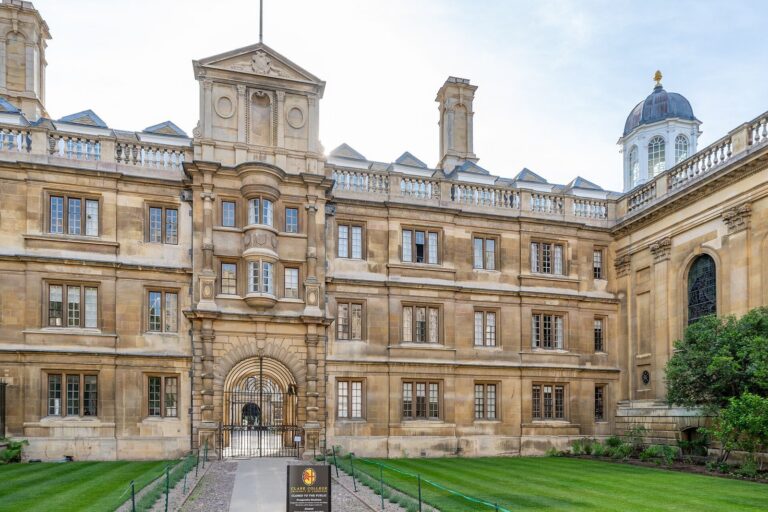
The historic core is arranged around Gonville Court, Caius Court and Tree Court, the largest of the three, which lies to the east. The central chapel and the Master’s Lodge form part of the historic court group. Across the college, the buildings reflect successive periods of construction, including later classical façades.
Courts and chapel
Gonville Court
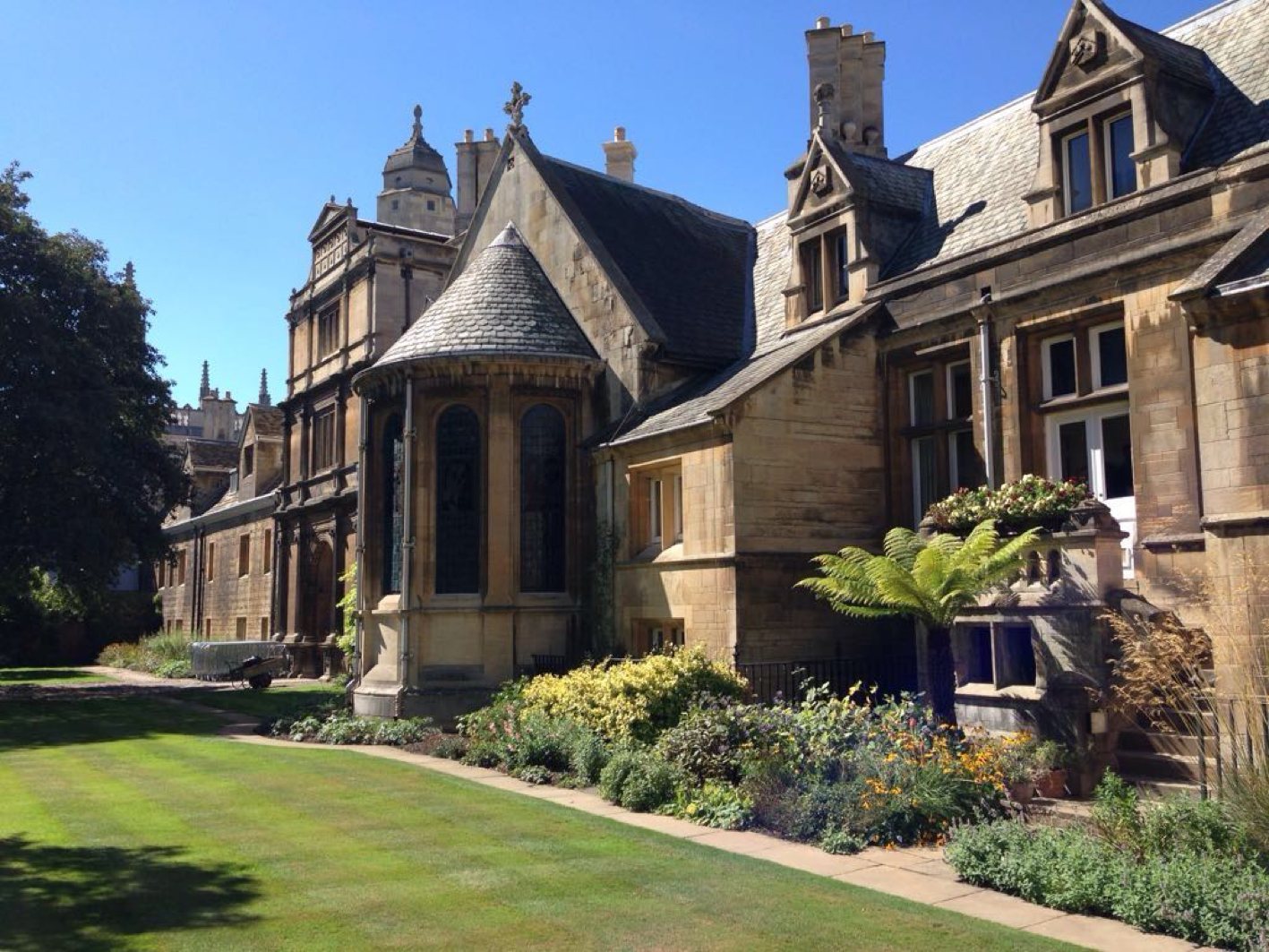
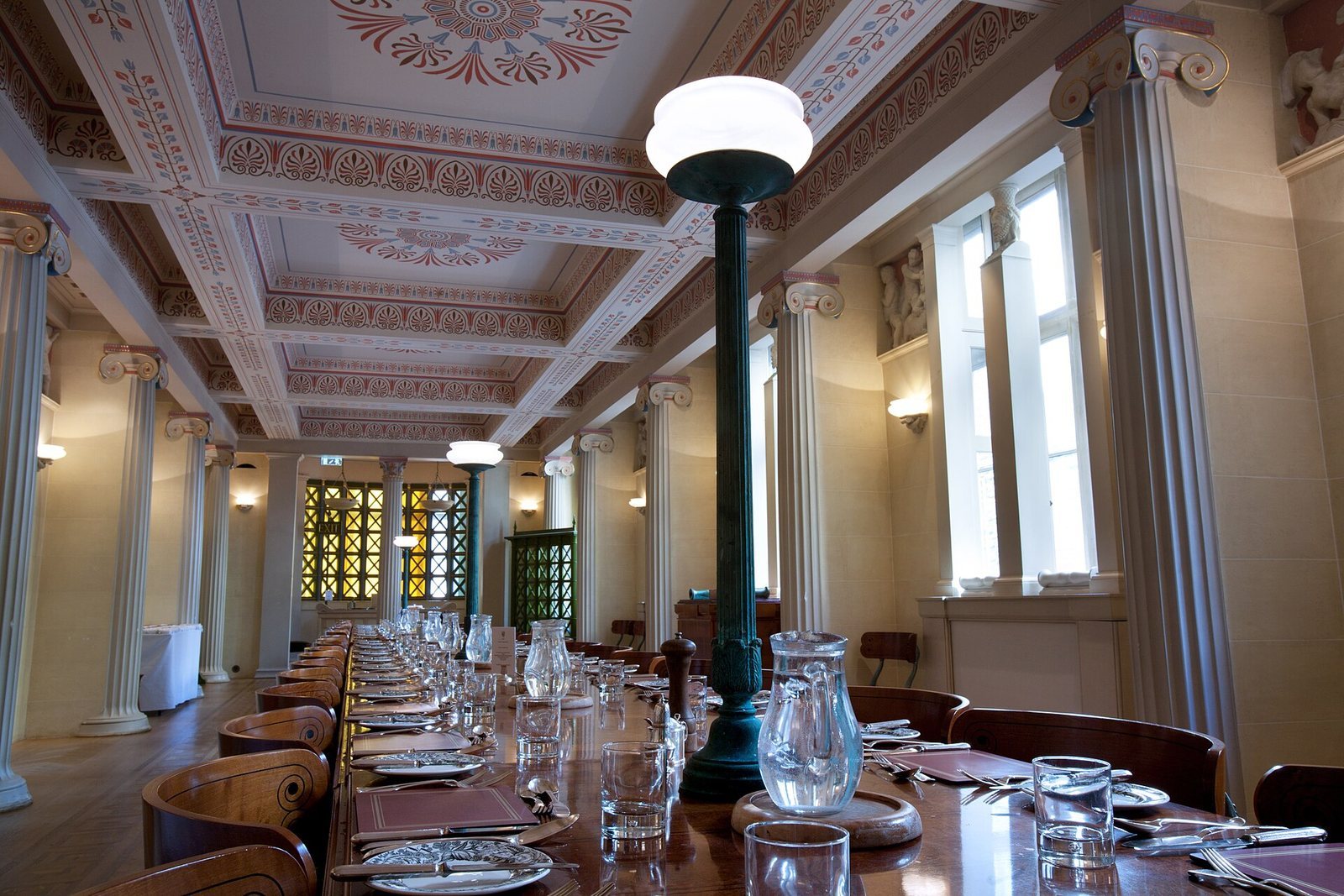
Gonville Court is the oldest part of the college, with its first buildings dating to 1353. Much of their stone came from Ramsey Abbey near Ramsey, Cambridgeshire. The chapel and Old Hall were added in 1393, followed by the Master’s Lodge during the next half-century. Classical façades were given to the court in the 1750s, and its buildings were remodelled during the eighteenth and nineteenth centuries. Anthony Salvin designed the Old Library and Hall in 1854. A college flag hangs on the Hall wall; physician, artist and explorer Edward Wilson carried it to the South Pole in 1912 during the British Terra Nova Expedition of 1910 to 1913.
Chapel
Standing centrally within the college, the chapel is described as the oldest purpose-built college chapel in continuous use at either Oxford or Cambridge. It was extended eastward in 1637. Between 1718 and 1726, its exterior was clad in stone and its interior substantially altered.
Caius Court
Work on Caius Court began in 1565. The court has three sides and remains open on the south; on the north, the chapel and Master’s Lodge divide it from Gonville Court.
Tree Court
John Caius planted an avenue of trees in the area now occupied by Tree Court. The court is dated to 1619 and is the largest of the college’s three historic courts.
Gates
Gate of Humility
Near the Porters’ Lodge, the Gate of Humility opens east toward Trinity Street. Students passed through it when they were formally admitted to the university.
Gate of Virtue
Dated to 1565–1567, the Gate of Virtue stands between Tree Court and Caius Court, on the route students used during their studies. An inscription on its eastern side means “of Virtue.” Above the western entrance, another inscription says that John Caius erected the gate in honor of Wisdom; this entrance is also known as the Gate of Wisdom.
Gate of Honour
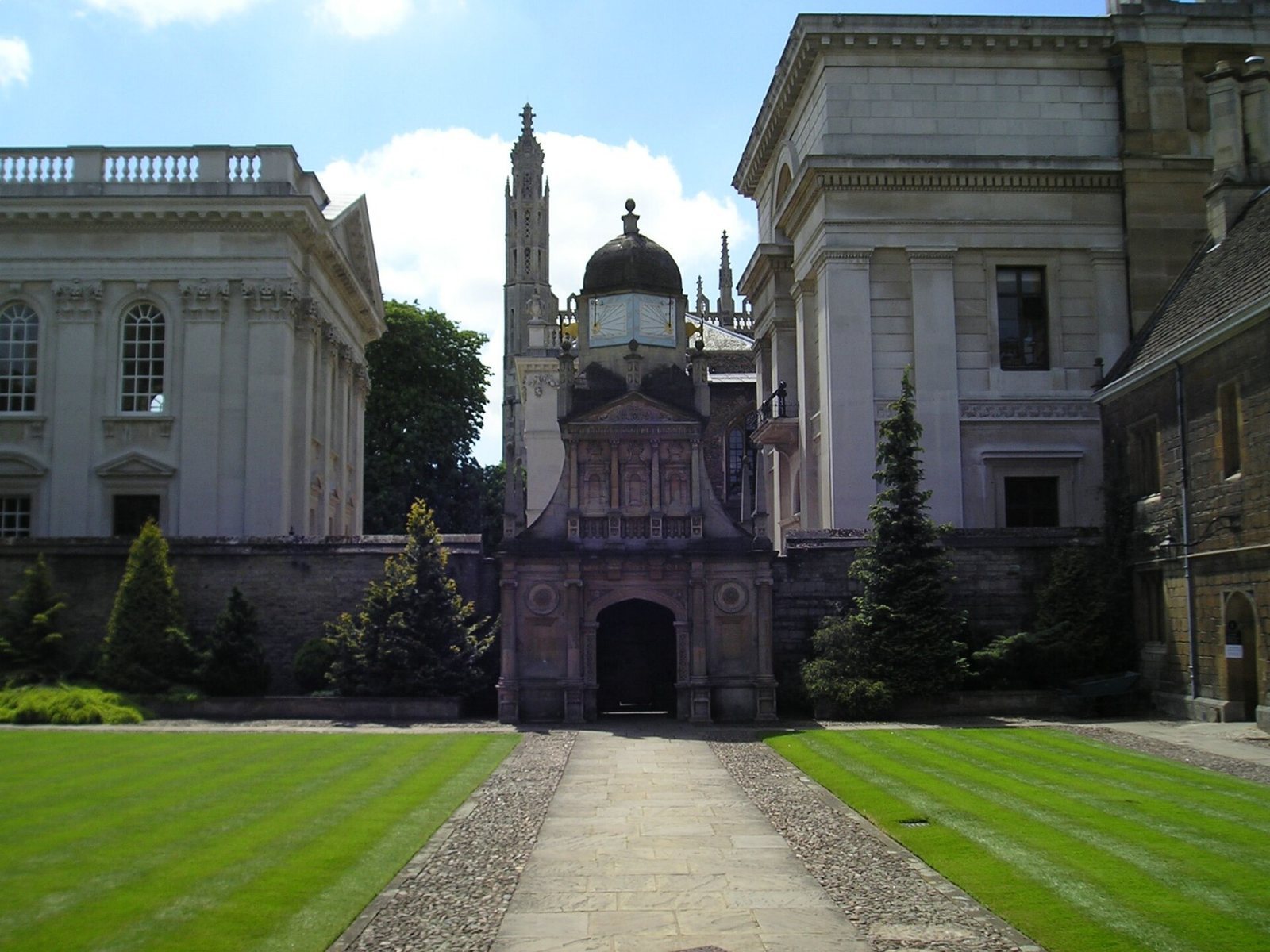
Built in 1575, after Caius’s death but to his design, the Gate of Honour stands on the south side of Caius Court and opens onto Senate House Passage, the narrow way between the college and the university’s ceremonial Senate House. A sundial tops the gate, which was reserved for occasions such as graduation. Its design has been interpreted as referring to classical medical practice, Plato and the geometry of a rhombic dodecahedron, a solid with twelve diamond-shaped faces.
Great Gate and Gate of Necessity
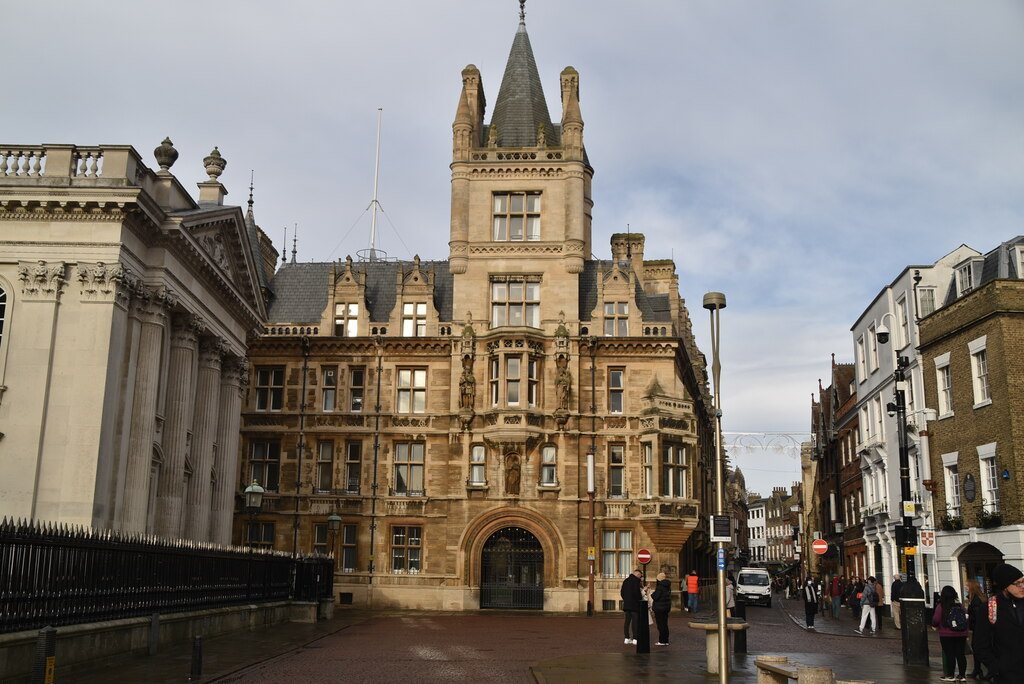
The Great Gate provides an entrance from King’s Parade. Students also informally call a passage between Tree Court and Gonville Court the Gate of Necessity; it gives access to some of the college’s lavatories.
Later buildings and grounds
Lecture rooms
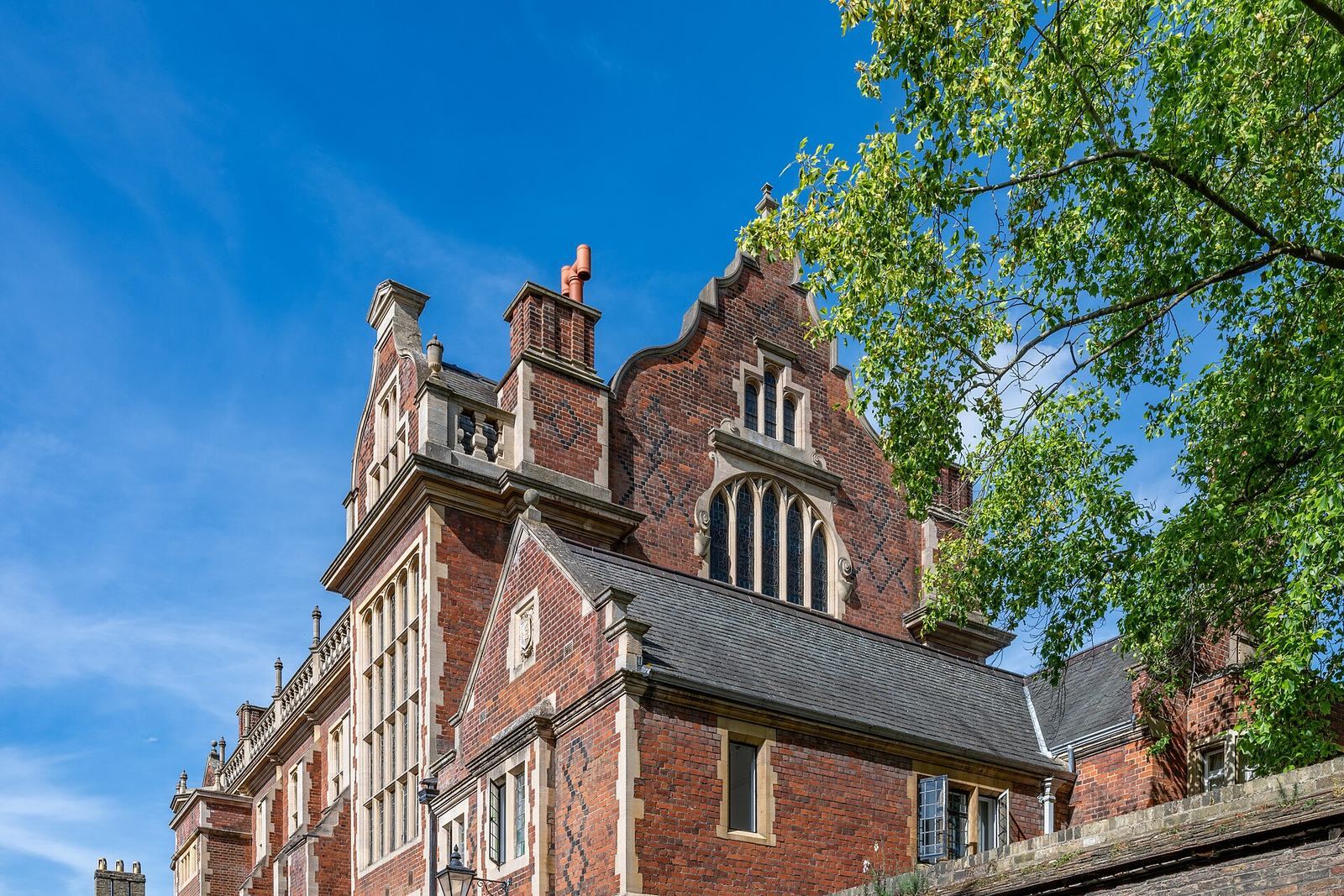
New lecture rooms designed by Alfred Waterhouse were completed in 1884 by the Cambridge building firm Rattee and Kett.
West Road buildings
On college land between West Road and Sidgwick Avenue, Harvey Court was built on West Road in 1961. Leslie Martin and Colin St John Wilson designed the building, which stands among landscaped gardens. The adjacent Stephen Hawking Building opened in October 2006. It provides accommodation with private bathrooms for 75 students and eight fellows, as well as conference facilities. Other college buildings provide housing for older students and include a day-care facility, study rooms and music rooms.
Library and other college sites
The college library occupies the Cockerell Building, which previously housed the Seeley History Library and the Squire Law Library. After obtaining the building’s lease in the 1990s and carrying out extensive renovation, the college moved its library there from Gonville Court in the summer of 1996. The college also owns the land occupied by the adjacent Squire Law Library, which has been there since 1995.
Across Trinity Street, college land surrounds St Michael’s Church. St Michael’s Court was completed in the 1930s, and a campus building on its south side overlooks Market Place. Some second-year undergraduates live in college houses on Mortimer Road and Gresham Road; graduate students occupy houses on Harvey Road and St Paul’s Road.
Garden and sports grounds
The Fellows’ Garden lies just beyond Harvey Court on Sidgwick Avenue. The college’s sports fields are on Barton Road, a short walk from Harvey Court.