Kloster Schmerlenbach: A Former Women’s Monastery in Bavaria
Site at a Glance
- Popularity
- Medium
- Country
- Germany
- Primary era
- Early Modern
- Eras represented
- Early Modern
- Civilizations
- Electorate of Mainz, Holy Roman Empire
- Site type
- Religious
- Remains
- Monastery
On this page8 sections
History
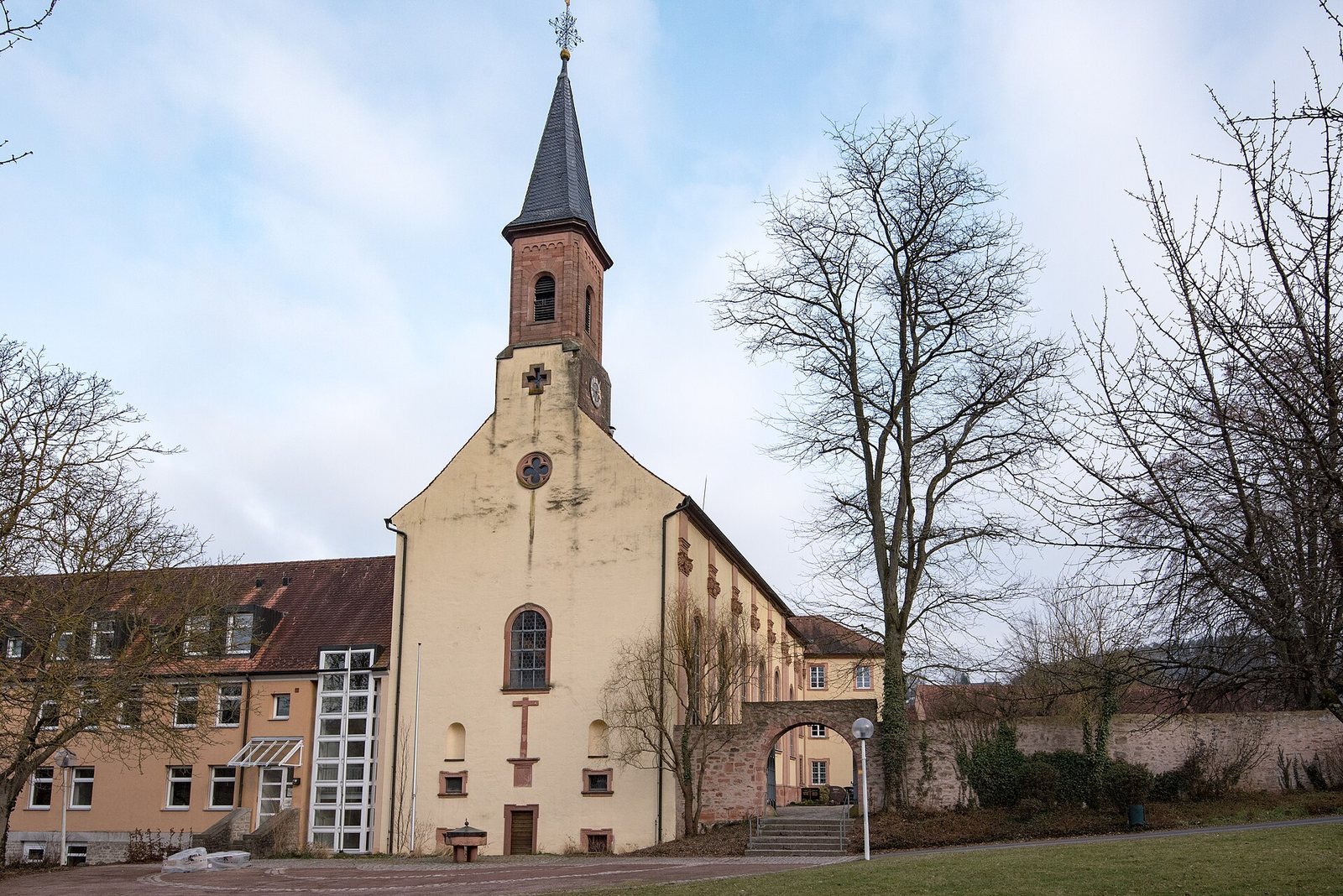
Kloster Schmerlenbach is a former women’s monastery in Winzenhohl, a district of Hösbach in Bavaria, Germany. Gottfried von Kugelnberg founded it in 1218. He was provost of Mockstadt, a senior cleric responsible for a church institution, and archdeacon of Würzburg, an administrator of part of a diocese. The community began as a noble women’s house and followed Cistercian customs, a Western monastic tradition. It was first dedicated to the Virgin Mary, the mother of Jesus in Christian belief, and later to St Agatha, an early Christian martyr venerated as a saint.
Foundation and early locations
The 1218 foundation was associated with Hagen. In 1219, Archbishop Siegfried II of Mainz, a senior bishop, authorized a monastery following Cistercian customs beside a chapel dedicated to Mary. He also confirmed the transfer of Hösbach’s right to nominate clergy for its church to the monastery. In 1226, he granted the community twelve fields and two Morgen of vineyard land on Bischofsberg, also called Bischberg. A Morgen was a regional land measure whose size varied.
The monastery’s first location is uncertain. A note added to a document in 1221 says the community had left Hagen, while the Latin name Indagine, associated with Hagen, remained in use in 1225. Schmerlenbach is first recorded as the monastery’s name in 1240. One reconstruction places a predecessor house at a ruin in Schöntal, Aschaffenburg, identified historically as the nunnery at Hagen, and proposes that the community moved to Schmerlenbach around 1240. Another interpretation places the abbey at its present site from the beginning and explains the change of name differently. Hagen has also been proposed as the origin of present-day Schweinheim.
Later forms of the name include Smerlinbach in 1254, Smerlibach in 1273, and Schmerlenbach in 1345. Hagen derives from a Middle High German word for a thorn thicket or enclosure. The name Schmerlenbach comes from the stream running through the settlement; the stream’s name is associated with the loach fish.
Religious and institutional change
The community later developed characteristics of a collegiate foundation for women, a religious community distinct from a monastic abbey and often formed of canonesses. In 1502, under Abbess Elisabeth von Wertheim, it formally joined the Bursfelde Congregation, a Benedictine reform movement. Benedictines were another Western monastic tradition.
Dissolution and later uses
Maria Antonia von Syrenburg was the monastery’s last abbess. After her death on 9 November 1807, no successor was appointed. During secularization, the transfer of church institutions and property into secular control, the abbey passed to Karl Theodor von Dalberg, a German archbishop and statesman who held Mainz’s electoral archchancellorship in the Holy Roman Empire. In 1807, Dalberg gave former monastic property to the Aschaffenburg clerical seminary.
In 1812, Schmerlenbach became a parish in its own right, with a house of correction for clergy, an institution for discipline and reform. Georg Scheiblein was its first director. Farmers continued using the monastery buildings into the 1970s.
Renewal
The Diocese of Würzburg acquired the complex in 1982. An education and retreat house called Maria an der Sonne opened there in 1985, and Pallottines, members of a Catholic religious congregation, have cared for it since. The church underwent extensive renovation from 2017 to 2019 and reopened on 24 March 2019.
Remains
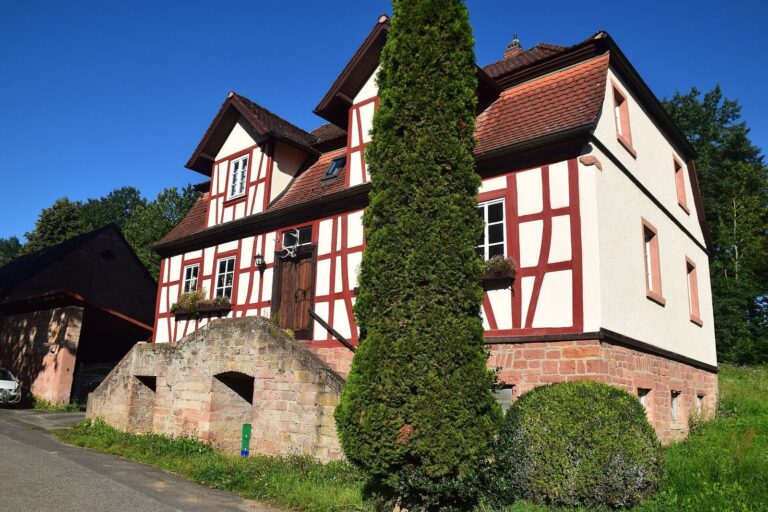
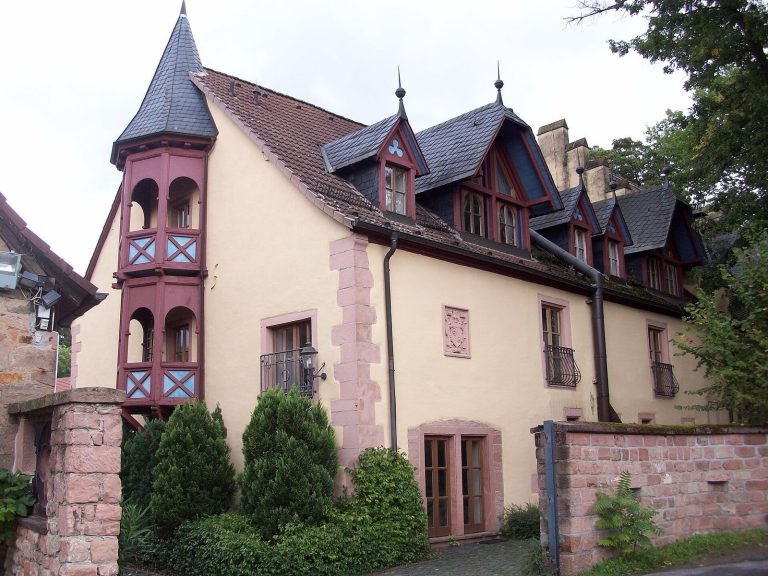
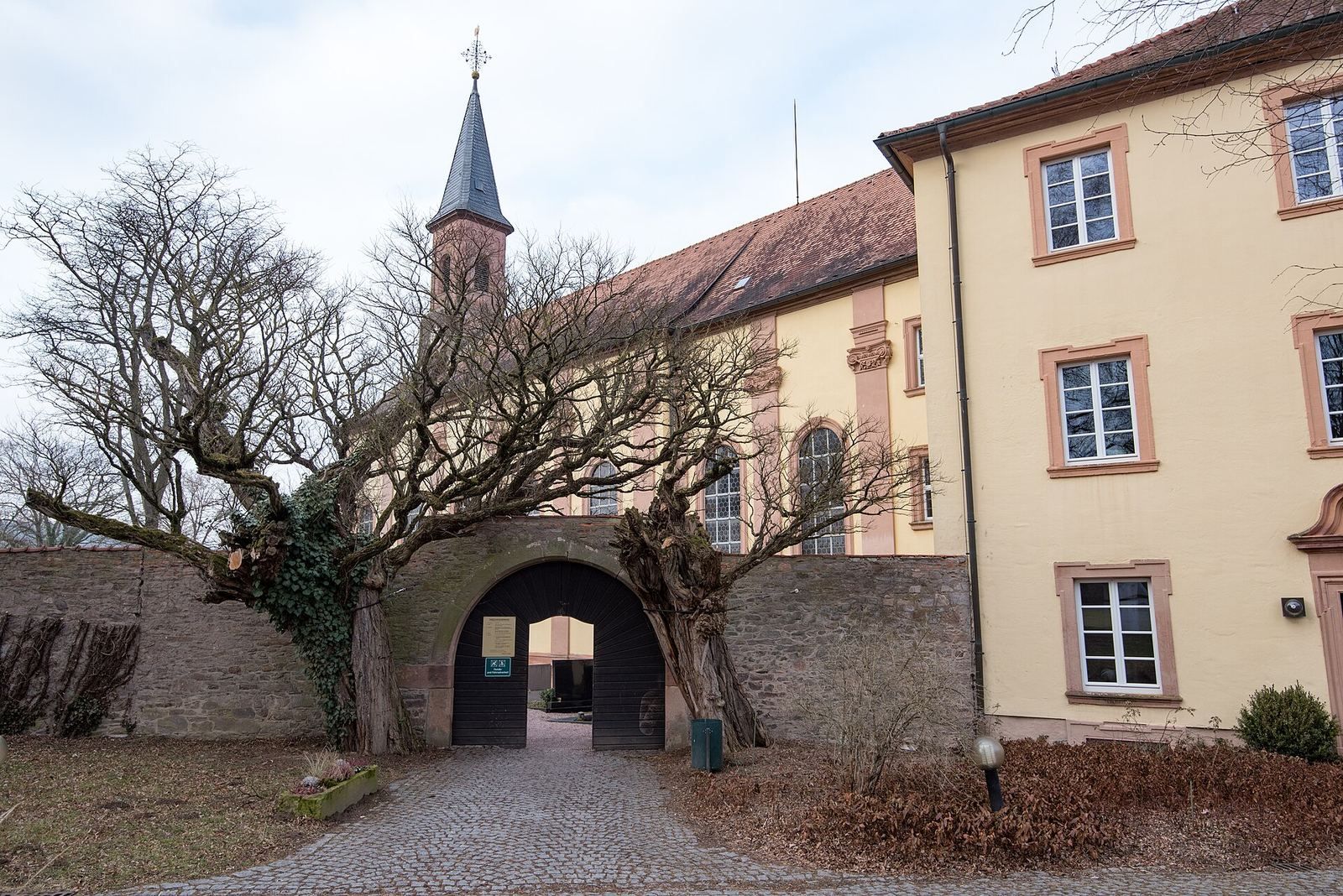
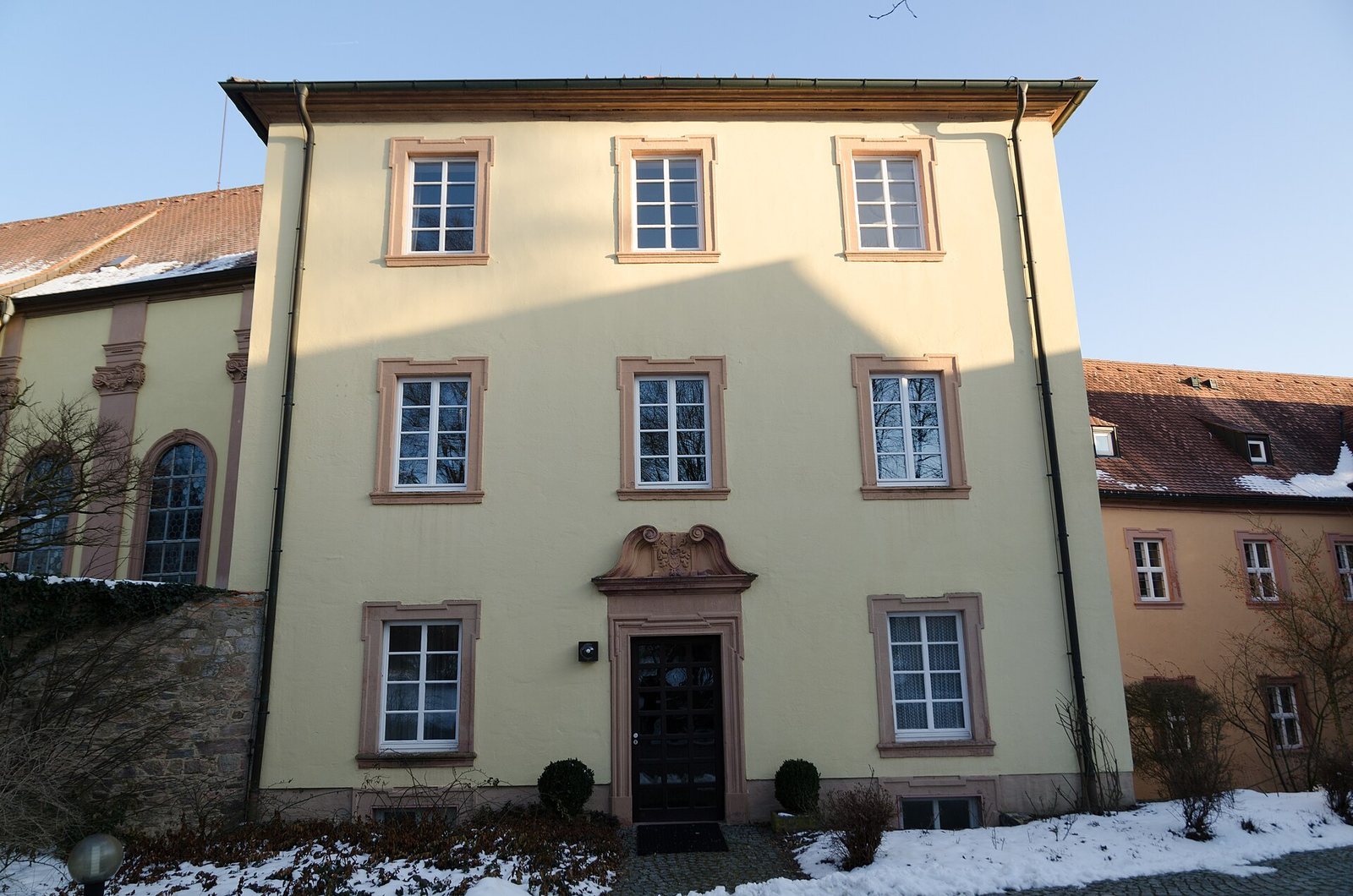
The former abbey church and the monastery cemetery beside it are the principal historic features described at Schmerlenbach. The wider complex also includes newer buildings associated with its education and retreat house.
Church and sacred features
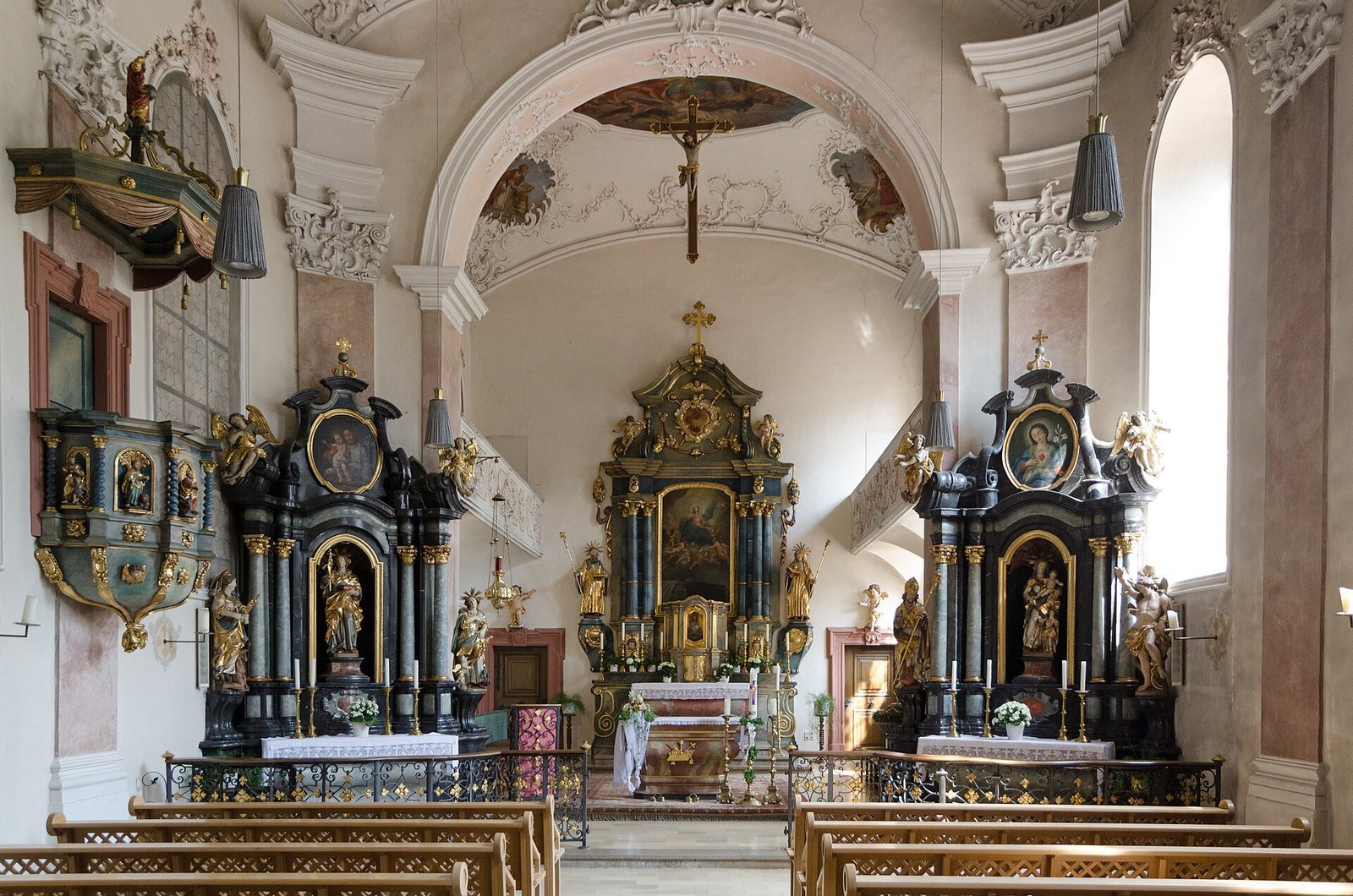
Under Abbess Maria Engelberta von Rodenhausen, the dilapidated abbey church was demolished and rebuilt in 1758 in the Baroque style. It now serves as the parish and pilgrimage church of St Agatha. A pilgrimage church is visited by pilgrims to venerate a sacred image or relic. The church holds the Schmerlenbach Madonna, a late Gothic figure of the Virgin Mary dating to around 1380. Its sorrowful expression is reflected in a Franconian saying that compares a person’s face to that of the Madonna of Schmerlenbach. In 2019, Bishop Franz Jung of Würzburg consecrated a new altar designed by artist Madeleine Dietz.
Former monastery cemetery
The former monastery cemetery lies immediately beside the church and continues to serve as a burial place for people from Winzenhohl.