Neuhaus Castle on the Inn: A Bavarian Castle and Rococo Palace
Site at a Glance
- Popularity
- Medium
- Country
- Germany
- Primary era
- Medieval
- Eras represented
- Medieval, Early Modern, Modern
- Civilizations
- Duchy of Bavaria, Electorate of Bavaria, German, Holy Roman Empire, Kingdom of Bavaria
- Site type
- Domestic
- Remains
- Castle
On this page8 sections
History
Medieval castle and Rococo remodelling
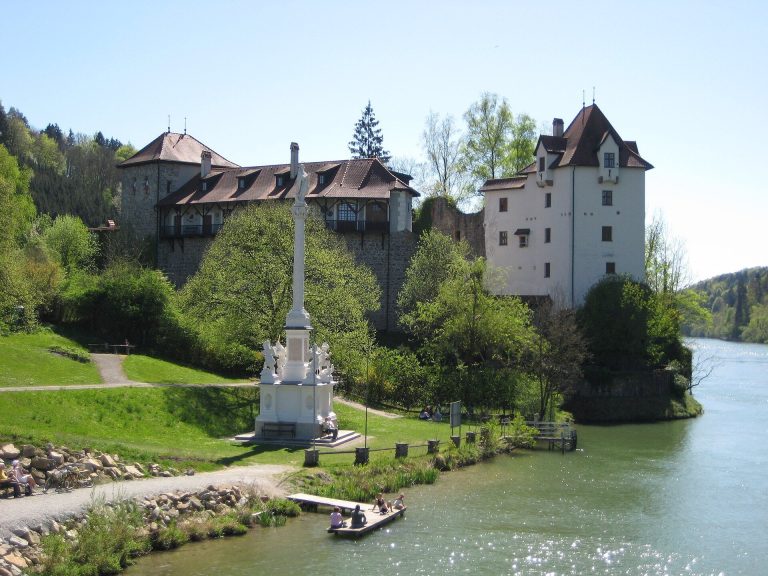
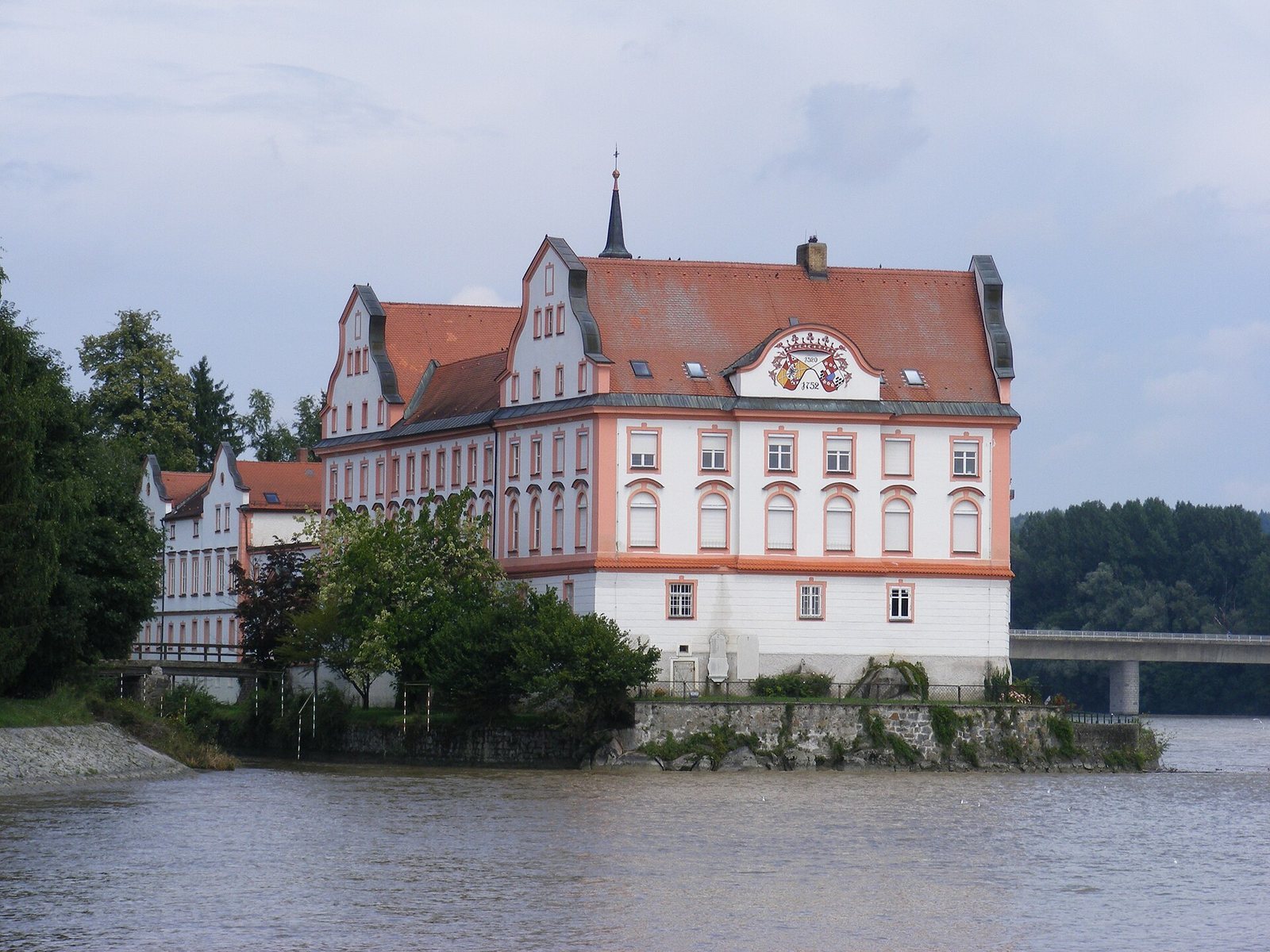
Neuhaus Castle on the Inn, in Germany, was built by Bavarian dukes in the 14th century to protect the Inn bridge at Schärding. From 1750 to 1752, it was remodelled in Rococo style, an ornate form of 18th-century design. Ferdinand, Imperial Count von der Wahl, president of the court chamber, the ruler’s financial and administrative office, commissioned the work. A chronicler tentatively associated the remodelling with the Bavarian master builder Johann Michael Fischer.
Later ownership and new uses
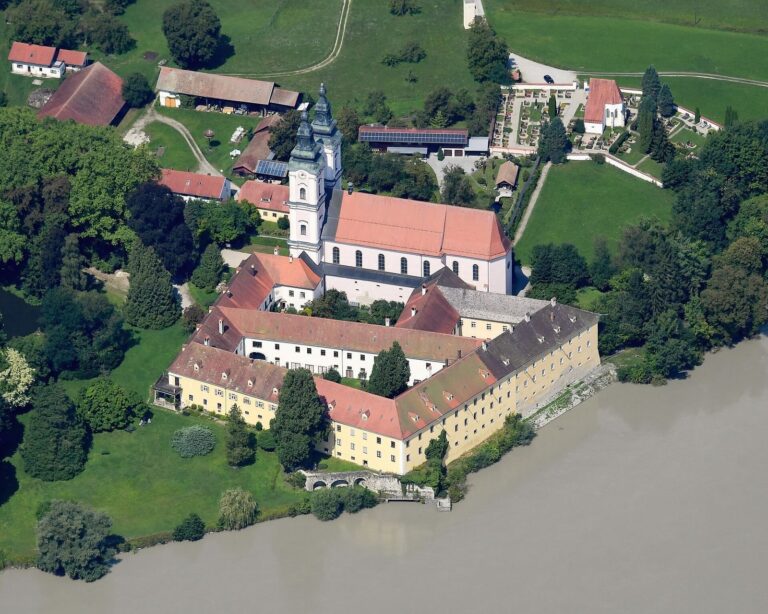
The property changed hands several times before the Institute of the English Ladies of Burghausen, a Catholic women’s religious institute with an educational mission, bought it in 1859 from Princess Auguste von Auersperg for 9,000 Gulden, a historical currency used in German-speaking lands. An extension followed in the years after the purchase. In 1902 and 1903, a Neo-Baroque church dedicated to the Holy Trinity connected the extension to the older castle. The church served as a parish church until 1974.
Since 2011, the castle buildings have been used by a Realschule, a type of German secondary school. The complex is protected as both an architectural monument and an archaeological monument.
Remains
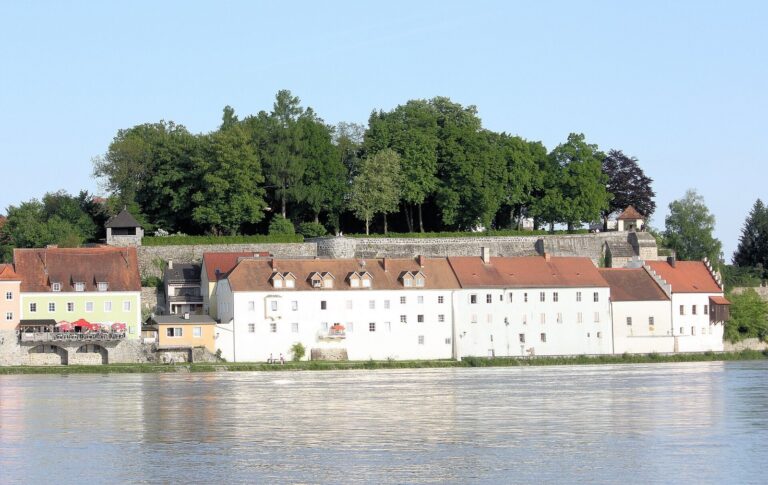
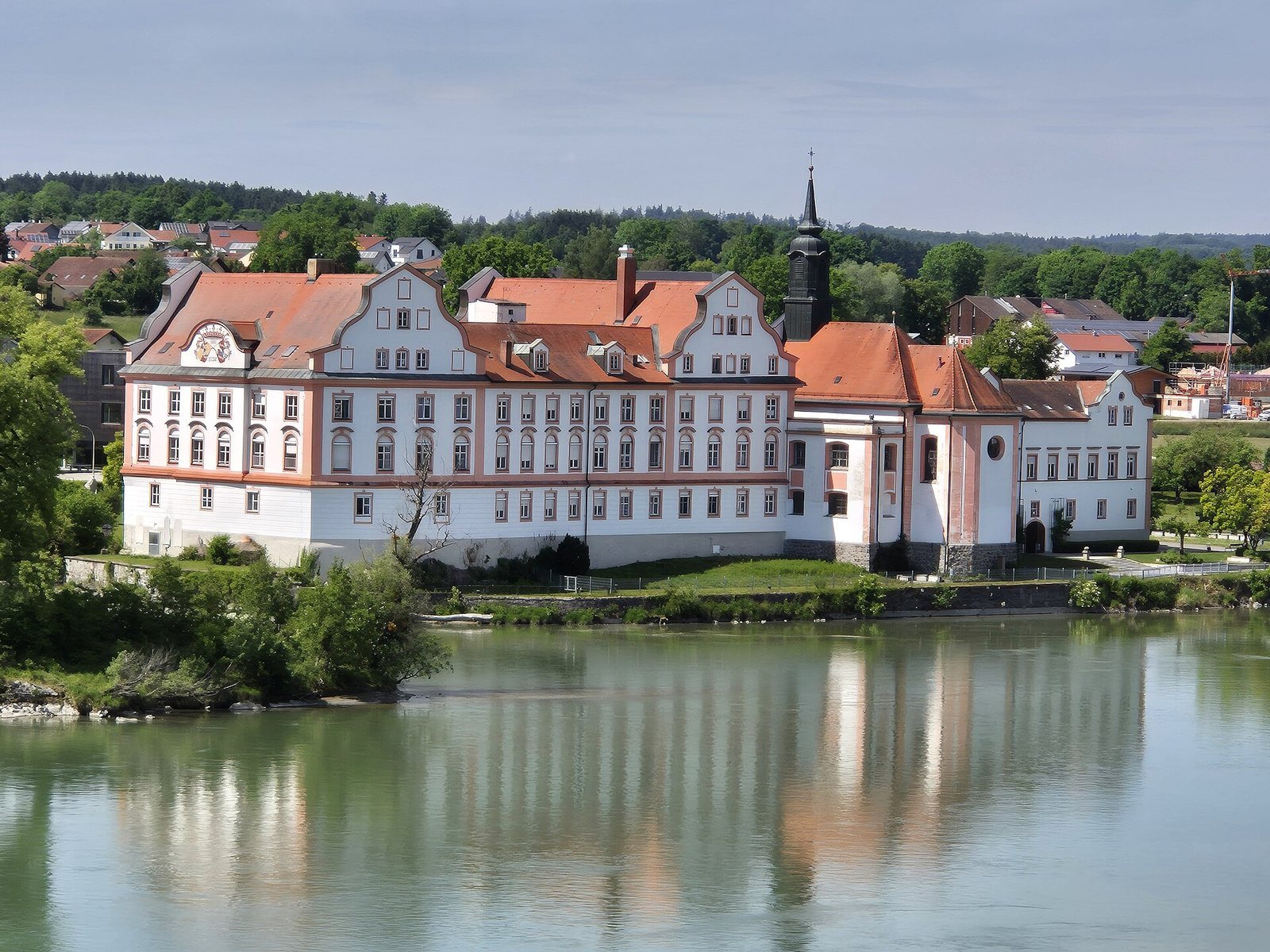
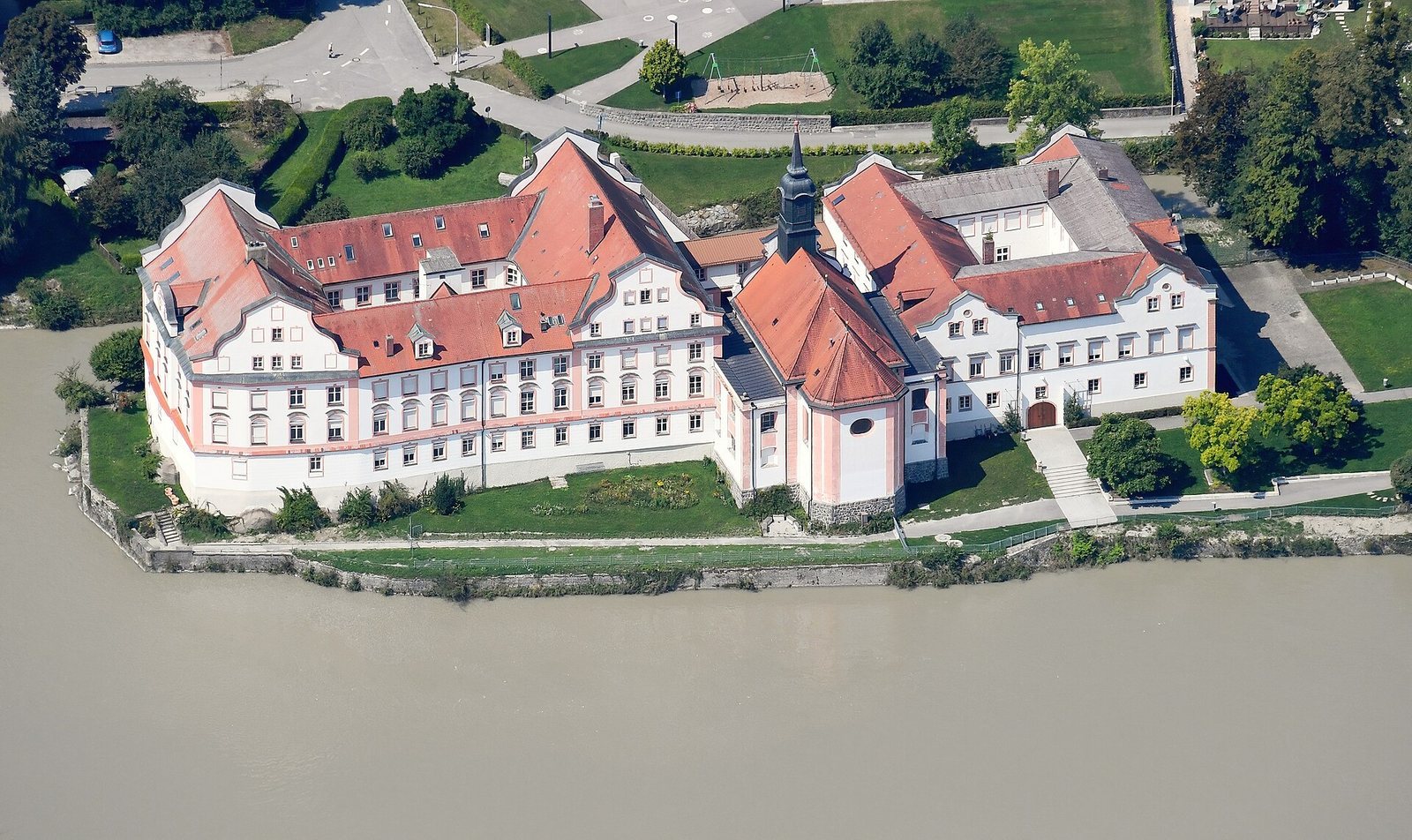
The complex stands on a rock beside the Inn, directly on the Austrian border. Its layout brings together the older castle and a later extension, linked by a Neo-Baroque church. Buried remains in the area relate to the medieval castle and the later palace and church.
The castle complex
Castle building
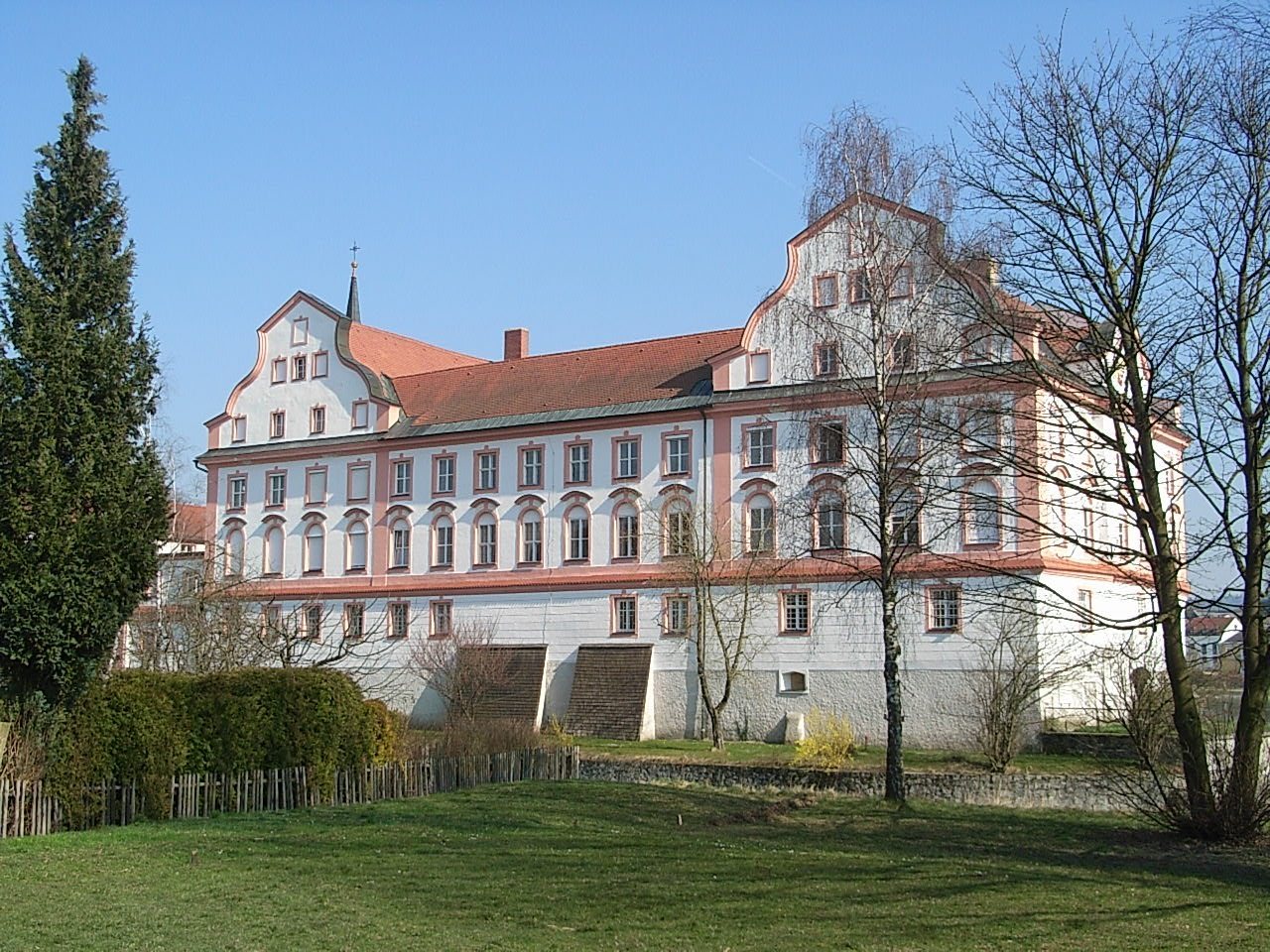
The three-storey castle has two side wings with swept gables, whose outlines curve outward. An alliance coat of arms on the façade combines heraldic arms and recalls the Counts of Taufkirchen. The building was remodelled in Rococo style in the 18th century.
Church of the Holy Trinity
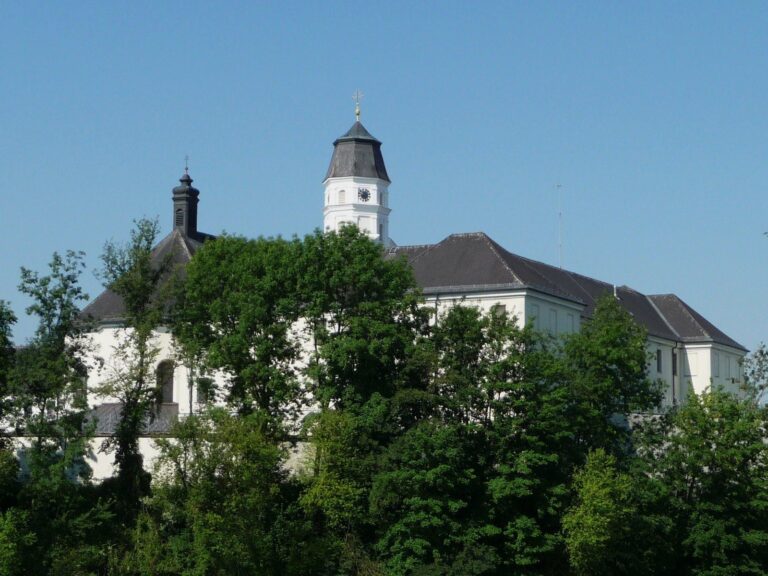
The Neo-Baroque church forms the link between the older castle and its extension. It was formerly the castle chapel and now serves as a Catholic church for a local district, as part of a larger ecclesiastical unit.
Buried archaeological remains
Archaeological remains beneath the area relate to the medieval castle and to the later palace and church.