Sint-Agathaklooster: A Medieval Women’s Monastery in Delft
Site at a Glance
- Rating
- 5
- Popularity
- Very Low
- Country
- Netherlands
- Primary era
- Medieval
- Eras represented
- Medieval
- Civilizations
- Holy Roman Empire
- Site type
- Religious
- Remains
- Monastery
On this page10 sections
History
The Sint-Agathaklooster was a Gothic brick monastery for women in Delft, Netherlands, established in 1403 and dedicated to Saint Agatha. It became the first women’s monastery within the city walls and, at its height, the largest and wealthiest religious community in medieval Delft.
Formation and growth
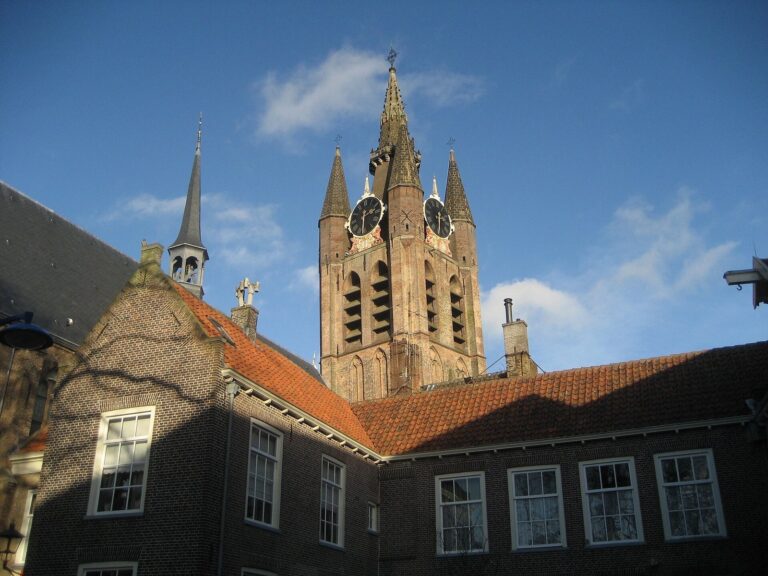
Around 1380, women seeking a religious life gathered around a priest. After 1390, they moved from Geerweg to a house on Oude Delft, behind the Oude Kerk tower. Their circumstances improved when the wealthy widow Alyd Busers and her daughter Aechte joined them late in the fourteenth century. Under Alyd’s support, the community grew and earned its living through spinning and weaving.
Delft’s government permitted the community in 1402. The women acquired a house on Oude Delft for use as a monastery in 1403 and dedicated it to Saint Agatha, Aechte’s patron saint. The Bishop of Utrecht formally recognized the monastery in 1404. Alyd became its first superior, or mother; after she died in 1409, Aechte took her place.
The sisters shared their lives, held no personal property, remained unmarried, prayed, and obeyed their superior. They followed the Modern Devotion, a late-medieval movement stressing personal religious discipline, and later joined the Franciscan Third Order, which adapted Franciscan practice for people living outside strictly cloistered orders. Permission for a chapel and cemetery came in 1414, and the chapel was probably built around then.
As the number of sisters increased, the monastery expanded. Its community eventually reached 125 women. Membership later declined from 80 in 1551 to 42 in 1581, in addition to the superior, Reimburg Christiaansdochter.
Dissolution and the Prinsenhof
The monastery escaped the 1566 iconoclasm, a wave of attacks on religious images. Its circumstances changed in July 1572, after Delft joined the Dutch Revolt, the uprising against Spanish Habsburg rule in the Low Countries. The monastery was dissolved, its property passed under the management of the States of Holland, the province’s governing assembly, and its buildings were put to separate uses. Former nuns received lifelong payments from the property’s income. Catholic worship was prohibited in Holland that year, and the monastery ceased to operate as a convent. The remaining sisters were allowed to live in its long southern wing.
That same year, the last rector, Cornelis Musius, a Catholic priest and poet, left Delft during curfew to take the monastery’s valuable treasures to safety. Willem II Lumey, commander of the Watergeuzen, Dutch rebel forces fighting Spanish rule, captured Musius and took him to Leiden. There he was tortured and hanged, despite a protective letter from William of Orange. In 1581, 28 sisters declared for themselves and 14 absent members that they had received their personal property. Shared ownership ended, and each sister thereafter received an individual payment. The community dwindled; Anna van Merwe, its last sister and, as far as is known, Delft’s last nun, died in 1640.
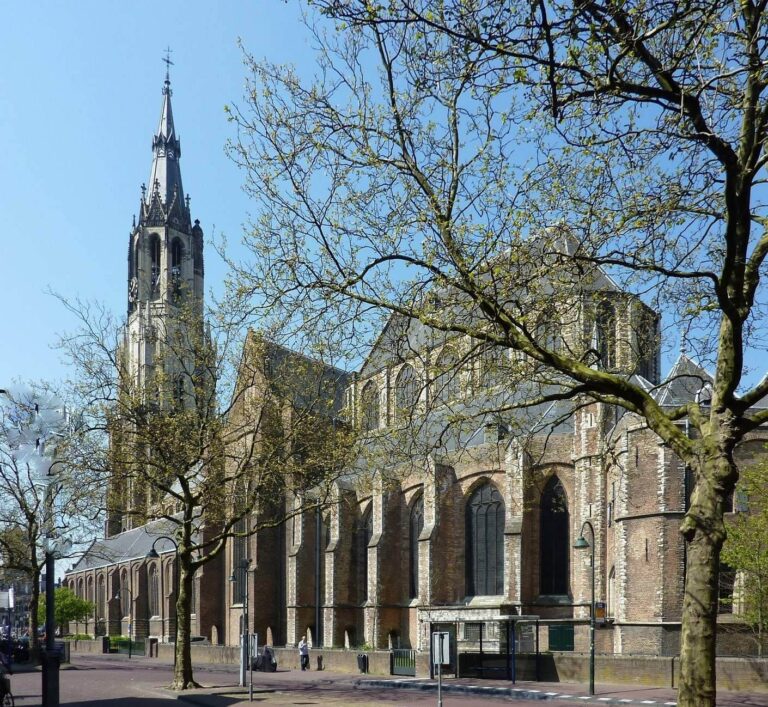
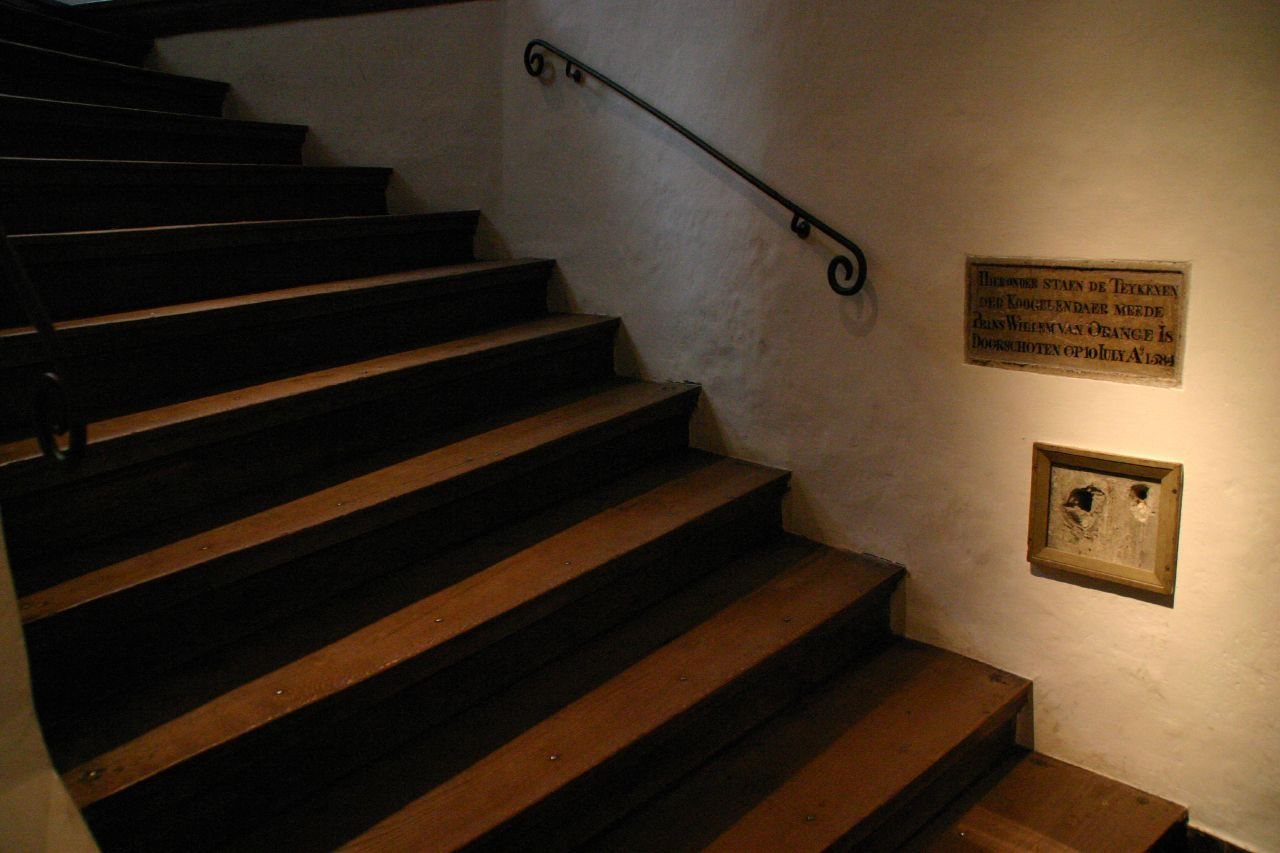
The former monastery buildings became a residence and court for William of Orange, who stayed there regularly from 1572 to 1584. The complex became known as the Prinsenhof, or Prince’s Court. On 10 July 1584, Balthasar Gerard, a French agent posing as a Protestant, shot William as he climbed the stairs to his bedroom. William was buried in Delft’s New Church.
Religious, civic, and museum uses
From 1585, the former chapel served a Walloon congregation, a French-speaking Reformed Protestant community, which held services in French. Its final official service in the chapel took place on 10 June 2018; the congregation then moved its activities to a Lutheran church in Noordeinde, The Hague.
From the mid-seventeenth century, parts of the complex housed textile workshops and fabric shops, with shops on the ground floor and owners’ homes above. Part of the Prinsenhof was arranged as a cloth hall in 1657. The Delft Music College also occupied the complex during the eighteenth century. A Latin school operated there from the late eighteenth century until 1807. Military requirements repeatedly displaced it from rooms after 1795, and when it left in 1807, the complex became entirely barracks.
An exhibition marking 300 years since William of Orange’s death took place in the historic hall, also known as the Murder Hall, and the refectory, a communal dining hall. Both rooms were restored in 1887. Delft’s municipal museum, founded in 1897, began housing its collection in the complex in 1906. The military had left by 1925, and a restoration carried out from 1932 to 1951 prepared the buildings for use as a municipal museum. A major renovation followed later.
Another part of the former monastery housed an Ethnographic Museum from 1911. Renovation in 1977 led to its use as the Nusantara Museum, devoted to Indonesian art and culture. After another renovation in 2011, it closed less than two years later because of a municipal funding shortage; its collection was divided among Museum Prinsenhof, the National Museum of Ethnology, and other institutions. The complex is a Dutch national monument and was included in the Top 100 list of Dutch national monuments established in 1990.
Remains
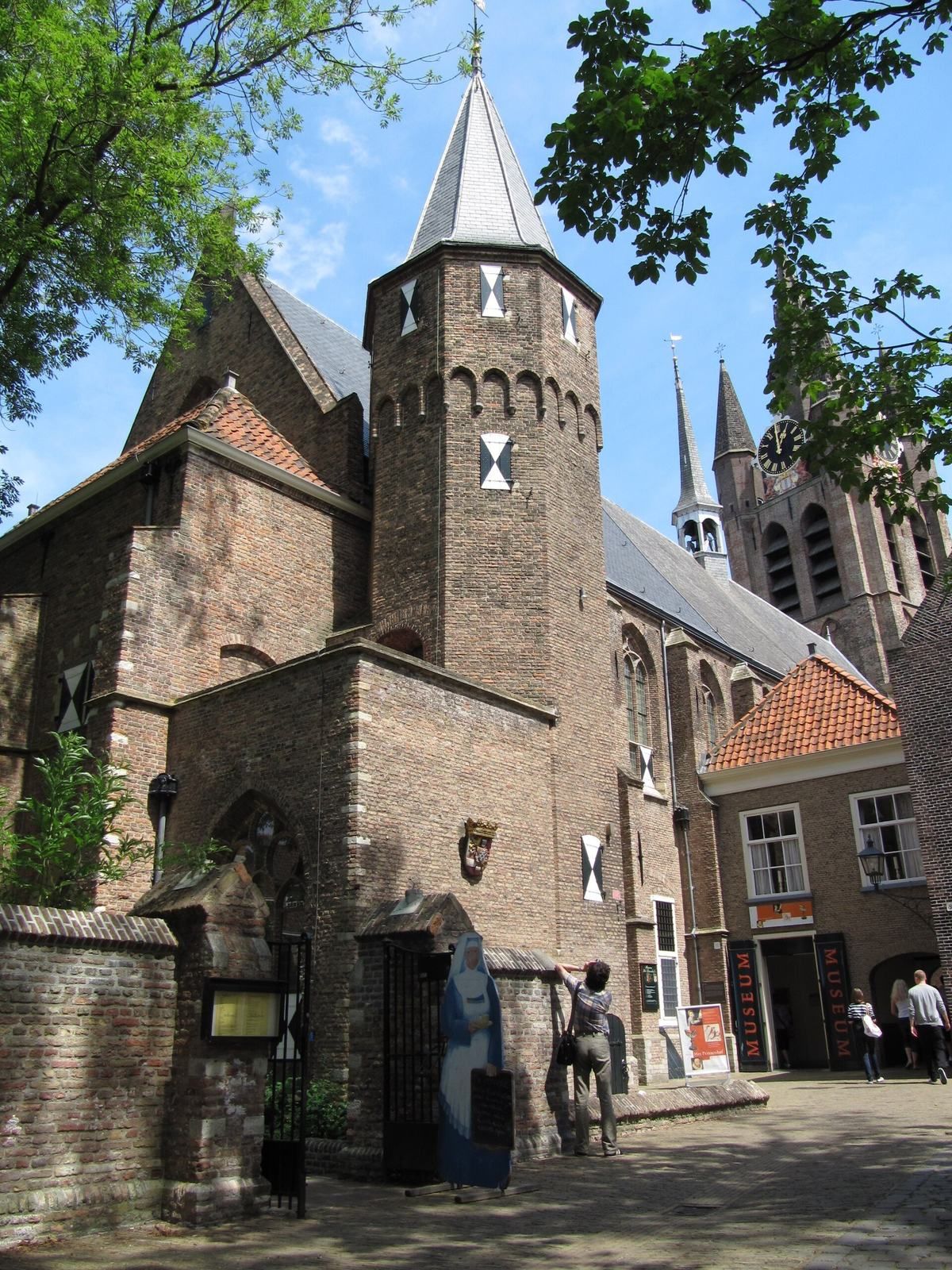
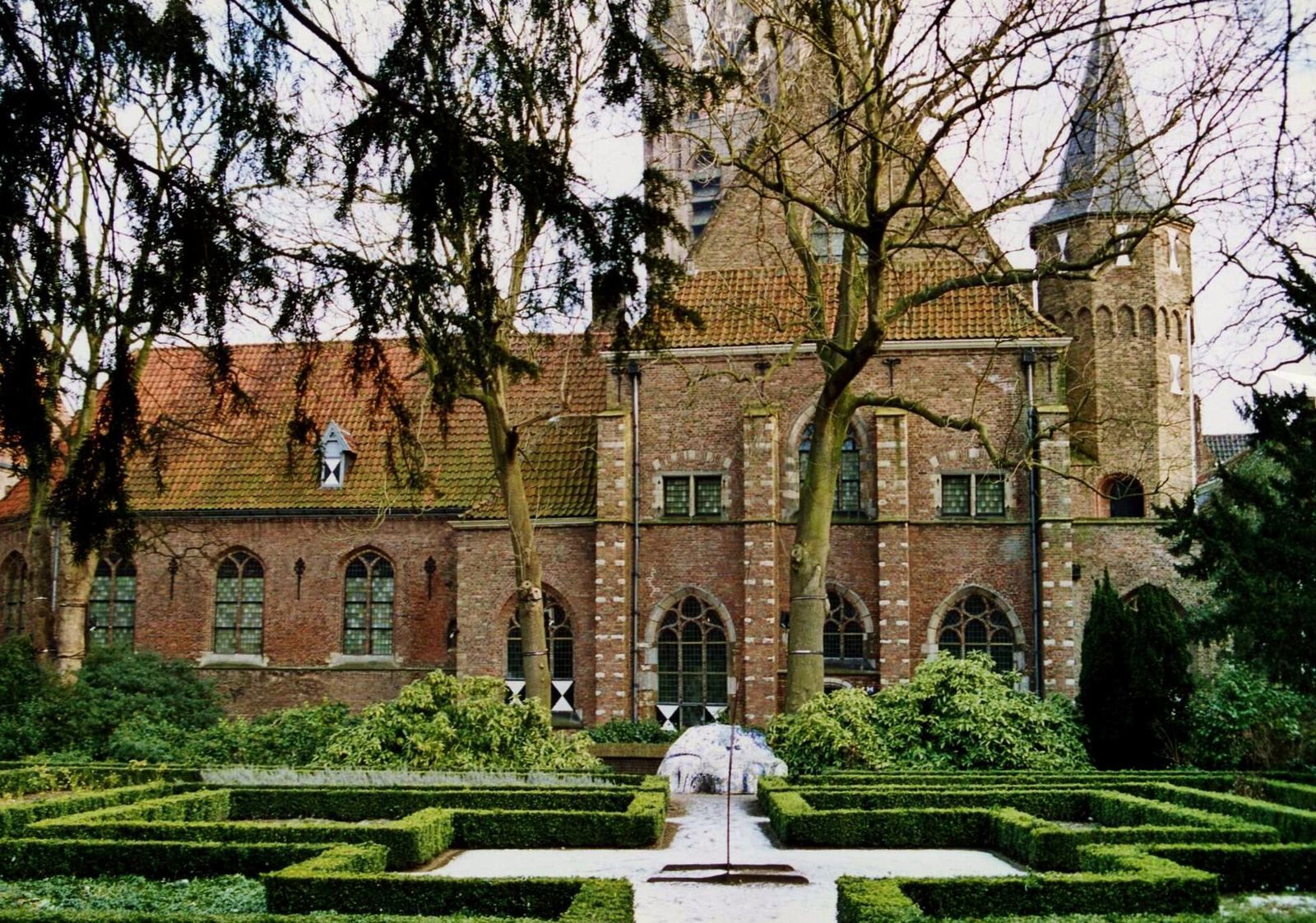
The former monastery is a brick Gothic complex whose components include a chapel, an inner courtyard, and a long southern wing. Identified features also include the historic hall, refectory, and stairs associated with William of Orange’s residence.
Buildings and surviving features
Layout and construction
The complex’s brick construction and Gothic style define its surviving buildings. The inner courtyard and the long southern wing are among its principal architectural elements.
Chapel
The former monastery chapel remains part of the complex. It served the Walloon Reformed congregation from 1585, and its last official service was held in 2018.
Historic rooms and stairs
The complex includes the historic hall known as the Murder Hall, the refectory, and the stairs leading toward William of Orange’s bedroom. Bullet holes from the 1584 shooting remain in a museum wall, protected beneath glass.
Garden and museum collections
A statue of William the Silent by sculptor Auke Hettema stands in the Prinsenhof garden. Museum Prinsenhof’s collections include material relating to William of Orange and the founding of the Dutch Republic, along with artworks from the sixteenth and seventeenth centuries and Delft blue, a tin-glazed earthenware associated with Delft pottery.