Gornja Radgona Castle: A Medieval Border Fortress in Slovenia
Site at a Glance
- Rating
- 4.4
- Popularity
- High
- Country
- Slovenia
- Primary era
- Medieval
- Eras represented
- Medieval, Early Modern
- Civilizations
- Duchy of Styria, Habsburg, Habsburg Austria, Holy Roman Empire
- Site type
- Military
- Remains
- Castle
On this page6 sections
History
Foundation and growth
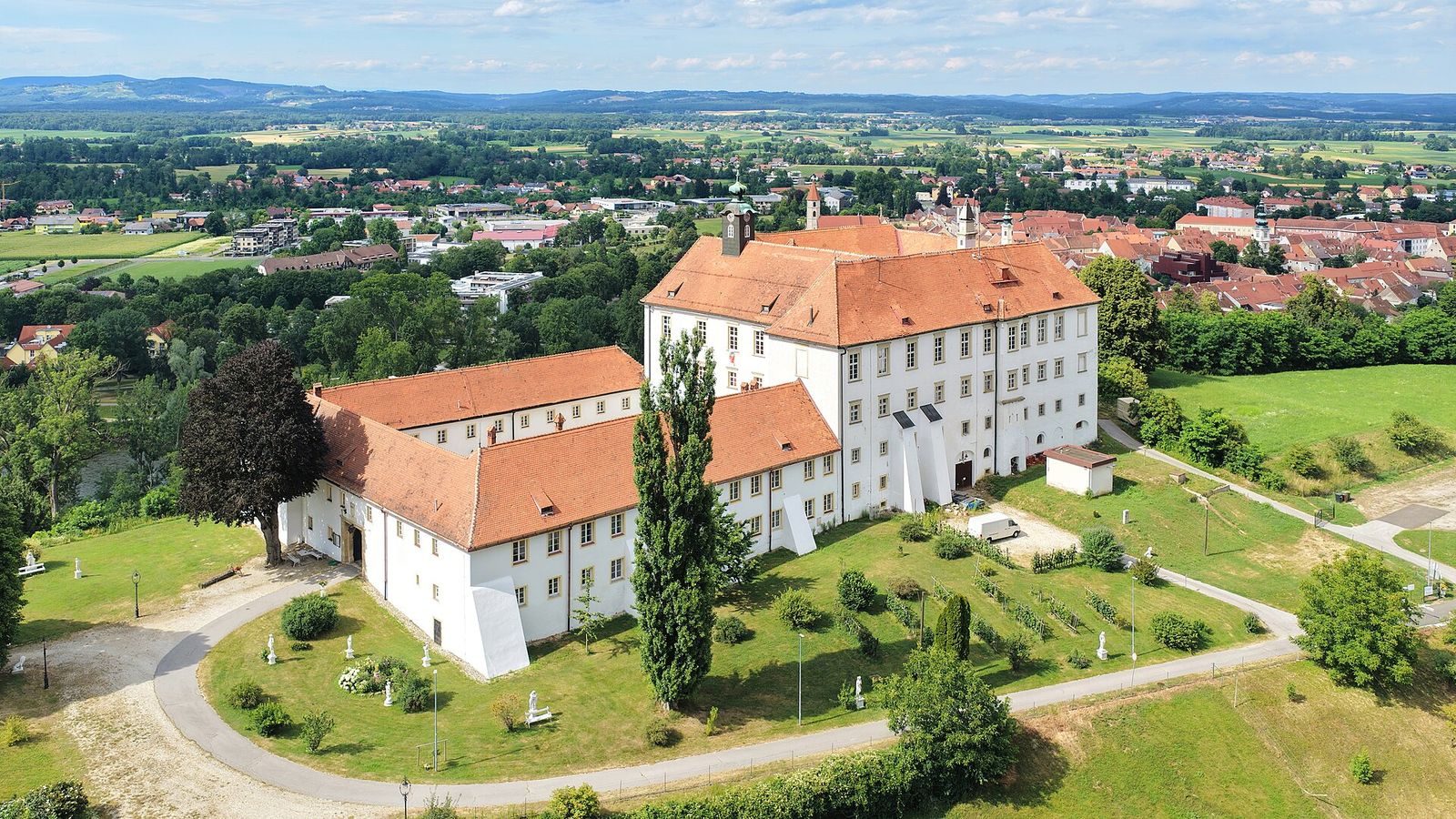
Gornja Radgona Castle is a medieval fortress in Gornja Radgona, Slovenia, built between 1147 and 1182 as an important stronghold on the border between Styria and Hungary. It initially had little land of its own and protected Radkersburg, across the Mur River. By 1265, the castle was associated with 40 dependent villages and 355 farms. The fortress was recorded again in 1363, and the town of Gornja Radgona developed below the castle hill.
Rebellion and changing rule
During the 15th century, a large lordship, a landed estate with associated jurisdiction, developed under Friedrich von Stubenberg and was administered from the castle. Hans von Stubenberg joined the rebellion of the nobleman and military leader Andreas Baumkircher against Holy Roman Emperor Frederick III. After the revolt failed, Frederick seized the castle. Hungarian forces loyal to King Matthias Corvinus occupied it from 1479 until his death in 1490. The castle then returned to imperial ownership and was leased to successive governors.
Eggenberg and Herberstein ownership
A thorough reconstruction took place in the late 16th century. Administration passed to Hans Ulrich, Prince of Eggenberg, in 1618, and Emperor Ferdinand II sold him the castle in 1623. It remained with the Eggenberg family until 1717, when marriage transferred it to Leopold, Count of Herberstein. By the mid-18th century, it was Herberstein family property. Leopold sold it in 1789 to the House of Wurmbrand-Stuppach, which retained ownership until 1914. Franz Karl Chrorinsky later became its owner.
Twentieth-century changes
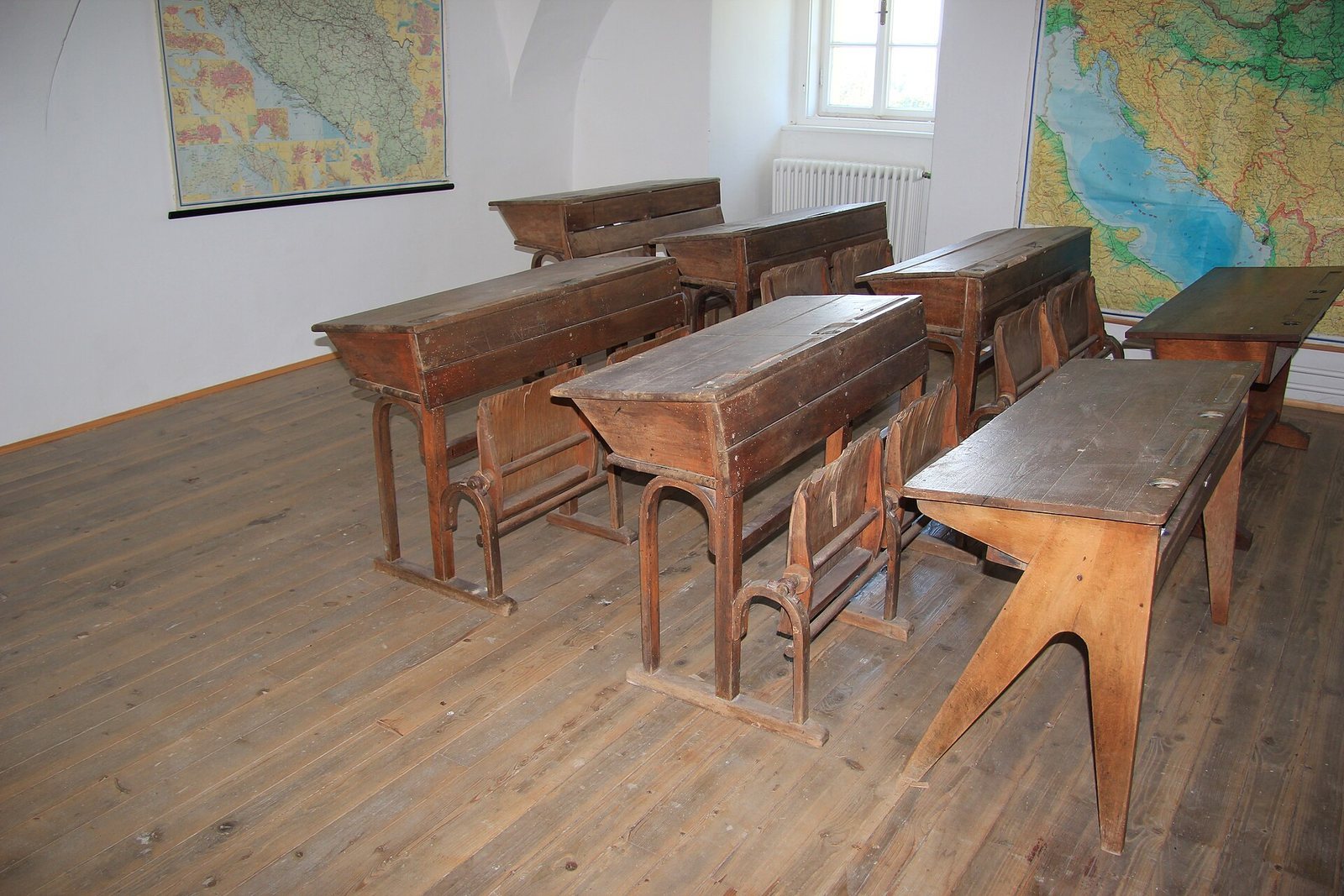
In 1920, Oberradkersburg and Untergries were separated from Radkersburg and incorporated into Gornja Radgona. Slovenian authorities took control of the castle in 1931, and under Yugoslav state ownership it was used as a school. The building suffered damage during the Second World War in 1945 and was subsequently repaired. It has been leased privately since 1992 and used for private purposes.
Remains
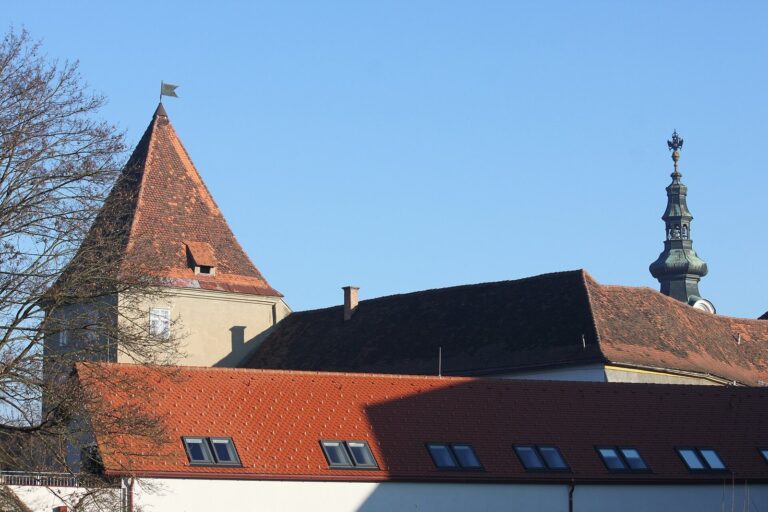
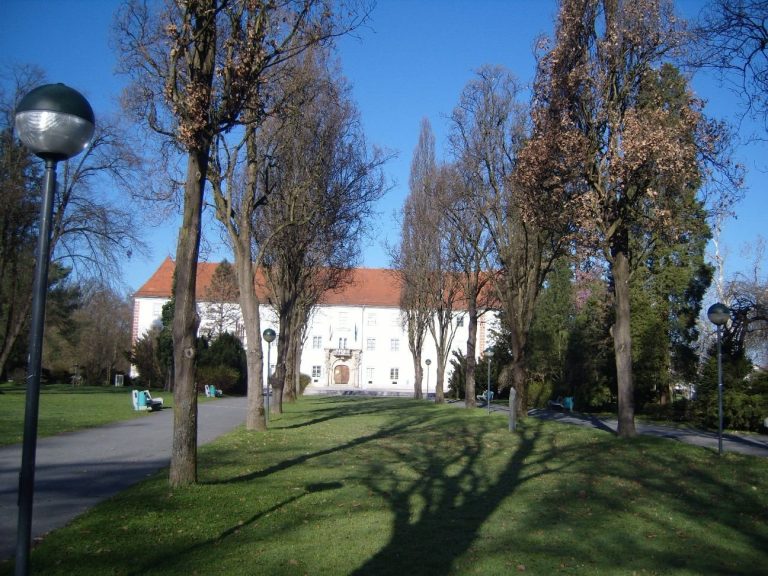
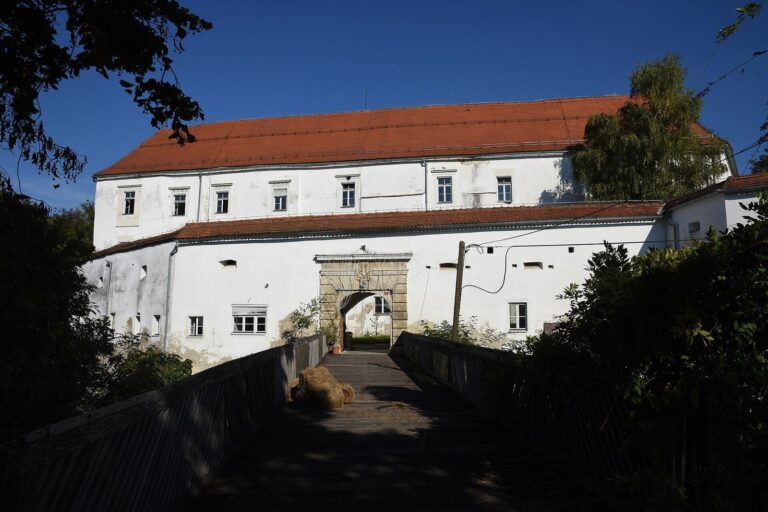
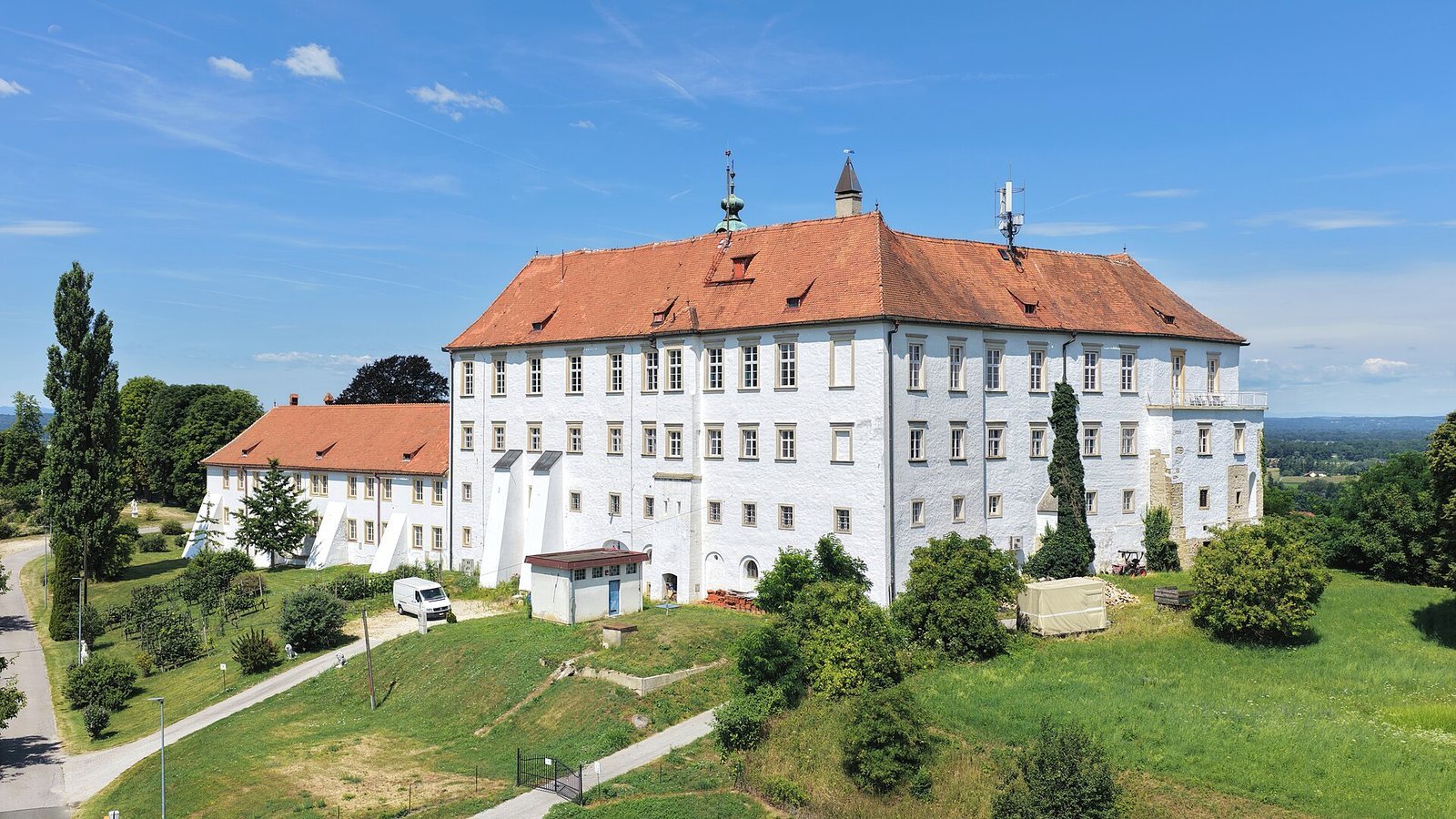
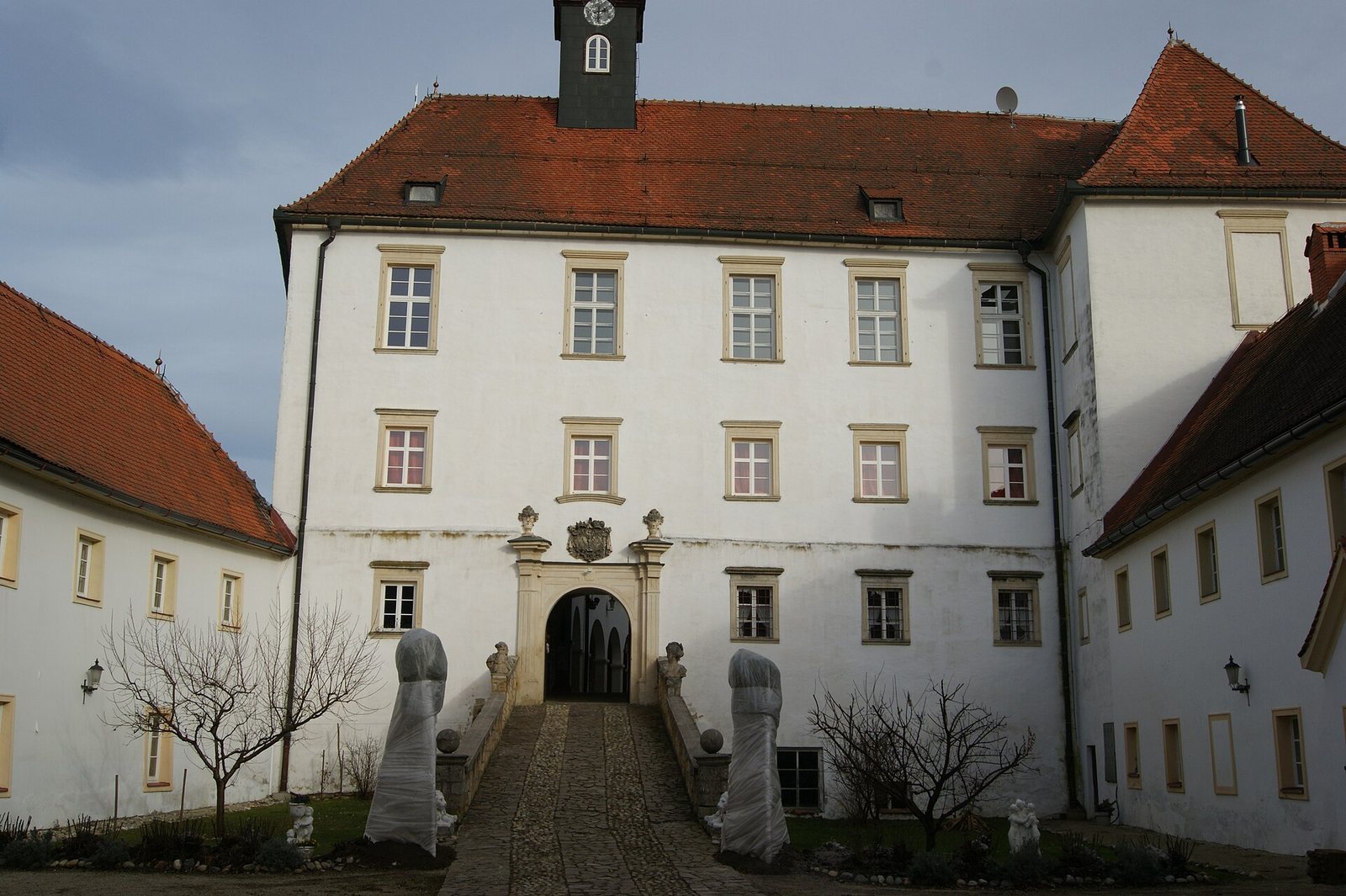
The castle stands on a hill beside the Mur River. Its medieval core was altered in the 16th and 18th centuries. The main building is a large, irregular, three-storey quadrangular block enclosing a courtyard, where Renaissance-style arcades rest on pillars. On the block’s western side, a substantial two-storey forecourt occupies a lower level. The western entrance portal bears the Herberstein coat of arms and the date 1775. A separate portal from the main block opens toward the forecourt; a ramp rises to it, and its face carries the combined coats of arms of the Herberstein and Eggenberg families.