Herne Charterhouse: A Carthusian Monastery in Belgium
Site at a Glance
- Popularity
- Medium
- Country
- Belgium
- Primary era
- Early Modern
- Eras represented
- Early Modern
- Civilizations
- Habsburg, Habsburg Austria, Spanish
- Site type
- Religious
- Remains
- Monastery
On this page11 sections
History
Herne Charterhouse was a Carthusian monastery in Belgium, founded in 1314 beside an older pilgrimage chapel dedicated to Mary. The Carthusian Order is a Catholic contemplative order whose monks traditionally lived in individual cells and gathered for communal worship. Herne was the order’s first foundation in the Low Countries and became the region’s oldest charterhouse.
Chapel and foundation
The chapel was already associated with Herne’s parish church when, in 1148, it passed with the church to Saint-Aubert Abbey in Cambrai. Dedicated to Our Lady of Dierikshoven, it was linked to a local legend about a hermit named Dierik. In 1212, Engelbert II of Enghien provided an annual rent of 40 stuivers to keep a lamp burning there.
Walter II, lord of Enghien, is credited with establishing the monastery through a bequest. His gifts included 15 bunder of land, a locally variable measure, monetary donations, and the use and income of a nearby mill and pond under his control. The bishop of Cambrai approved the foundation. The first monks arrived in 1314 from Carthusian communities in French Flanders, including houses near Vervins and Valenciennes. Robert, also known as Robertus de Bray, became the first prior, or head of the community; he may have come from Vervins. The monastery was also called Domus Capellae, meaning “Charterhouse of the Chapel.”
Construction and consolidation continued through 1410. Herne initially belonged to the Diocese of Cambrai and, from 1559, to the Diocese of Mechelen-Brussels. It was part of the Carthusian Province of Teutonia, a regional administrative division of the order. Herne also helped establish later charterhouses in the Low Countries, including Antwerp in 1324; Sint-Martens-Bos, Zelem, and Ghent in 1328; Scheut in 1455; and Delft in 1470. Grammont was another foundation associated with Herne.
Books and regional influence
Herne became a center for copying, translating, and circulating books, helping Middle Dutch, the medieval form of Dutch, develop as a language of culture. Monks copied works by the mystic and devotional writer Jan van Ruusbroec. At their invitation, he visited in 1362 to explain his writings, and the visit led to Dat Boecsken der verclaringhe.
A translation of the Vulgate, the Latin Bible associated with Jerome, was made at Herne around 1360. It was the first translation of the Vulgate into a vernacular language and circulated widely in manuscript. The translation later provided the basis for the Delft Bible of 1477, the first printed Bible in Dutch. Its attribution to Petrus Naghel, a Carthusian prior of the late fourteenth century, remains disputed. Naghel was also credited with translating parts of the Vulgate, the Golden Legend, and writings by Church Fathers into Dutch.
The monastery’s religious reputation brought local support, particularly from the house of Enghien, and its priors Jean d’Arras, Jean de Montignies, and Laurent Muschezeele were called on to reform other monasteries. Henri van Loen entered Herne in 1441 and became prior in 1445. From 1454 he helped establish Scheut, serving there as rector from 1456 and prior from 1458. He returned to Herne in 1475 and died there. His writings included works on the Psalms of David and Aristotle’s Nicomachean Ethics.
Marguerite of York, Duchess of Burgundy through her marriage to Charles the Bold, visited with her stepdaughter Mary of Burgundy to see her spiritual adviser, prior Laurentius van Muschenzele. When Marguerite died in 1503, her body was buried at Mechelen, her heart at Herne, and her entrails at Scheut. The painter Roger van der Weyden donated to the monastery, where his son became a monk.
Monastic chronicles
Three monks recorded Herne’s history. Arnold Beeltsens entered the monastery in 1456 and was ordained in 1460. He served in musical and choir-supervision roles before his death in 1490. His chronicle, drawing on the monastery’s cartulary, a collection of records concerning its rights and property, recounts events through 1490.
Jean Ammonius, also known as Jean van der Maude, entered Herne in 1500 and began his chronicle in 1529. His interest in classical literature, books, and new ideas drew suspicion, including accusations that he sympathized with Lutheranism. He died in 1545. Guillaume-Bruno Pédé became prior in 1752 by decision of the order’s general chapter, its governing assembly. He held the office until his death in 1765, and his chronicle continued the earlier works, covering the monastery’s history through 1762.
Wars, suppression, and the 1798 uprising
Religious wars brought severe damage. Protestant insurgents known as the Geuzen devastated the monastery in 1566 and burned it when they returned in 1580. After the church was restored, monastic life and religious services resumed there in 1596. The community did not regain stability, however: governments took monastic property, while dissatisfied monks increasingly moved between houses.
In 1783, Joseph II, the Habsburg ruler and Holy Roman Emperor, abolished contemplative monastic orders, ending life at Herne. An attempt to restore the Carthusians in 1794 failed. During the 1798 Peasants’ War, an uprising following French annexation and opposition to laws suppressing Catholic practice and imposing conscription, fighting took place at the charterhouse. About 300 young peasants and the local uprising’s leader, Jan Baptist Eeckhoudt, were killed there. The surviving monastery remains are protected as a monument, and the surrounding area has protected village-townscape status.
Remains
The monastery was arranged around its church in two courtyard compounds with covered walks. A wall enclosed the domain, with entry through a gatehouse. The complex separated a non-monastic area from the monks’ quarters, while an older church served parishioners and the monastery church was reserved for the monks.
Cloisters and working areas
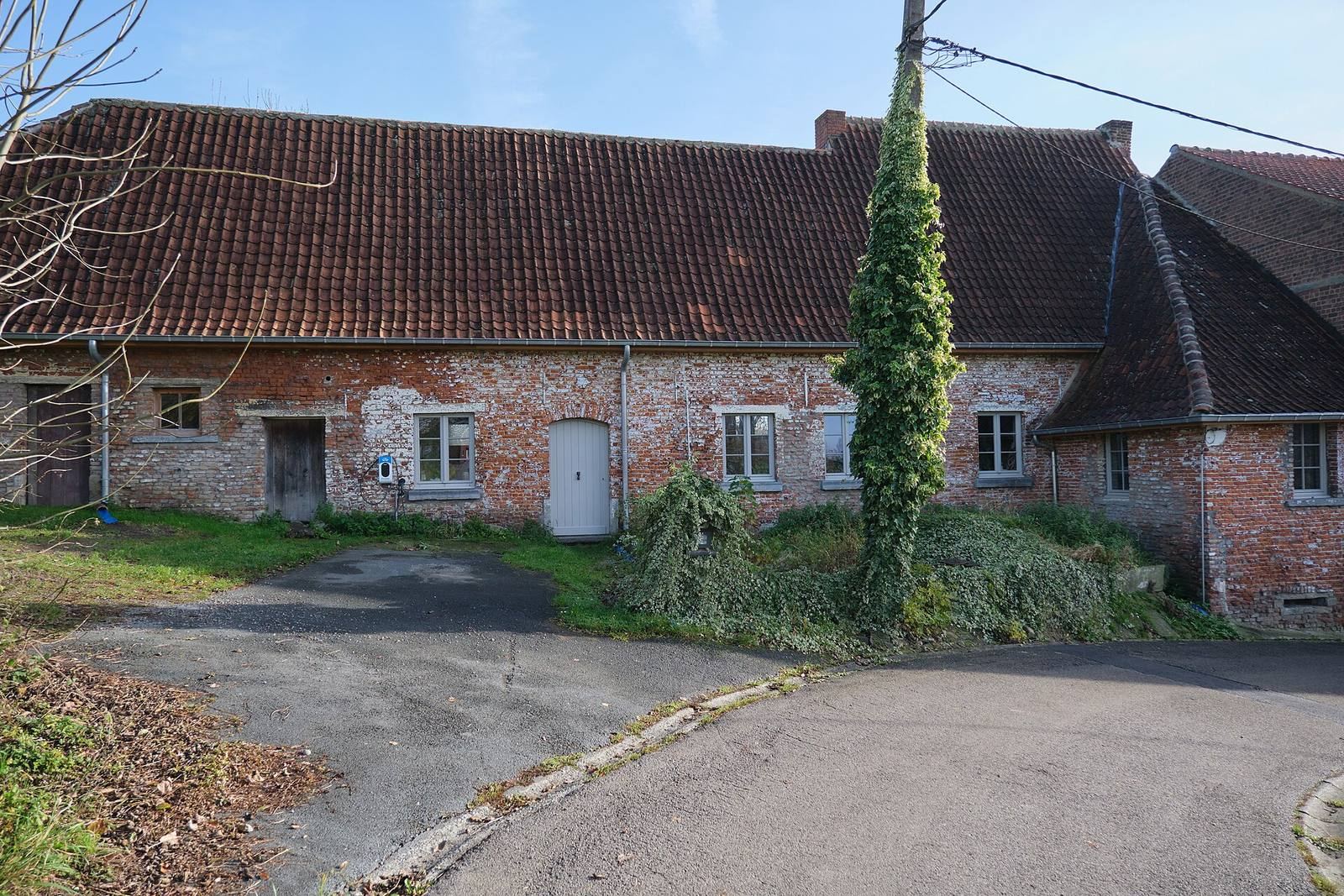
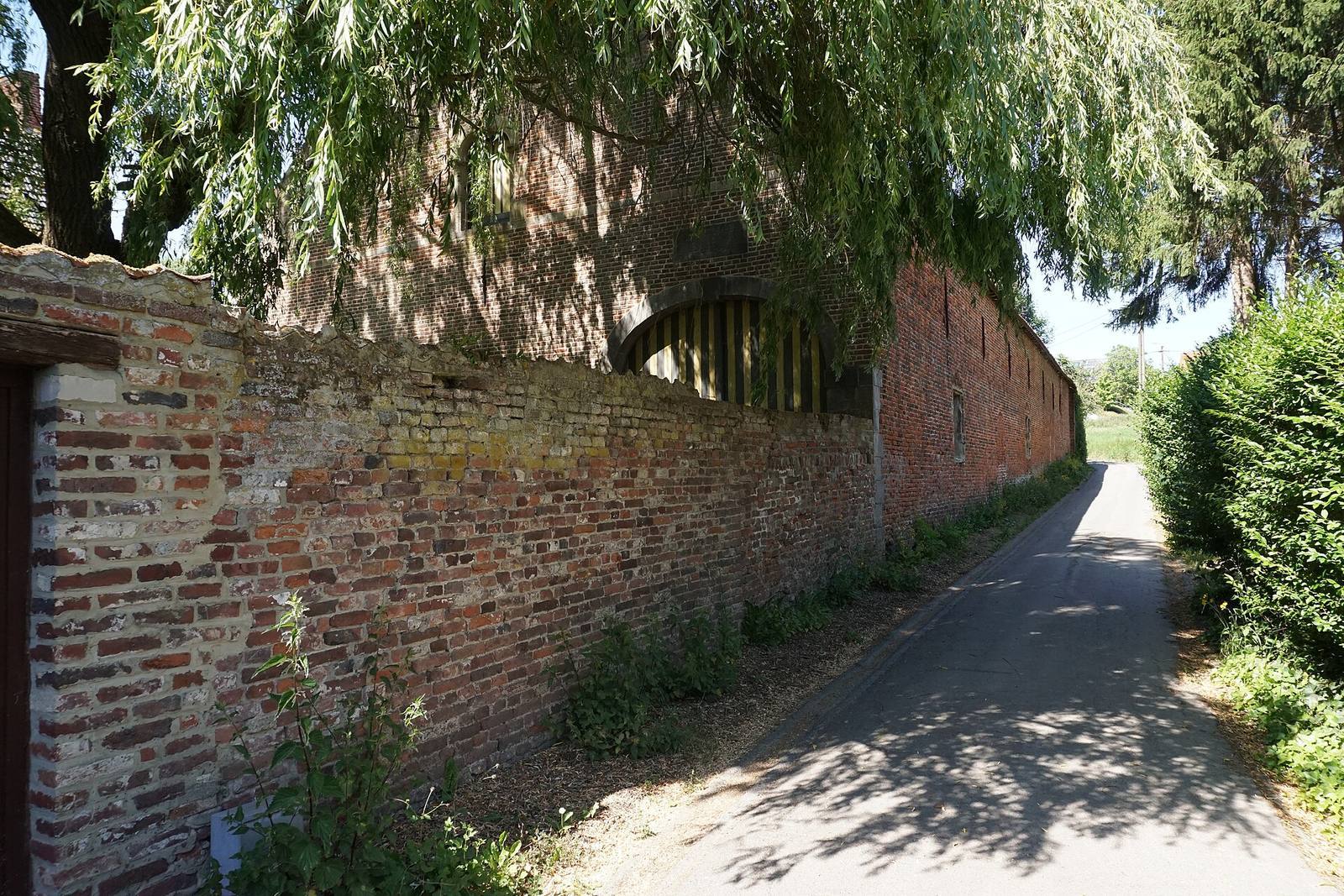
The smaller courtyard compound contained a covered walk, the prior’s residence, a kitchen, and a dining hall. Around the larger compound’s covered walk were the monks’ cells. The gatehouse included guest quarters for women, while men’s guest quarters stood farther away. The non-monastic area contained working buildings, including a farm, brewery, and milk house, as well as a large barn and fishpond. Most monastery buildings, among them the church, cell courtyard, guest quarters, dining hall, and meeting house, were demolished in the early nineteenth century.
Surviving buildings
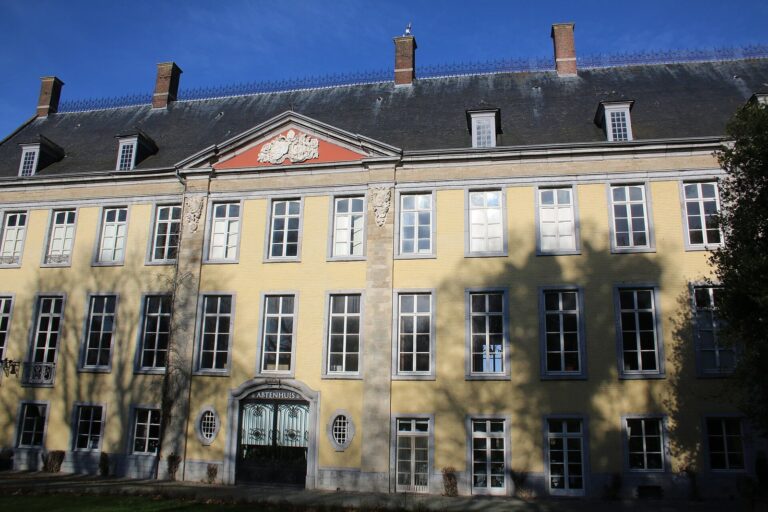
Prior’s residence
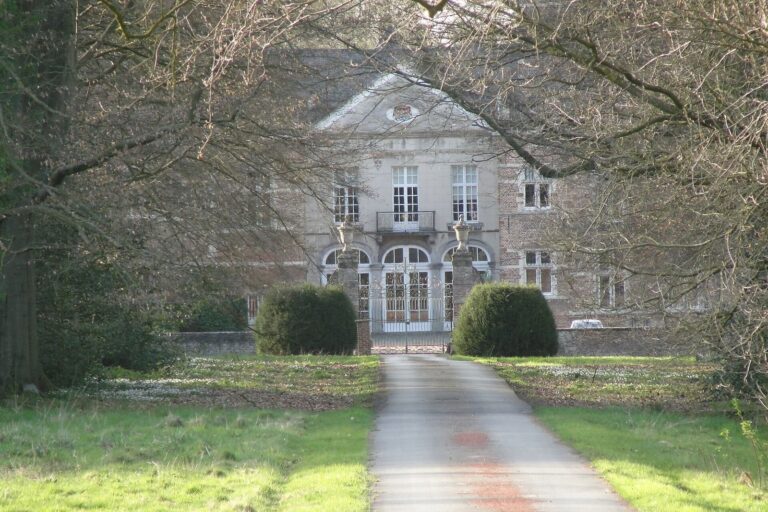
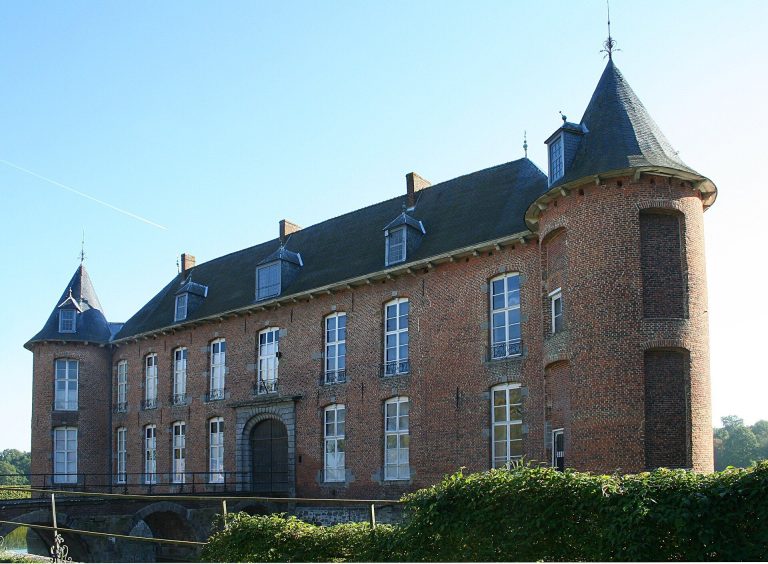
The prior’s residence dates to 1716 and is one of the two surviving buildings of the main monastery complex.
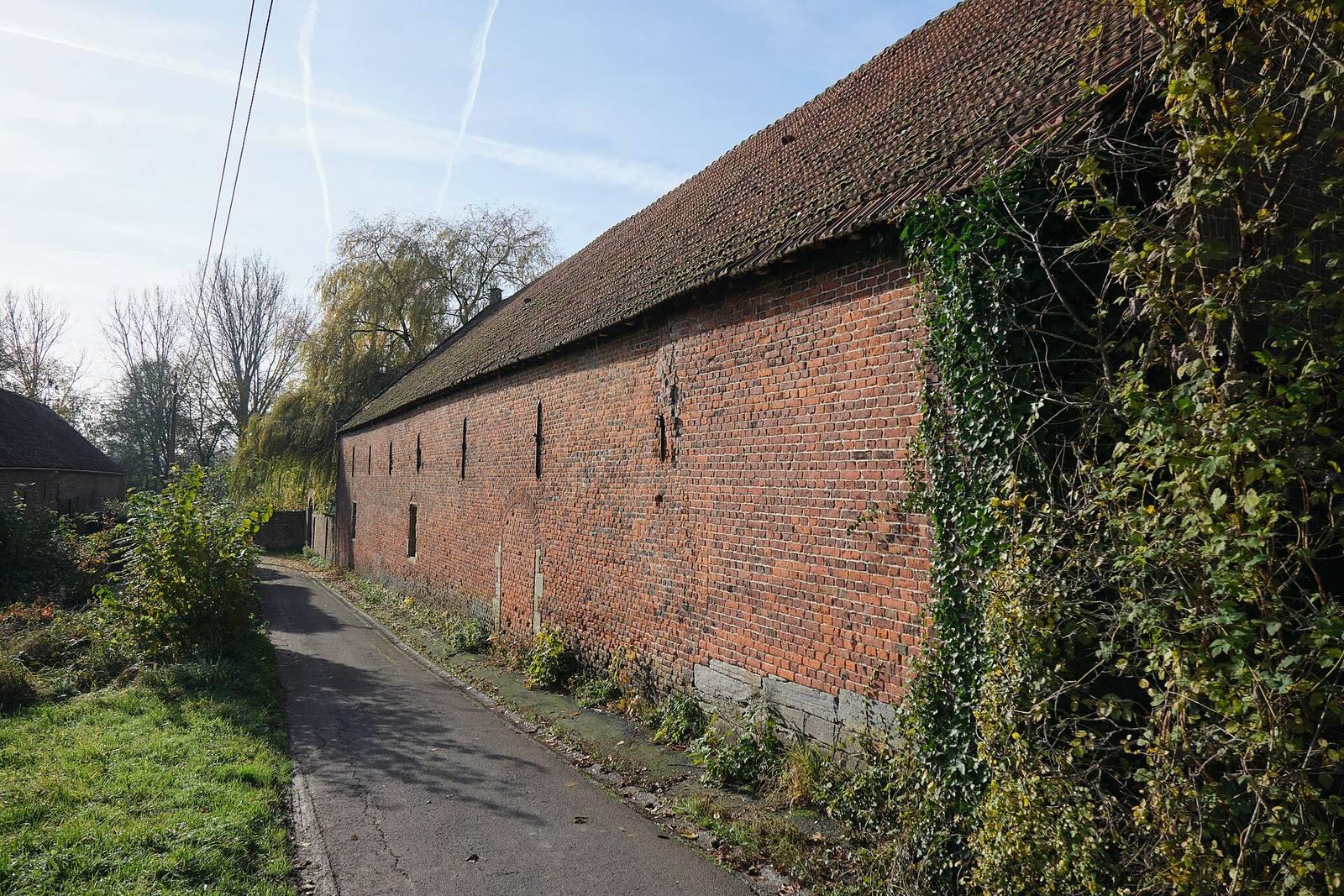
Long barn
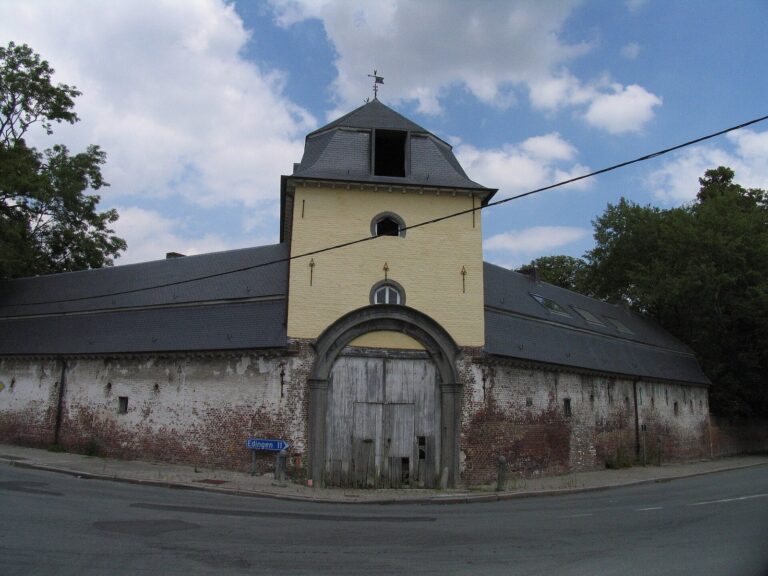
The other surviving building is a brick long barn, built in 1705.
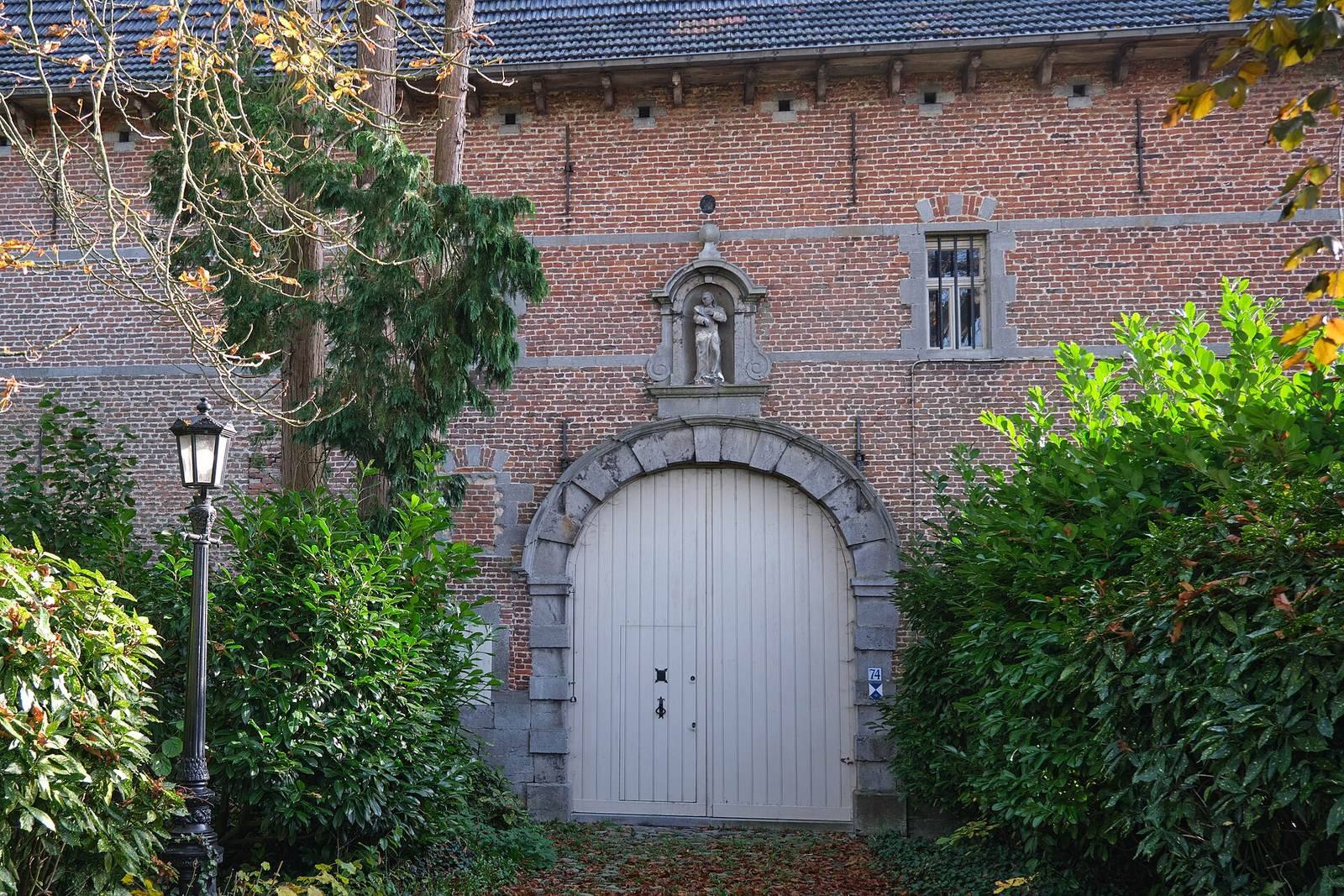
Farm and Saint Bruno statue
The monastic farm Hof te Schiebeek is situated in Herne near the junction of Ninoofsesteenweg and Scheibeekstraat. A statue of Saint Bruno stands above the portal of the former charterhouse.