Wégimont Castle: A Historic Residence in Belgium
Site at a Glance
- Rating
- 4.5
- Popularity
- High
- Country
- Belgium
- Primary era
- Early Modern
- Eras represented
- Medieval, Early Modern
- Civilizations
- Holy Roman Empire, Prince-Bishopric of Liège
- Site type
- Domestic
- Remains
- Castle
On this page9 sections
History
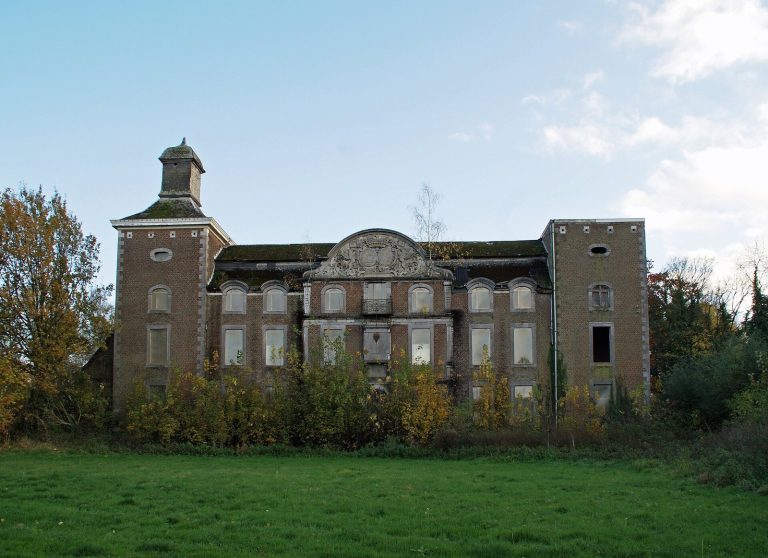
Wégimont Castle stands in Ayeneux, part of Soumagne in Wallonia, Belgium. A castle occupied the site by the fifteenth century, and an archival record refers to it in 1574. The Grignoux, a political faction involved in Liège’s seventeenth-century conflicts, partly destroyed it in 1636. It was rebuilt and enlarged during the seventeenth and eighteenth centuries in the Mosan Renaissance style, a regional Renaissance tradition associated with the Meuse River.
Early castle and noble ownership
The castle belonged first to the d’Aspremont-Lynden family and later to the D’Oultremont family, both aristocratic families of the historical Low Countries.
Chapel and provincial ownership
The castle chapel was built in 1671 and used by the Carmelites, a Catholic religious order whose members traditionally live in monastic communities. During part of the nineteenth century, it served as Ayeneux’s parish church. A new parish church was consecrated in 1876.
In 1920, the castle passed to the Province of Liège. The surrounding 22-hectare area is now a provincial domain.
Wartime use and the 1964 fire
From 1942 to 1944, the castle operated as Belgium’s only Lebensborn maternity home, under the name Heim Ardennen. Lebensborn was a Nazi program that established maternity homes and sought to encourage births the regime considered racially desirable. The first children were born there in April 1943. The home cared for children fathered by German soldiers with non-German women, who stayed with their children. Wives of SS officers also gave birth there; the SS was a major Nazi organization involved in security and regime enforcement. An earlier facility at Wolvertem closed soon afterward.
On 26 May 1964, a major fire killed 17 people, most of them elderly, and destroyed part of the castle. The residential section was subsequently rebuilt.
Remains
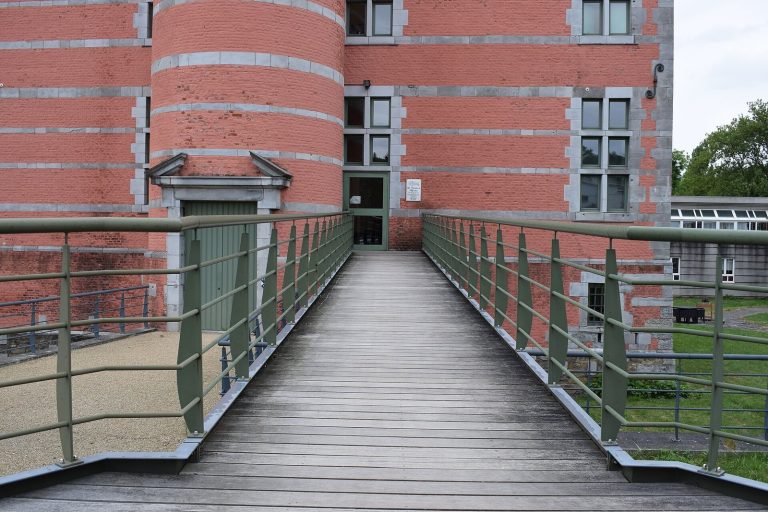
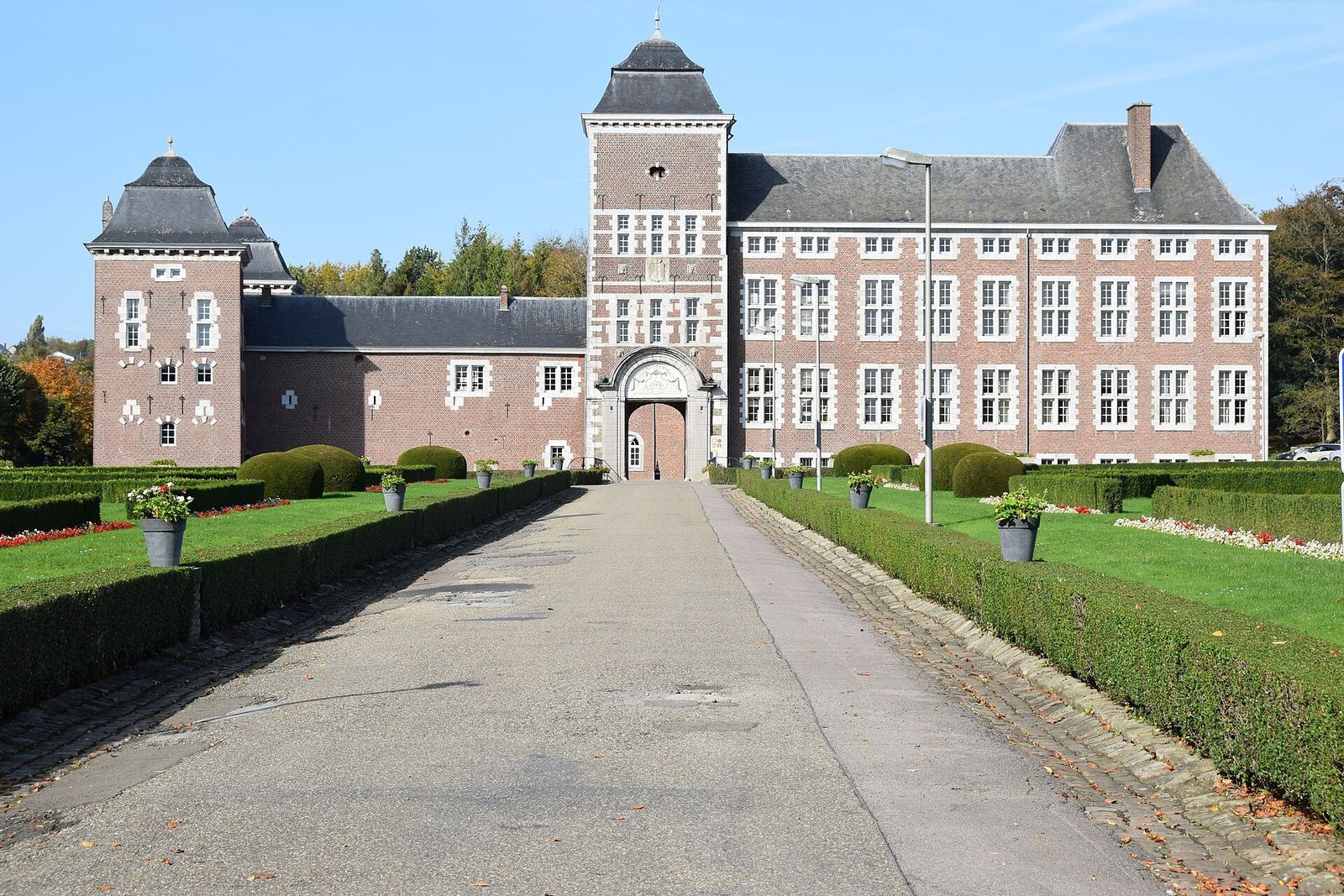
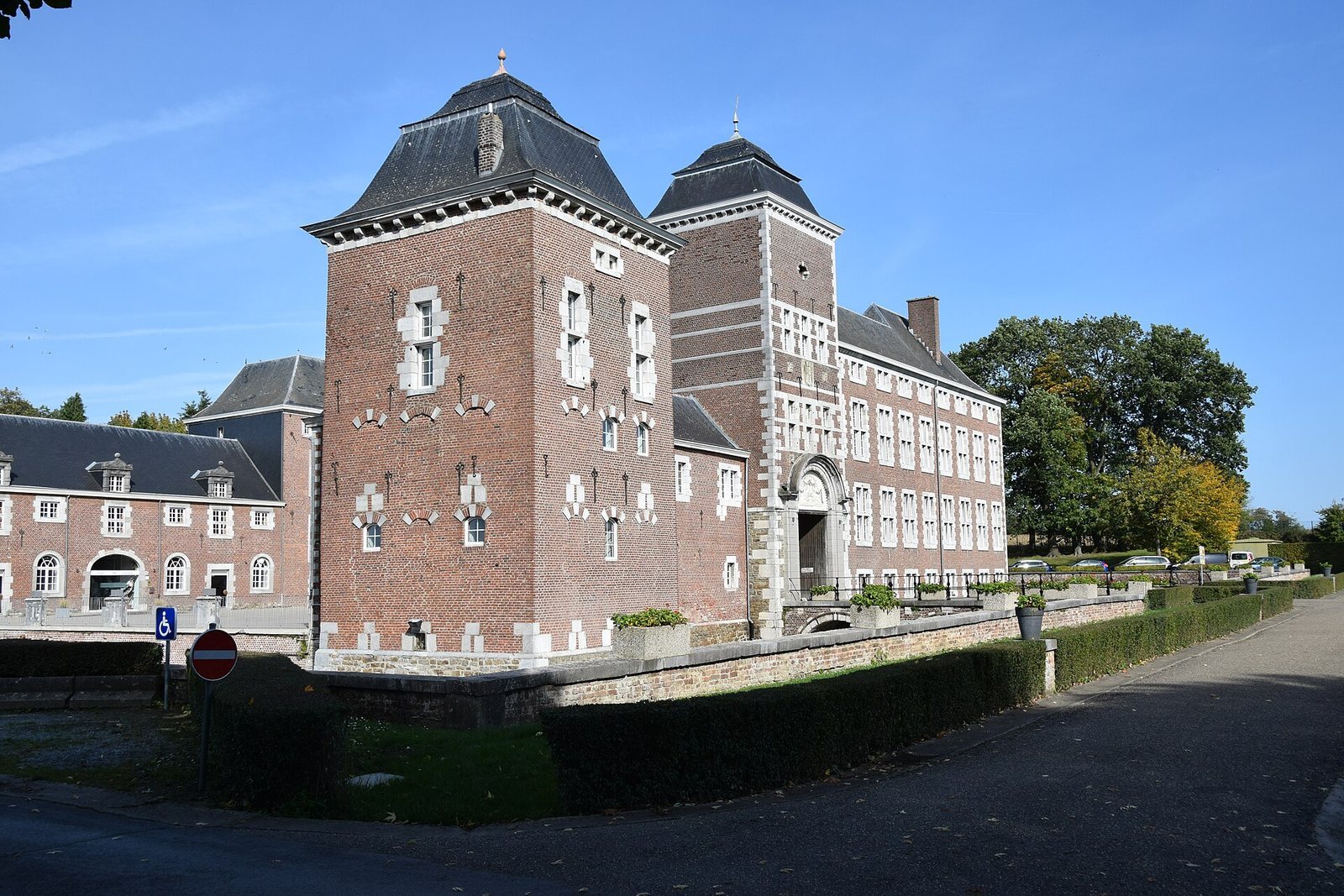
The castle stands in a park with ponds and an arboretum. A moat surrounds the buildings, and a stone bridge, replacing a former drawbridge, leads to the gatehouse.
Castle buildings
Gatehouse and entrance
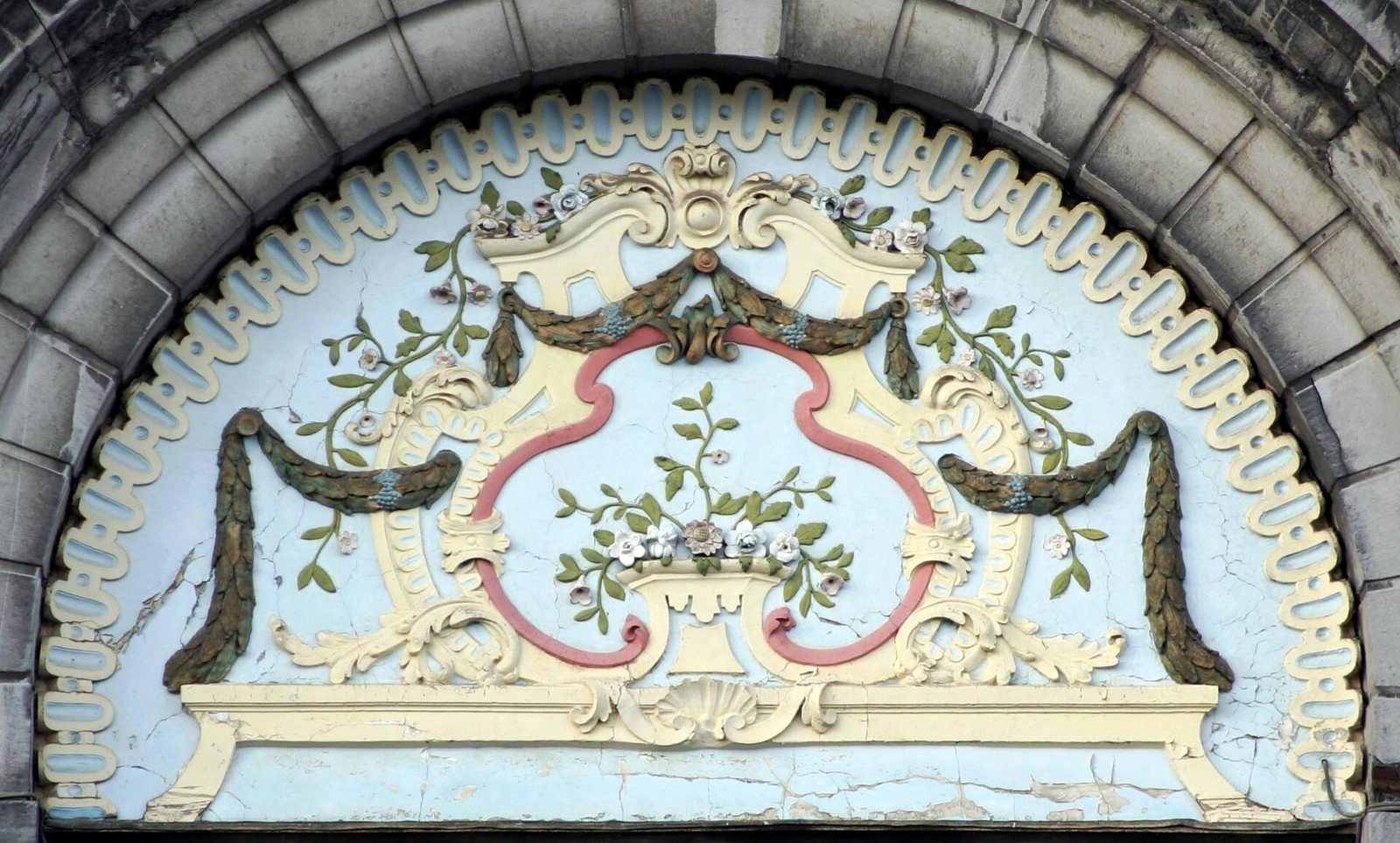
Dating to 1614, the gatehouse also served as a dovecote. Its eighteenth-century entrance portal has stucco decoration above the doorway. Two female heads and two lion heads appear on the façade, alongside a stone plaque bearing the coat of arms of Charles-Ernest de Lynden et de Froidcourt, a nobleman of the de Lynden family.
Residential and side ranges
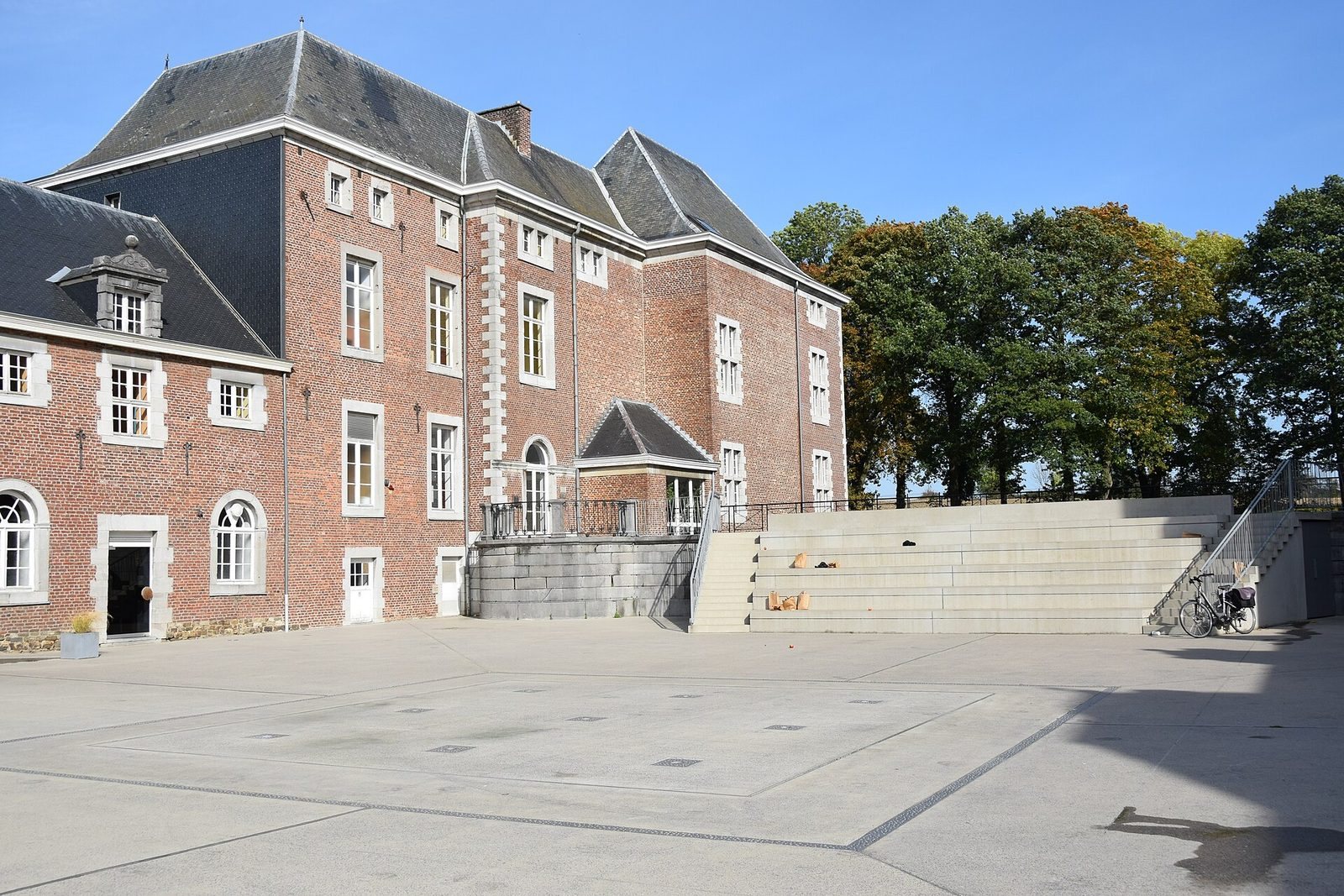
A four-storey residential section stands to the right of the gatehouse. To its left are a side wing and two square towers.
Chapel
The chapel’s nave was later demolished, but its choir survives and includes the D’Oultremont family funerary chapel.