Boghall Castle: A Fleming Courtyard Castle in Scotland
Site at a Glance
- Rating
- 3.6
- Popularity
- Low
- Country
- United Kingdom
- Primary era
- Medieval
- Eras represented
- Medieval
- Civilizations
- Kingdom of Scotland
- Site type
- Military
- Remains
- Castle
On this page8 sections
History
Boghall Castle was a courtyard castle built by the Fleming family south of Biggar in South Lanarkshire, Scotland, during the 14th century. The Flemings built it to replace an earlier motte-and-bailey castle at Biggar, a fort with a raised earthwork mound and an enclosed courtyard. Boghall later hosted royal visitors and became caught up in conflict during Scotland’s regencies.
Fleming castle and royal visits
Edward II of England stayed at Boghall in 1310. In 1473, Queen Margaret, wife of James III, spent a night there while travelling to the shrine of St Ninian at Whithorn. St Ninian was an early Christian saint traditionally associated with the spread of Christianity in Scotland. Mary, Queen of Scots, also stayed at the castle in 1565.
Conflict during the regencies
On 11 June 1568, James Stewart, Earl of Moray, arrived at Boghall with an army, and the castle surrendered. Moray was serving as regent after Mary, Queen of Scots, had been forced to abdicate. He spared the castle because Lord Fleming was holding Dumbarton Castle against him, and Moray hoped to negotiate.
On 14 November 1569, Moray paid 20 shillings in drinksilver, money for soldiers’ refreshments, to men commanded by James Cunningham for confiscating Lord Fleming’s goods at Boghall. The farm stock taken included eight oxen, 13 cows, a bull and 617 sheep. In September and October 1570, Regent Matthew Stewart, 4th Earl of Lennox, sacked the houses of Cumbernauld and Boghall and expelled Lord Fleming’s wife, Elizabeth Ross, and their three infant children from her properties.
Inventory and decline
After Elizabeth Ross, Lady Fleming, died, an inventory of goods at Boghall Castle was made in October 1578. She was the wife of John Fleming, 5th Lord Fleming. The castle became ruinous during the 19th century.
Remains
Castle layout and furnishings
Courtyard and towers
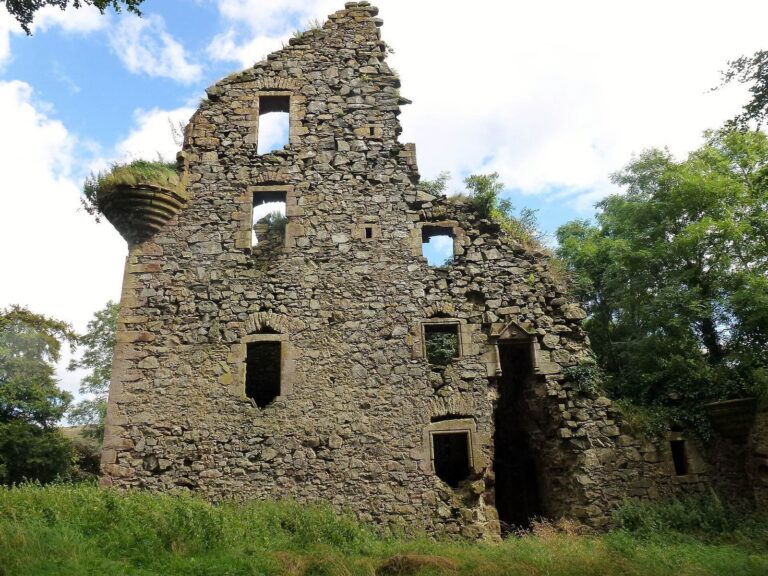
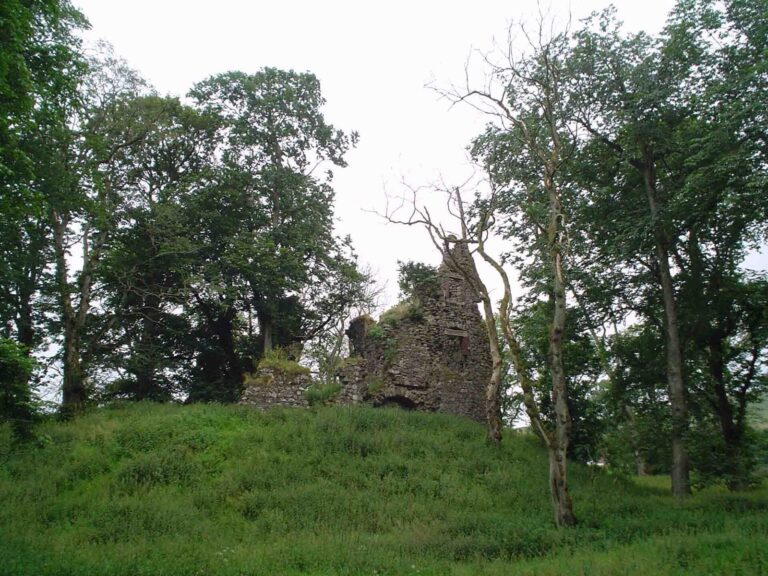
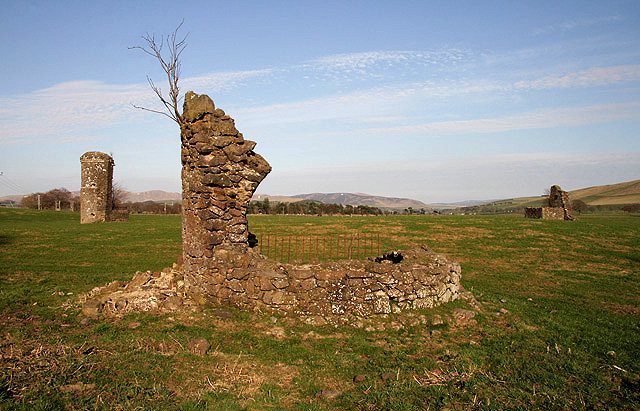
The castle stood where the valleys of the River Tweed and River Clyde meet, south of Biggar. It was arranged around an enclosed courtyard. Foundations of two D-shaped towers survive, with curved outer faces and straight sides; the remainder of the castle is ruinous.
Furnishings listed in 1578
The October 1578 inventory lists rich bed hangings and canopies made of velvet and silk. It also describes gilded wooden knobs and ornamental pieces that finished or crowned the beds.