Schloss Unterdießen: A Castle in Upper Bavaria
Site at a Glance
- Popularity
- Medium
- Country
- Germany
- Primary era
- Early Modern
- Eras represented
- Classical, Medieval, Early Modern
- Civilizations
- Duchy of Bavaria, Electorate of Bavaria, Holy Roman Empire, Roman
- Site type
- Domestic
- Remains
- Castle
On this page8 sections
History
Origins and foundation
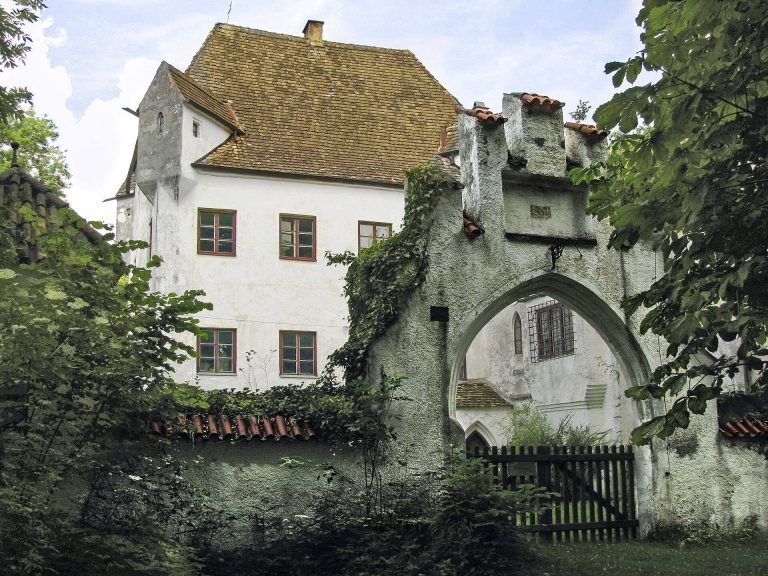
Schloss Unterdießen is a castle in Upper Bavaria, Germany. Before the present complex was built, the Welfs, a German ruling dynasty, had a fortress constructed over the remains of a Roman refuge fortification, a defended place used for shelter in times of danger. The Lords of Dießen built the castle complex in the sixteenth century.
Sixteenth-century rebuilding
The castle was destroyed and rebuilt in 1526. A fire in 1589 led the Freyberger family to rebuild it in the form it retains today.
War, rebuilding, and restoration
The Thirty Years’ War, a major European conflict fought from 1618 to 1648, brought another destruction. Rebuilding began in 1664. During the seventeenth century, Johann, Baron von Thurn und Taxis, acquired the castle.
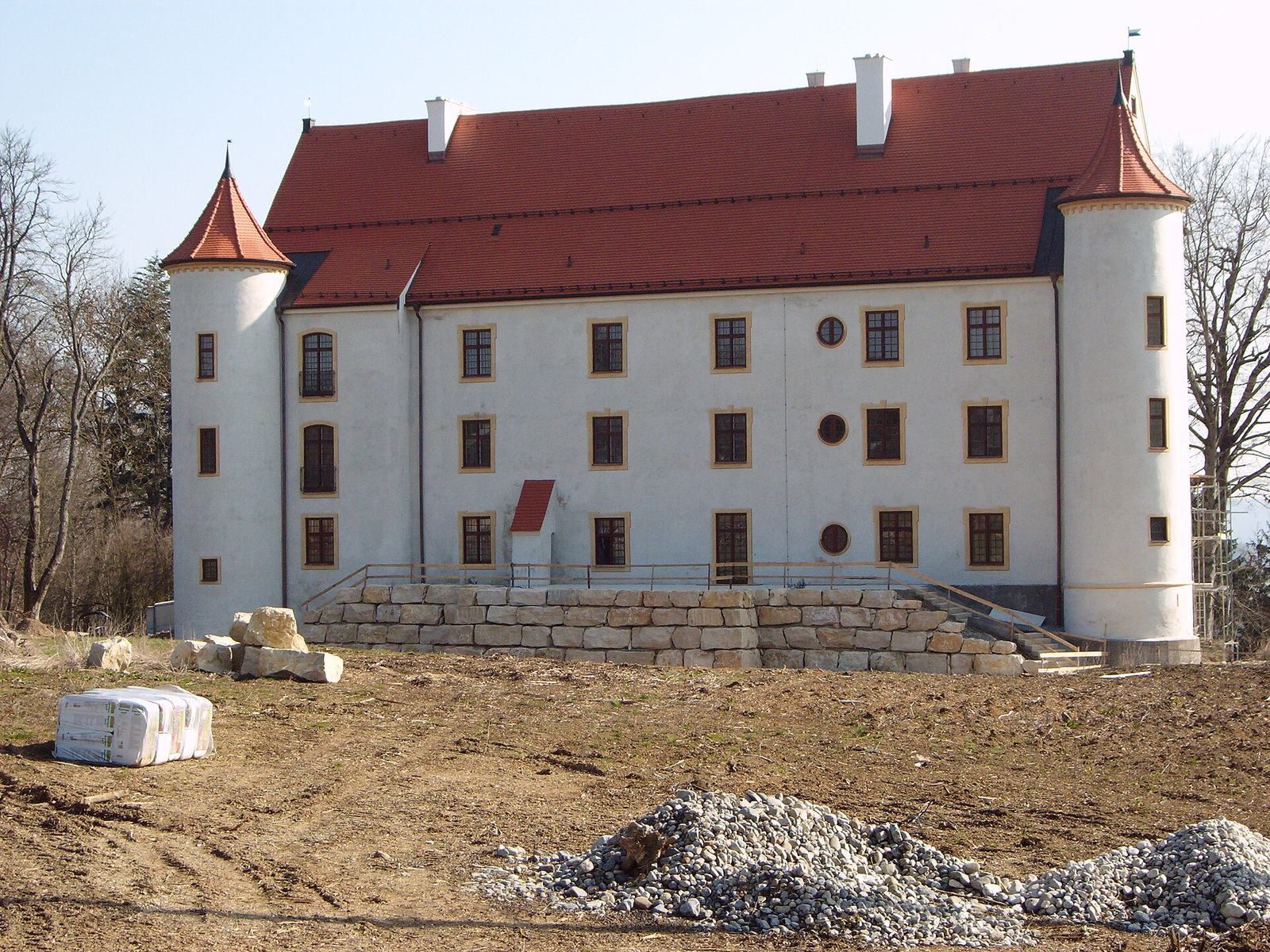
In the early twenty-first century, the castle was sold in need of repair to a buyer from Augsburg. Extensive renovation and restoration followed, preserving its historic fabric. Work on partly ruinous ancillary and farm buildings began in 2010 and was still in progress in summer 2012. An organic horticultural business was established on the extensive grounds and associated properties.
Remains
Layout and surviving features
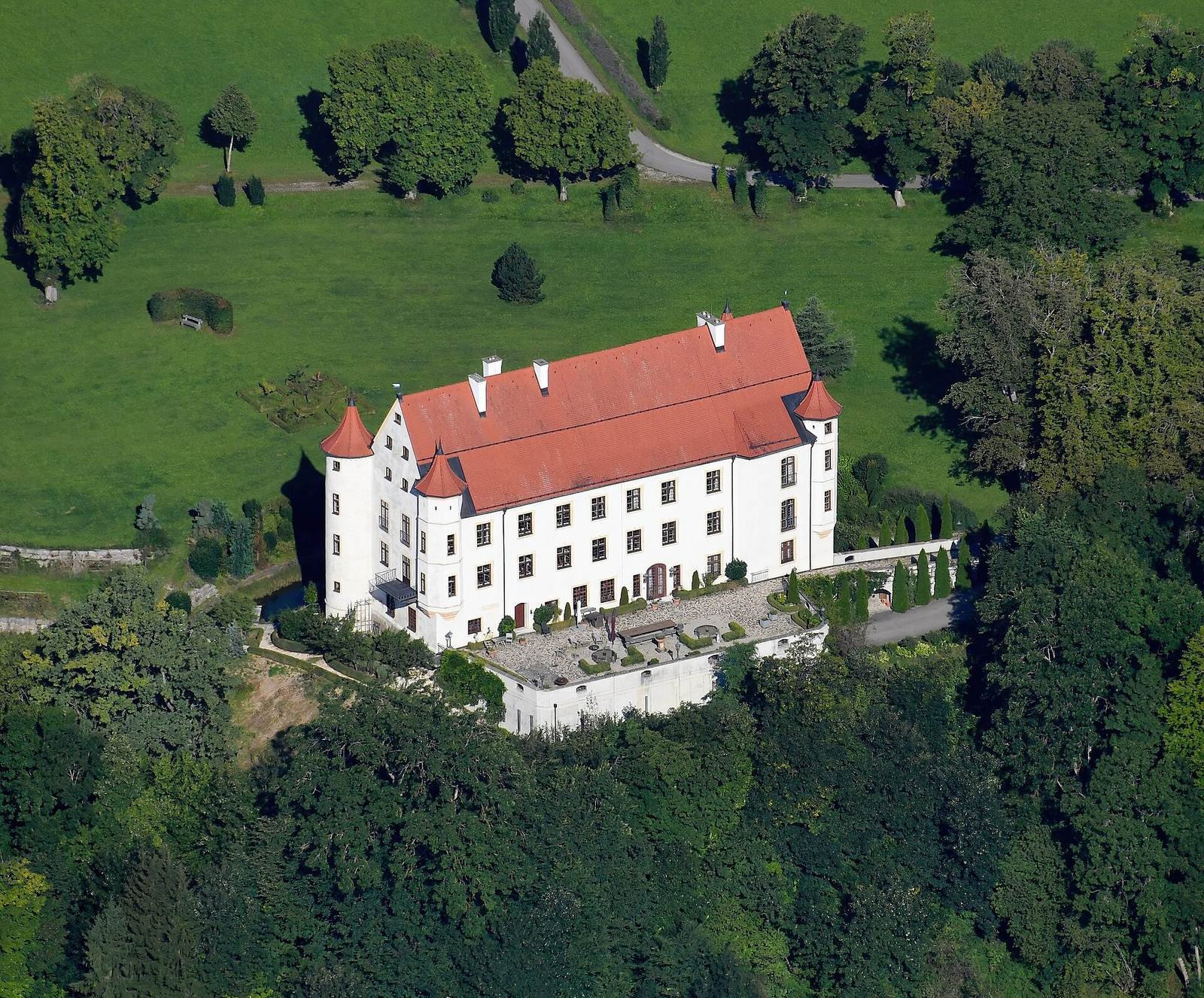
The castle stands on a ridge of old moraine, a landform made of glacially deposited material, above the settlement. Its physical remains include the castle building and underground archaeological traces from earlier phases of occupation.
Castle building
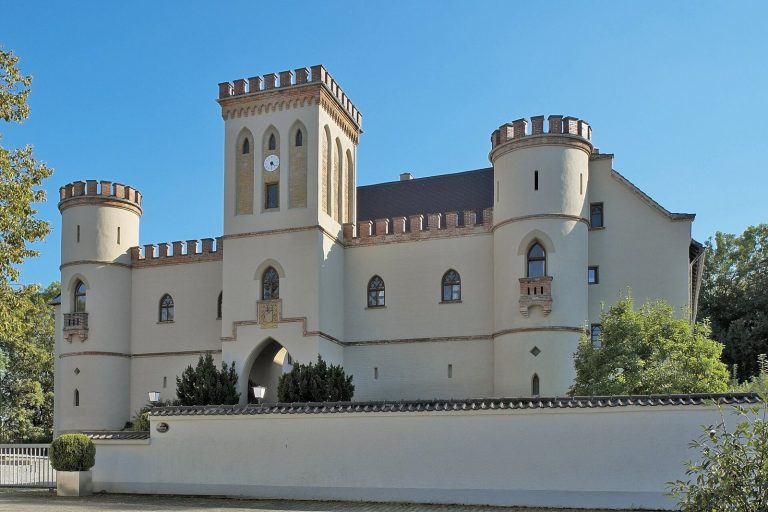
The castle is a gabled-roof structure with four corner towers.
Underground remains
Medieval and early-modern archaeological remains lie beneath the area of the castle and its predecessor buildings. They include evidence associated with a former farmyard.