Kappel Abbey: A Cistercian Monastery in Switzerland
Site at a Glance
- Popularity
- Medium
- Country
- Switzerland
- Primary era
- Medieval
- Eras represented
- Medieval, Modern
- Civilizations
- Holy Roman Empire
- Site type
- Religious
- Remains
- Monastery
On this page8 sections
History
Foundation and growth
Kappel Abbey is a former Cistercian monastery in Switzerland, founded on 29 June 1185 by the barons of Eschenbach-Schnabelburg. They invited monks from Hauterive Abbey to establish the community, with the approval of Hermann II, bishop of Constance. The first abbot, William, and the monks were given a chapel. A foundation legend associated the site with earlier hermits, while the abbey’s name was said to derive from the chapel.
Kappel belonged to the Cistercian order, a Catholic monastic community that followed the Rule of St Benedict. It was founded as a daughter house of Hauterive, meaning an abbey established within another monastery’s institutional line, and belonged to the lineage of Clairvaux. Dedicated to Saint Mary, it was under the medieval Diocese of Constance, now the Diocese of Chur. In 1211 Pope Innocent III granted the abbey a Cistercian papal privilege and placed it under papal protection. Imperial and royal privileges followed between the thirteenth and fifteenth centuries.
The abbey prospered spiritually and economically into the mid-fourteenth century. Its founders and other noble families continued to make donations through the end of that century. Among them were the Hallwyl, Hünenberg, Bonstetten, Hinwil, Baldegg, Uerzlikon, Gessler, and Habsburg-Laufenburg families. Kappel’s scattered lands extended across the Knonauer Amt, the Zug region, present-day Aargau, the canton of Lucerne, areas around Lake Zurich, the Zurich Unterland, and parts of Central Switzerland.
Economic pressure and political ties
Lay brothers helped manage the abbey’s economic activities, which included wine-growing near Zug and Wollishofen, a vineyard on Lake Zurich, and agricultural estates at Wollishofen and Zug. In the fifteenth century, Kappel lost access to most of its more distant businesses and relied increasingly on produce from its own lands and a local dairy. The growth of towns and cash-based commerce, along with competition from mendicant religious orders that depended substantially on preaching and alms, contributed to financial strain.
Kappel’s dependence on secular lords also increased. After King Albert I was murdered in 1308, the Habsburgs confiscated the possessions of Eschenbach nobleman Walters IV, who had been involved in the killing. In 1339, those lands came under the authority of the lords of Hallwyl. Kappel formed a civic alliance with Zug in 1344 and a similar pact with Zurich in 1403. Zurich’s influence continued to grow: its city council began direct supervision of the abbey’s finances in 1473, and in 1495 Zurich obtained reeve rights from the Hallwyl family. These were secular administrative powers over the abbey and its lands.
During the Old Zurich War, a fifteenth-century conflict between Zurich and other Swiss cantons, the monks fled to Zurich. Swiss Confederation troops plundered the abbey in 1443. A fire on 15 January 1493 devastated the convent buildings, which Abbot Ulrich rebuilt. His tenure ended in 1508, when he was forced to resign because of his extravagant lifestyle.
Reformation and dissolution
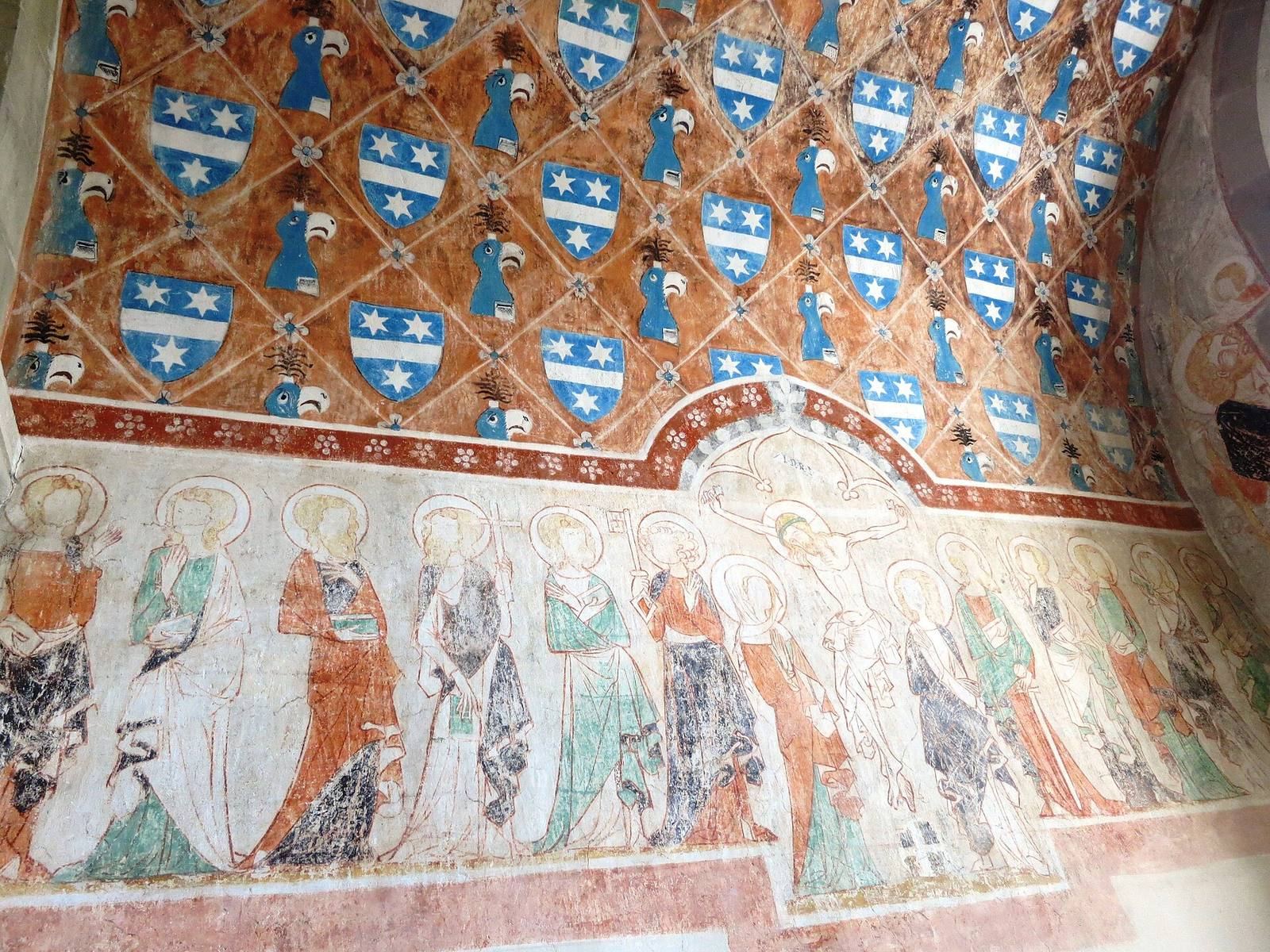
The Reformation associated with Zurich reformer Huldrych Zwingli reached Kappel in the early sixteenth century. In 1523 the last abbot, Wolfgang Joner, brought the nineteen-year-old Heinrich Bullinger to the abbey as a tutor for the monks and young men from the surrounding area. Reforms followed in stages. Images were removed from the church on 9 March 1525, the Mass was abolished on 4 September, and on 29 March 1526 the monks celebrated Communion according to the Reformed rite and laid aside their monastic habits. Many left to take up trades or become preachers.
The monastic community handed the abbey to Zurich in 1527, bringing its life as a monastery to an end. Joner, Bullinger, and four other men stayed to run a boys’ boarding school, and the former abbey became a Zurich cantonal estate. The former abbey church became Kappel’s parish church.
In June 1529, during the First War of Kappel between Protestant Zurich and Catholic cantons, troops gathered at Kappel and negotiated a peaceful end to the confrontation. A traditional story known as the Kappeler Milk Soup tells how soldiers shared bread and milk cooked in a pot on the Zurich-Zug cantonal border. In this account, the Protestants supplied the bread and the Catholics the milk. Fighting returned in the Second War of Kappel, and on 11 October 1531 Zwingli was killed.
Later uses and restoration
From 1834 the former monastery buildings were used for social purposes. In 1836 they became a workhouse and an orphan school for the Knonau district; a correctional institution was added later. In 1894 the complex was converted into a district hospital for the poor. As the hospital became too small and the buildings aged, alternative uses were considered in the 1960s.
From 1983 the Reformed Church of the Canton of Zurich used the complex as a spiritual retreat, seminar hotel, and educational centre. It was called Haus der Stille und Begegnung before returning to the name Kloster Kappel in 2008. Renovations have taken place since 2009. Work begun in 2023 included a new rental-apartment building and improvements to existing buildings. Kappel Abbey is designated a cultural property of national importance.
Remains
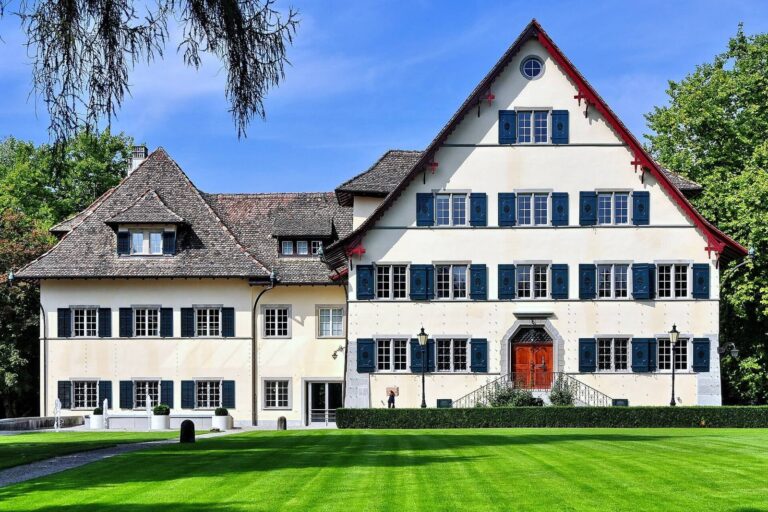
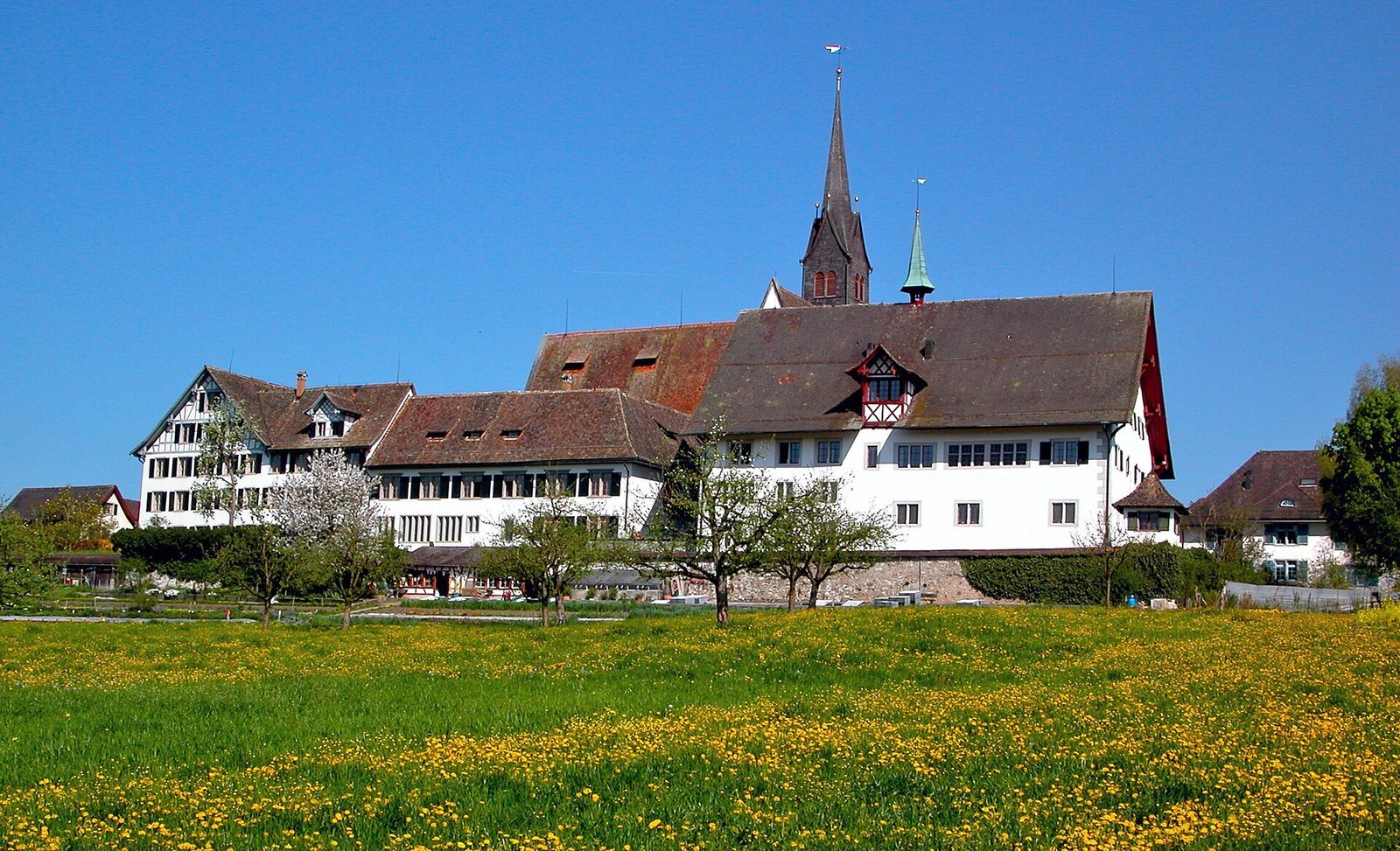
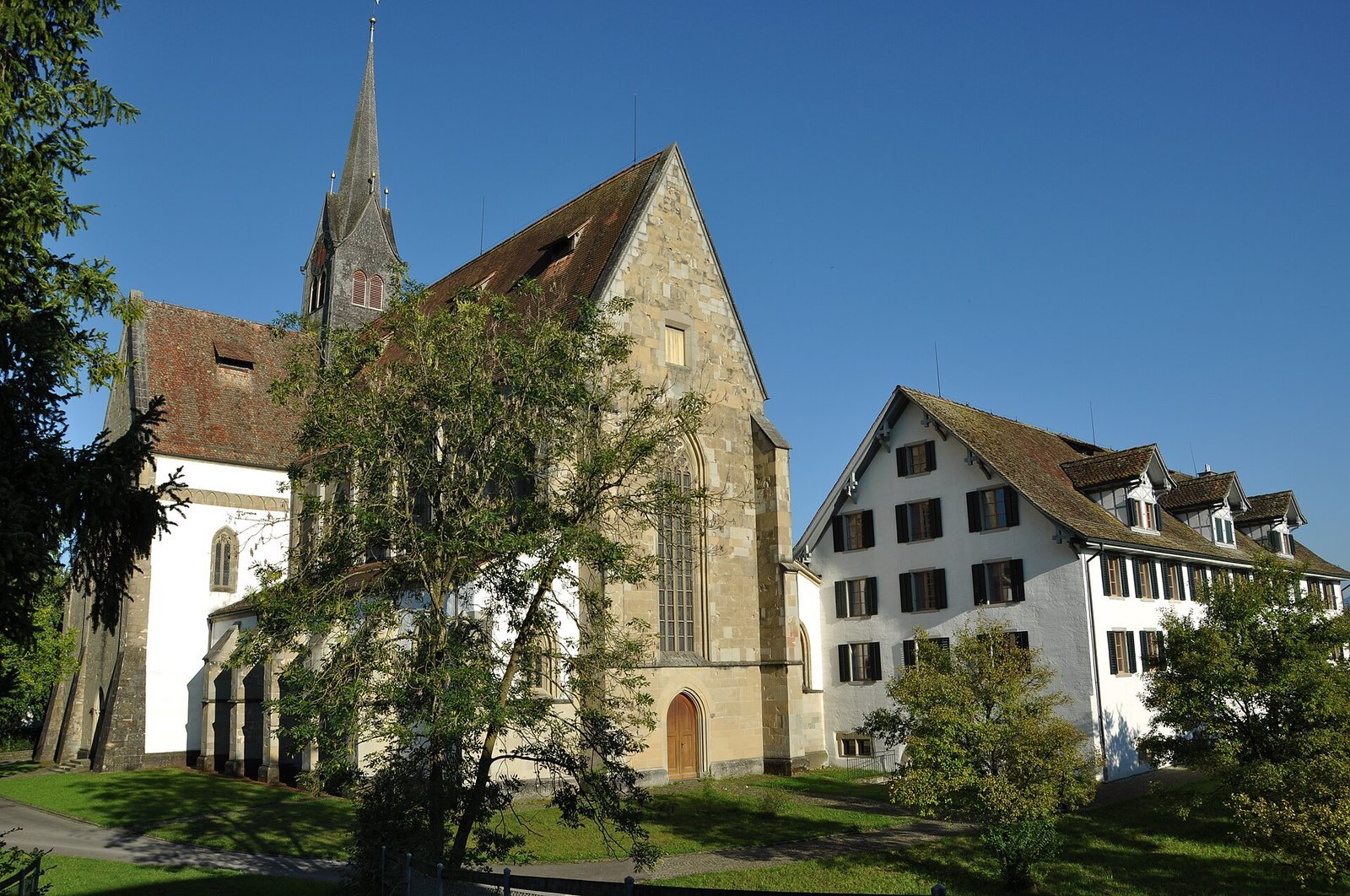
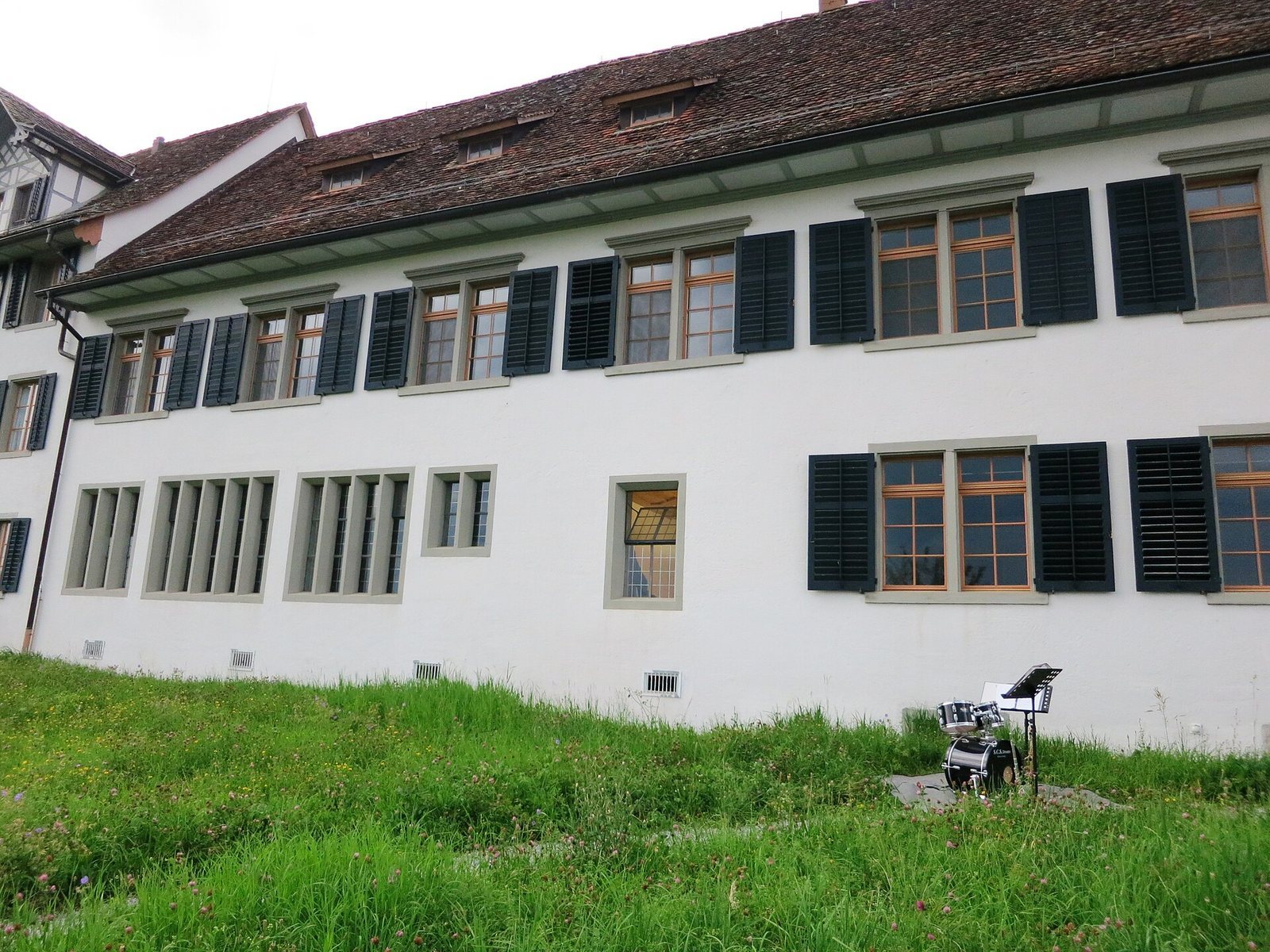
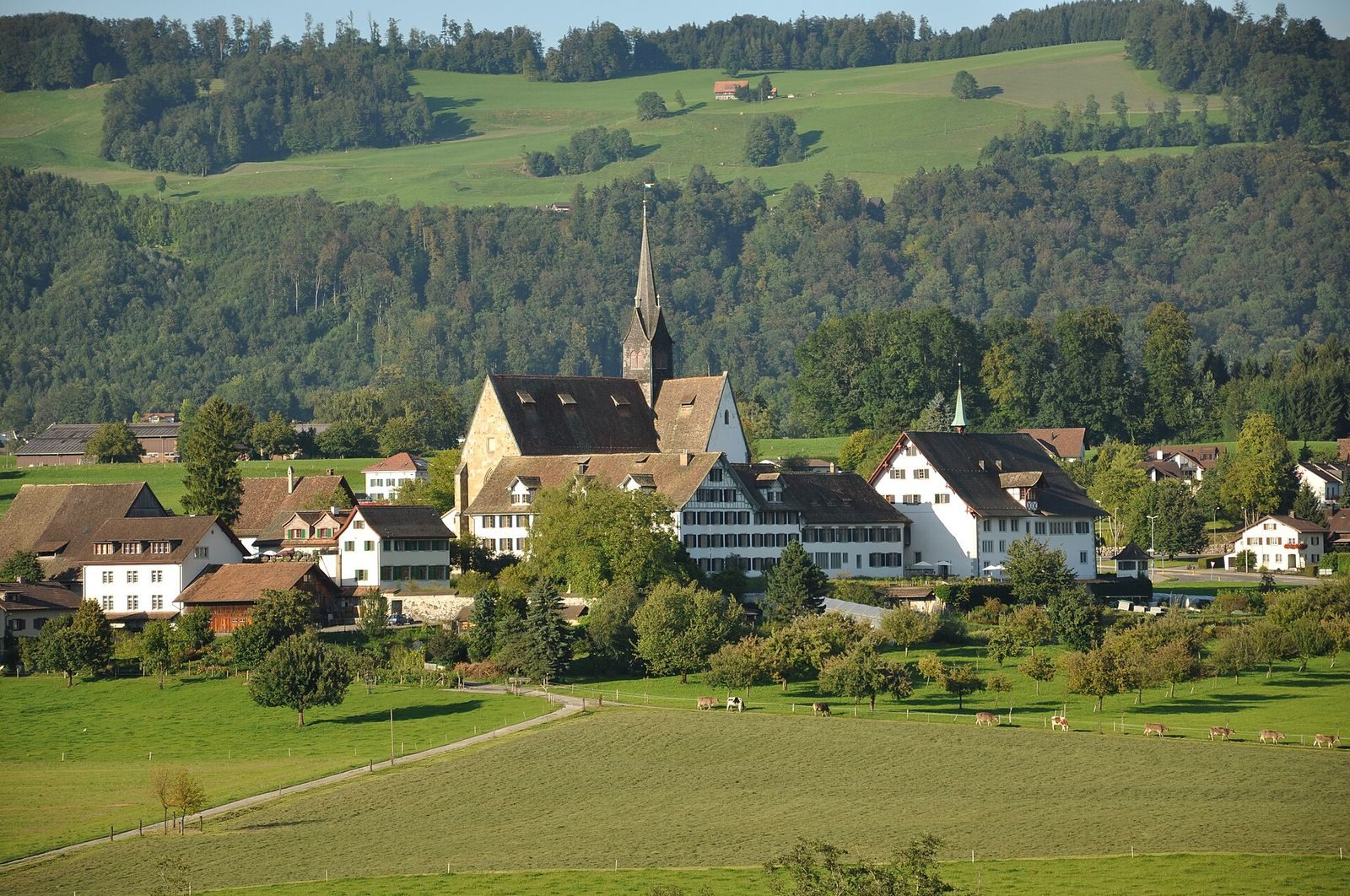
The surviving complex includes the former abbey’s administrative buildings and church. Its oldest identified section is the core of the administration buildings, while the church preserves parts of an earlier building within its present structure.
Administrative buildings
The oldest part of the monastery is the core of its administration buildings, probably built in 1209 or 1210 as a hospital. It was later used as the residence of the abbot, the head of the abbey, and the prior, a senior monastic officer.
Abbey church
A new church was begun around 1255 on the site of the original church. Built in the early Gothic style, it was not completed until the early fourteenth century, and portions of the earlier church survive within the present building. The choir contains a stained-glass work by Swiss graphic artist and painter Max Hunziker.