St. Andreas Castle: A Medieval Fortress and Historicist Residence
Site at a Glance
- Popularity
- Medium
- Country
- Switzerland
- Primary era
- Modern
- Eras represented
- Medieval, Modern
- Civilizations
- Holy Roman Empire, Swiss
- Site type
- Domestic
- Remains
- Castle
On this page11 sections
History
Early use and the medieval estate
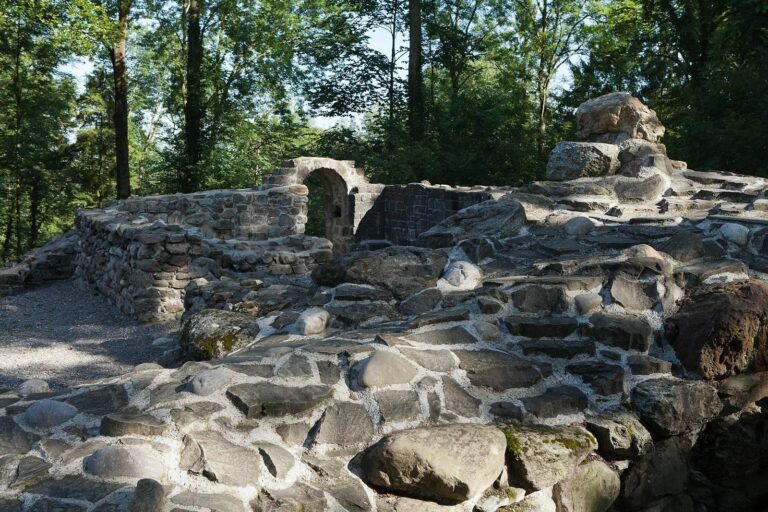
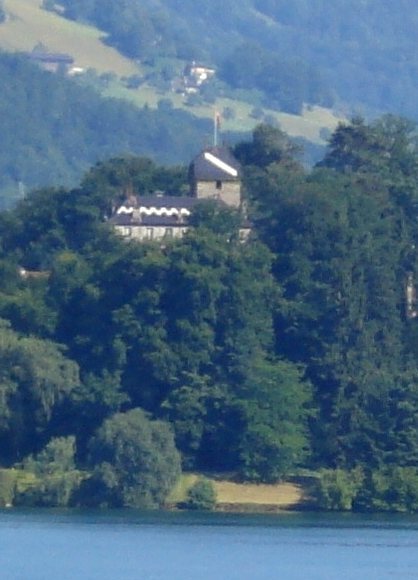
St. Andreas Castle stands on a small hill on a peninsula on the north shore of Lake Zug in Switzerland. Tree-ring dating places an early building on the peninsula between 1150 and 1220, and the castle later became a fortified estate contested by regional powers. Roman artifacts indicate that the hill was in use by at least AD 400. The area now occupied by the neighboring chapel served for religious ceremonies in the Roman period, and an unnamed bishop held Christian services there in the eighth century.
The estate first appears in written records in 1282, when Gottfried II von Hünenberg held it as a fief, land granted by a superior lord under agreed obligations, from the Barons of Wolhusen. The Hünenbergs collected dues from people connected with St. Andreas and exercised judicial authority. A small settlement probably grew around the castle.
Fortification, rights, and conflict
The castle was fortified in the fourteenth century. In 1360, its owner, Gottfried IV von Hünenberg, secured town and market rights for the settlement in front of the castle from Emperor Karl IV at the Imperial Diet, an imperial assembly, in Nuremberg. A market could be held each Monday, and residents could be admitted as citizens. The market did not rival the weekly market at Zug.
After the Swiss Confederacy took control of Zug and three other ports in 1352, St. Andreas remained beyond its authority. In 1370, facing financial difficulties, Gottfried IV sold the fortress and its outer courtyard to the Austrian Habsburg dukes Albrecht III and Leopold III for 3,500 Florentine gold guilders. They pledged the property to Götz von Mülner, a wealthy resident of Zürich.
Forces from Zug and Schwyz captured the castle in 1385 amid events leading up to the Sempach War. Zug claimed lordship, but in 1388 the property passed by inheritance to Götz von Mülner’s sister, Anna Manesse. She sold it in 1406 to the wealthy Lucerne resident Peter von Moos. Following a dispute, an arbitration court of the Swiss Confederacy required Zug to purchase the estate from him.
Administrative estate and renewed residence
Zug’s acquisition of St. Andreas, the former estate associated with Zürich’s Fraumünster Abbey, and its parish church established the Bailiwick of Cham in 1477. A bailiwick was a territory administered by a bailiff. During this period the castle gradually fell into disrepair.
On 23 November 1533, Zug councillor and mercenary leader Heinrich Schönbrunner acquired the castle, repaired it, and adapted it as a residence. In wartime he had to keep it available to Zug as a military base. Ownership subsequently changed several times. Franz Fidel Landtwing acquired the property in 1747 and, in 1775, placed it and his wealth from service in France in a family trust intended to keep property within the family. The trust held the castle until 1903.
Decline and twentieth-century renovation
During the French occupation, which began in 1798 and continued into the early nineteenth century, the castle served as a horse stable and a prisoner camp. It deteriorated and partly collapsed. In 1896, it was leased to Heinrich Viktor von Segesser, an architect and division commander with the rank of colonel, on the condition that he repair it and make it habitable. He restored the upper floor for use and died in 1900.
Adelheid Page-Schwerzmann bought the castle in 1903 and commissioned an extensive renovation from Zug architect Dagobert Kaiser, completed in 1907. In the years around the purchase, the Page family acquired parcels across the peninsula, some through intermediaries. Adelheid and her son Fred Page eventually owned the entire peninsula. The estate has remained with Page’s descendants since Fred’s death in 1930. St. Andreas is listed in the Swiss inventory of cultural property of national significance.
Remains
Castle and associated grounds
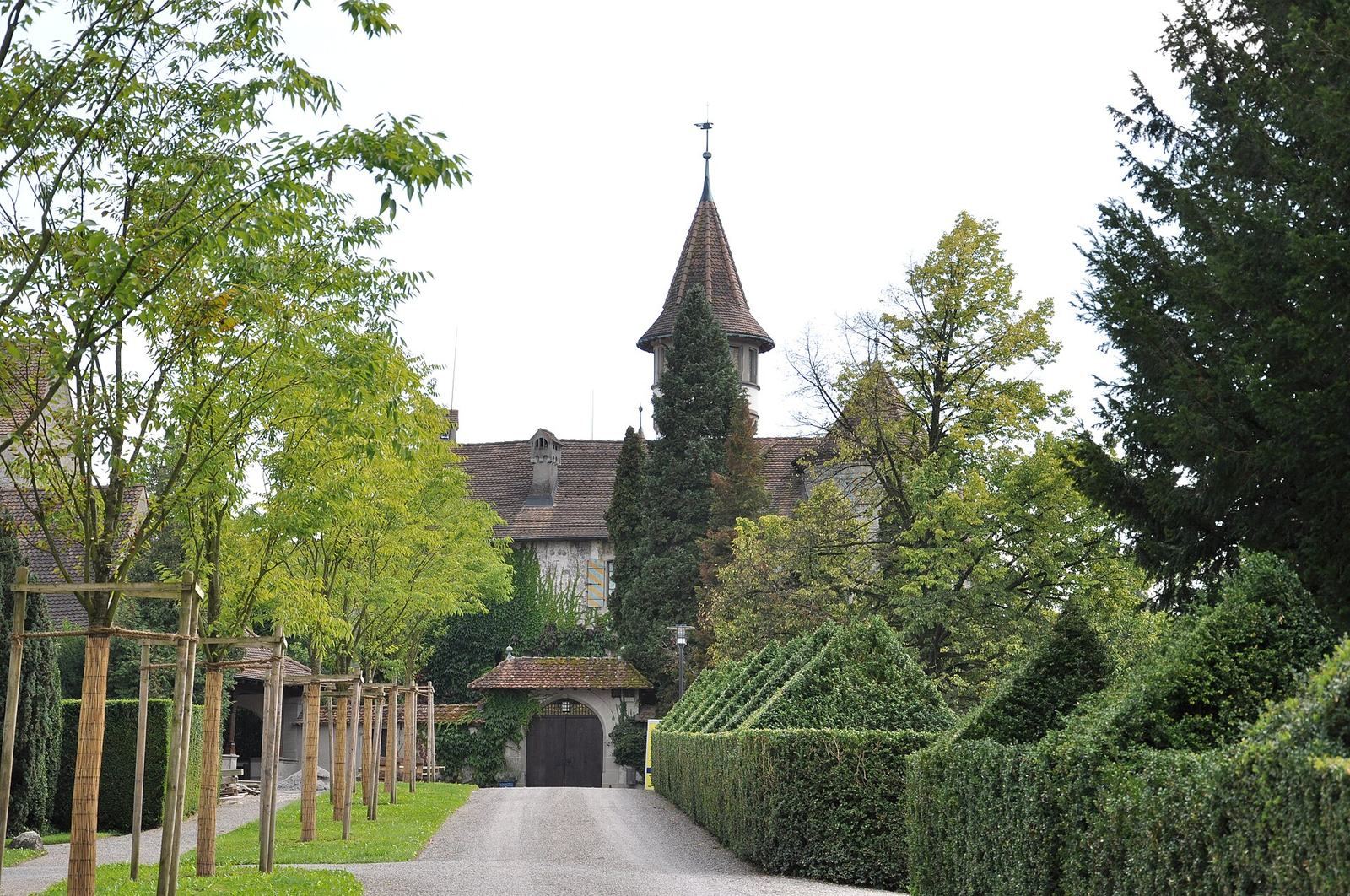
The castle and its associated features occupy a hill on the peninsula, with the park extending across the hill and opening toward Lake Zug. The grounds include the castle, a neighboring chapel and chaplain’s residence, Castellino and its harbor facilities, and an English-style park.
Castle
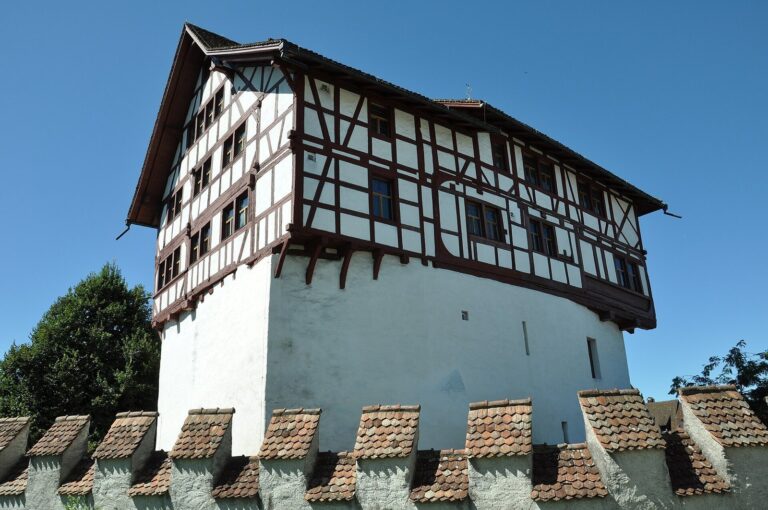
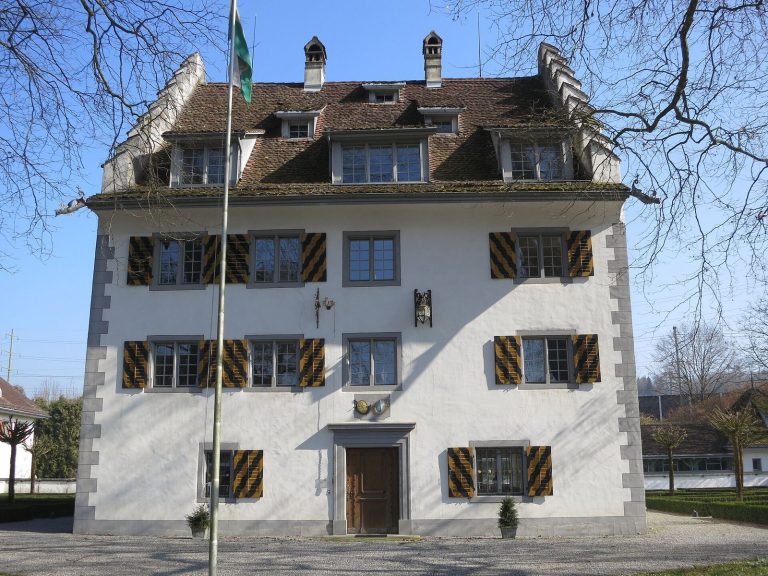
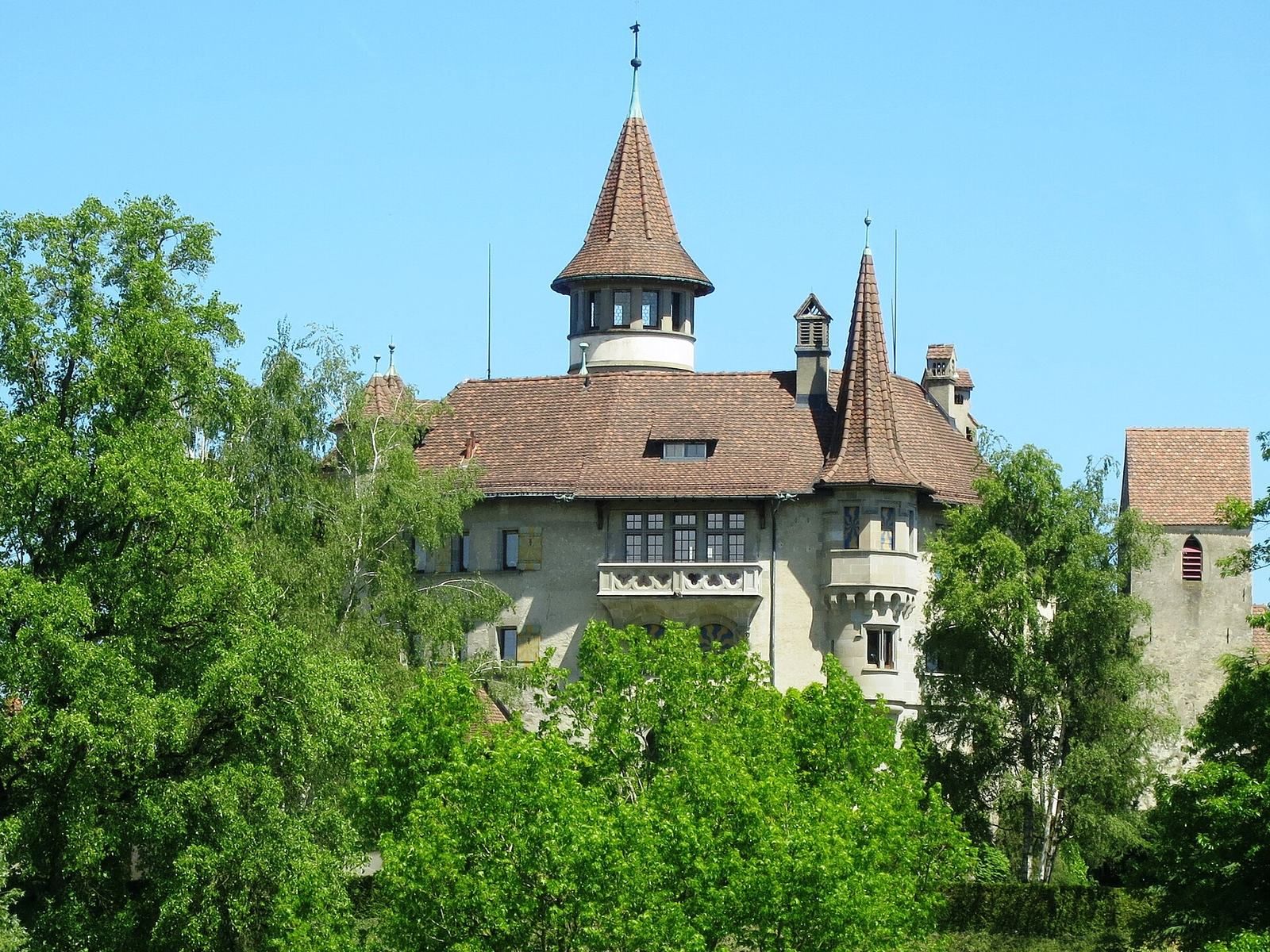
The medieval core was a fortress surrounded by an irregularly rounded wall, and its fourteenth-century fortifications included a moat. The building’s present appearance chiefly reflects its later renovation in the Historicist style, an architectural movement drawing on earlier historical styles. The work added windows, colored shutters, bay windows, and balconies, and equipped the castle with central heating, hot and cold running water, and electric lighting.
Castellino and harbor
Castellino and its harbor facilities were built in 1906 as part of the associated grounds.
Chapel and chaplain’s residence
A chapel stands beside the castle grounds, with a chaplain’s residence attached to it. The chapel occupies an area used for religious ceremonies since the Roman period.
Park and baths
The park covers more than 67,000 square metres. Designed by Zürich landscape architect Otto Fröbel, it follows the English-style garden tradition, which arranges a landscape to appear natural rather than formally geometric. Its planting is varied and emphasizes North American species, while its old trees are a notable part of the grounds. The park retains much of its original form and is among the few parks of its period to do so. Nearby baths are also associated with the estate.