Ducal Palace of Pesaro: A Renaissance Palace and Seat of Government
Site at a Glance
- Popularity
- Medium
- Country
- Italy
- Primary era
- Medieval
- Eras represented
- Medieval, Early Modern
- Civilizations
- Duchy of Urbino
- Site type
- Domestic
- Remains
- Palace
On this page6 sections
History
The Ducal Palace of Pesaro is a Renaissance palace in Pesaro, Italy. Alessandro Sforza began the present building around the middle of the fifteenth century, and the dukes of Urbino completed it. Its architect is tentatively identified as Luciano Laurana. An earlier building probably commissioned by the Malatesta stood on the site, though estimates for its date range from the late thirteenth to the early fifteenth century.
Della Rovere alterations
The Della Rovere family held the palace until 1631. In 1523, Duke Francesco Maria I Della Rovere commissioned its renovation by Girolamo Genga, with work continuing under his son, Guidobaldo II.
Papal and civic administration
In 1631, the Duchy passed from the Della Rovere to the Papal States, and the palace became a residence for papal legates, representatives of the pope. After the Papal States’ territories entered the Kingdom of Italy during the Risorgimento, the movement for Italian unification, the building became the seat of the Prefecture, a government administrative office, a role it retains. From 1920 to 1936, it housed Pesaro’s Civic Museum, which later moved to Palazzo Toschi Mosca.
Remains
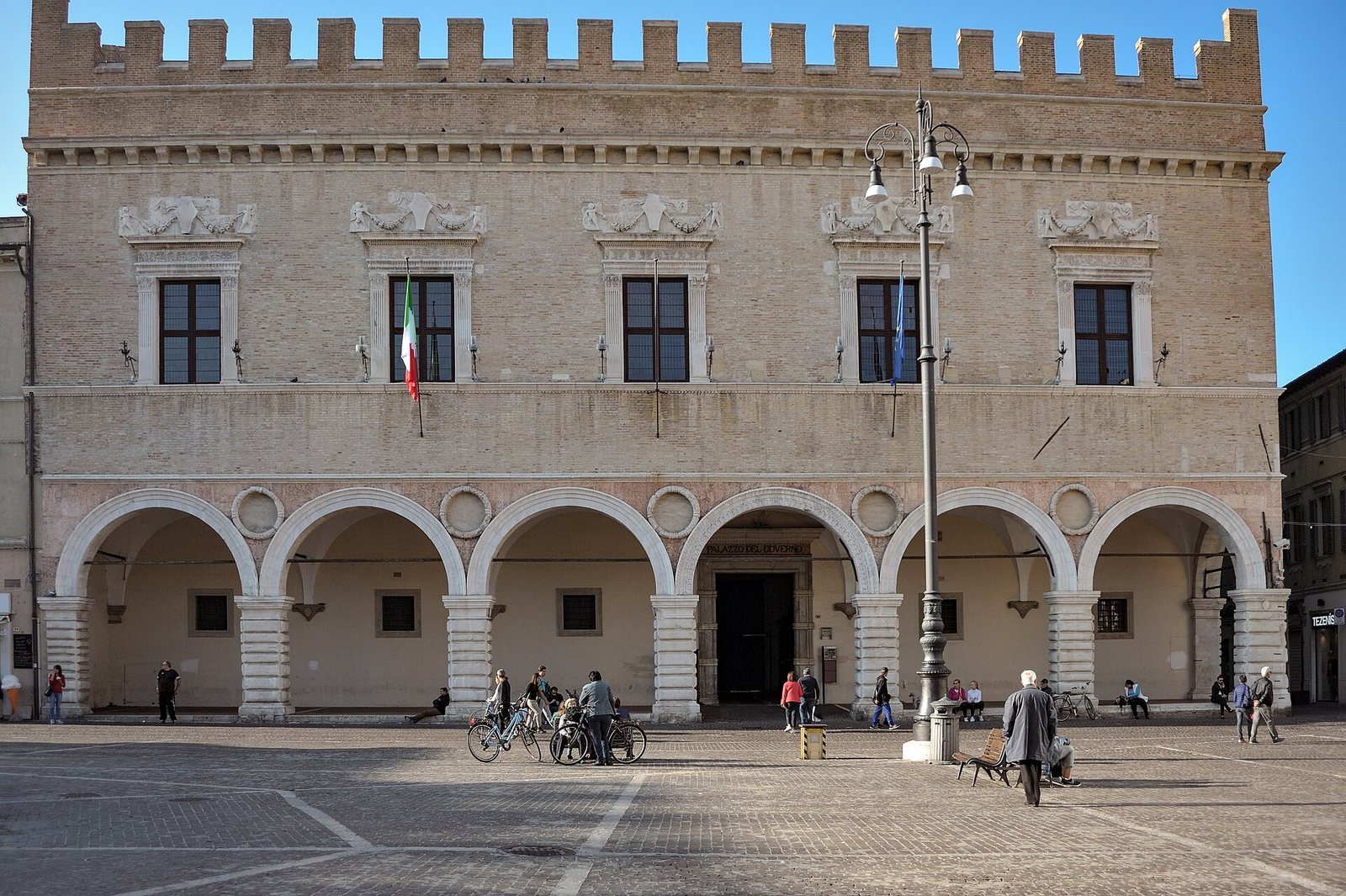
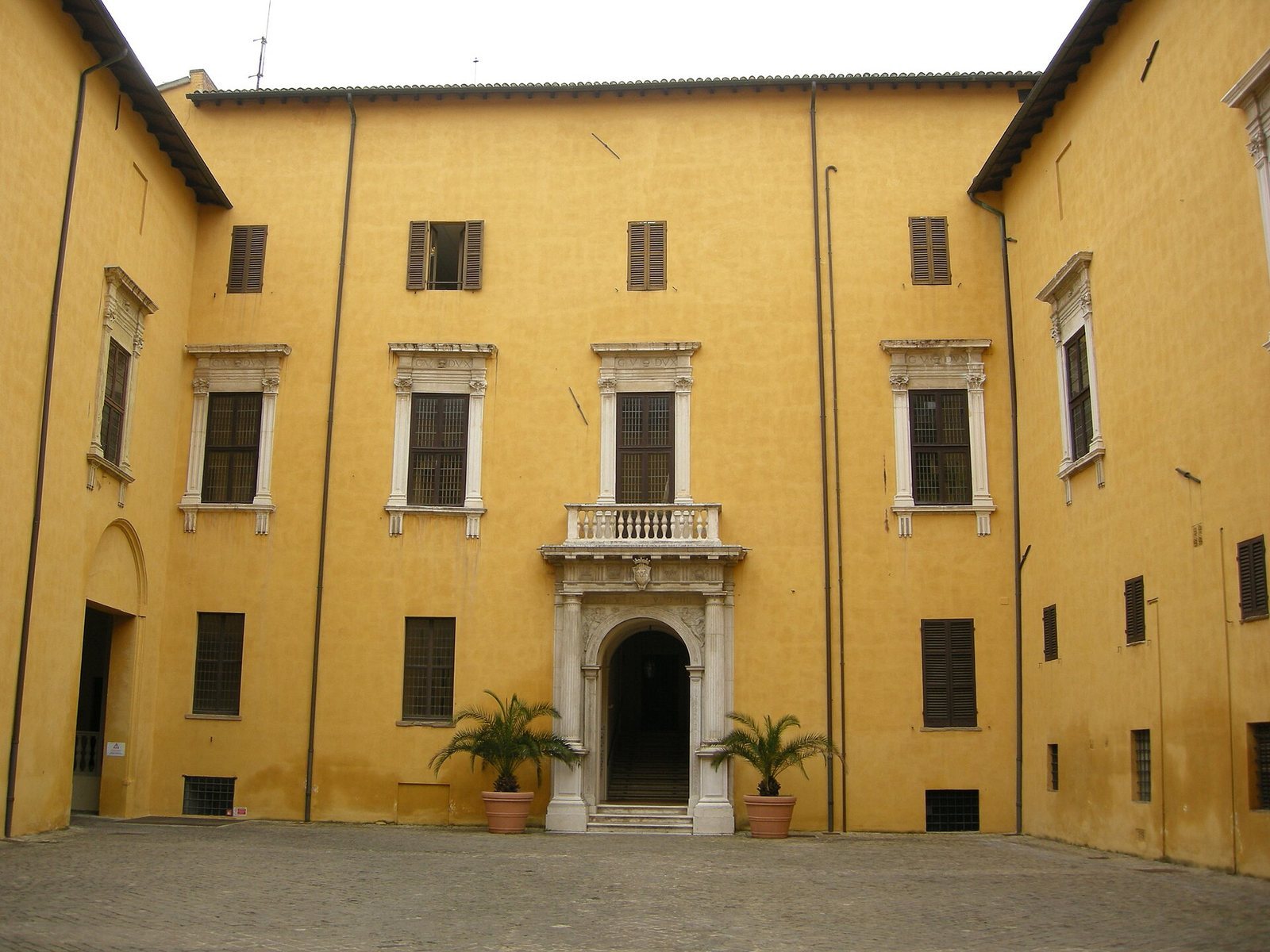
The Renaissance palace is arranged around a principal block facing Piazza del Popolo, with an additional wing extending along Via Barignani.
Exterior
The principal façade has a portico, a roofed entrance space, with six arches supported by massive piers built of rough-faced masonry. Above it are five windows crowned with coats of arms, garlands, and decorative child figures. On the right flank, the portico ends in a Gothic-style arch. The upper floor of this side has two large windows resembling those on the front, but without their ornamental crowns. The wing along Via Barignani was designed by Filippo Terzi under the supervision of Bartolomeo Genga, Girolamo’s son.
Interior decoration
In the waiting room, Federico Brandani’s fireplace depicts a chariot race around the Della Rovere walls. Other rooms have intricate arabesque patterns, while the bathing room is decorated with colored stucco. In the nineteenth century, Romolo Liverani was commissioned to decorate five halls. The palace’s interior decoration also included paintings by Federico Brandani, Taddeo Zuccari, and Ludovico Carracci, as well as fresco work involving Francesco Menzocchi.