Wildenburg Castle in Zug: A Medieval Lordship Centre
Site at a Glance
- Popularity
- Medium
- Country
- Switzerland
- Primary era
- Medieval
- Eras represented
- Medieval
- Civilizations
- Unclassified
- Site type
- Military
- Remains
- Castle
On this page6 sections
History
Foundation and the Hünenberg lordship
Wildenburg Castle in Zug, Switzerland, was founded in the thirteenth century by a branch of the Lords of Hünenberg, a medieval noble family. They held fiefs, or lands granted by a superior lord in return for service or allegiance, from the Counts of Kyburg and the Habsburgs, medieval ruling dynasties. Built as the centre of a new lordship formed through land clearance, the castle controlled traffic from the valley toward higher villages. It also had a line of sight to the Lorze crossing at Lorzentobel Bridge.
The castle first appears in a record from 1309 under the name Wildenberg, as the most important part of Gottfried von Hünenberg’s inheritance. The family had held citizenship in Zug since 1383. In 1386, Hünenberg knights fought for Habsburg Austria against the Swiss Confederates, the allied communities of the Old Swiss Confederacy, at the Battle of Sempach. It is uncertain whether Wildenburg, like the family’s ancestral castle at Hünenberg, was destroyed after the defeat. Rudolf von Hünenberg still described himself as living at Wildenburg in 1409. In 1416, Grüter farmers acquired the properties immediately around the castle. The Hünenberg family appears to have died out around 1450.
Decline and modern conservation
The castle fell into decay and was used as a quarry during the sixteenth century. Excavations began in 1938, when only the uppermost parts of its round defensive tower remained visible. The exposed masonry was inadequately conserved, and deterioration continued. In 1978, the property passed from private ownership to the Canton of Zug. Voters rejected a proposed restoration credit in 1981, but a private initiative by the Pro Wildenburg association led to a full conservation programme and further archaeological investigations in 1985.
Remains
Setting and early arrangement
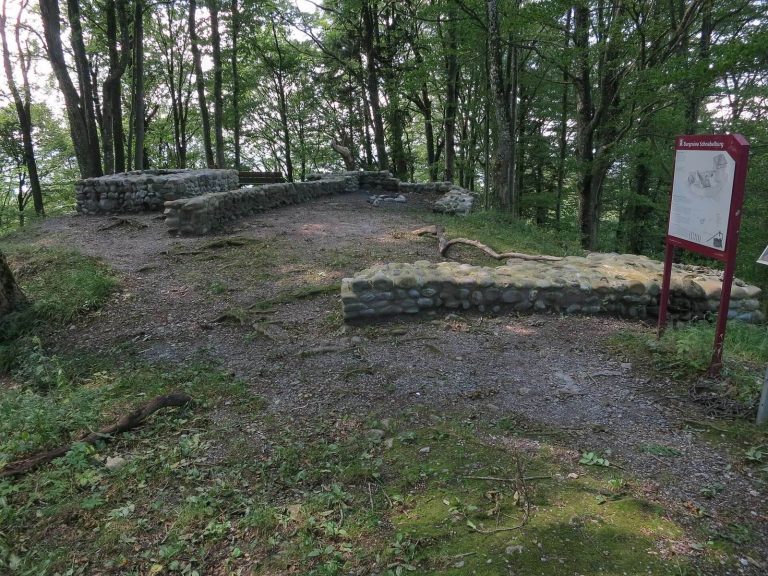
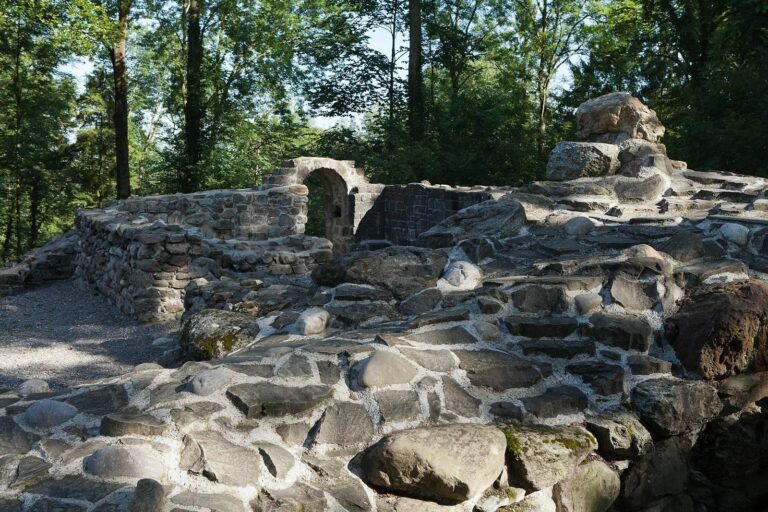
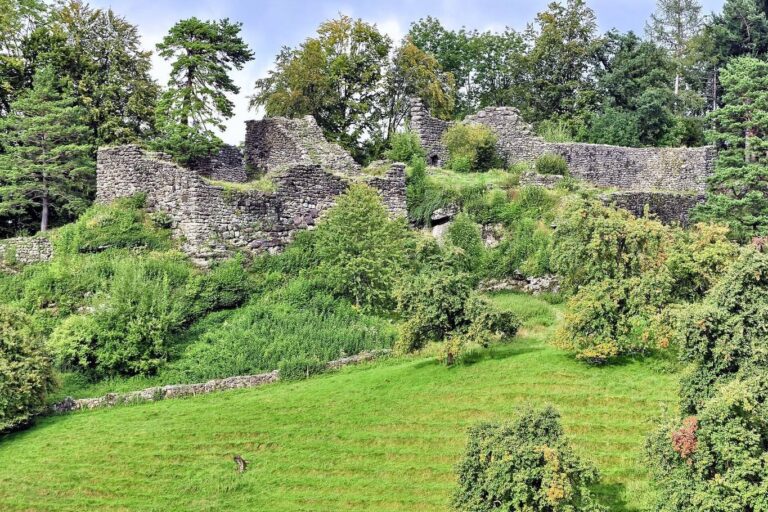
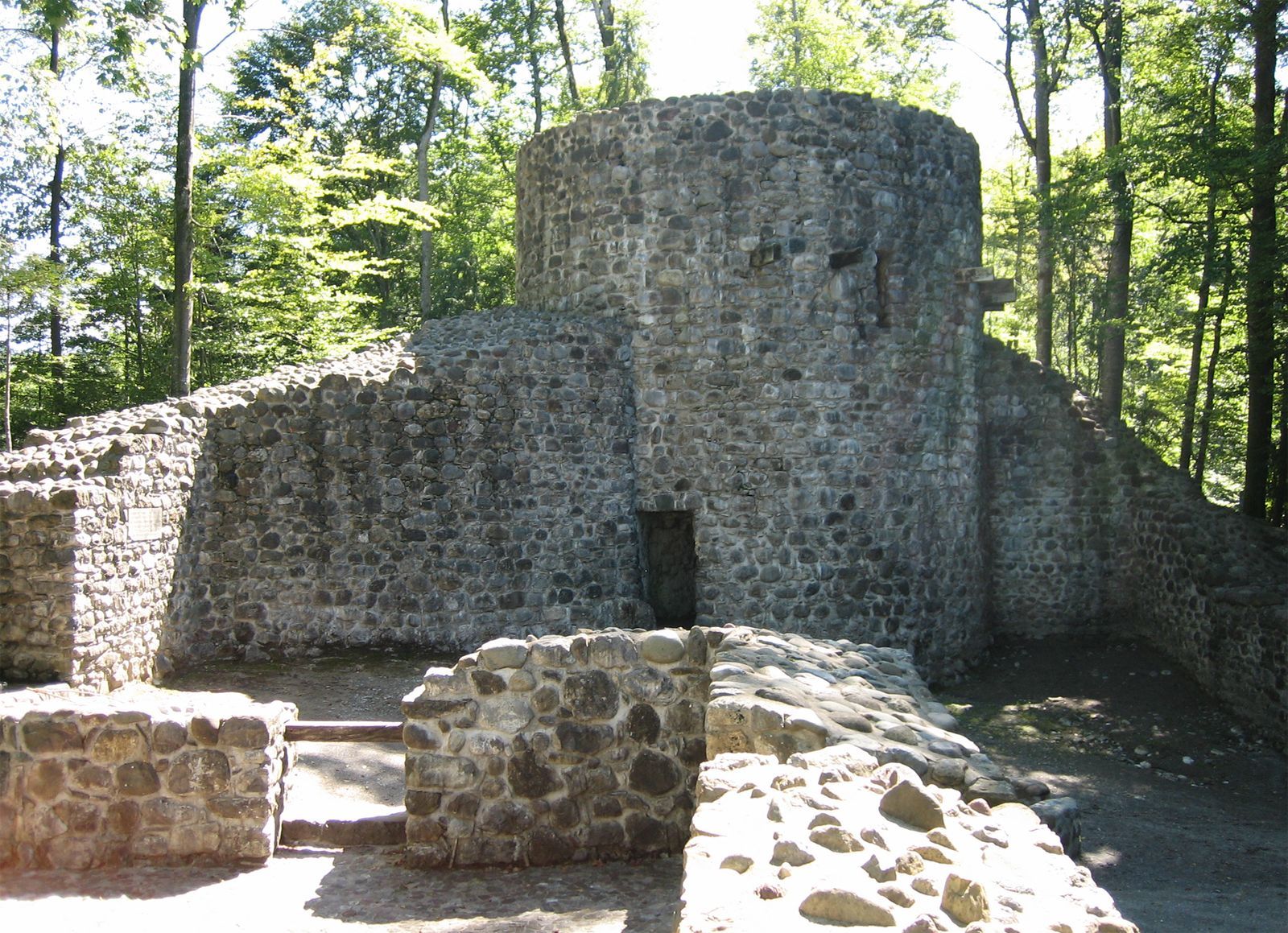
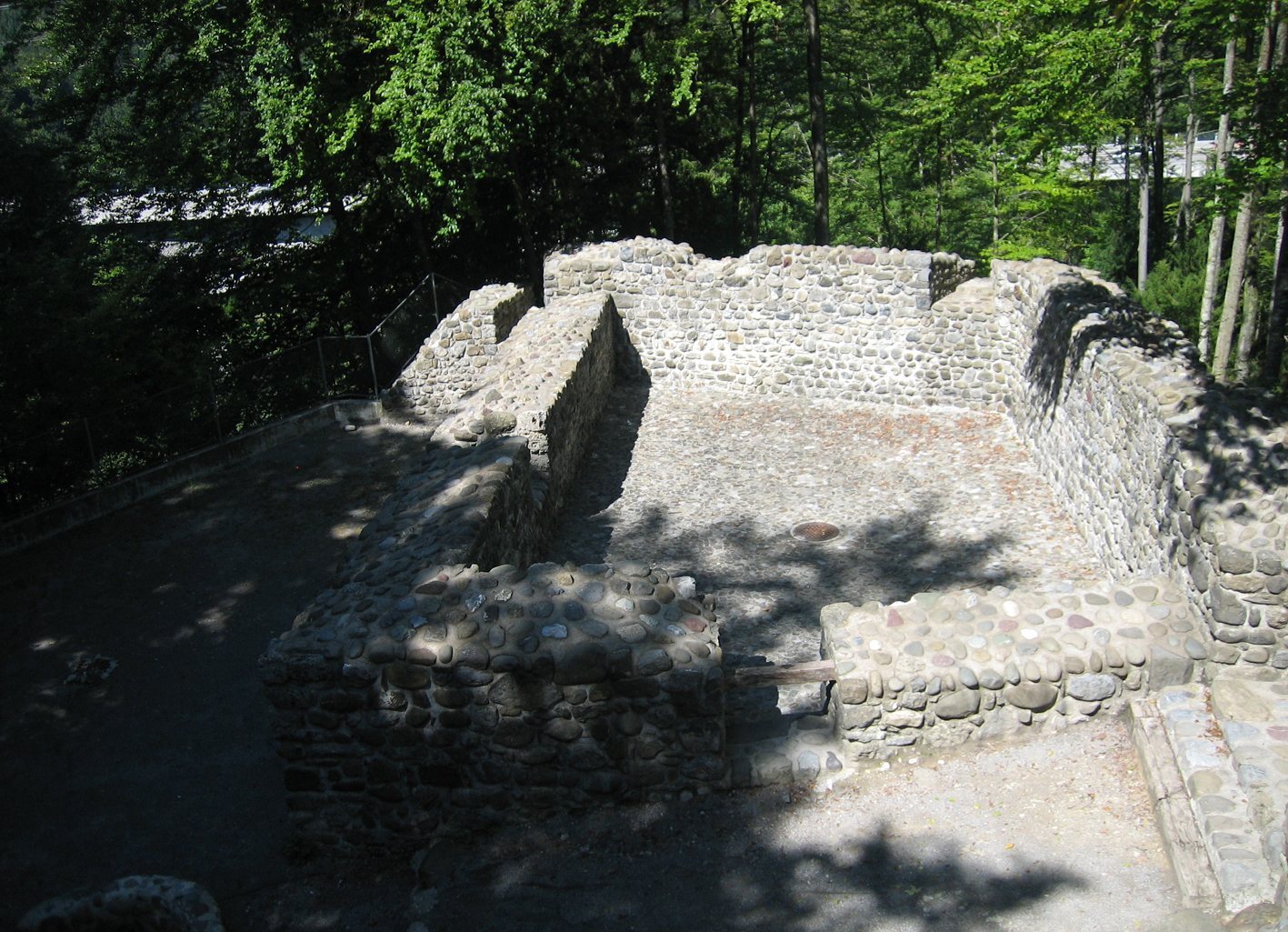
The ruin stands on a rocky spur above the gorge formed by the Schwarzenbach and the Lorze, southeast of Lorzentobel Bridge, at an elevation of 635 metres. Its earliest arrangement probably consisted of a stone ring with wooden buildings set against it. A round defensive tower was added later, along with a residential hall in the northeastern corner.
Surviving walls and buildings
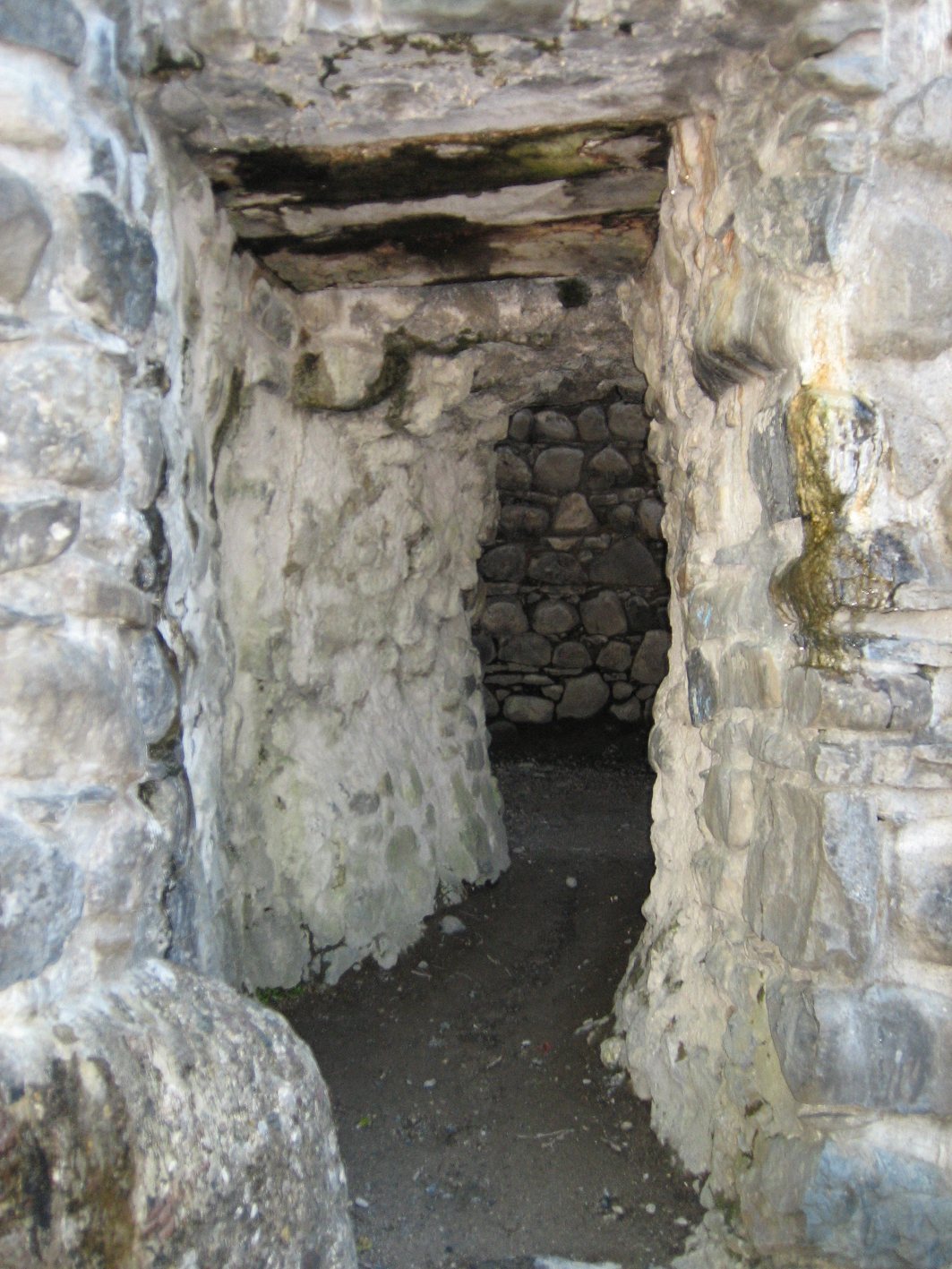
The enclosing walls, residential hall and defensive tower survive. A section of the ring wall’s northwestern corner collapsed into the adjoining gorge in 1956. The tower’s walls are 3.5 metres thick, a measurement clearly visible at its entrance.