Bridlington Priory: An Augustinian House and Parish Church
Site at a Glance
- Popularity
- Medium
- Country
- United Kingdom
- Primary era
- Medieval
- Eras represented
- Medieval, Modern
- Civilizations
- British, English
- Site type
- Religious
- Remains
- Church
On this page15 sections
History
Foundation and growth
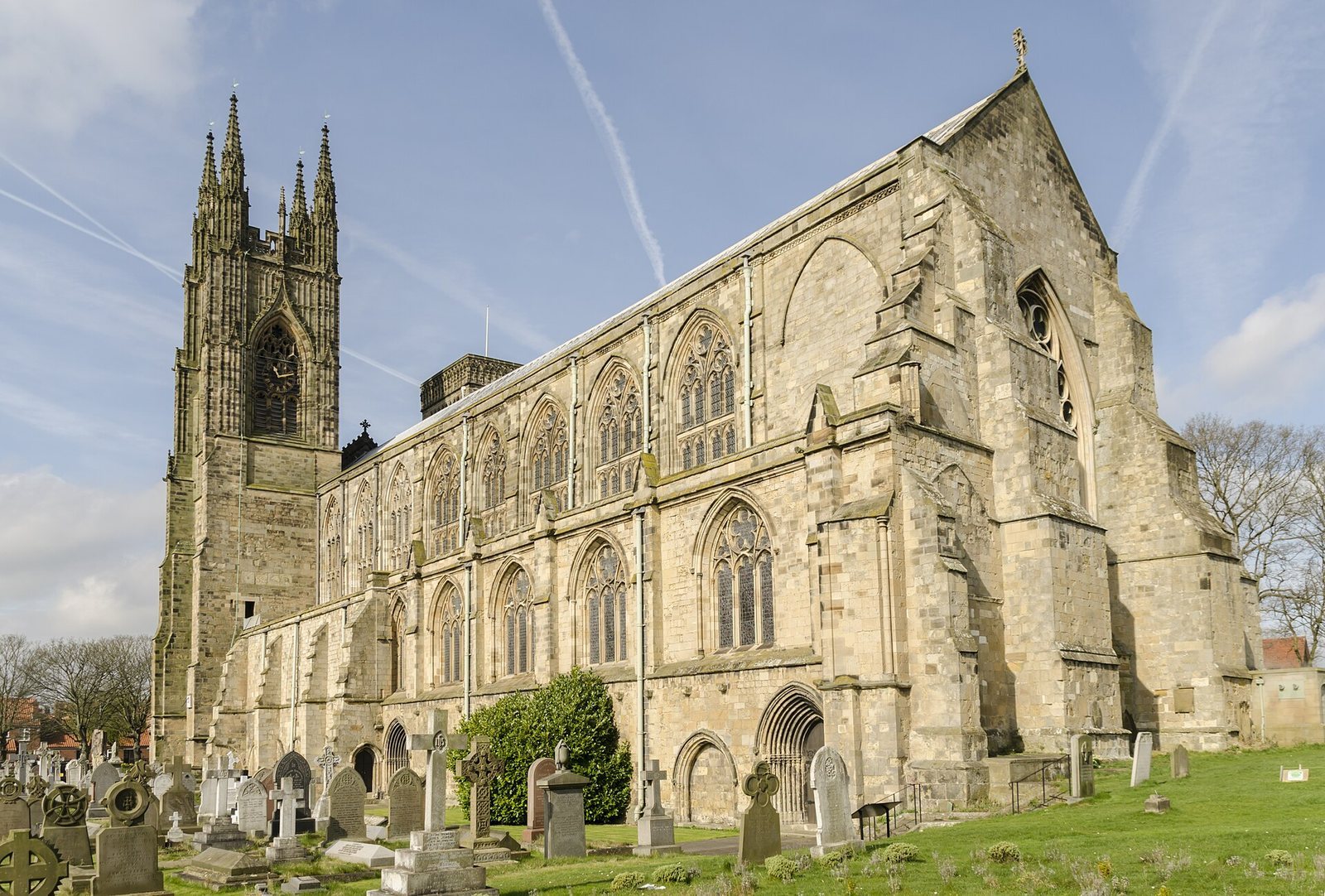
Bridlington Priory is a Gothic church and former Augustinian priory in Bridlington, United Kingdom. Founded around 1113 by the Anglo-Norman noble Walter de Gant, it was among England’s earliest houses of Augustinian Canons Regular, clergy who followed the Rule of St Augustine and lived under a prior. The church was dedicated to St Mary. Henry I confirmed the foundation by charter. An Anglo-Saxon church and nunnery had occupied the site earlier, and the priory also had an adjoining convent. Its first prior is thought to have been named Guicheman or Wickeman.
In 1145 the canons established Newburgh Priory as a daughter house, a religious community founded by and linked to a parent house. The priory gained support from royalty and nobility and accumulated lands across Yorkshire. King Stephen granted it rights to property belonging to felons and fugitives within Bridlington, as well as income from the harbour.
Conflict and royal privileges
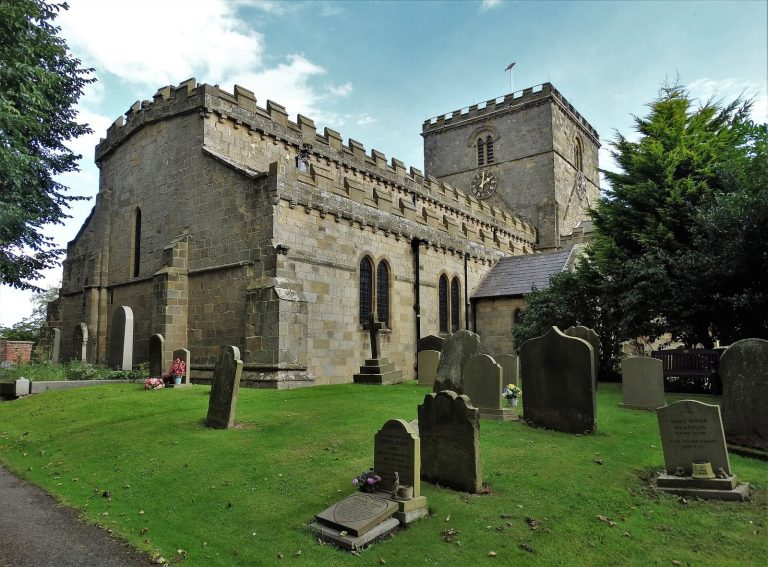
During the civil war between Stephen and Matilda, rivals for the English throne, William le Gros, Earl of Albemarle, expelled the canons while campaigning against Gilbert de Gant of Hunmanby. William fortified the priory and later granted it six parcels of land: one at Boynton and five in Holderness. In 1200, King John authorized an annual fair in Bridlington. Richard II issued a licence in 1388 to add battlements to the priory, although it was not enclosed by walls.
Henry IV granted the priory the revenues of Scarborough’s rectory, a parish benefice and its associated income. Henry V, Henry VI and Edward IV subsequently confirmed the grant. The house also maintained a large library, which the writer John Leland listed shortly before its dissolution.
Dissolution and parish use
Henry VIII dissolved Bridlington Priory in 1538. It then had an estimated annual income of £547 6s. 11½d. and lands stretching from Blubberhouses in the north to Askham Richard and Spurn Point. The priory buildings were destroyed apart from the church nave and gatehouse. The nave became Bridlington’s parish church, and some priory stone was reused in the town’s piers. William Wode, the last prior, was executed at Tyburn for his part in the Pilgrimage of Grace, a major northern English uprising against Henry VIII’s religious policies.
For the next three centuries the nave remained in use as the parish church, although the congregation occupied only about a third of the building.
Restoration and present status
From 1846, parishioners raised funds to restore the church. Paley and Austin of Lancaster carried out the initial work, but church authorities were dissatisfied with it. Around 1874, Sir George Gilbert Scott undertook a comprehensive refurbishment that gave the church its present appearance. Bridlington Priory remains an active Church of England parish church in the Diocese of York. It was listed as a Grade I building in 1951, a category reserved for buildings of exceptional interest, and follows the Broad Church tradition, which allows a relatively inclusive range of theological views.
Remains
The Gothic church formed the centre of a larger monastic complex. The completed church measured more than 400 feet (120 m) in length and 75 feet (23 m) across the nave, the main body of the church. Its transept, the crosswise section projecting from the church, was 150 feet (46 m) long. At the dissolution, the church was recorded as more than 390 feet long.
Church and monastic complex
Church plan and interior
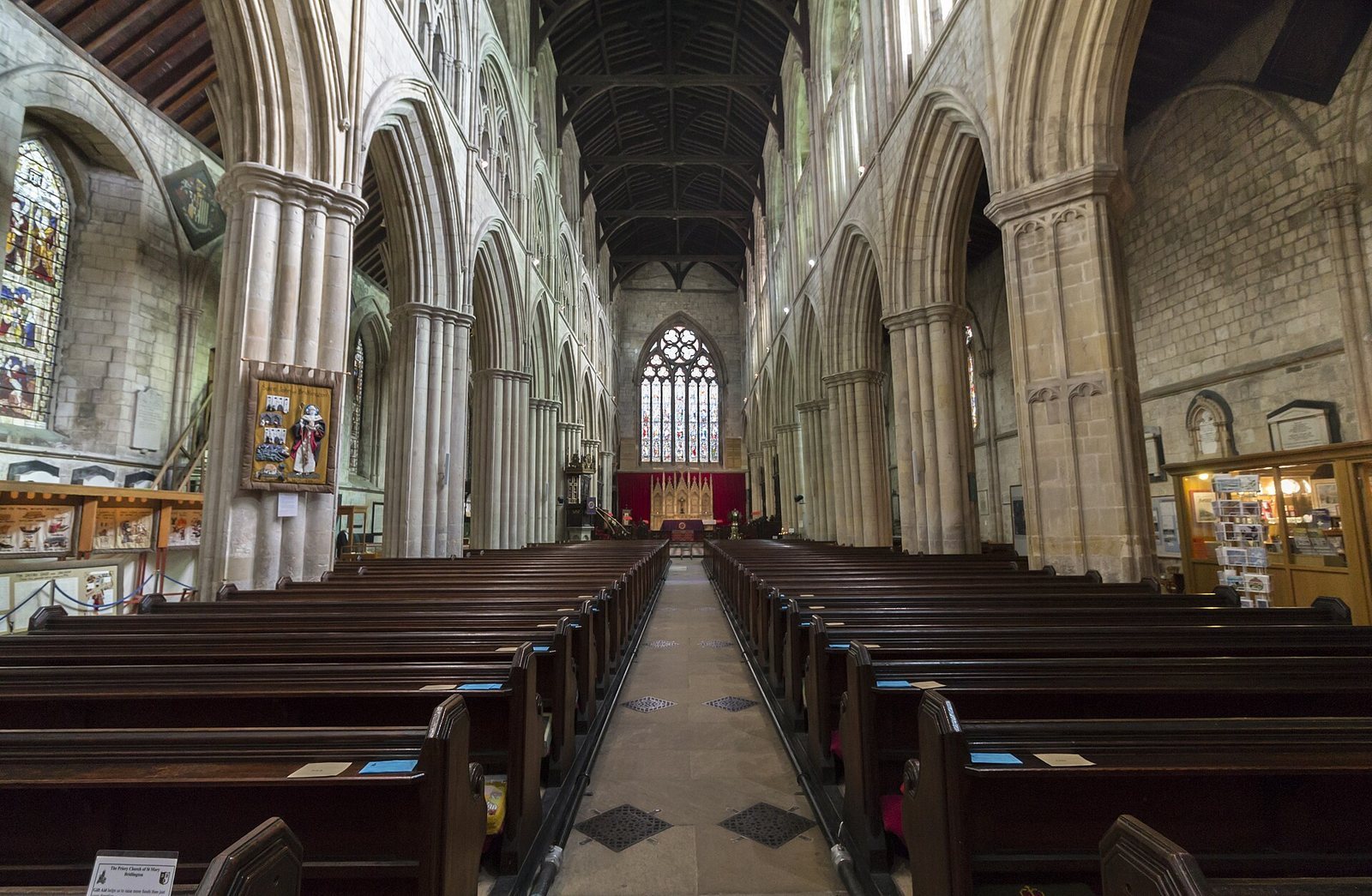
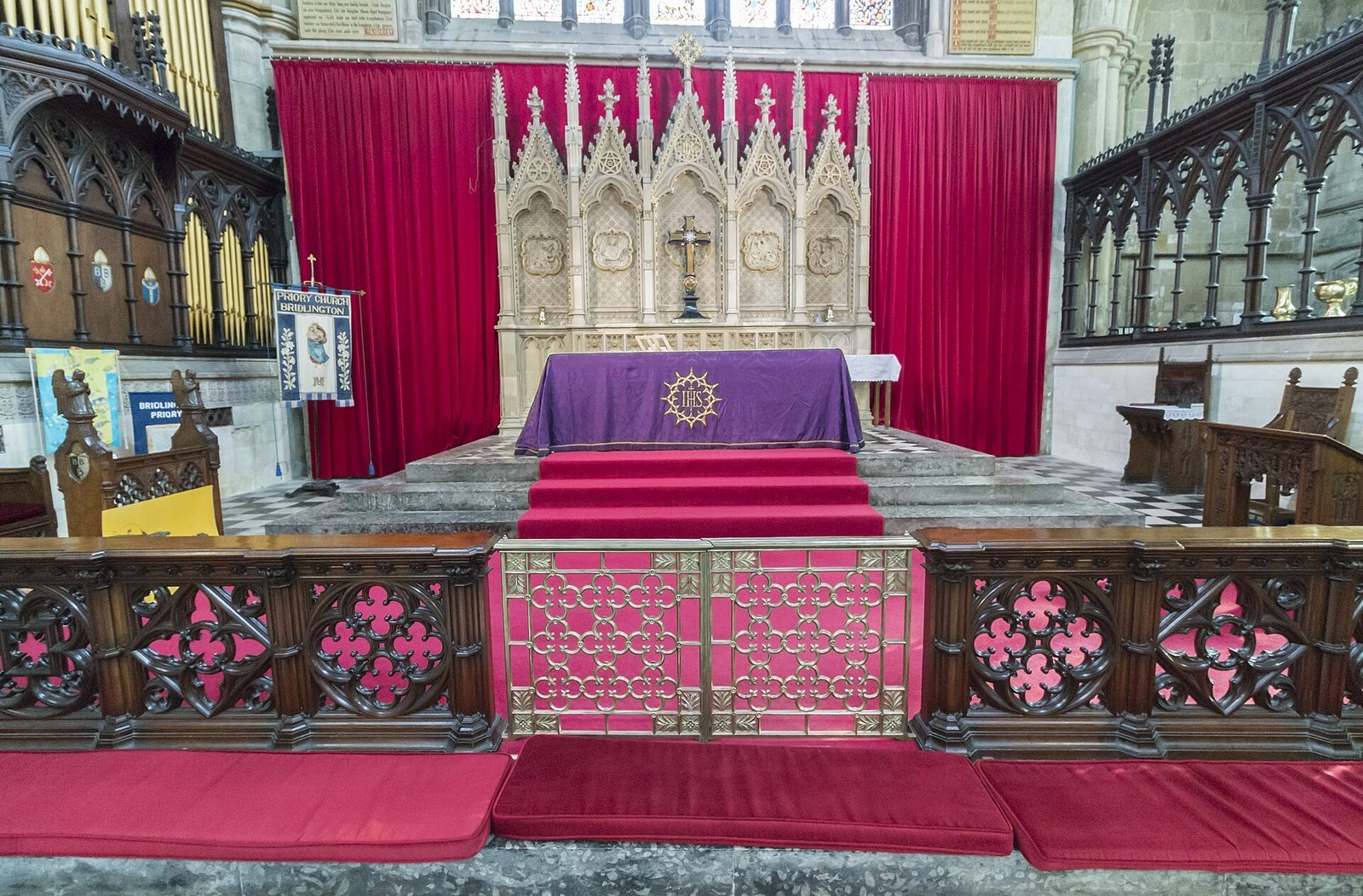
The nave is the principal surviving part of the church. During restoration, the roof was partly renewed, the west window was reopened and fitted with stained glass, and stained glass was added to the east window. The interior was whitewashed. These works altered the appearance of the church while preserving its role as a place of worship.
Other priory buildings
The wider priory included a chapter house, where the community met, a treasury, a cloister or covered walkway around a courtyard, the prior’s hall and an infirmary. The medieval choir contained woodwork by William Brownflete, also known as Bromflete.
Gates and gatehouse
Kirk Gate, West Gate and Nun Gate served as everyday entrances to the priory’s lands. Bayle Gate stood at the boundary and was its only fortified entrance. The surviving gatehouse now houses the Bayle Museum.
Fittings and tower features
Organs
John Lowrey presented a pipe organ in 1834, built by John Parkin of York. Robert Postill enlarged it in 1838, and Forster and Andrews added to it in 1851 and moved it within the church in 1857. It left the church in 1889 for Mr Grindall’s Music Room on Holderness Road in Hull, then moved to Emmanuel Church in Bridlington in 1911.
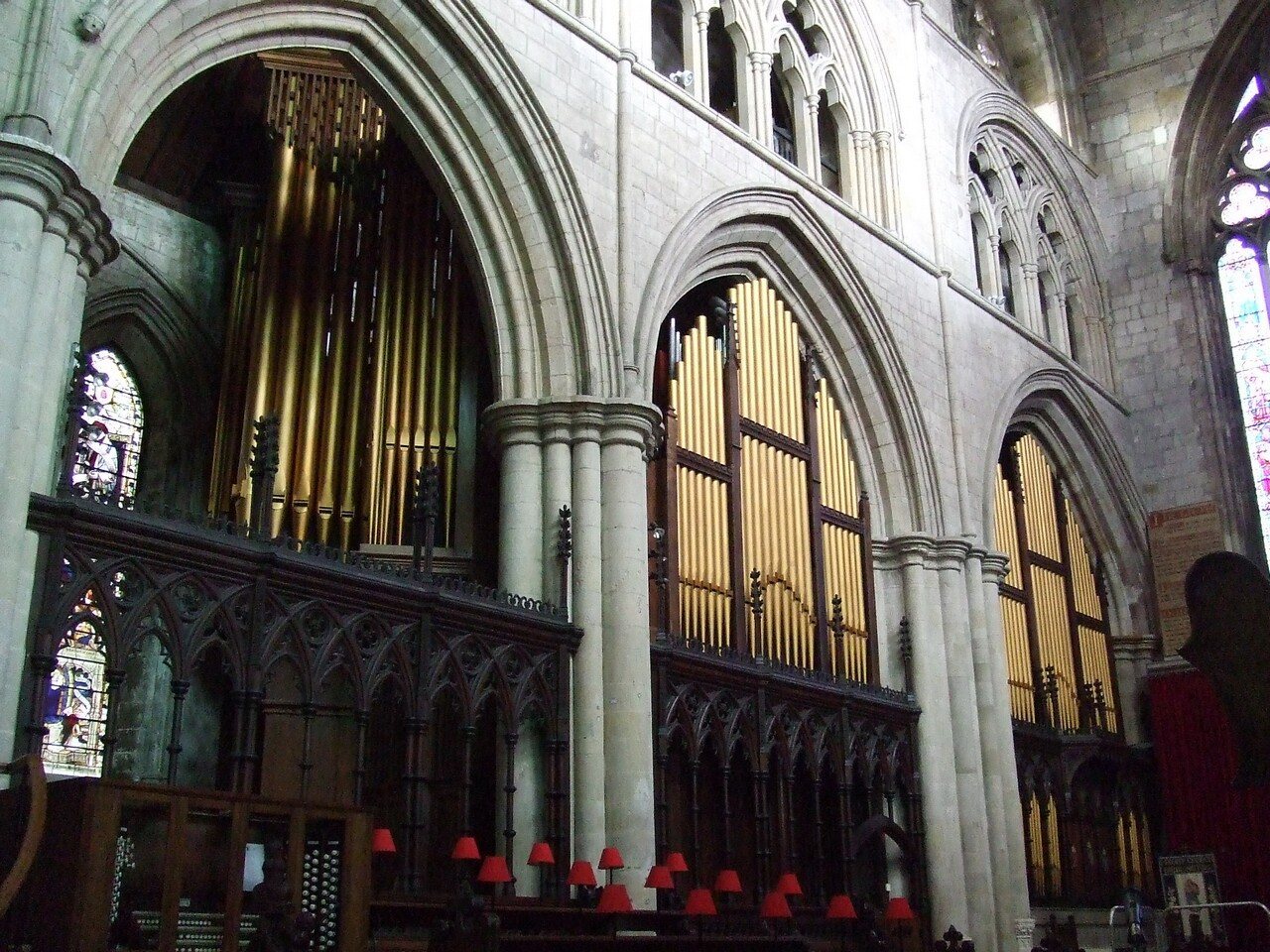
A new organ built in 1889 by Belgian organ builder Charles Anneessens began with 41 stops, each controlling a set of pipes. Its pipework reached a lowest pitch of 16 feet, and it had three 61-key manuals, or hand-operated keyboards, named Choir, Great and Swell, plus a 30-key pedalboard. By 1968 it had grown to 81 stops, with pipework reaching a 32-foot pitch, four manuals including Solo, and a 32-key pedalboard. An electric blower powered by a 5½-horsepower motor supplied the air. Nicholson restored and enlarged the organ between 2004 and 2006.
Bells
The tower holds eight bells cast in 1902 by Taylor of Loughborough. They are tuned to the key of D, and the tenor bell weighs 2,870 pounds (1,300 kg).
Clock
Made by Gillett, Bland and Co. of Croydon, London, the tower clock began operating on 4 November 1880. It strikes the hours on a bell weighing 28 long hundredweight (about 1,400 kg) and plays Cambridge quarter-hour chimes on four other bells. Its three open-frame dials each measure 7 feet 6 inches (2.29 m) across and have ornamental centres, gilt figures, minute marks and hands. The clock has a cast-iron frame, a double three-legged gravity escapement, a mechanism using gravity to regulate a clock, and a pendulum made with zinc and iron tubes to counter temperature changes.
Memorial plaque
A plaque in the priory commemorates Ginger Lacey, a fighter ace associated with the Battle of Britain.