Palacio Vela de los Cobos: A Renaissance Palace in Úbeda
Site at a Glance
- Rating
- 4.5
- Popularity
- Medium
- Country
- Spain
- Primary era
- Early Modern
- Eras represented
- Early Modern
- Civilizations
- Crown of Castile, Habsburg, Habsburg Spain, Spanish
- Site type
- Domestic
- Remains
- Elite Residence
On this page7 sections
History
Commission and Renaissance setting
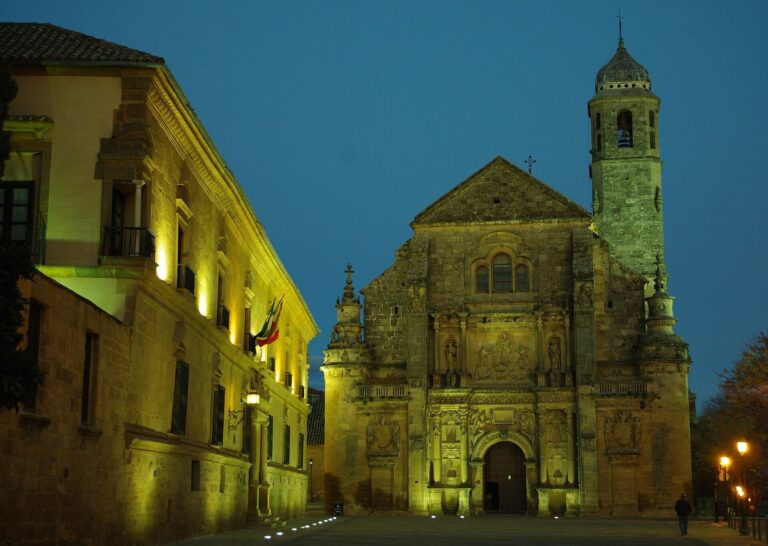
Palacio Vela de los Cobos is a sixteenth-century Renaissance palace in Úbeda, Spain, built in a style that revived classical forms. Francisco Vela de los Cobos, a municipal officeholder in Úbeda, commissioned it in the mid-sixteenth century. Andrés de Vandelvira designed the building, and stonemason Jorge Leal carried out its construction. The palace forms part of Úbeda’s Renaissance monumental ensemble. In 2003, that ensemble and Baeza’s were designated UNESCO World Heritage Sites, a recognition for places considered to have outstanding universal value.
Later changes and continued use
The interior underwent several alterations, and its central courtyard was lost in the nineteenth century. The palace remains a residence, the only palace in its province still used for that purpose. It is distinct from the separate Palacio de los Cobos in Úbeda, commissioned by royal secretary Francisco de los Cobos.
Remains
Architecture
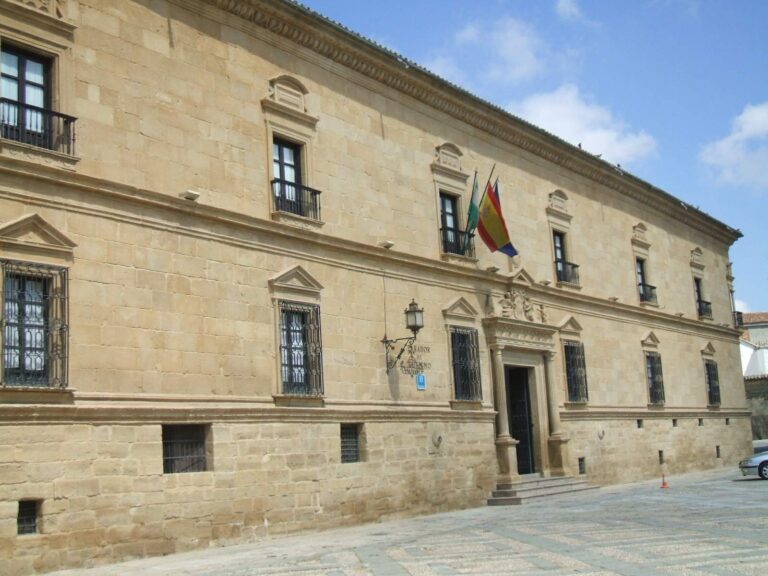
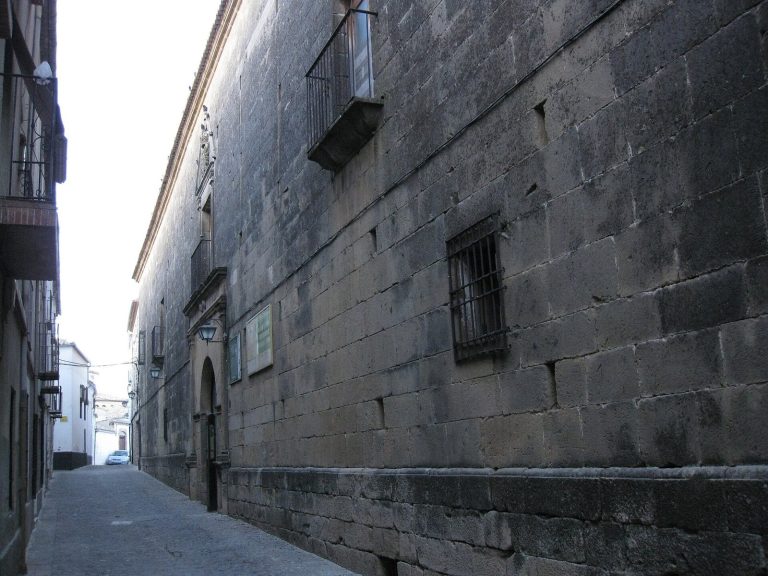
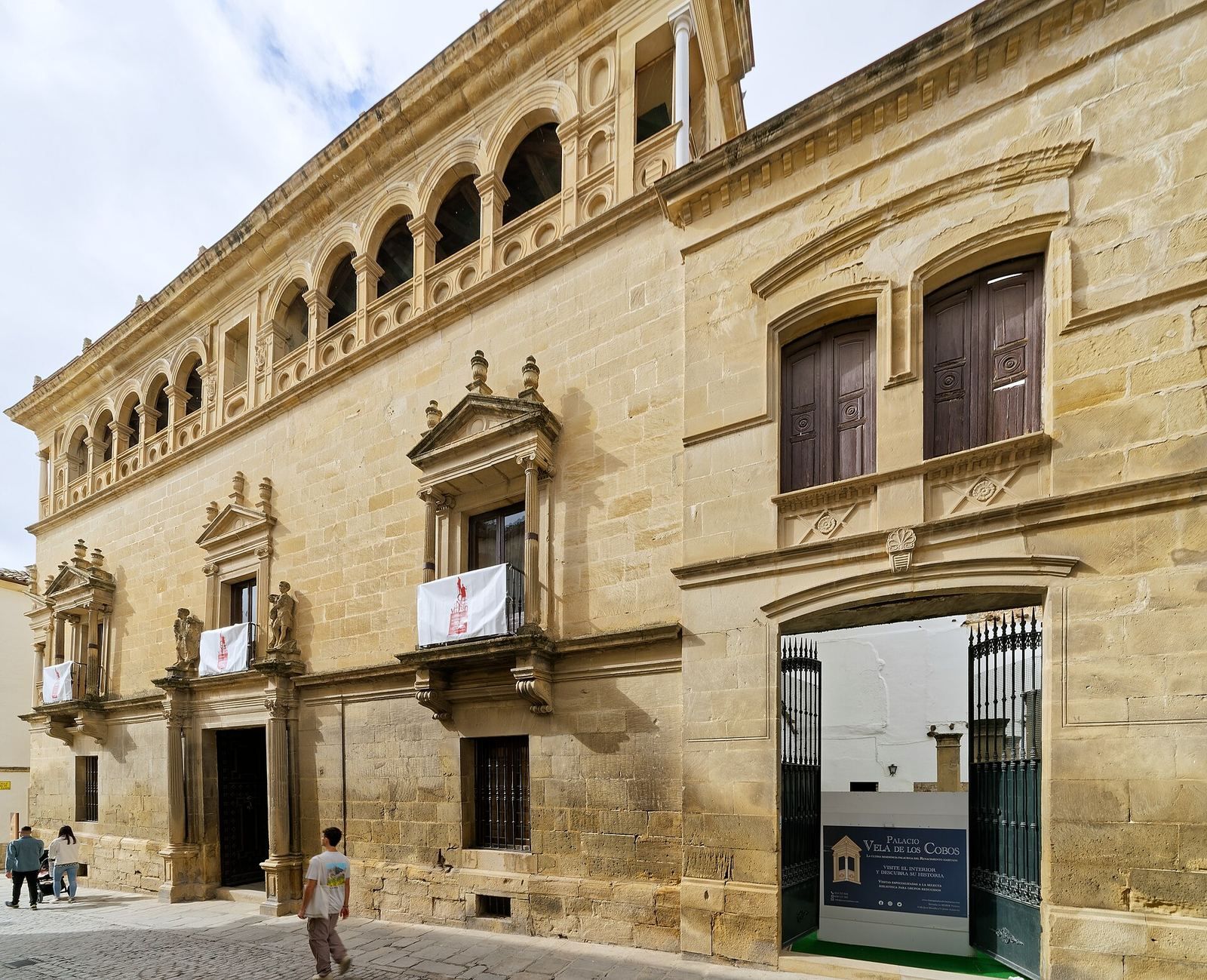
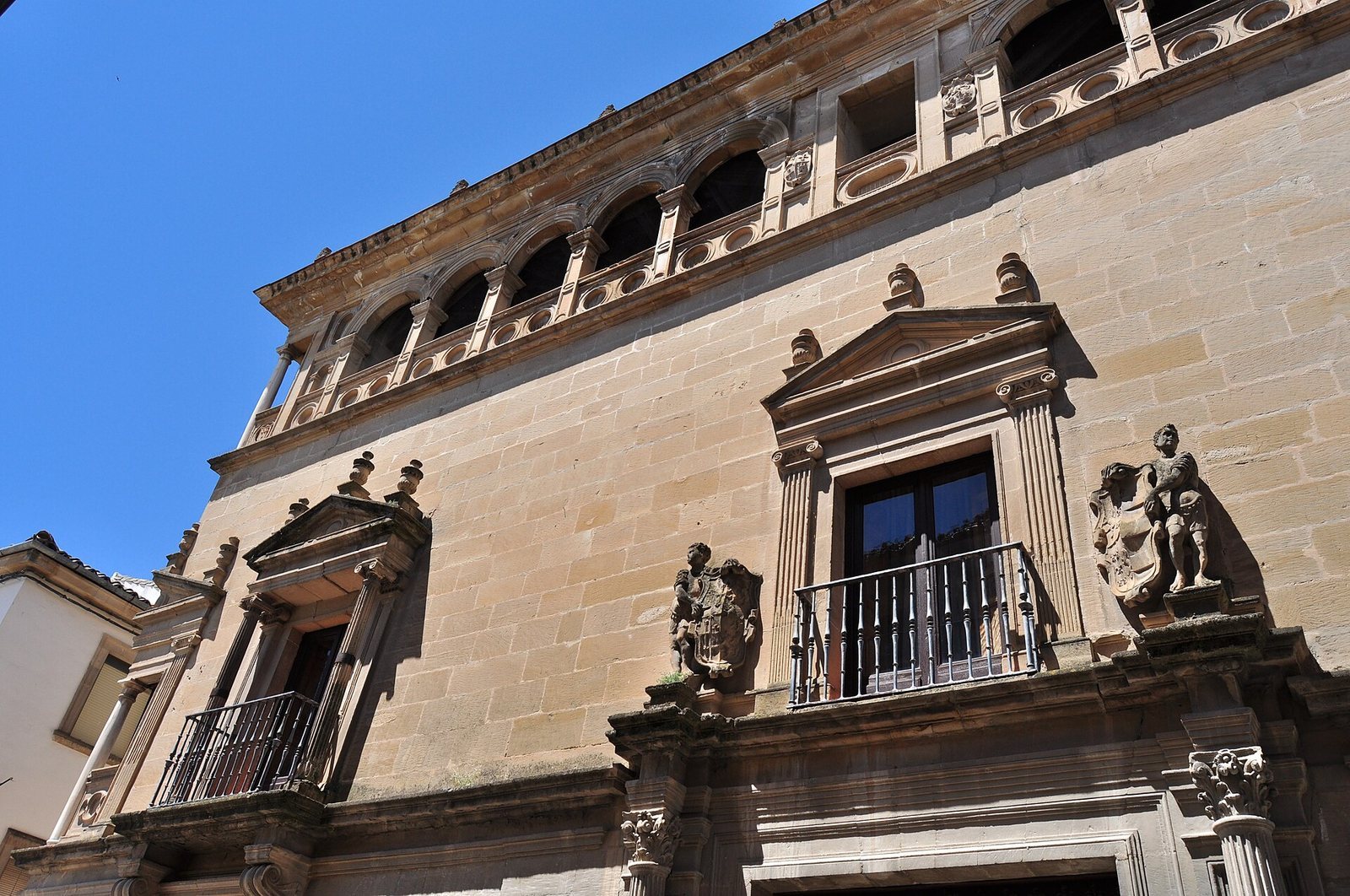
The Renaissance stone building stands in Úbeda’s historic center. Its three-storey façade presents a formal entrance below balconies and an open gallery at the top.
Façade
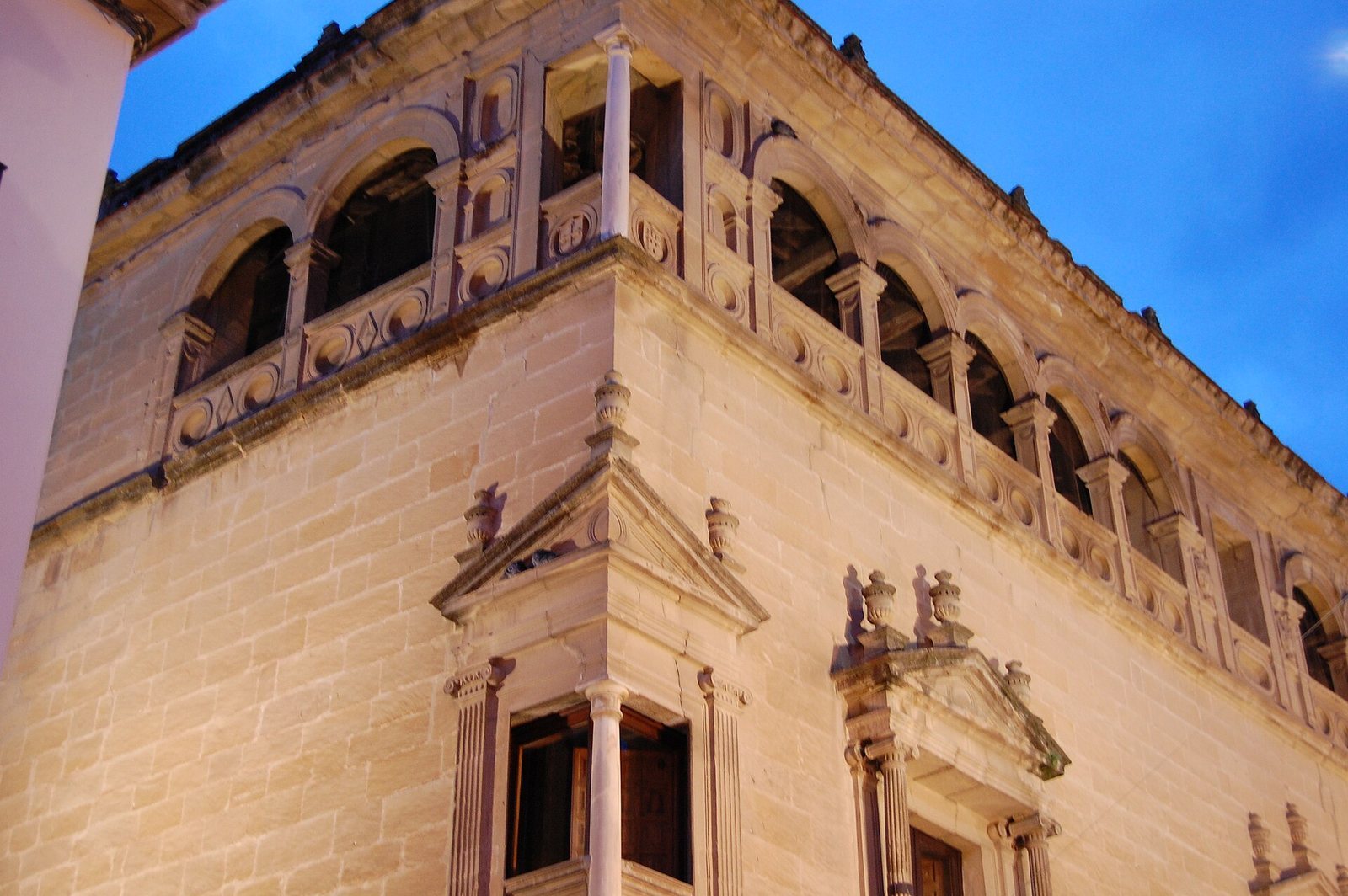
The ground-floor doorway has a horizontal lintel and is framed by two Corinthian columns, a classical column style. Above it, the central balcony displays the family coat of arms, supported by two carved warrior figures. Ionic columns, another classical style, and triangular pediments frame the two side balconies. One end of the façade has a corner balcony, a feature characteristic of Andalusian Renaissance architecture. The uppermost storey is an open gallery of semicircular arches resting on piers, or solid supports.
Interior
The interior contains a collection of artworks and an important library.