University of Baeza: A Renaissance Center of Learning in Spain
Site at a Glance
- Popularity
- Medium
- Country
- Spain
- Primary era
- Early Modern
- Eras represented
- Early Modern
- Civilizations
- Crown of Castile, Habsburg, Habsburg Spain, Spanish
- Site type
- Civic
- Remains
- University
On this page12 sections
History
The University of Baeza was a center of higher learning in Baeza, Spain, in what was then the Kingdom of Jaén. Pope Paul III authorized its foundation in 1538, during the Renaissance, at the initiative of Rodrigo López, a local cleric and notary who was related to the pope and belonged to his household. It began as an elementary school and received permission to teach humanities as a university in 1542. It was one of four universities founded in Andalusia during the sixteenth century. Spain classified it as a “minor university,” a category contrasted with the “major universities” of Salamanca, Alcalá, and Valladolid.
Foundation and teaching
Saint John of Ávila, a Spanish priest and religious writer who became the university’s patron in 1540, organized its new studies. The institution awarded bachelor’s, licentiate, and doctoral degrees in arts and theology. In 1565, it added teaching posts in rhetoric, grammar, Greek, philosophy, and scholastic theology. The curriculum also included medicine, while John of Ávila’s preference against teaching church law was reflected in the subjects offered.
A larger educational foundation took shape after the death in 1568 of Rodrigo Pérez de Molina, an archdeacon and university patron who was also the founder’s nephew. He left his estate and administrative responsibilities to his nephew Pedro Fernández de Córdoba, a cathedral canon. Fernández de Córdoba used the inheritance and his own funds to establish the expanded foundation. The university moved formally into its new building in 1595, while elementary studies continued at the original premises until they transferred there in 1814.
Religious scrutiny and institutional standing
Many early teachers were Christians whose families had Jewish ancestry, known in the period as New Christians. Their influence helped give the institution a pastoral emphasis. Jesuits and Carmelites also took part in its early work, and Saint John of the Cross, a Spanish Carmelite mystic and poet, participated in prayer seminars.
The university’s religious outlook and the ancestry of some of its teachers attracted scrutiny from the Spanish Inquisition, a tribunal that prosecuted suspected heresy under royal and ecclesiastical authority. Several teachers faced accusations of alumbrado beliefs, associated with claims of direct mystical illumination. John of Ávila was imprisoned for a year, and Hernán Núñez, Hernando de Herrera, Diego Pérez de Valdivia, and Bernardo de Carleval were also prosecuted. The accusations were not proved, and the proceedings were eventually abandoned, although they damaged some teaching careers. Carleval was forced to withdraw his statement that Jews were not responsible for the crucifixion of Jesus.
In 1585, the Augustinians tried to establish a competing university in Jaén, but Baeza successfully opposed the plan. A royal order of Philip IV rejected the proposed institution in 1630. In that same year, Pope Urban VIII recognized Baeza as a pontifical university, meaning one established or recognized under papal authority. The university formally twinned with Salamanca in 1667, when its rector was Juan Francisco de Mexía y Ponce de León, who had been born in Baeza.
Decline, suppression, and later use
The university’s fortunes declined as the surrounding province became more rural. Local aristocrats often lived elsewhere and invested their wealth outside Jaén, while the textile industry that had supported local prosperity contracted. Teaching at Baeza also grew increasingly stagnant. A decree suppressed the university in 1807. Courses resumed briefly from 1815, but Ferdinand VII ordered its definitive suppression in 1824, a decision implemented by the Royal Chancery of Granada.
After suppression, the original premises passed out of university ownership under Spain’s property reforms. The later university building became a College of Humanities in 1824, then a free institute, and a secondary school in 1875. It continues in use as the Santísima Trinidad secondary school. The poet Antonio Machado taught French grammar there from 1912 to 1919.
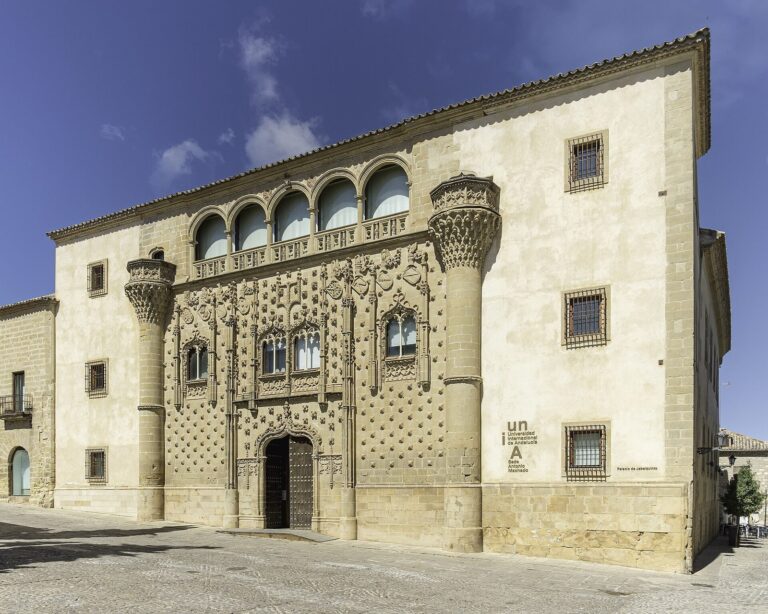
University-level teaching returned to Baeza in 1979 through a summer university first affiliated with the University of Granada and, from 1994, with the International University of Andalusia. Now called the Antonio Machado Summer University, it uses the restored Jabalquinto Palace and the former Conciliar Seminary rather than the historic university buildings. In 2003, the Renaissance monumental ensembles of Baeza and Úbeda were jointly inscribed as a UNESCO World Heritage Site.
Remains
The surviving university fabric includes its original foundation premises and the later Renaissance complex. The later complex is organized around a courtyard and includes the university building and the adjoining chapel of Saint John the Evangelist.
University buildings
Original premises
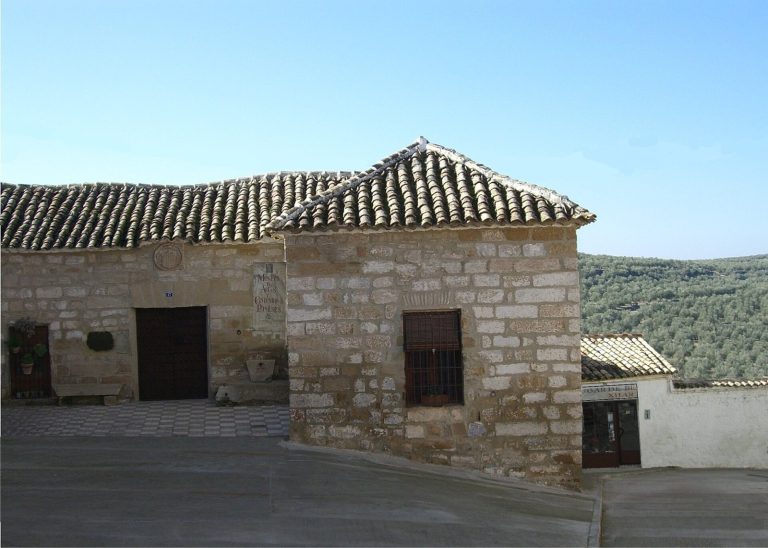
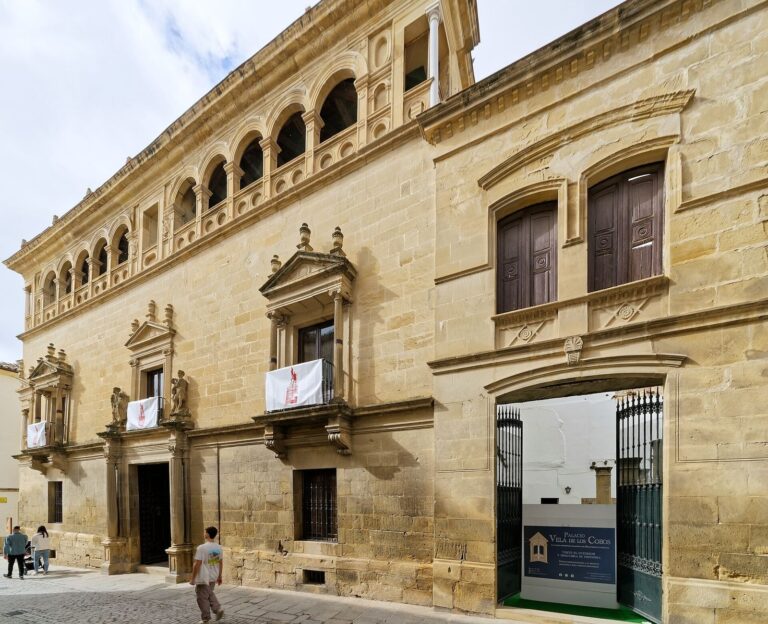
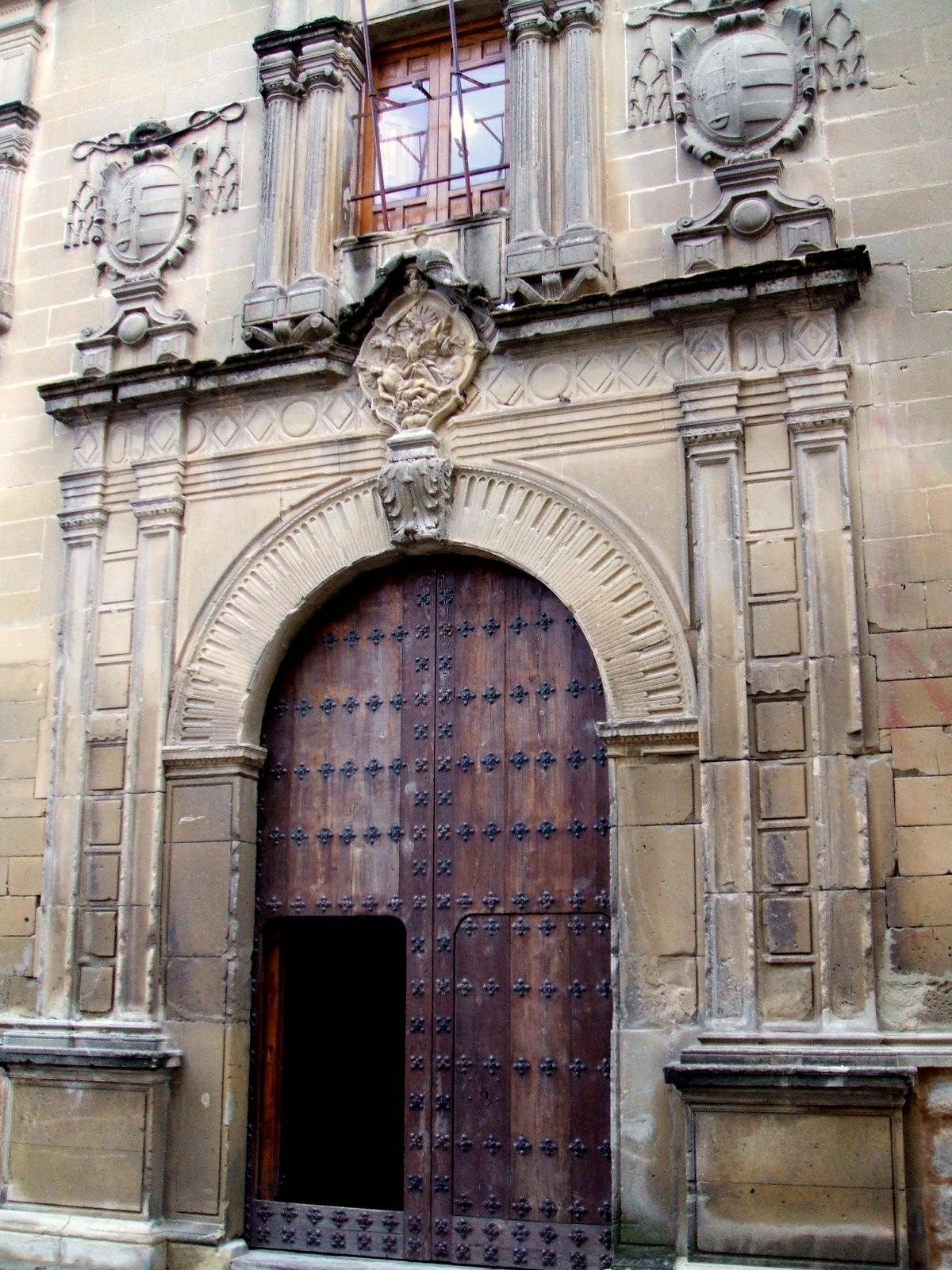
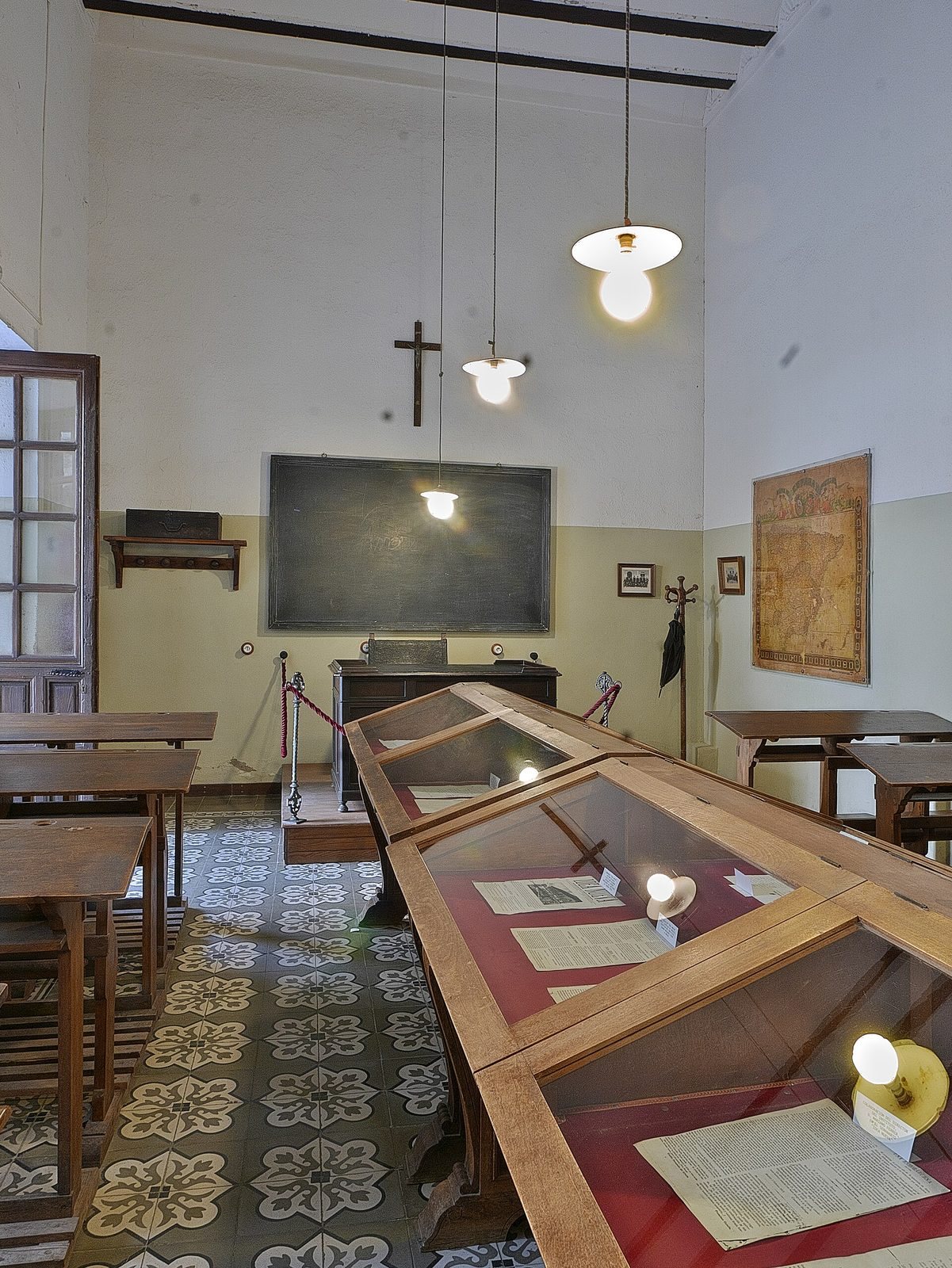
The first premises stood within Baeza’s walls, not far from the fortress. The property had belonged to the Acuña family before Charles I confiscated it after local Comuneros, participants in a Castilian revolt against royal authority, used it as a meeting place. Its exterior retains an old round-arched entrance framed by columns with vertical grooves; one column was replaced during restoration. A Latin inscription above the entrance refers to the foundation. Later uses altered the building, which now houses the municipal museum.
Later building and façade
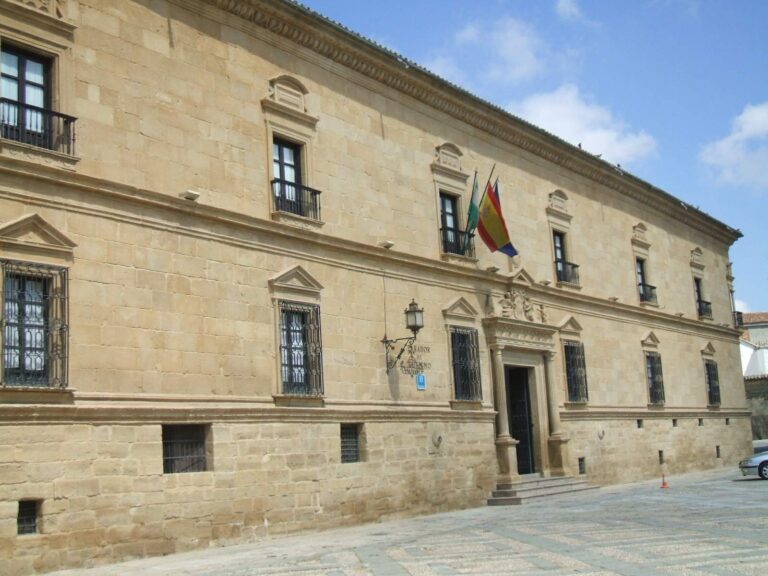
The later university building was erected beside the city granary and the San León gate, near a Franciscan convent that has since vanished. Its construction required the removal of an adjoining stretch of the city wall. The three-level façade is in the Mannerist style, a later form of Renaissance art and architecture. On the first level, a medallion showing the Holy Trinity, the Christian belief in one God in three persons, appears beneath a mantle and interrupts the horizontal band above. The second level displays two shields belonging to Pedro Fernández de Córdoba, each topped by an archbishop’s hat.
Courtyard and interior rooms
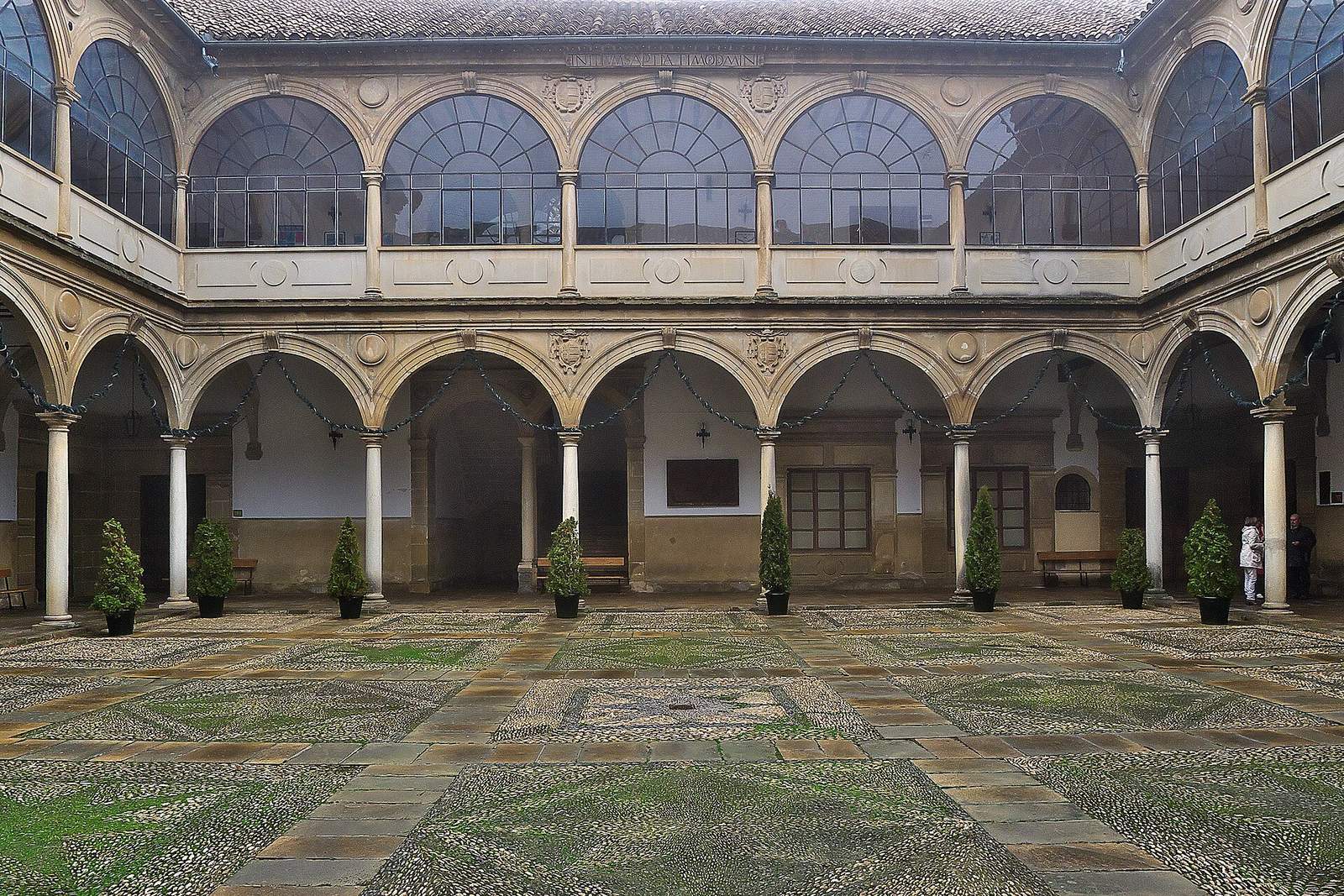
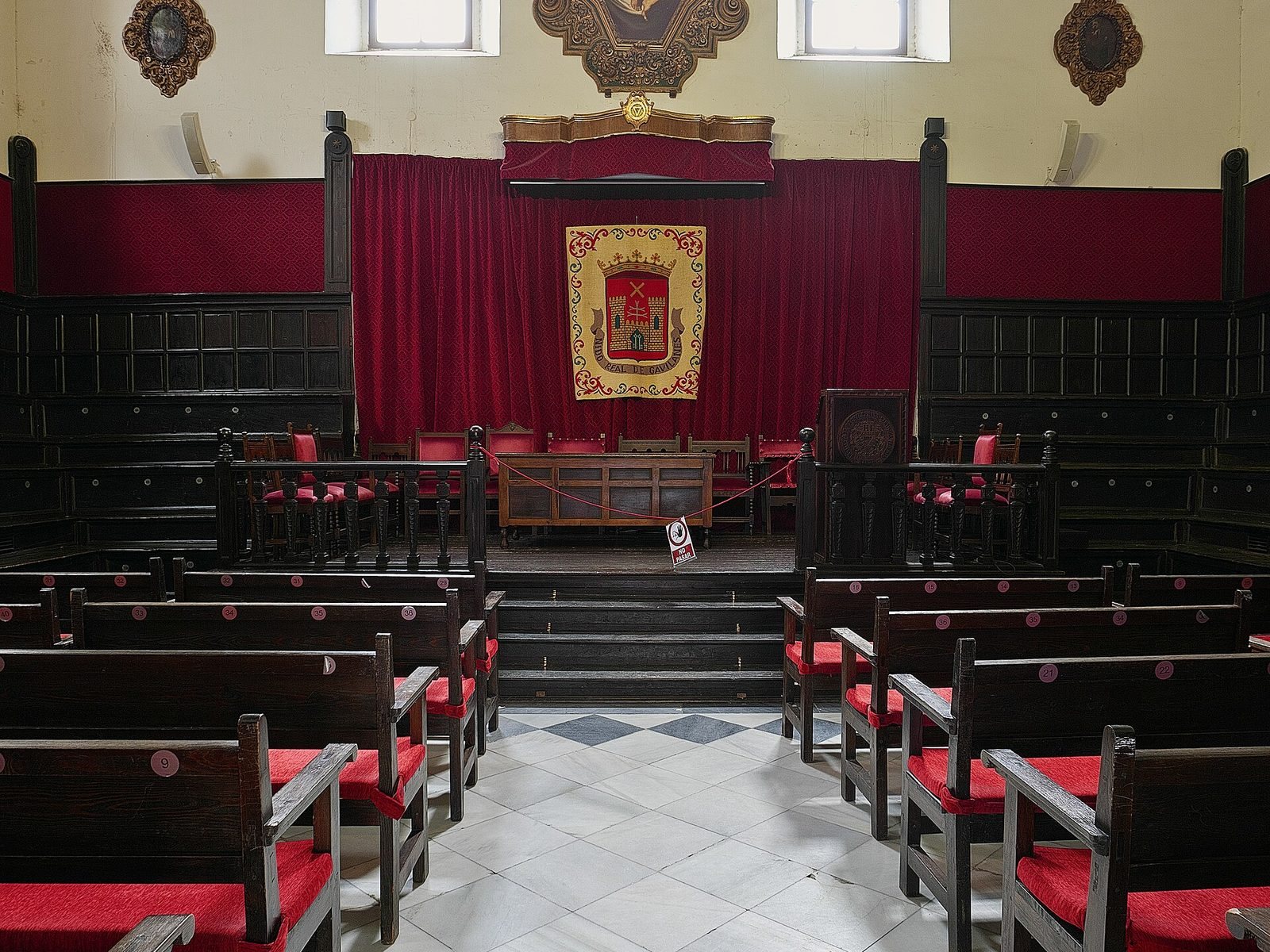
Two levels of arcades on columns surround the courtyard, the building’s interior focus. Nearby are a stairwell that also held a jail for students and the paraninfo, the university’s ceremonial hall. The square hall has tiered seating, a wooden ceiling with recessed panels, and paintings of the Holy Trinity, Rodrigo López, Saint John of Ávila, and Diego Pérez de Valdivia. The historic library and some halls have been restored and partly updated, while sports facilities and modern technology supplement the older complex.
Chapel of Saint John the Evangelist
Plan and tower
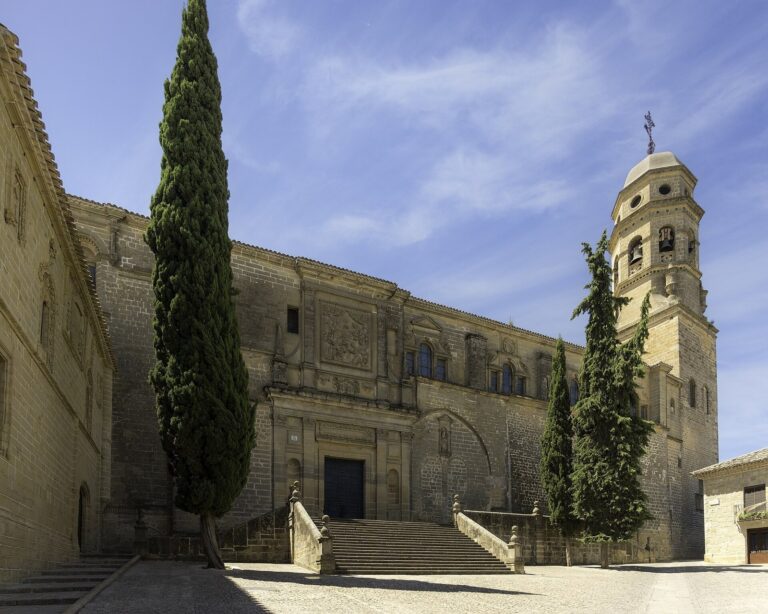
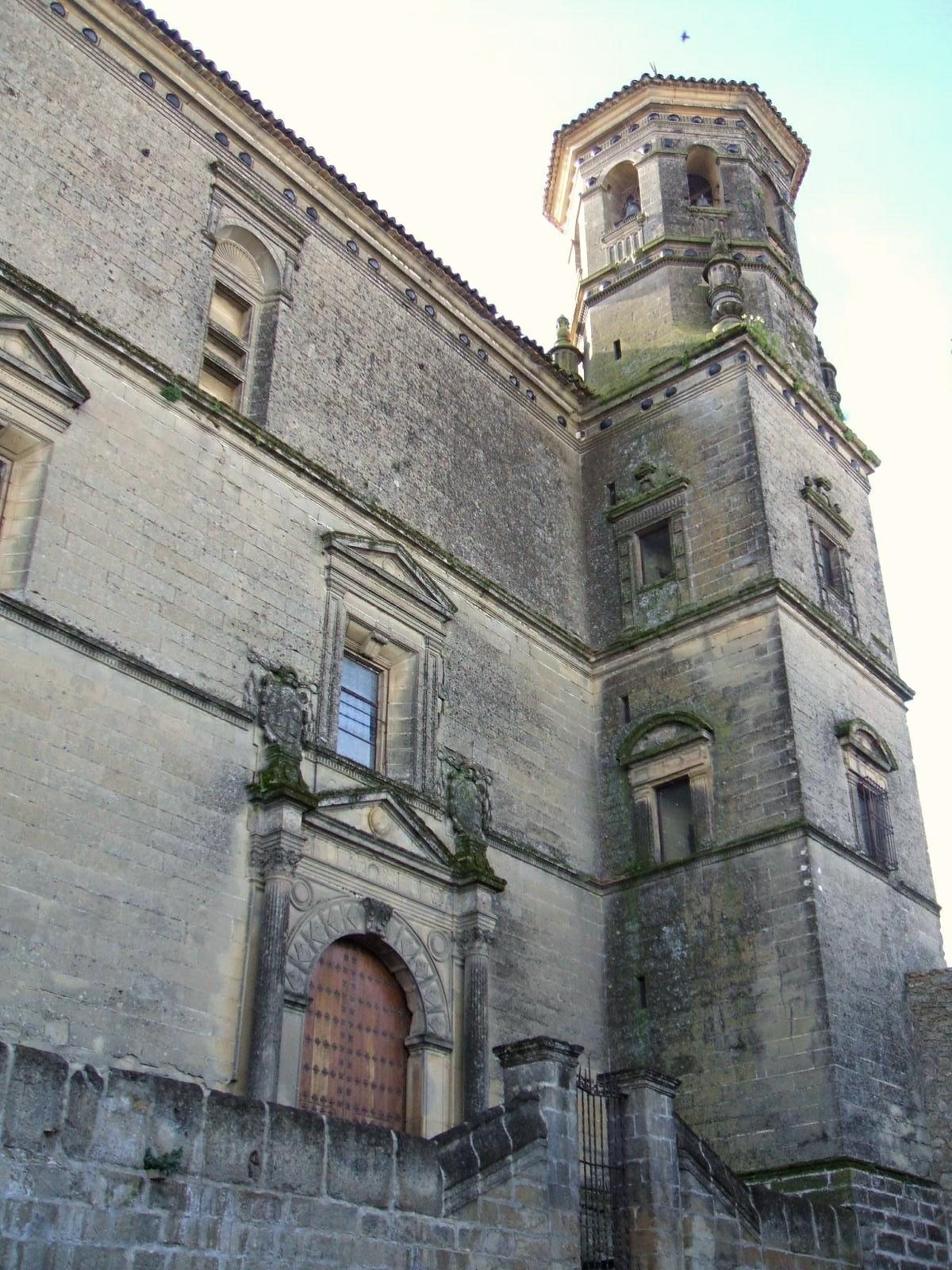
Completed in the early seventeenth century, the chapel has a principal façade that forms a single composition with the collegiate building. It occupies the west wing of the cloister, a covered walkway around a courtyard. Doorways open to the south and west. On the west side, an outer wall accommodates the change in ground level and forms a paved forecourt. The tower has a square lower stage and two octagonal stages above it. Inside, the single nave, or main body of the chapel, has three sections: a barrel-shaped vaulted ceiling, a dome supported by curved triangular sections that meet the square space, and a large round arch above the presbytery, the sanctuary around the altar. The dome covers a simulated crossing, a crossing-like area without a full transept.
Memorials, chapels, and choir
On the left side of the simulated crossing when viewed from the nave toward the altar, a large arched niche holds a praying Carrara-marble statue of Pedro Fernández de Córdoba. A low relief above it shows the Resurrection of Jesus, flanked by the donor’s shields, and two chapels face one another below the crossing. At the chapel’s foot, a high choir stands above a shallow ceiling with recessed panels and curved sections, supported by eight columns; a singers’ gallery extends over the nave on the right side. The presbytery held a crucifix from the last third of the sixteenth century. A penitential brotherhood founded at the chapel in 1980 was devoted to its veneration. In 2010, the brotherhood added the Immaculate Conception, the Catholic belief that Mary was conceived without original sin, and Saint John of Ávila to its titular devotions.