Neghuts Monastery: An Armenian Apostolic Monastic Complex near Arzakan
Site at a Glance
- Popularity
- Medium
- Country
- Armenia
- Primary era
- Medieval
- Eras represented
- Medieval
- Civilizations
- Armenian
- Site type
- Religious
- Remains
- Monastery
On this page7 sections
History
Neghuts Monastery is an Armenian Apostolic monastery on a hillside near Arzakan, Armenia, founded in the tenth or eleventh century. Its exact foundation century is uncertain. The monastery is associated with the Kotayk Diocese, a regional jurisdiction of the Armenian Apostolic Church, and ascetics practiced fasting there.
Armenia recognizes Neghuts as a monument of republican significance, and it is included in the state list of immovable historic and cultural monuments in Kotayk Province.
Remains
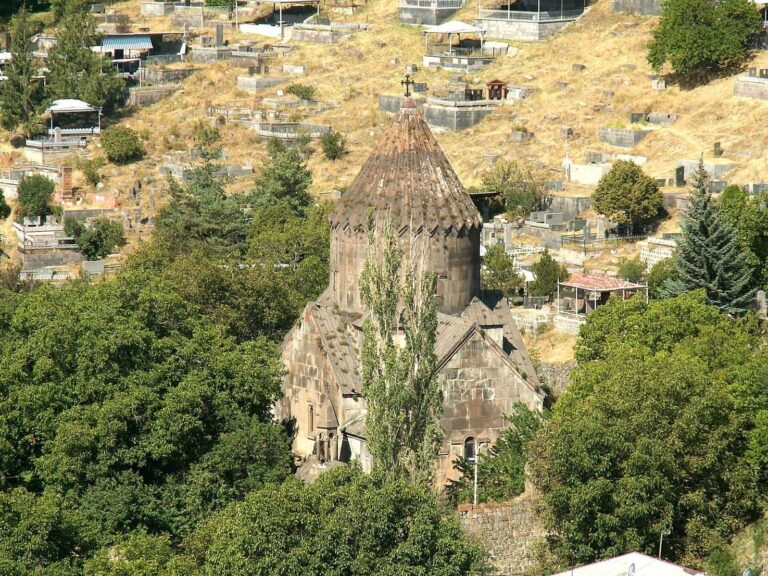
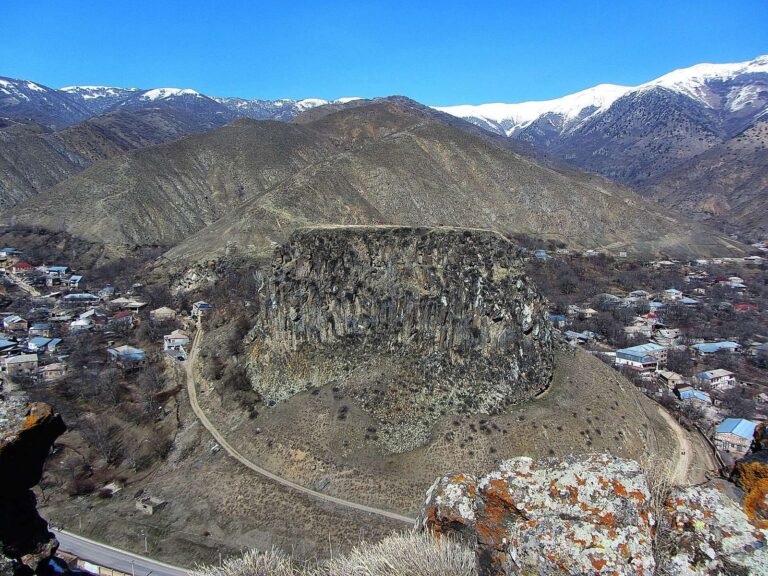
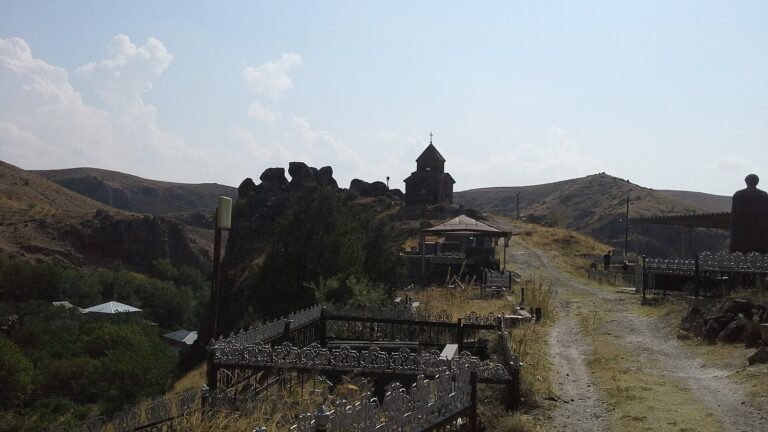
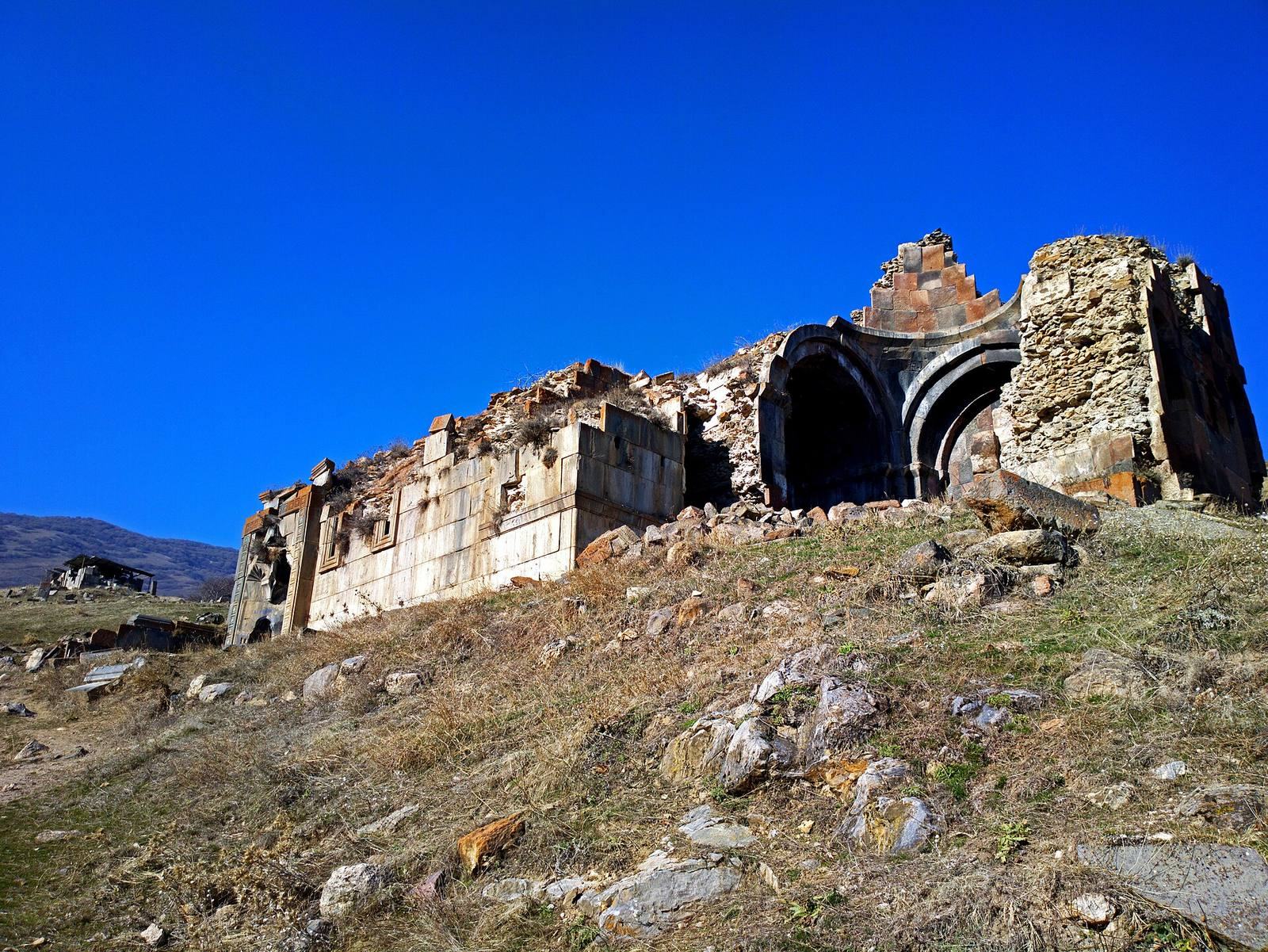
The complex occupies a clearing on a hillside overlooking a valley and the village of Arzakan, about two kilometres northwest of the village centre. Its main group consists of the Church of Surb Astvatsatsin (Holy Mother of God) and an adjoining gavit, a hall commonly attached to Armenian monasteries. Farther uphill, east of the church, are a small chapel and a medieval cemetery.
Main religious complex
Church of Surb Astvatsatsin
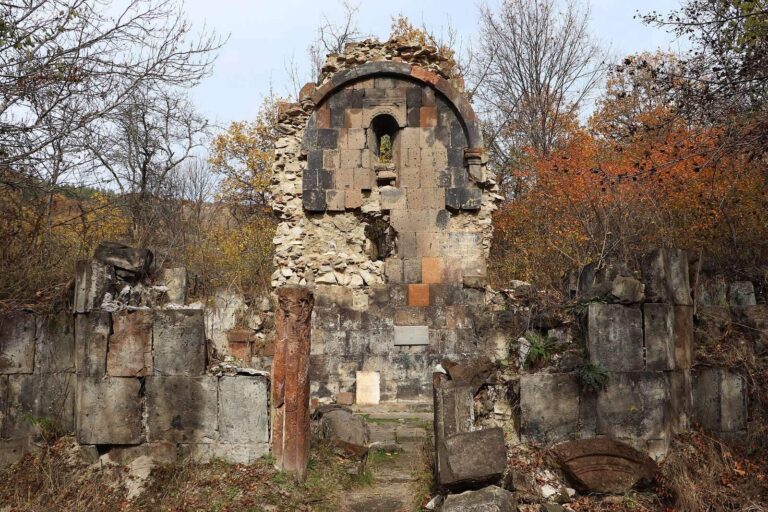
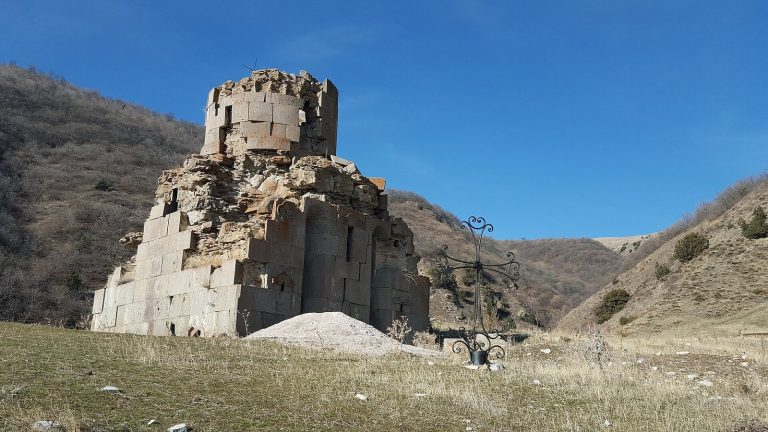
The domed church is relatively plain beside the adjoining hall. Three of its walls survive, while the south wall and most of the section beneath the dome, as well as much of the dome itself, have collapsed. Narrow windows remain in the north wall and at the altar; a window may also have been present in the south wall. Triangular recesses mark the eastern side. A doorway in the west wall opens into the hall, directly opposite the altar.
Gavit
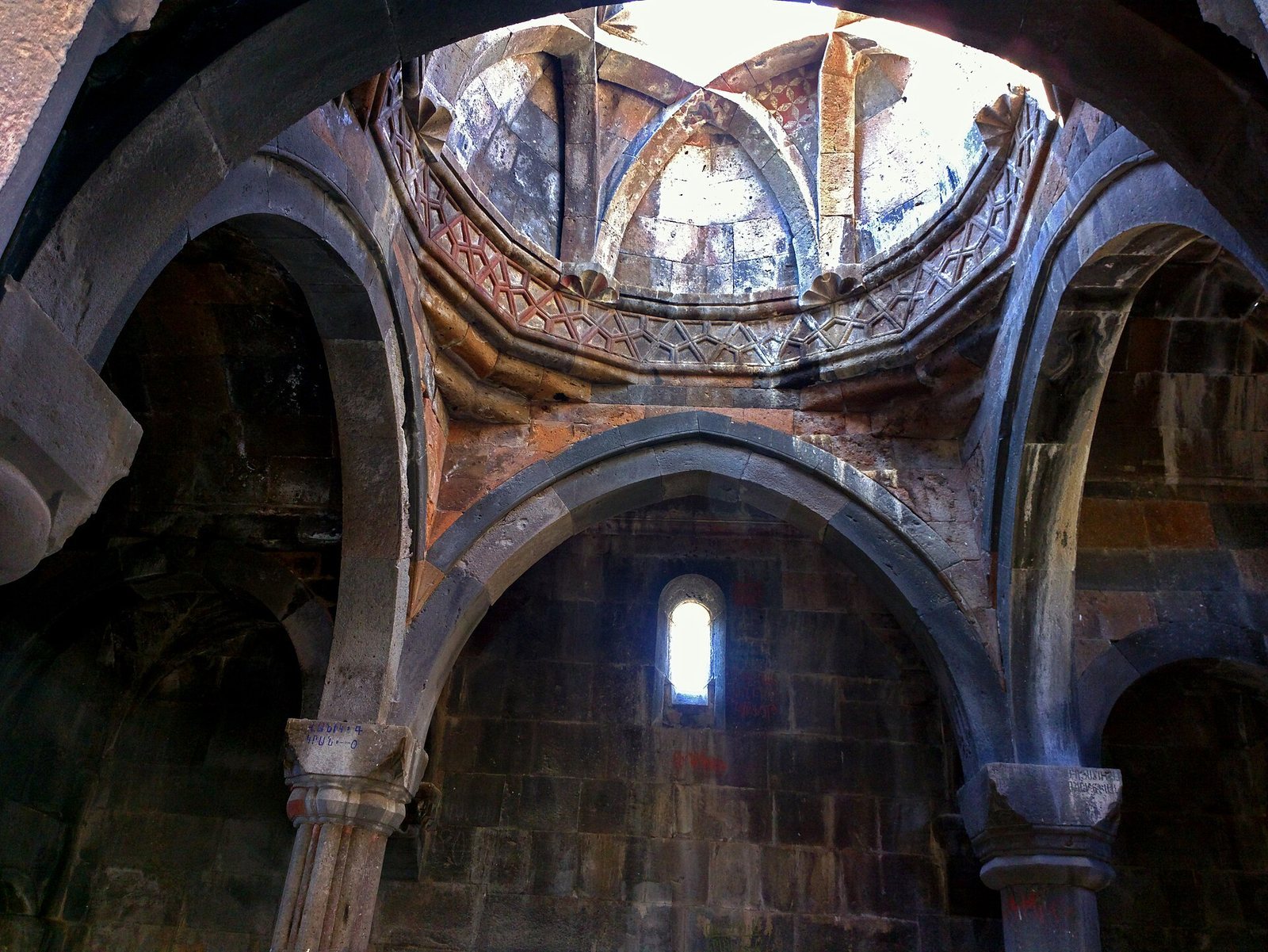
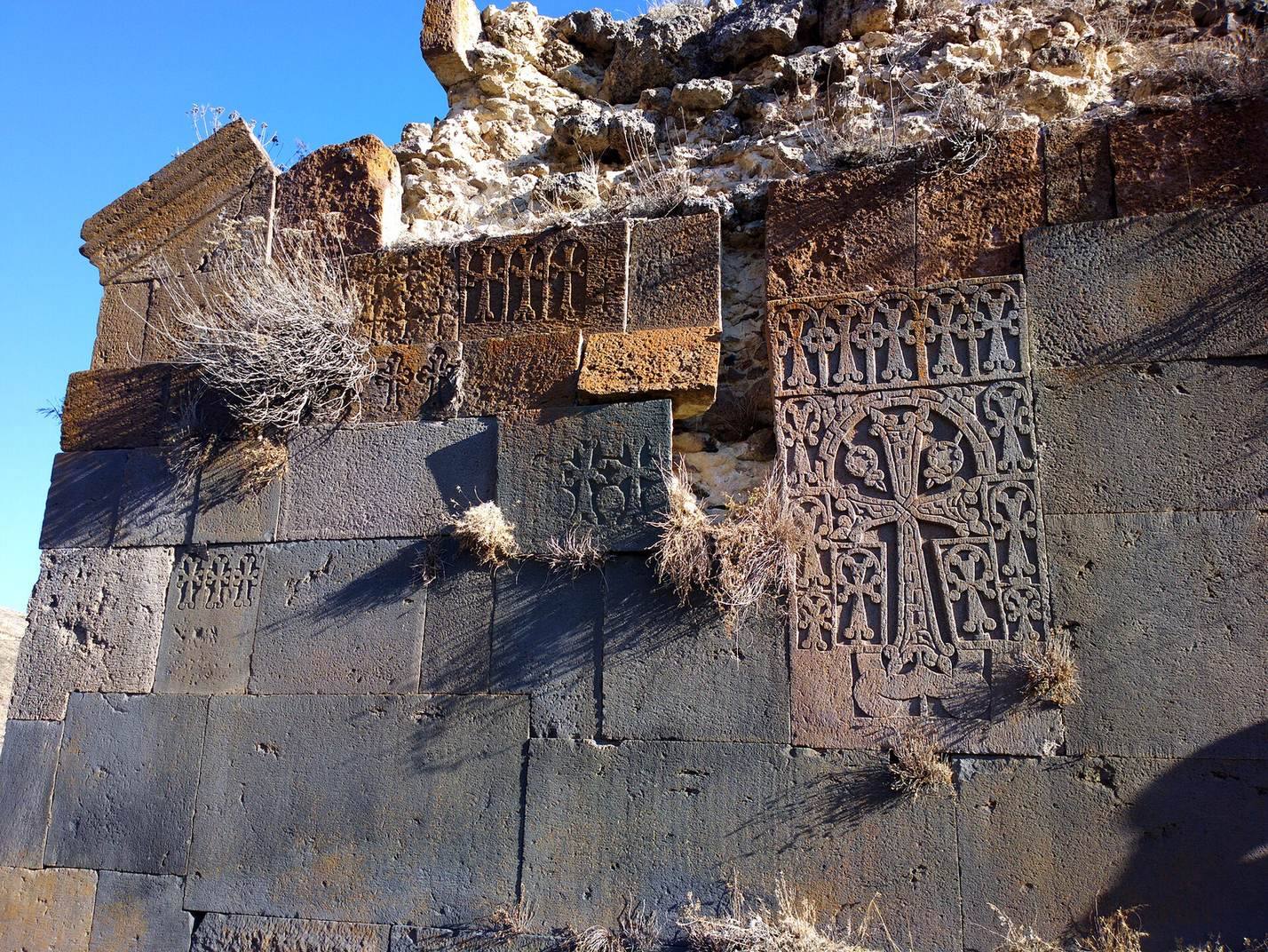
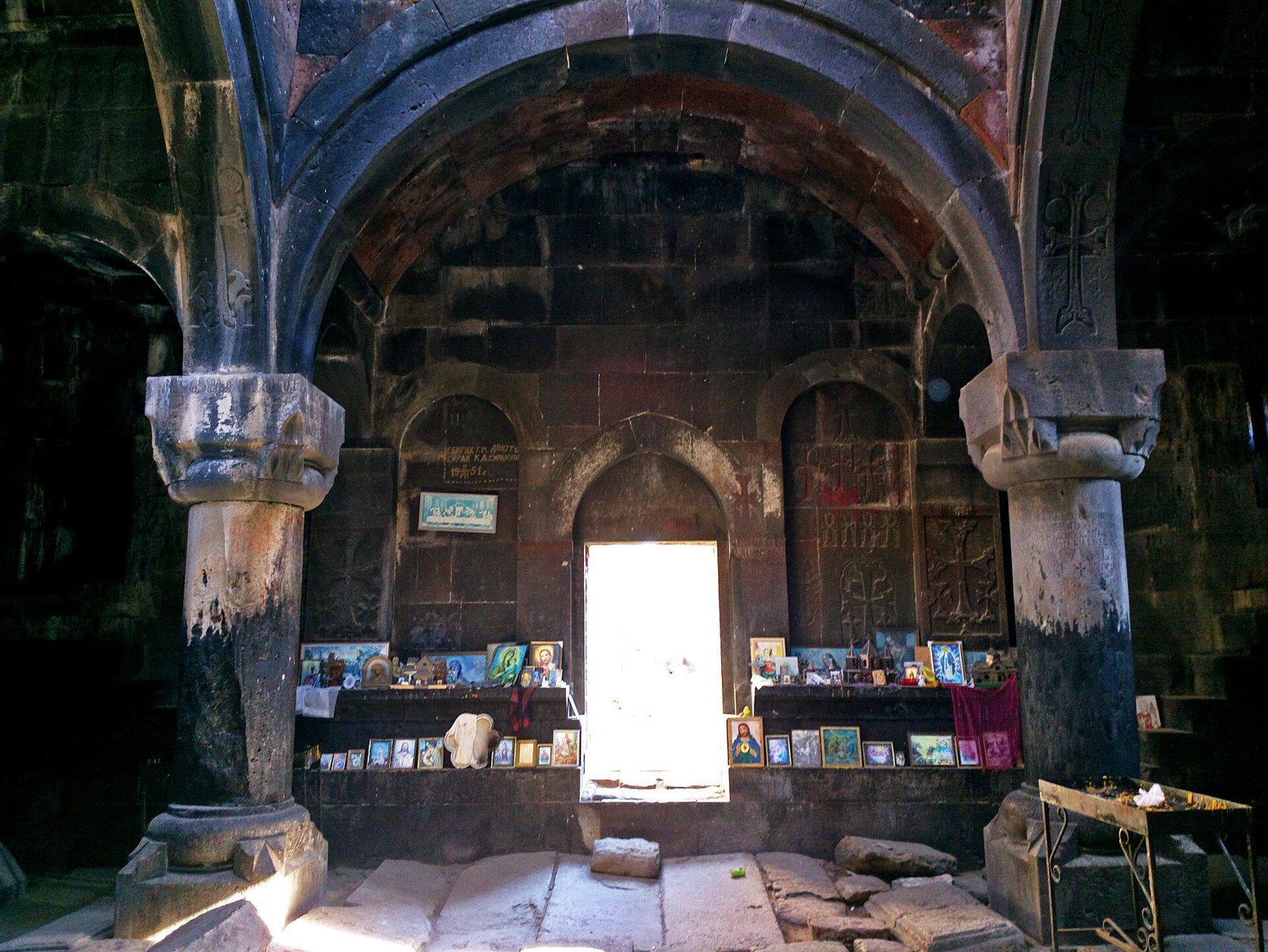
The hall adjoins the church and rests against the hillside at its northwest wall. Its original walls and ceiling survive, together with parts of its dome, although the exterior is less well preserved. Four large, free-standing columns support the vaulted ceiling. Six intersecting arches form an opening at the centre of the dome that admits light. The rectangular hall has an ornate main entrance in its south wall, another entrance to the north, and access from the church. Inscriptions dating to the thirteenth century appear on its walls, columns, capitals, and arches. Large low-relief khachkar carvings, stone monuments bearing carved crosses, decorate the walls.
Hilltop cemetery and chapel
A small chapel and medieval cemetery lie farther up the hillside, east of the main church. Khachkars stand in the cemetery.
Two-room building remains
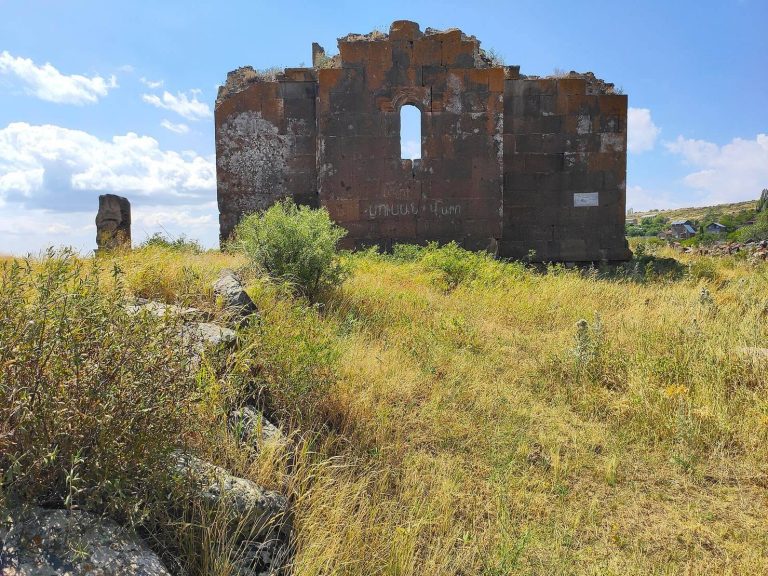
A rectangular depression immediately south of the church and hall marks the remains of a two-room building. Remnants of a large doorway and four columns survive there. The building may have been a small church with its own adjoining hall.