Bjni Fortress: A Medieval Stronghold in Armenia
Site at a Glance
- Popularity
- Medium
- Country
- Armenia
- Primary era
- Medieval
- Eras represented
- Classical, Medieval
- Civilizations
- Armenian, Sassanid
- Site type
- Military
- Remains
- Castle
On this page12 sections
History
Bjni Fortress is a medieval stronghold in Armenia, built in the ninth or tenth century by the Pahlavuni family, an Armenian princely house linked to the Bagratuni ruling dynasty. For centuries, it served as the principal stronghold of the Nig district, guarding approaches to the area and acting as a Pahlavuni seat and fortified settlement. The fifth-century Armenian historian Ghazar Parpetsi provides the earliest known mention of Bjni.
Pahlavuni control and conflict
In 1021, forces associated with the Daylamis raided the Nig district. The fortress commander Vasak Holum Pahlavuni and his men fought them near the Kasakh River, killing 300 and driving the rest away. After the battle, Vasak rested on Mount Serkevelo. A villager who had fled the fighting found him asleep and killed him.
The Pahlavunis controlled Bjni during the eleventh to thirteenth centuries. In 1072, Seljuk Turks, whose dynasty expanded across western and central Asia, captured the fortress and transferred it to the Shaddadids, a dynasty that ruled parts of the South Caucasus. Vasak’s son, Gregory Magistros, an Armenian prince and scholar, commissioned the Church of the Holy Mother of God at Bjni and the principal church of Kecharis Monastery. From the thirteenth century until the late fourteenth, the Zakharyan family, another prominent Armenian princely house, controlled the fortress.
Timur Lenk’s campaigns and abandonment
During Timur Lenk’s campaigns of 1387-1388, the village of Bjni was destroyed, and the fortress was probably destroyed as well. Timur, also known as Tamerlane, was a Turco-Mongol conqueror. The Armenian chronicler Thomas of Metsoph describes the siege and capture of the fortress, the killing of Bishop Vanakan, and the violence, enslavement, and depopulation inflicted on the district.
A note written at the end of a Gospel manuscript in 1478 described Bjni as a divinely inhabited fortress that could not be taken. The fortress later fell into ruin and was abandoned during the sixteenth and seventeenth centuries. In 1648, Catholicos Philip Aghbaketsi, a senior leader of the Armenian Apostolic Church, ordered a church at the fortress to be repaired. Travelers recorded surviving walls and ruins in 1673 and the ruins of the church, fortress walls, castle, and other buildings in 1700.
Excavation and conservation
Archaeological expeditions excavated the site in 1929 and 1977-1978. Cleanup in 2003 cleared accumulated debris from inside and outside the church. Work in 2007-2008 included wall restoration, stabilization, and further excavation.
Remains
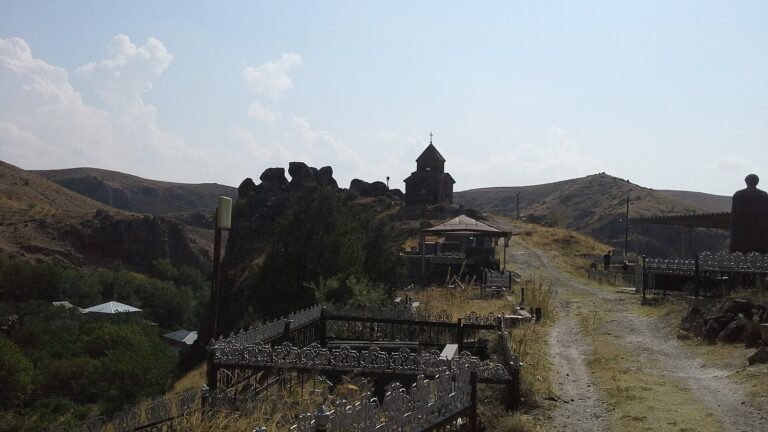
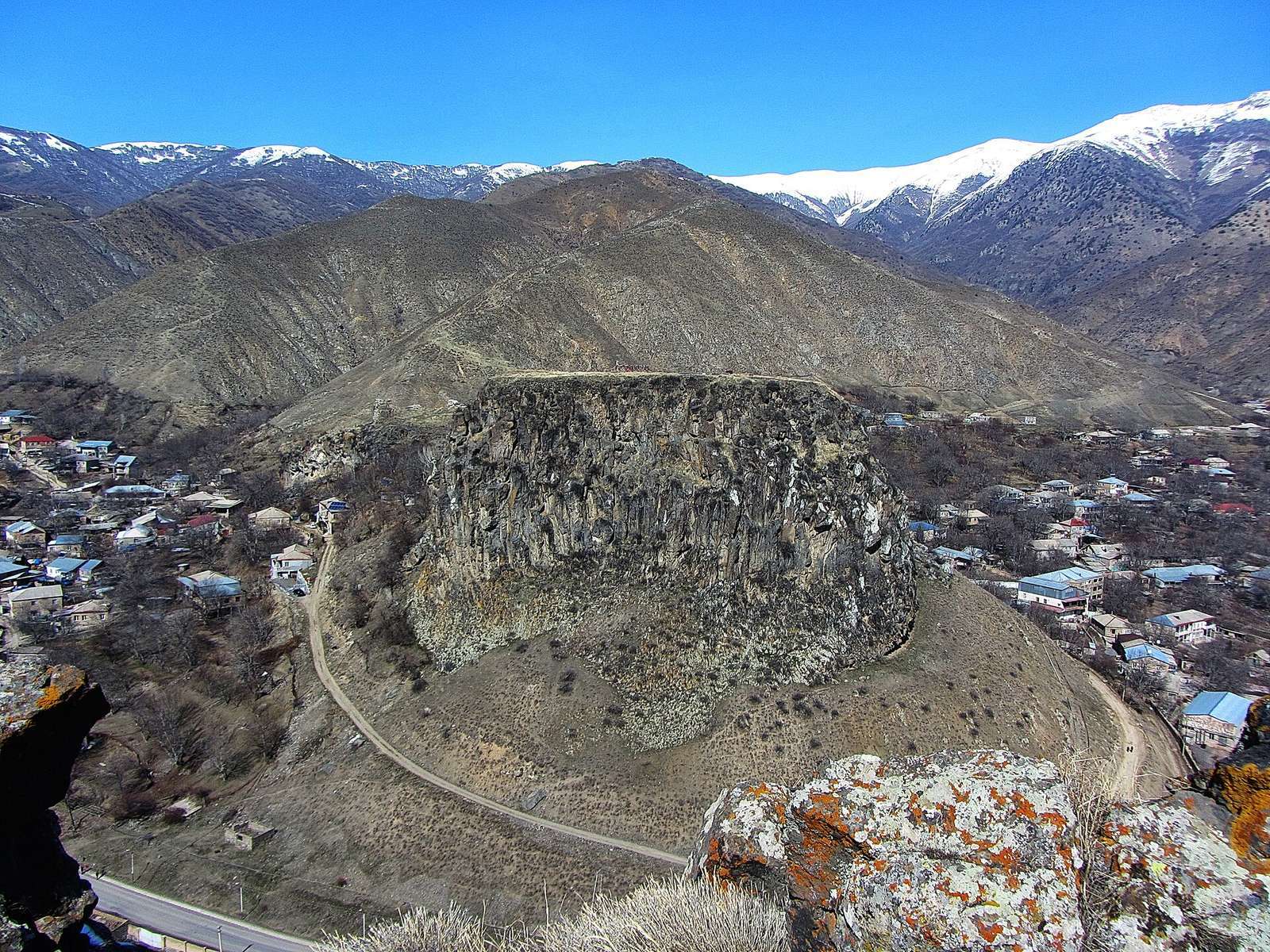
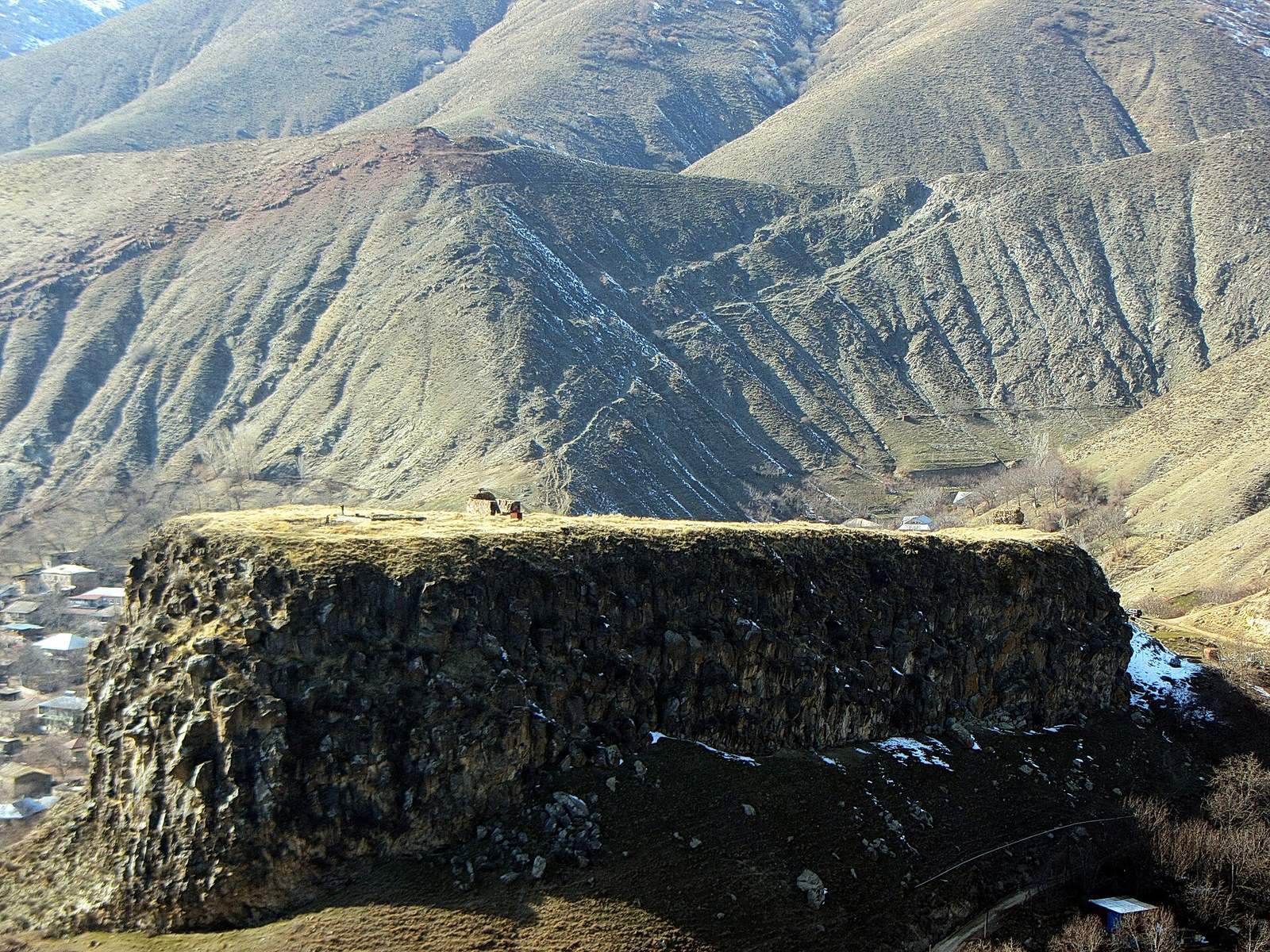
The fortress occupies the top and sides of a broad, flat-topped mesa that divides Bjni village nearly in half. At an elevation of 1,504 metres, the site lies on a high terrace in the Hrazdan River gorge, with steep cliffs around it. Its larger section lies west of the mesa and curves south; a smaller section occupies the east. A wall line separates the Upper Fortress from the Lower Fortress, while stone defenses use the cliffs and built walls to protect the site.
Fortifications
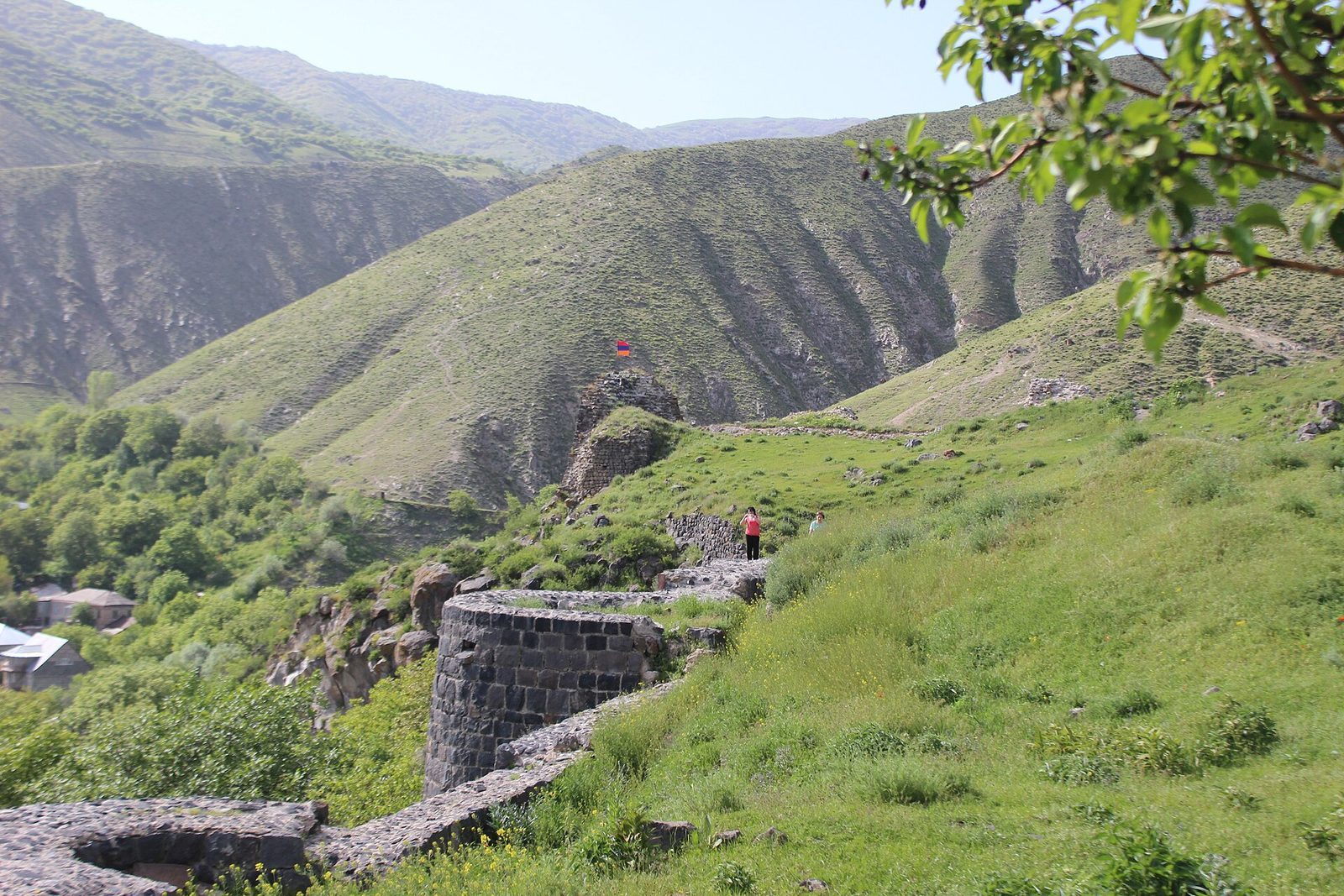
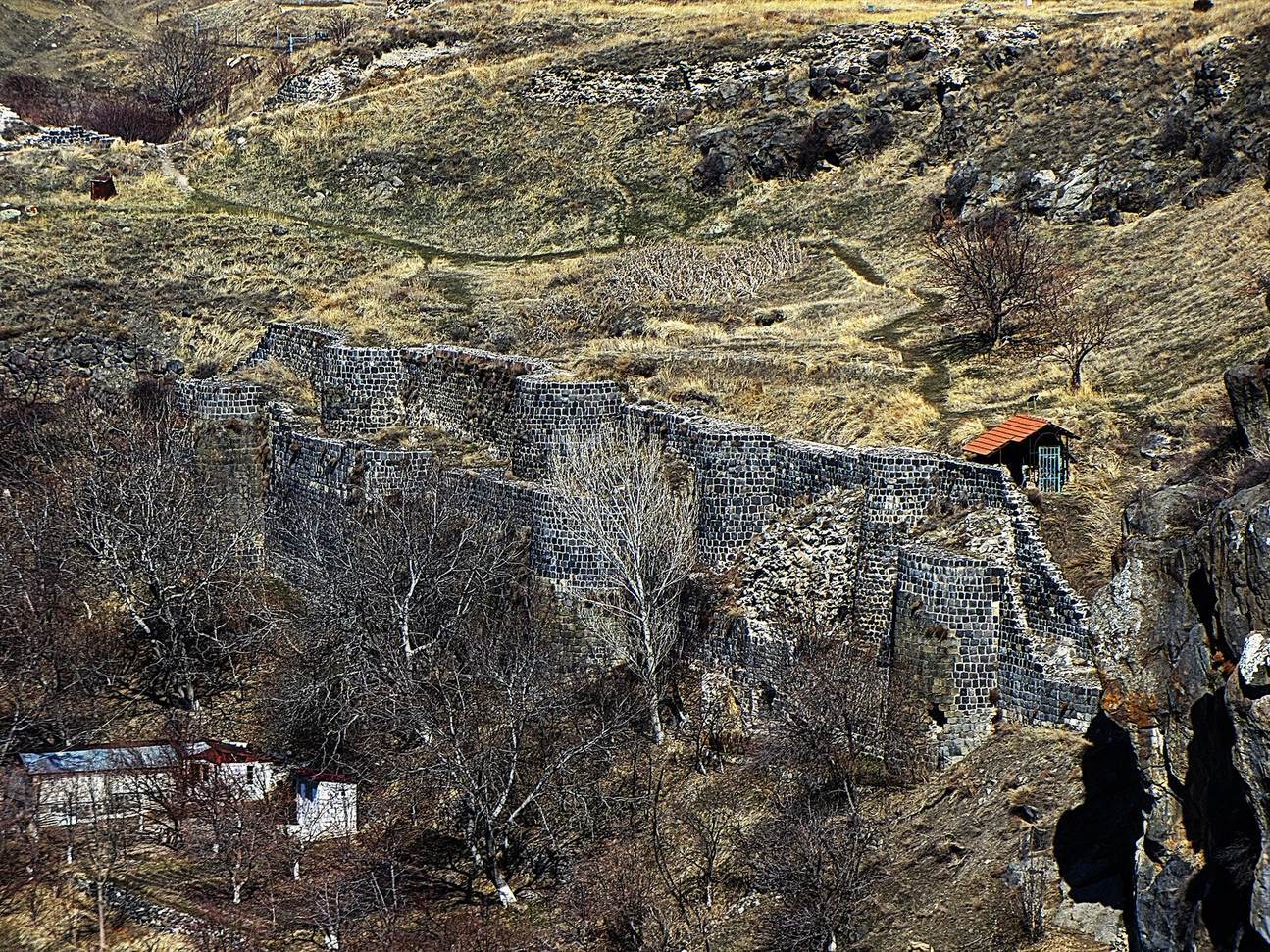
Cliffs defend the south, east, and part of the west. On the north and west, a towered retaining wall and a fortification wall provided protection. The wall line extends up to 120 metres. Exterior sections and battlements survive in relatively poor condition.
Buildings and water systems
Church of the Holy Cross
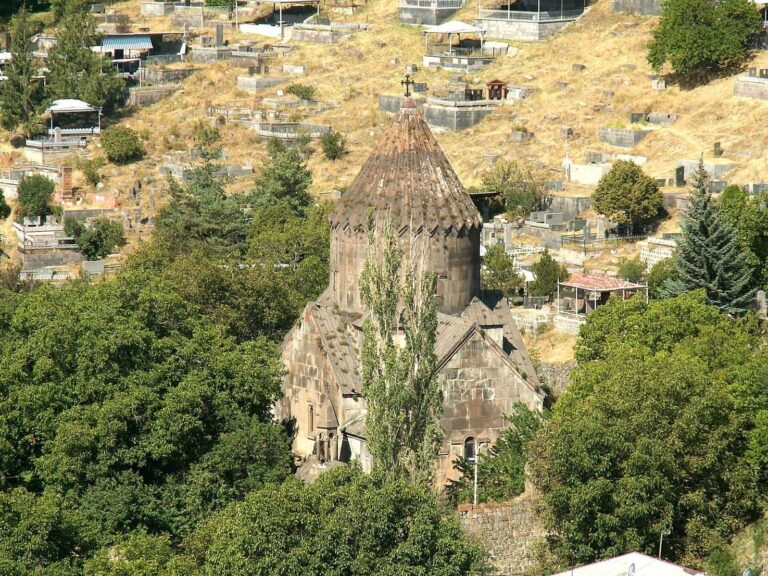
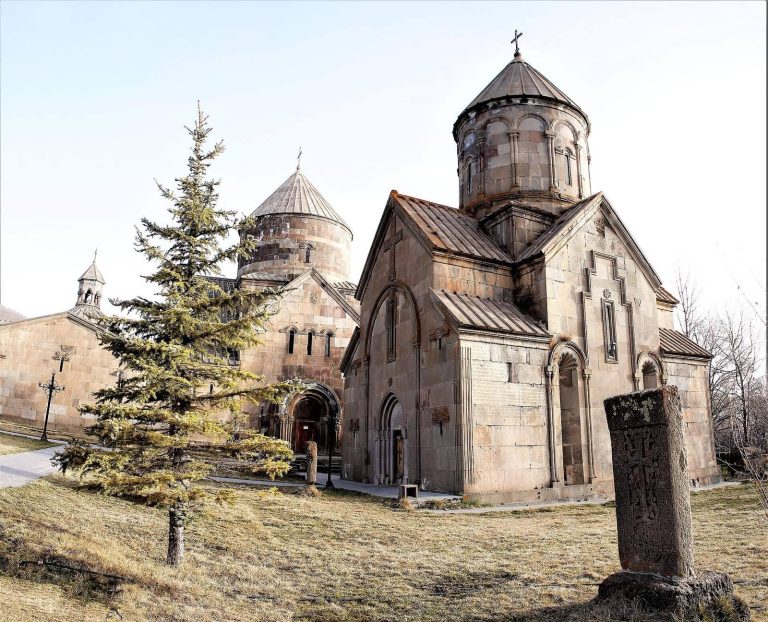
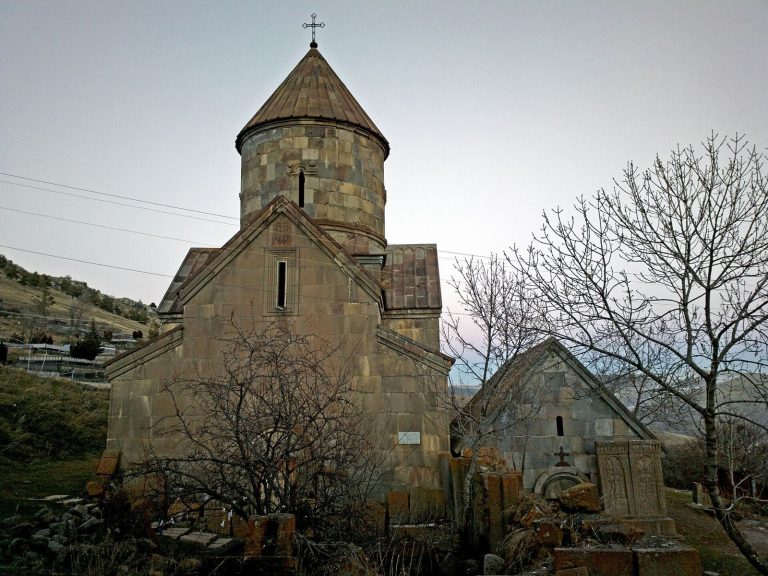
The Upper Fortress includes the Church of the Holy Cross, dated to the ninth or tenth century. Excavations revealed foundations for a central-domed church, meaning its main dome stood over the centre of its plan, as well as details of an early medieval church.
Other church and building remains
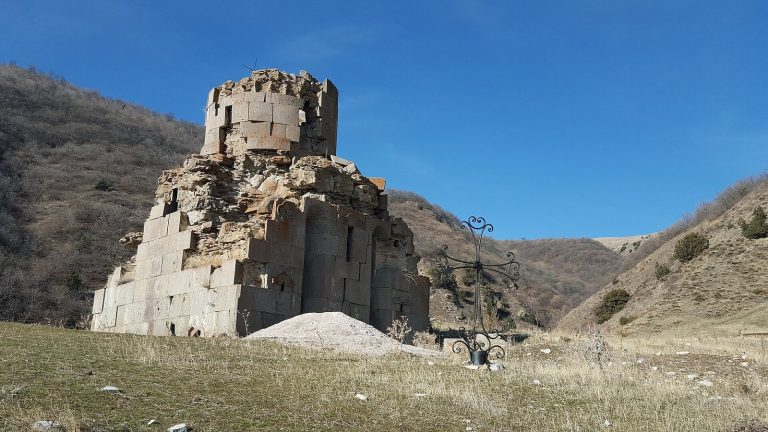
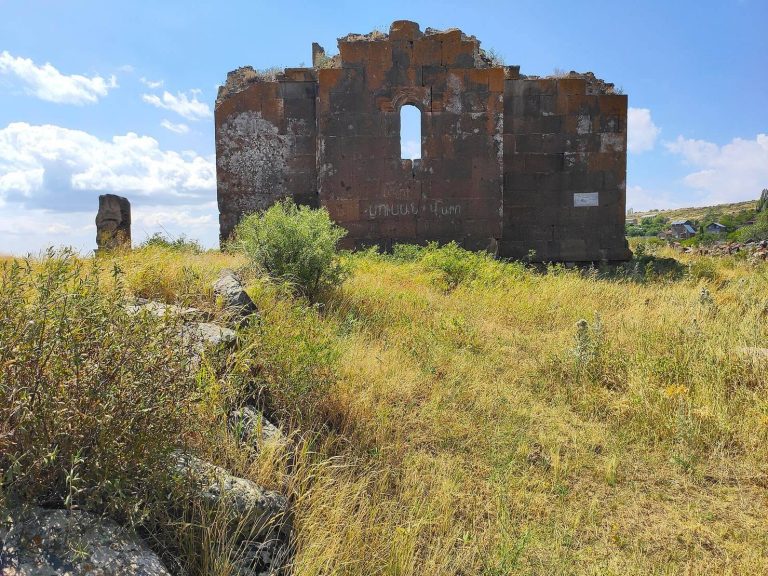
Stone foundations identified with a fifth-century church survive at the site. A medieval structure is partly standing and was undergoing reconstruction in 2009.
Palace
The palace is a two-hall building with arched ceilings. Excavations also revealed residential buildings within the fortress.
Cisterns and river passage
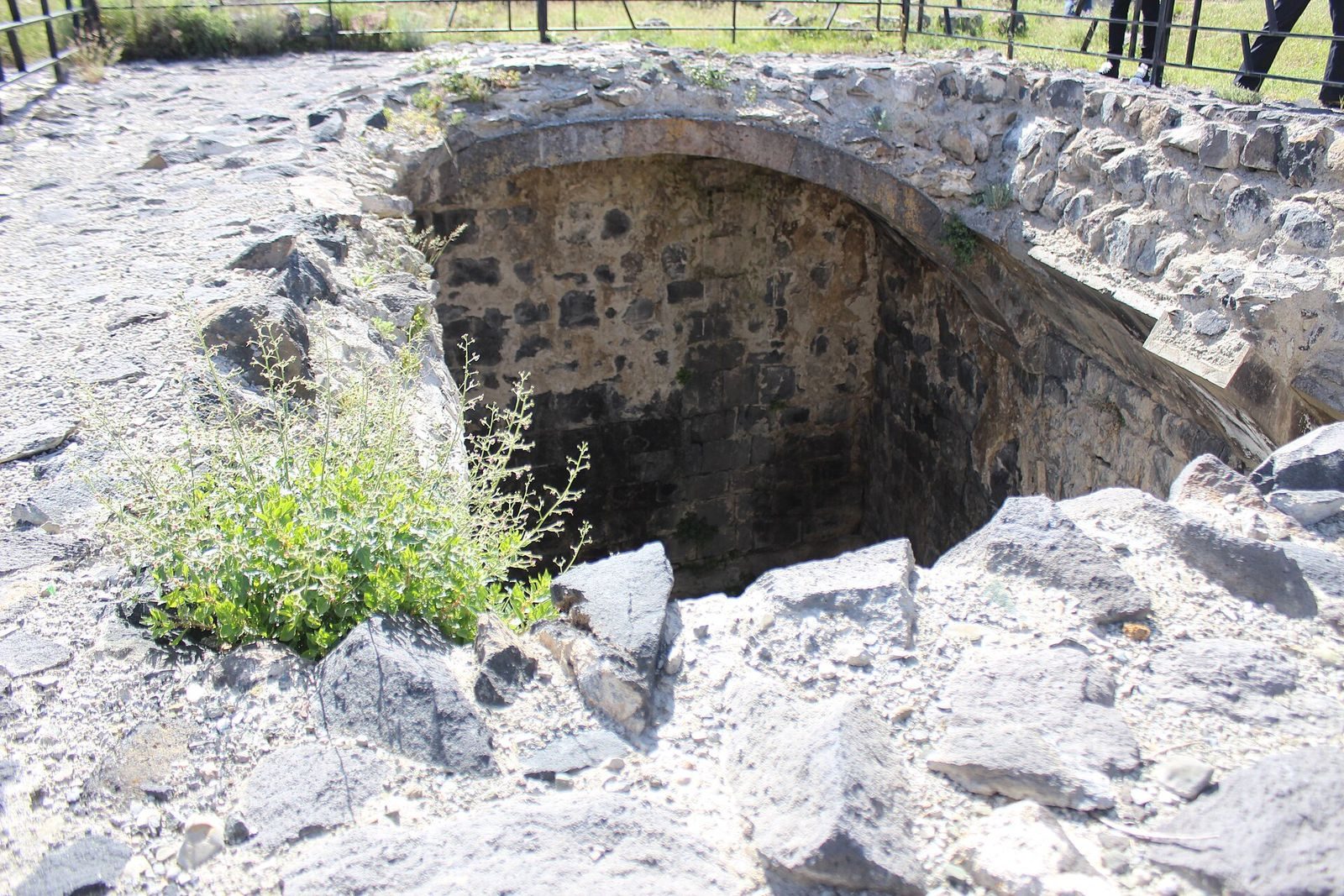
Two cisterns, or water-storage reservoirs, remain; one retains an intact arched roof. A covered passage with an arched ceiling in the Lower Fortress led toward the Hrazdan River, providing a way to reach water during a siege or descend to the river. A passage found near the walls measures about 20 metres.
Residential remains and excavated finds
Ruins and traces of numerous residential and production buildings date from the tenth to fifteenth centuries. Depressions in the ground mark places where foundations once stood. Excavations uncovered tombs from the Late Iron Age, the later phase of the period associated with widespread iron use; recovered material is held by the History Museum of Armenia. Other excavated finds include clay vessels and numerous metal objects.