Newark Priory: A Medieval Augustinian House in Surrey
Site at a Glance
- Rating
- 4.4
- Popularity
- Medium
- Country
- United Kingdom
- Primary era
- Medieval
- Eras represented
- Medieval
- Civilizations
- English
- Site type
- Religious
- Remains
- Monastery
On this page5 sections
History
Newark Priory is a medieval religious house built for Augustinian canons in Surrey, United Kingdom. Its present church dates to a rebuilding phase between 1189 and 1199 and follows the Early English Gothic style.
Foundation and religious role
A register compiled in 1312 attributes the priory’s earliest foundation to a Bishop of Winchester. The present priory belongs to a later phase: during the reign of Richard I, Rauld de Calva and his wife Beatrice de Sandes granted lands to the canons to build a church. Augustinian canons were clergy who lived in a religious community under the Rule of St Augustine.
The church was dedicated to the Virgin Mary and St Thomas Becket, who was referred to as “Thomas the Martyr.” Becket, the archbishop of Canterbury, was murdered in 1170 and venerated as a martyr. The land was originally called Aldbury; it later became known as Newark, or “New Place of St Thomas” near Guildford, and was also called Newstead at one time.
Holdings and income
The priory controlled churches at Old Woking, with chapels at Horsell and Pyrford, as well as at Send, St Martha on St Martha’s Hill, Wanborough, Weybridge, Windlesham, and Leigh. Windlesham also had a chapel. The priory’s holdings extended into Hampshire, including Shipton and a chapel at Snodington, thought to have been near Snoddington Manor.
A 1291 tax roll lists rents or tenements in ten London parishes bringing in £5 16s 3d. It also gives annual income of £1 6s in the Diocese of Rochester and £27 10s 3½d in the Diocese of Winchester.
Dissolution and later history
In 1538, during Henry VIII’s suppression of the monasteries, Newark Priory was dissolved. Richard Lipscombe, its last known prior, had been appointed shortly before the priory and its lands were surrendered. He received a pension, valuables were sent to the Tower of London, and the land was granted to the Master of the King’s Horse.
A cannon may have been fired from Church Hill against the priory’s extensive buildings. Tessa Kewen depicted the possible attack in one of her paintings. After the site fell into ruin, local people are said to have taken stones for road repairs. In the 1730s, Lord Onslow, then the owner, chose to preserve what remained.
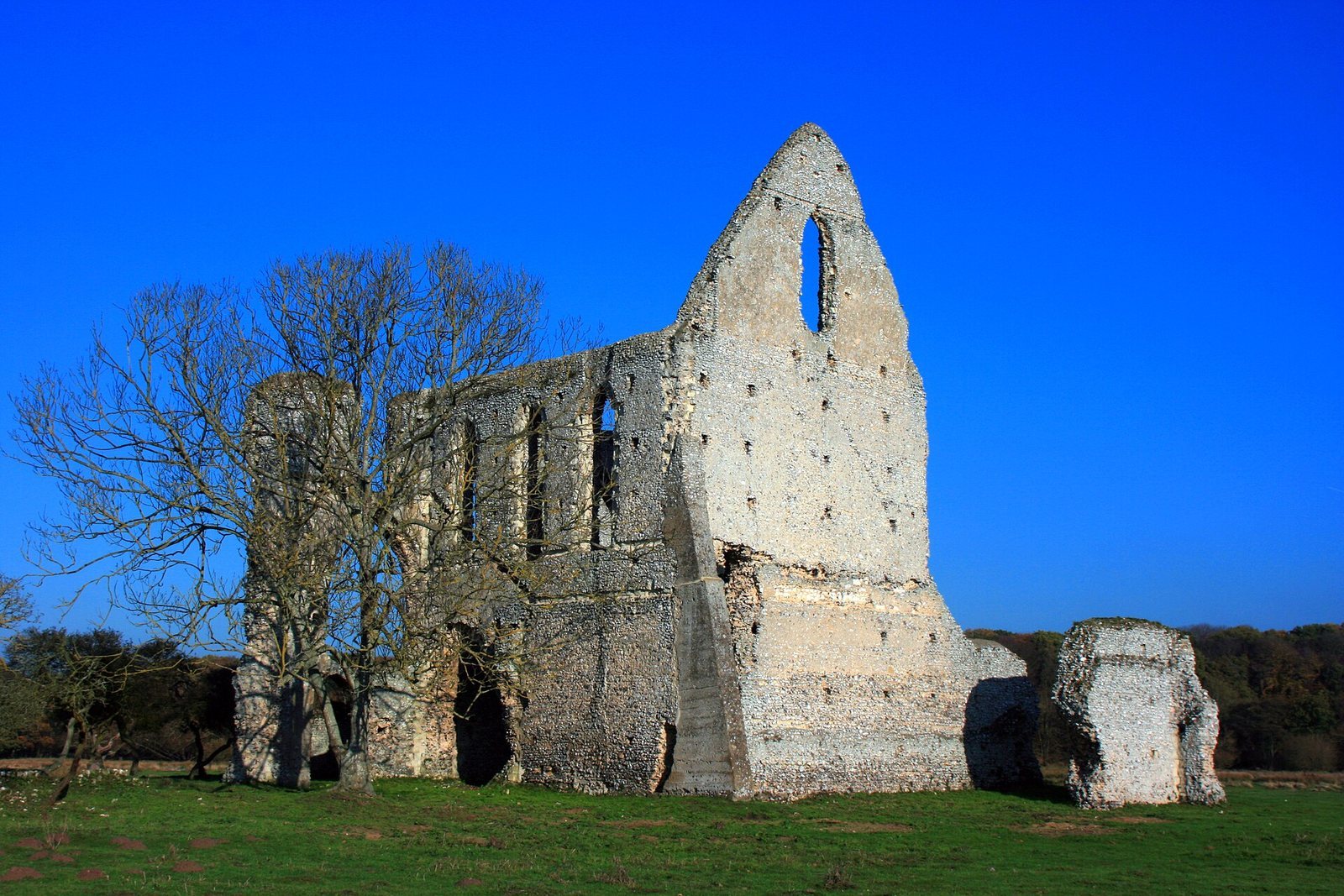
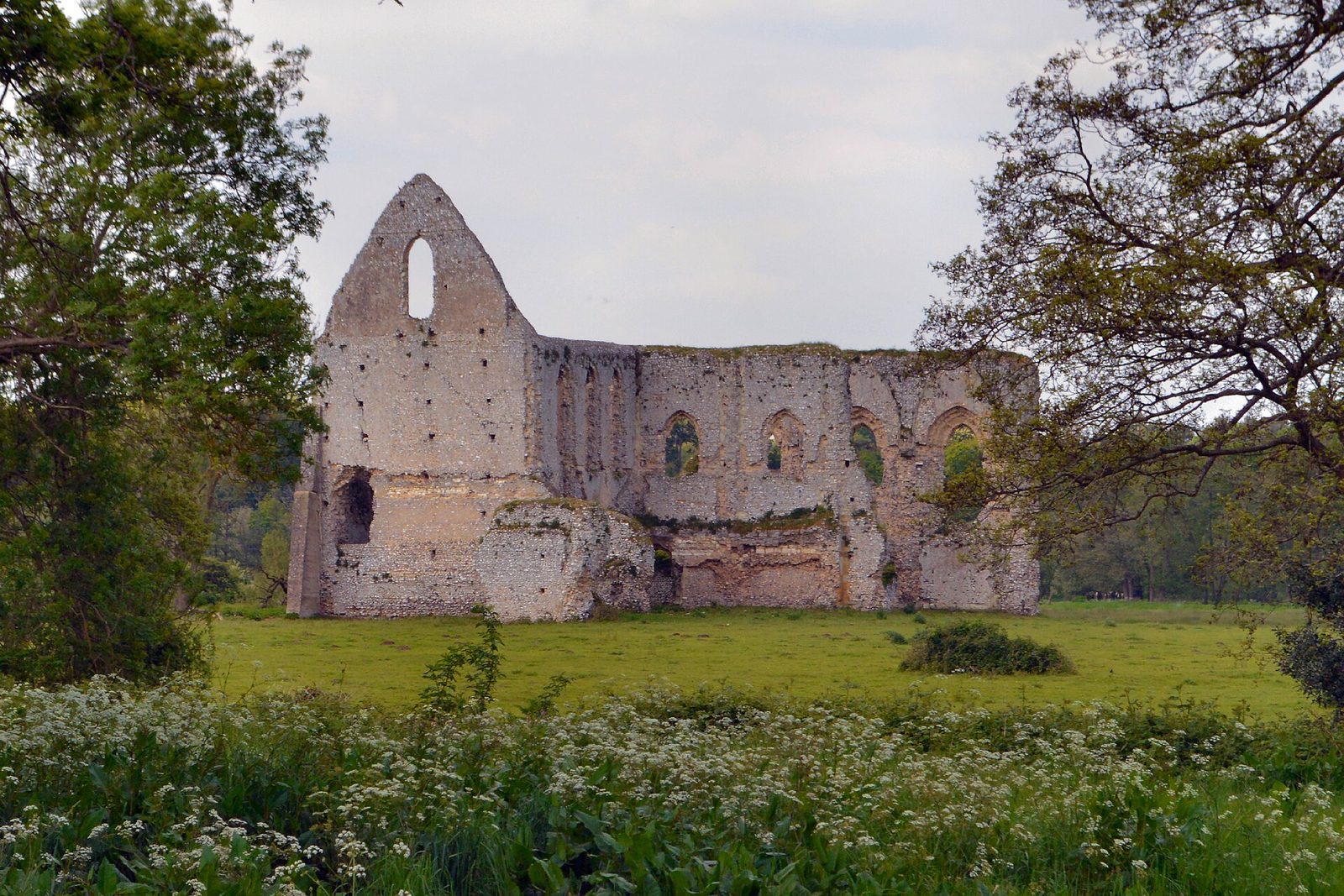
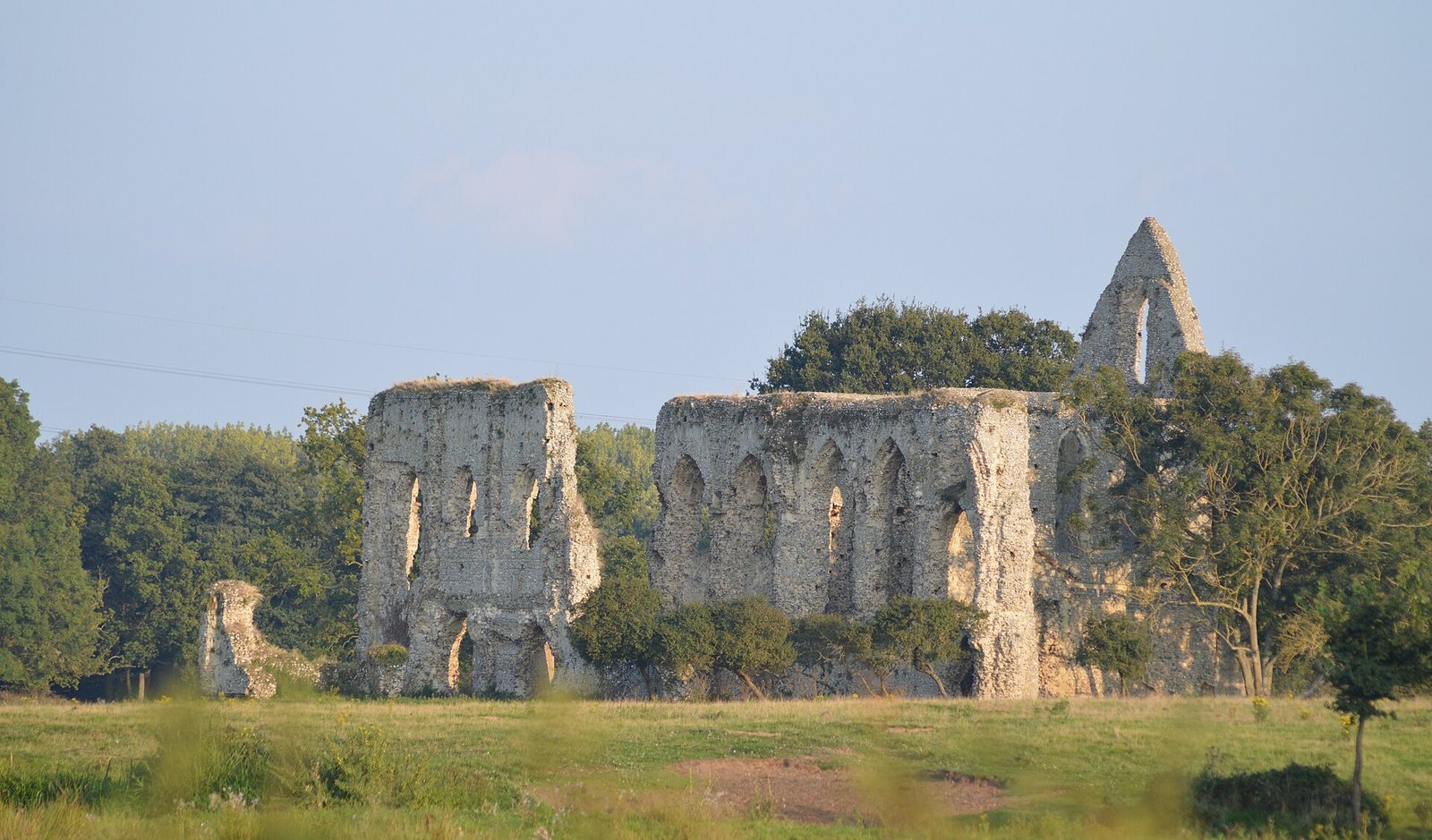
The ruins are a scheduled monument and a Grade I listed building. They were also placed on English Heritage’s Register of Buildings at Risk, established in 2007. Churches from Byfleet, West Byfleet, Pyrford, and Ripley hold an annual Easter dawn service among the ruins.
Remains
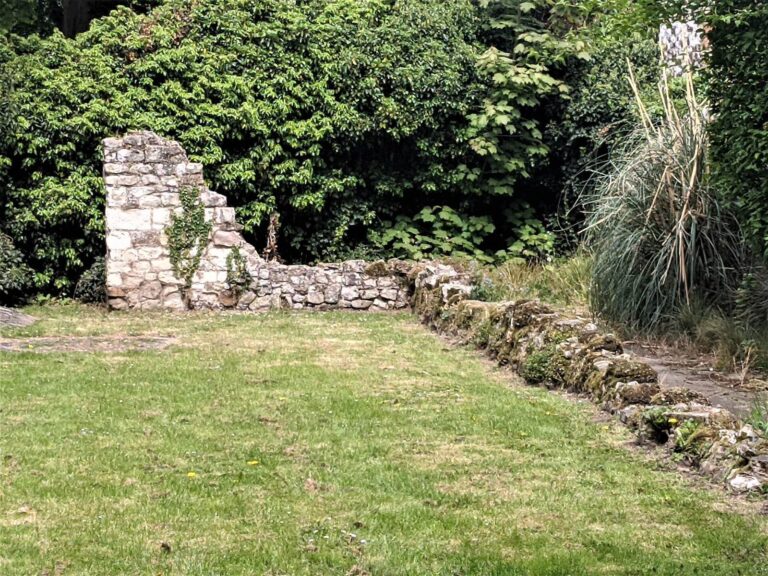
The priory’s ruined fabric occupies an island of a few acres, surrounded by the River Wey and its former water channel, the Abbey Stream. The island lies near the boundary between the parish lands of Ripley and Pyrford. Newark Lane crosses its end between the two settlements.