Llys Euryn: A Late-Medieval House in North Wales
Site at a Glance
- Popularity
- Medium
- Country
- United Kingdom
- Primary era
- Medieval
- Eras represented
- Medieval
- Civilizations
- English
- Site type
- Domestic
- Remains
- Elite Residence
On this page5 sections
History
Llys Euryn is a ruined late-medieval house on Bryn Euryn near Rhos-on-Sea in Conwy, north Wales, United Kingdom. It was one of the Dinerth-area estates owned and occupied by Ednyfed Fychan, a senior official in the medieval kingdom of Gwynedd and an ancestor of Owen Tudor and the Tudor dynasty.
Ednyfed Fychan and the estate
Ednyfed Fychan died in 1246. As seneschal, a senior officer in a ruler’s household, he served Llywelyn the Great, ruler of Gwynedd, and Llywelyn’s son Dafydd ap Llywelyn. Through his descendant Owen Tudor, Ednyfed was an ancestor of the Tudor royal family, which ruled England from 1485 to 1603.
The late-medieval house and its later owners
Llys Euryn is thought to have been burned in 1409 during Owain Glyndŵr’s revolt, a Welsh uprising against English rule, and restored or rebuilt soon afterward. The surviving house is late medieval. It may have been occupied by the Conwy family until 1629, when they sold it to Sir Peter Mutton.
Quarry use and conservation
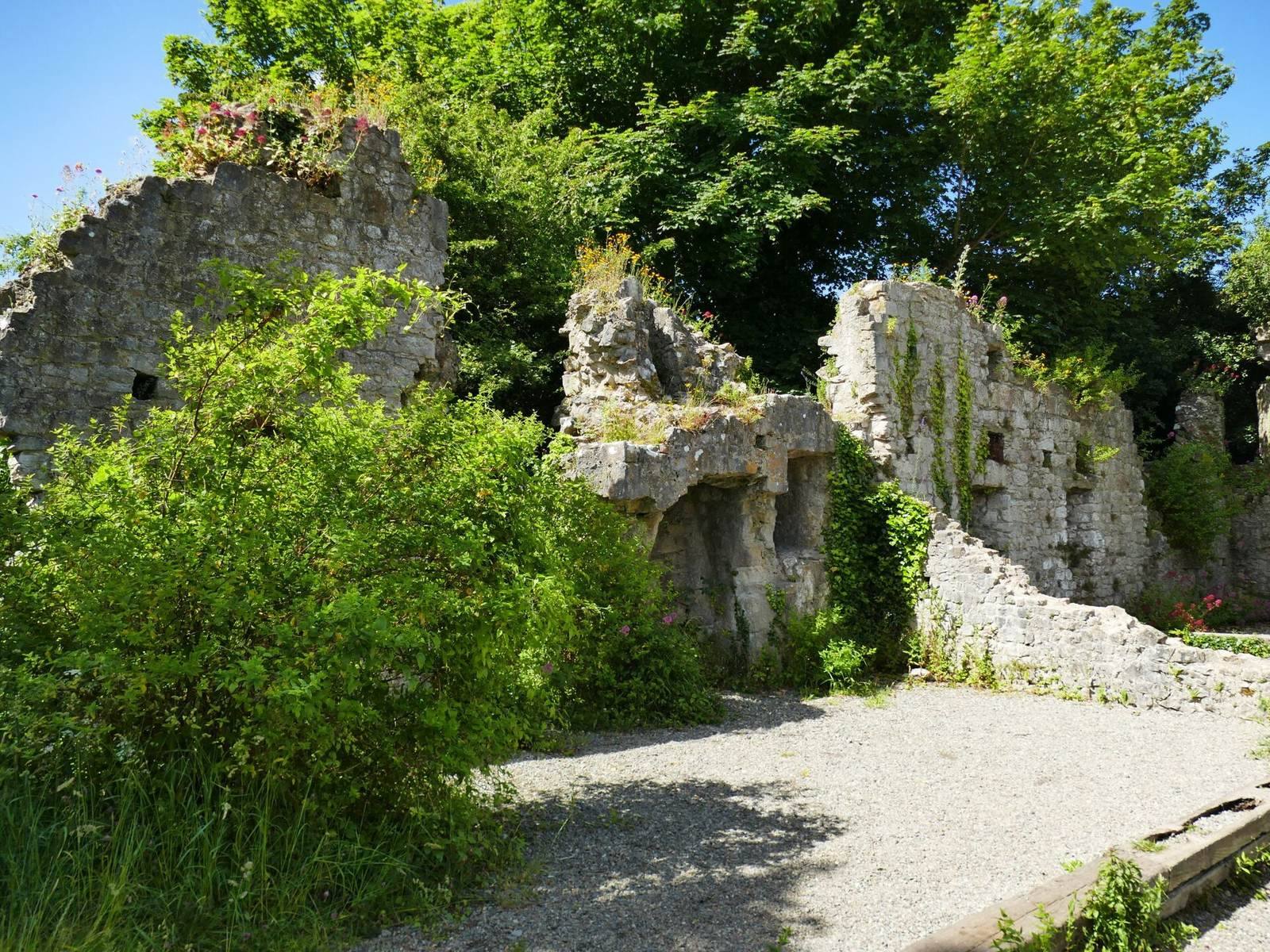
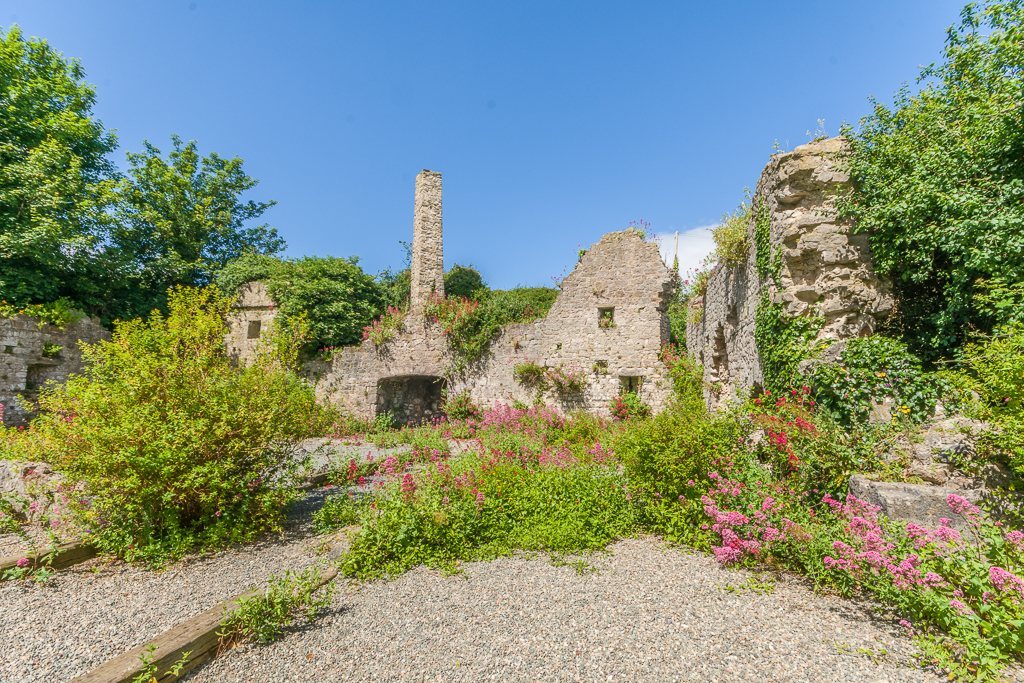
When a nearby limestone quarry was operating in the late nineteenth century, a small hut was built against one of the house’s walls, probably to store blasting materials. An amateur attempt to demolish the chimney damaged the side of a fireplace but did not bring the stack down. The overgrown ruins attracted little notice until the late 1990s. Conservation work in 1998–99 cleared much of the vegetation, exposed interior walls and a large fireplace, removed the hut and spread stone chippings to discourage regrowth.
Remains
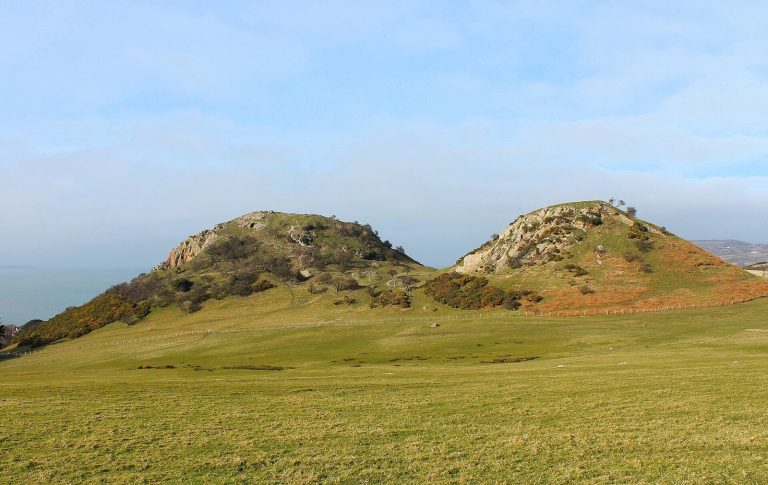
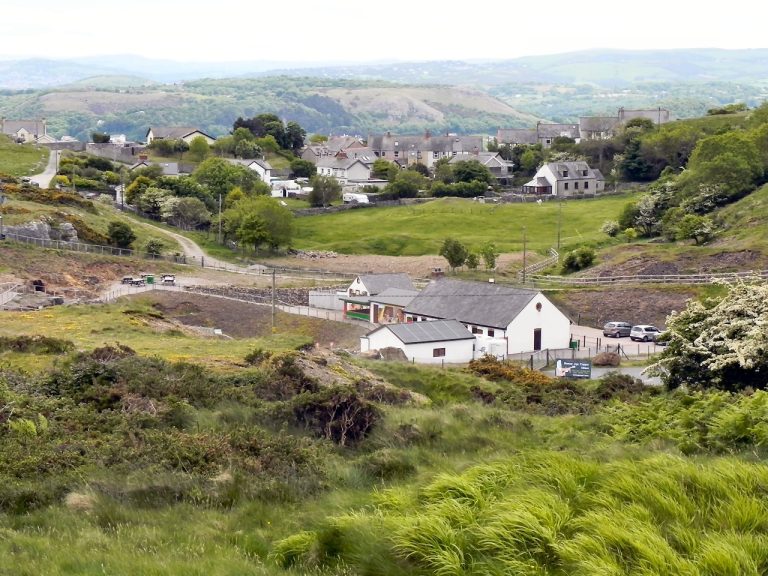
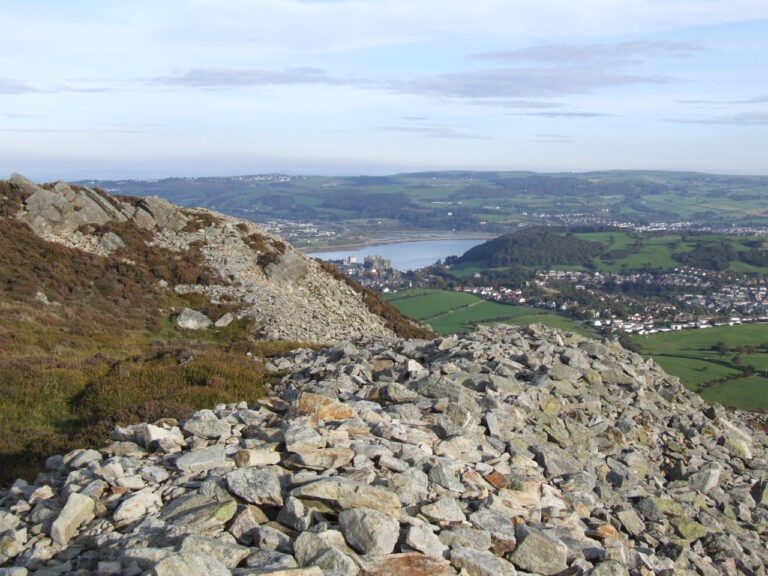
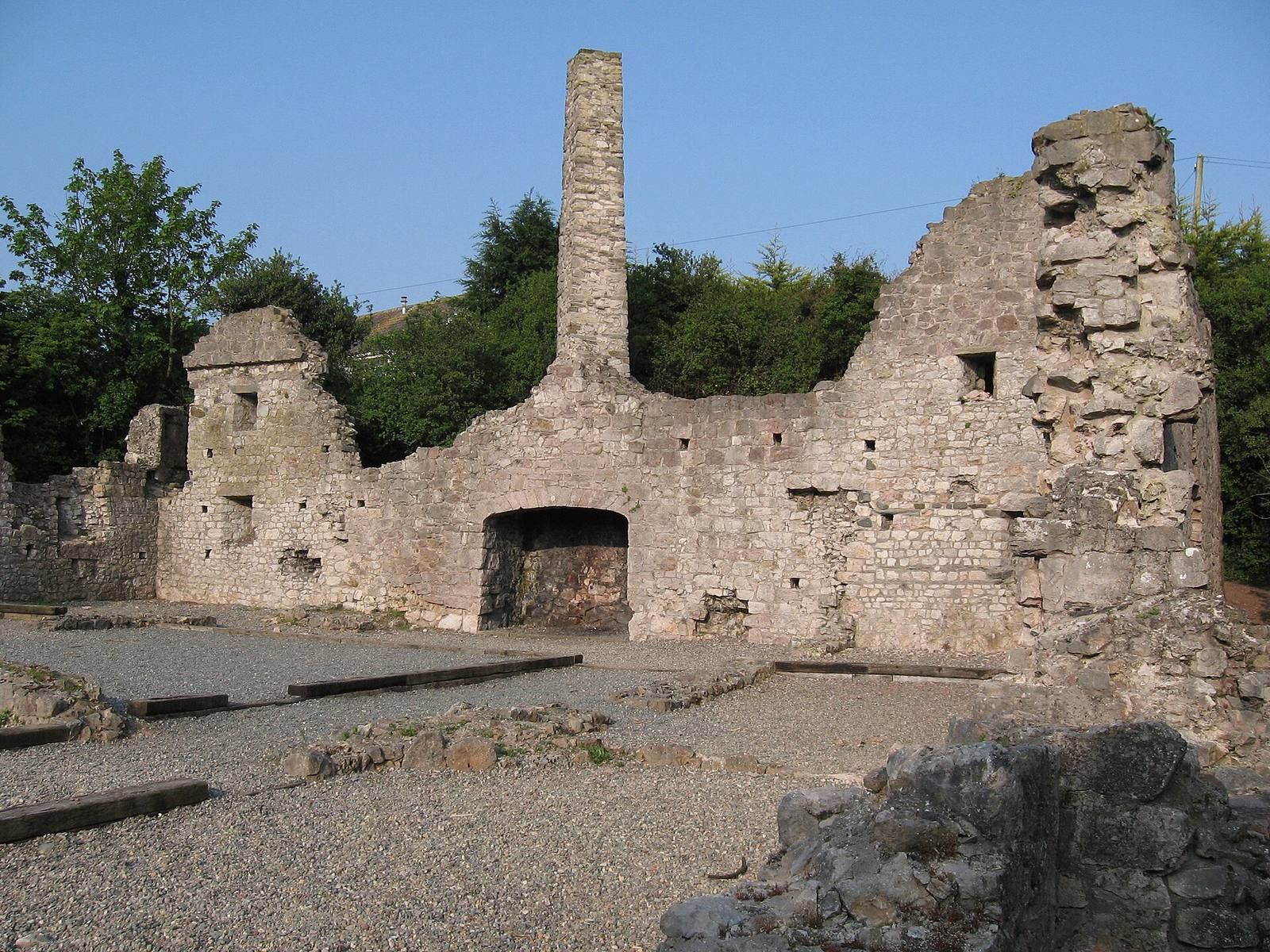
The ruins stand on a wooded shoulder of Bryn Euryn, a limestone hill on the outskirts of Rhos-on-Sea. Three sides of the building survive, together with interior walls, giving a partial view of the house’s layout. Windows remain in the standing walls.
A chimney stack rises about 50 feet above the ruins and is associated with a large fireplace. The building also retains two other fireplaces. The chimney survived an attempted demolition, which damaged the side of its fireplace; the hole in the stack was filled during the 1998–99 conservation work.