Savoysches Damenstift: A Palace and Secular Women’s Foundation in Austria
Site at a Glance
- Rating
- 4.4
- Popularity
- Low
- Country
- Austria
- Primary era
- Early Modern
- Eras represented
- Early Modern
- Civilizations
- Habsburg, Habsburg Austria, Holy Roman Empire
- Site type
- Domestic
- Remains
- Elite Residence
On this page8 sections
History
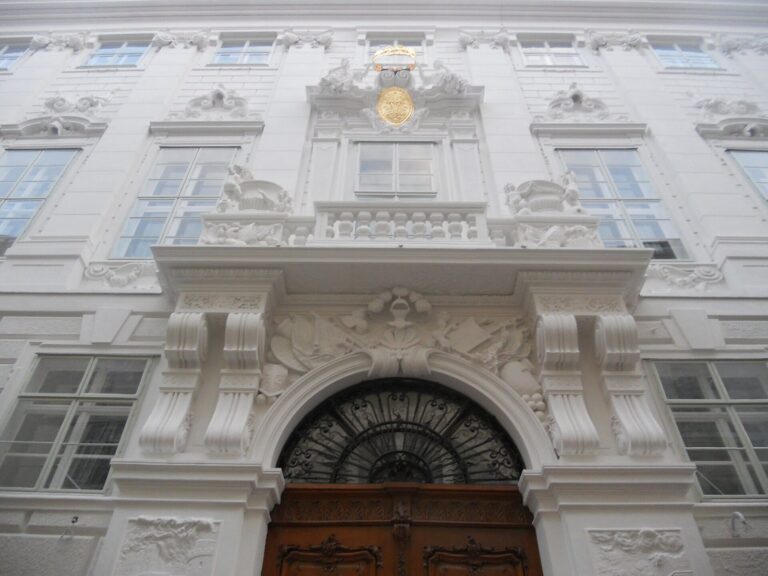
The Savoysches Damenstift is a palace in Austria, formed in 1688 by combining two older houses.
Eighteenth-century development
During the eighteenth century, the palace came into the possession of Prince Thomas Emanuel of Savoy-Carignan, a nephew of Prince Eugene of Savoy, the Habsburg military commander and statesman. From 1766, master builder Joseph Meissl remodelled the building, shaping its present appearance. In 1783, the foundation acquired the neighboring house at Johannesgasse 17, and Andreas Zach made further adaptations.
Women’s foundation and later use
Thomas Emanuel’s widow, Maria Theresia Antonia, born a Princess of Liechtenstein, designated the palace in her will as the home of a noble, secular women’s foundation. Unlike a convent, the institution did not require its members to take religious vows or live a monastic life. It was overseen by the Liechtenstein majorat, an entail that restricted inheritance to a designated family line. The arrangement continued even though noblewomen did not live in the palace. Its last regent, Countess Karoline Fünfkirchen, died on 8 July 1980.
The palace later served as a retirement residence. Austrian Social Democratic politician and government minister Hertha Firnberg died there in 1994.
Remains
Architectural features
Layout and staircases
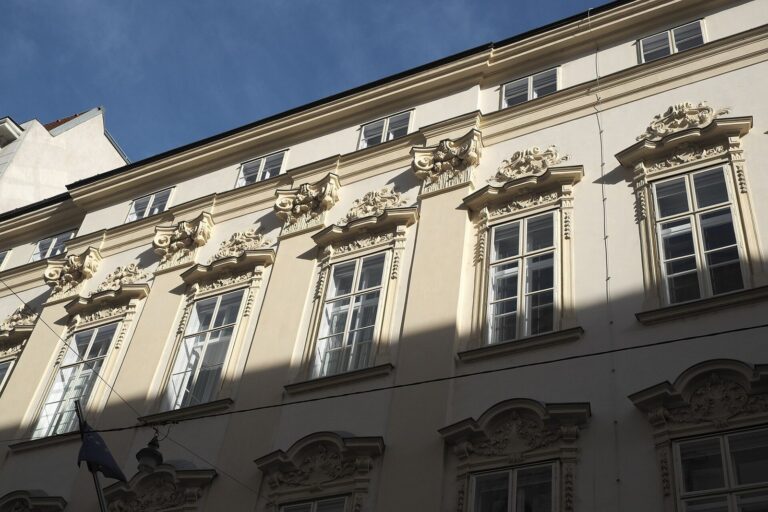
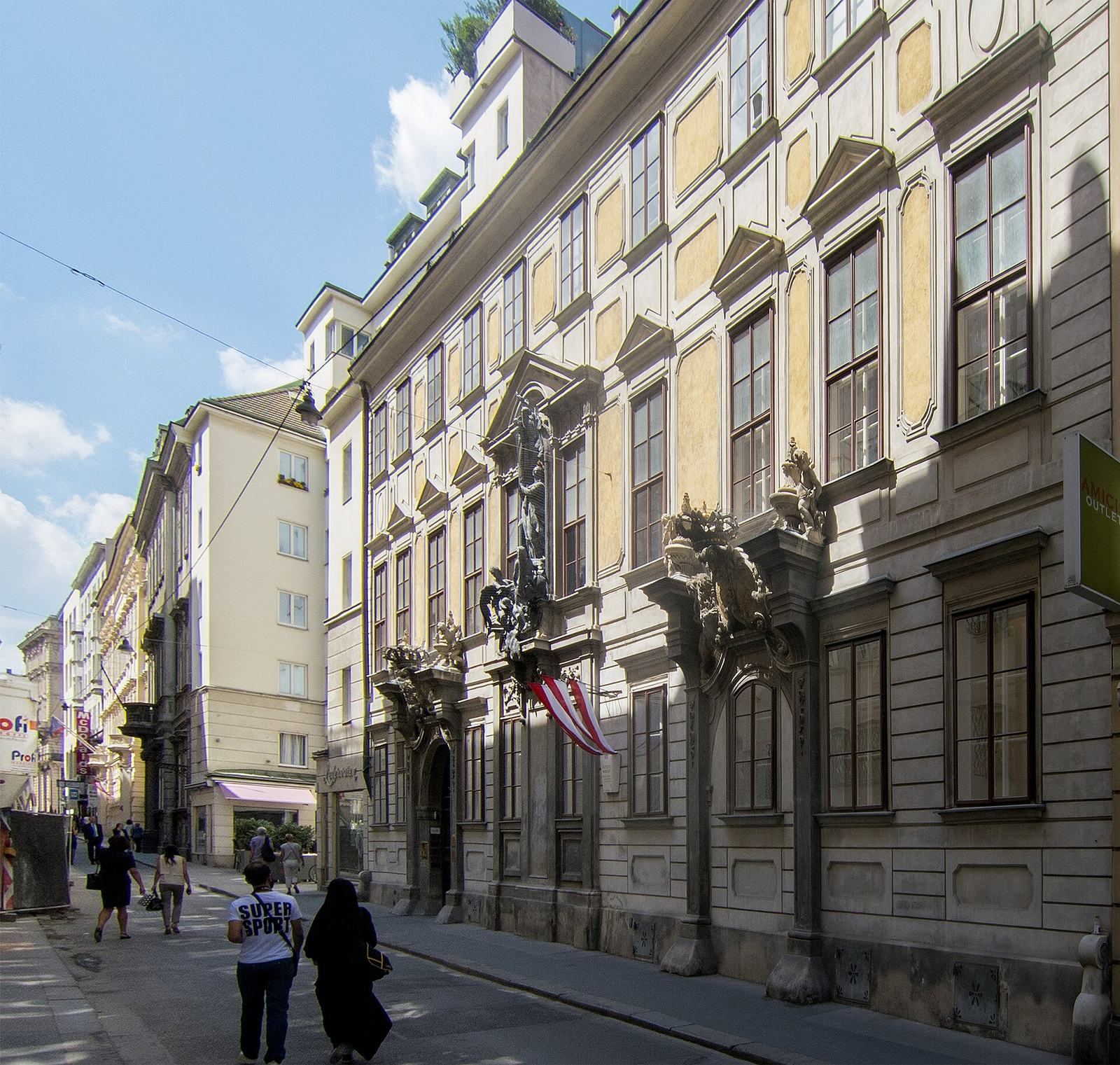
The three-storey palace stands at Johannesgasse 15–17. Its façade has ten vertical window alignments, whose differing positions retain the building’s composite plan. The main staircase in the vestibule and the branching staircase in the courtyard have steps made from Kaiserstein, a hard limestone quarried at Kaisersteinbruch.
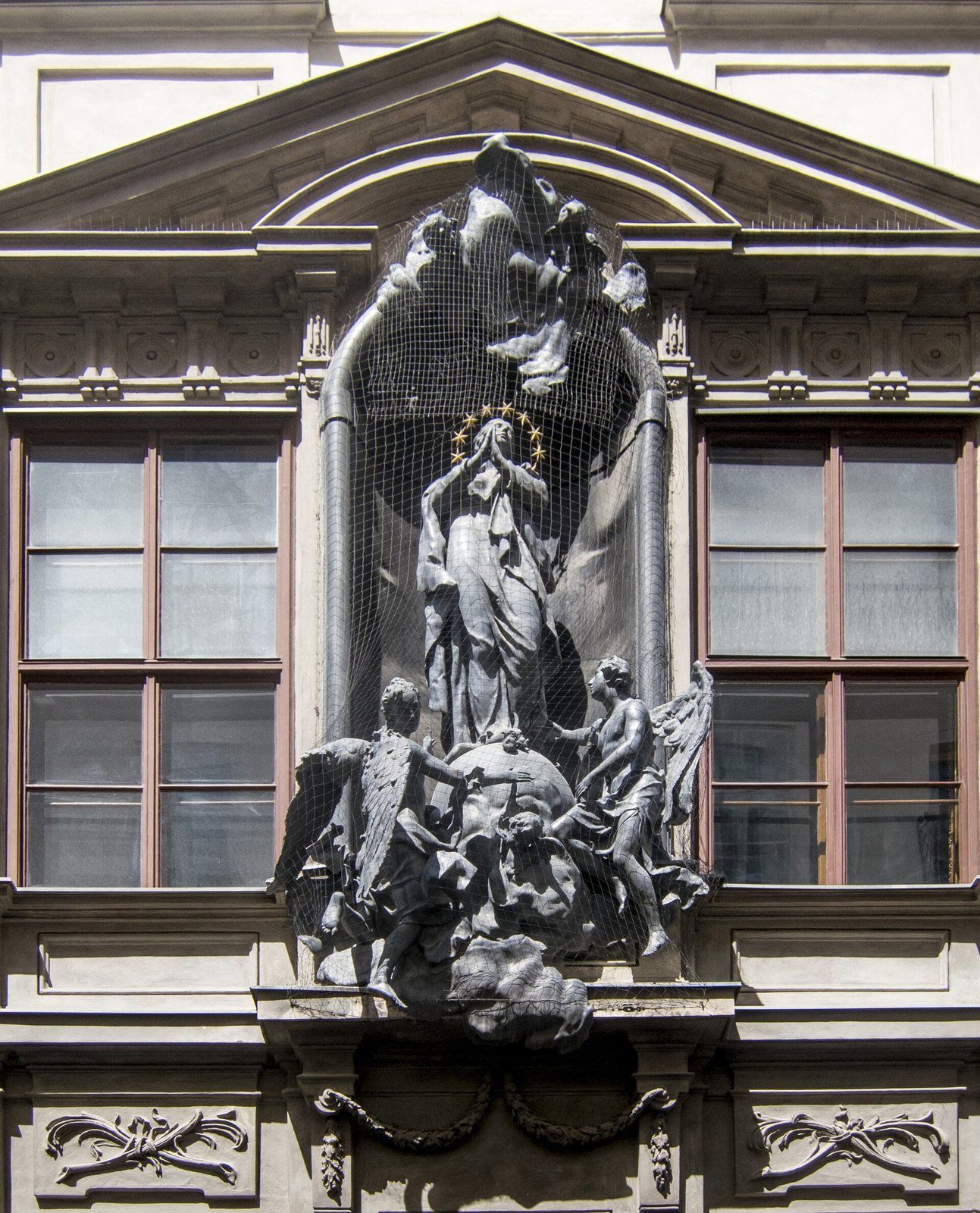
Façade statue
A large lead statue by Franz Xaver Messerschmidt marks the façade. It represents the Immaculata, the Virgin Mary conceived without original sin in Christian teaching.
Widow of Sarepta Fountain
The courtyard contains the Widow of Sarepta Fountain, an early-Classical wall fountain featuring the biblical widow associated with the prophet Elijah. Johann Martin Fischer and Franz Xaver Messerschmidt made the fountain.