Cappella Strozzi di Mantova: A Chapel in Santa Maria Novella
Site at a Glance
- Popularity
- Medium
- Country
- Italy
- Primary era
- Medieval
- Eras represented
- Medieval
- Civilizations
- Republic of Florence
- Site type
- Religious
- Remains
- Chapel
On this page13 sections
History
Foundation and the Strozzi family
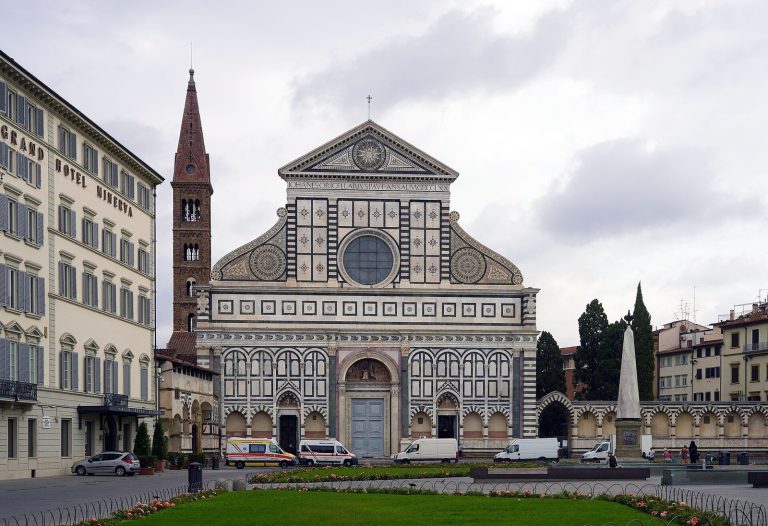
The Cappella Strozzi di Mantova is a chapel in the Basilica of Santa Maria Novella in Italy, completed around 1335 for a branch of the Strozzi family. Its construction is attributed either to Rosso di Geri Strozzi or to his son Jacopo di Rosso Strozzi. The family branch that owned it descended from Rosso di Geri.
The chapel was dedicated to Thomas Aquinas from its foundation. Aquinas was a Dominican theologian whose writings became influential in Catholic theology. The chapel remains a Catholic place of worship following the Roman rite, the liturgical tradition of the Latin Church, within the Archdiocese of Florence.
The family’s later connection with Mantua gave the chapel its name. Descendants of the branch, including Tommaso Strozzi, were exiled there in 1382. The branch acquired the designation di Mantova after Palla Strozzi was exiled in 1434.
The fresco commission
Between 1351 and 1357, Tommaso di Rossello Strozzi commissioned Nardo di Cione to paint a cycle for the chapel as penance for usury. Niccolò di Tommaso and Giovanni del Biondo also contributed to the work.
Blessed Alessio
Blessed Alessio, a Dominican, meaning a member of a Catholic religious order, and prior of the basilica, was the son of Jacopo di Rosso Strozzi. He died in 1383. His remains had been kept inside the chapel until the twentieth century. In 1942, an examination found his body incorrupt, and his remains were moved to their present burial place.
Remains
Position and layout
The raised chapel occupies the head of the basilica’s left transept. It is positioned symmetrically in relation to the Rucellai Chapel, but is off-center from the end of the transept because the bell tower stands behind the left part of its end wall.
Painted decoration
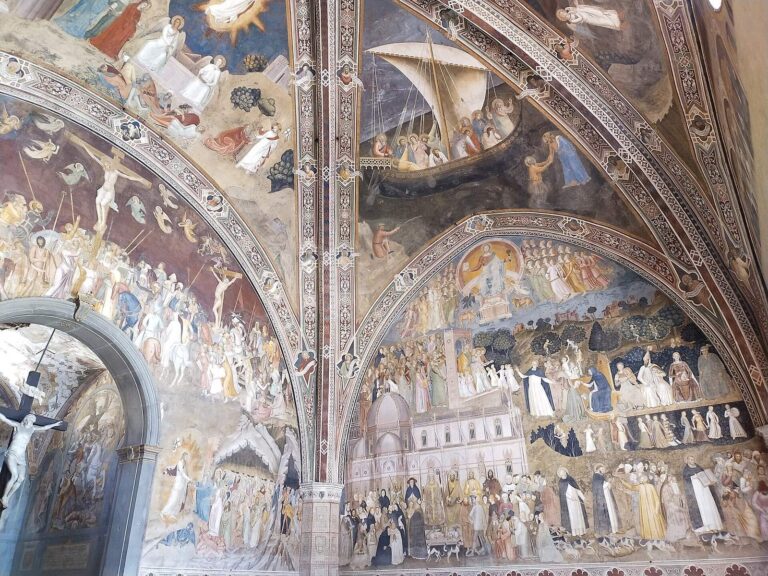
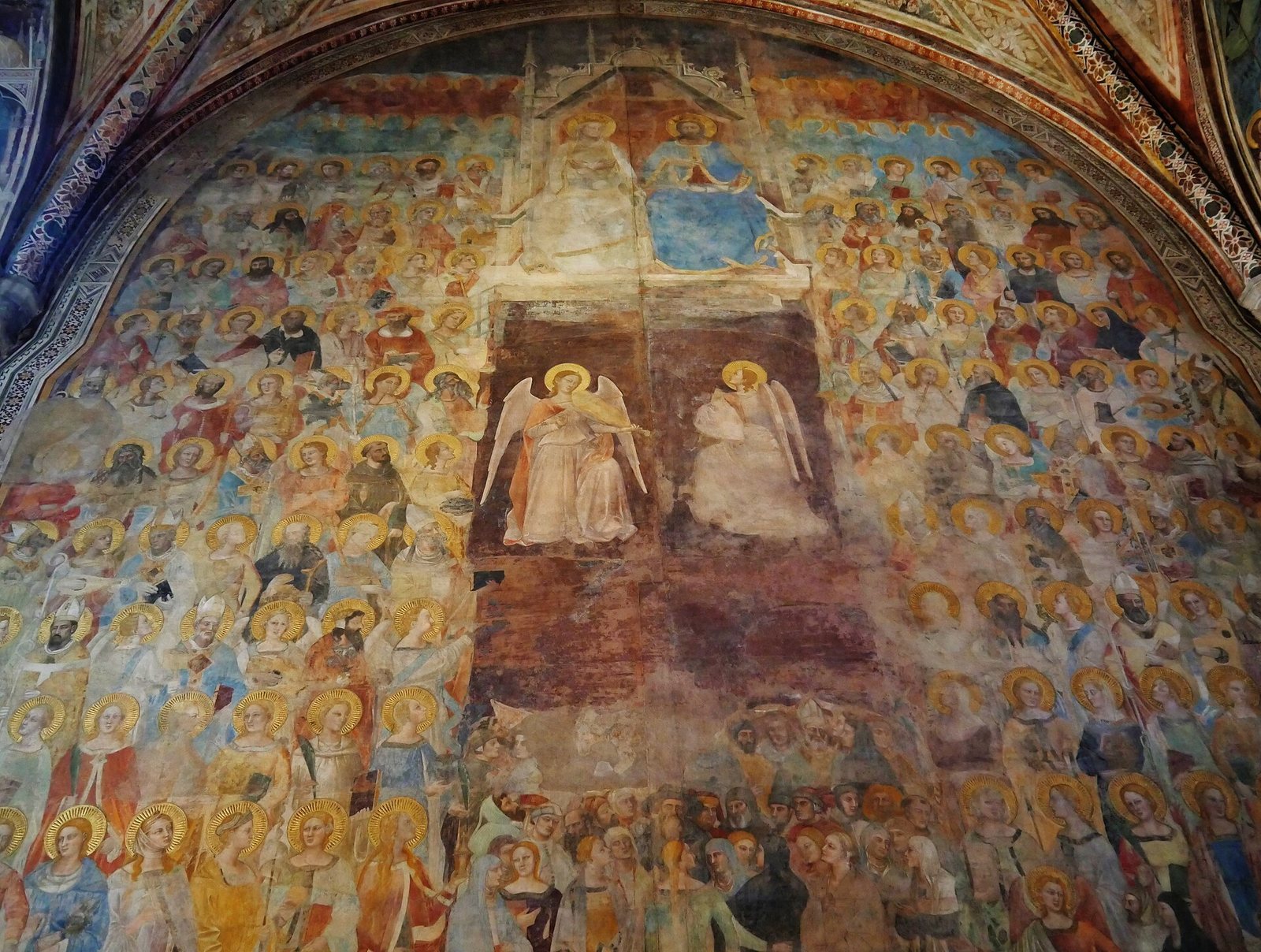
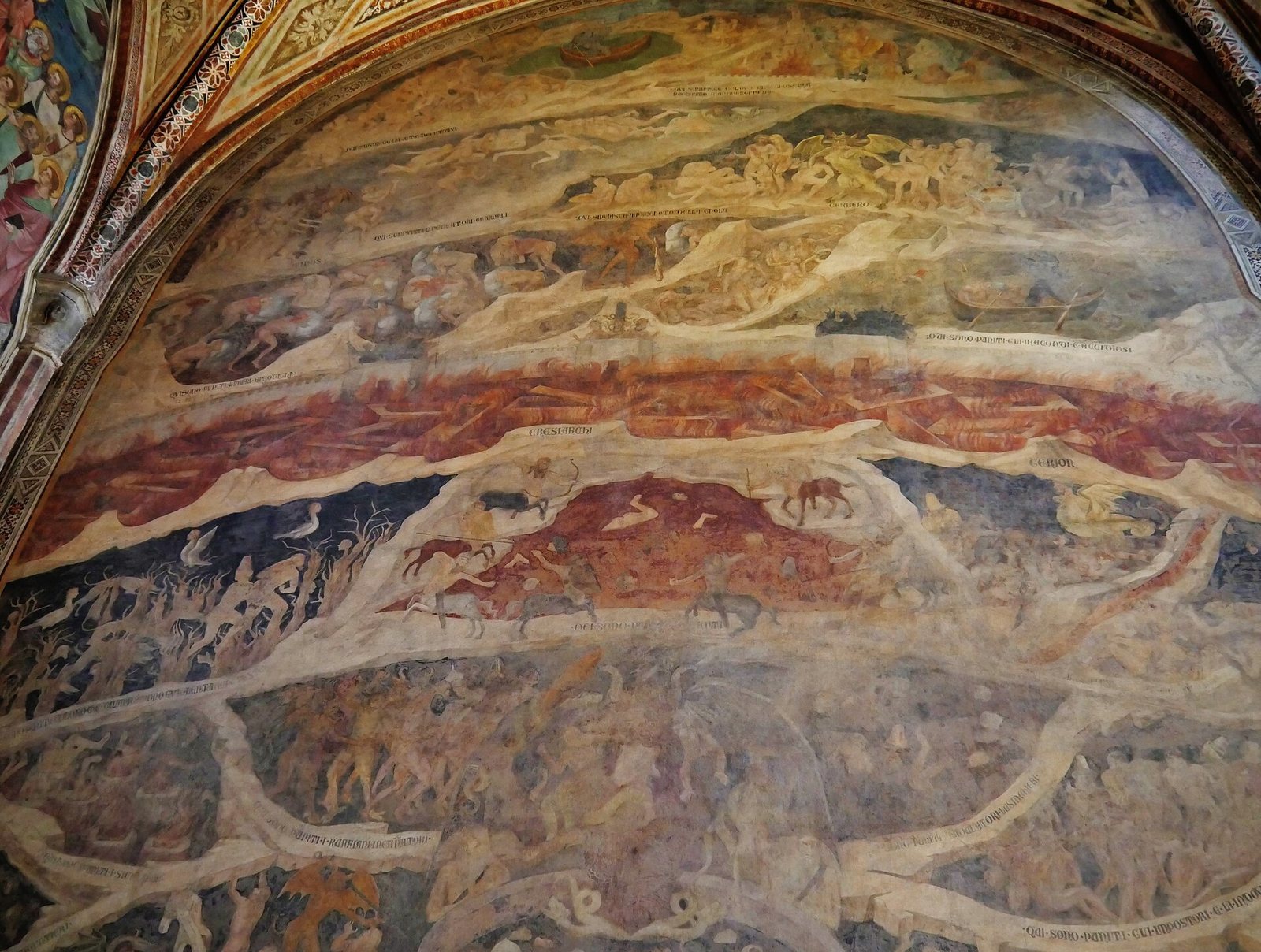
The fresco cycle presents Paradise, the Last Judgment, Hell, and Purgatory in an arrangement based on Dante Alighieri’s poem the Divine Comedy.
Paradise and the Last Judgment
On the left wall, Paradise unfolds in two sections, with saints arranged in successive horizontal rows. Their distinct faces appear in a flattened composition of many colors, while recurring poses give the scenes a strong visual rhythm. The Last Judgment covers the back wall and includes a portrait of Dante.
Hell
Hell occupies the right wall, where scenes of the damned are rendered with vivid, violent detail. During restoration, the fresco was detached as a single piece measuring 110 square metres and repositioned.
Stained-glass windows
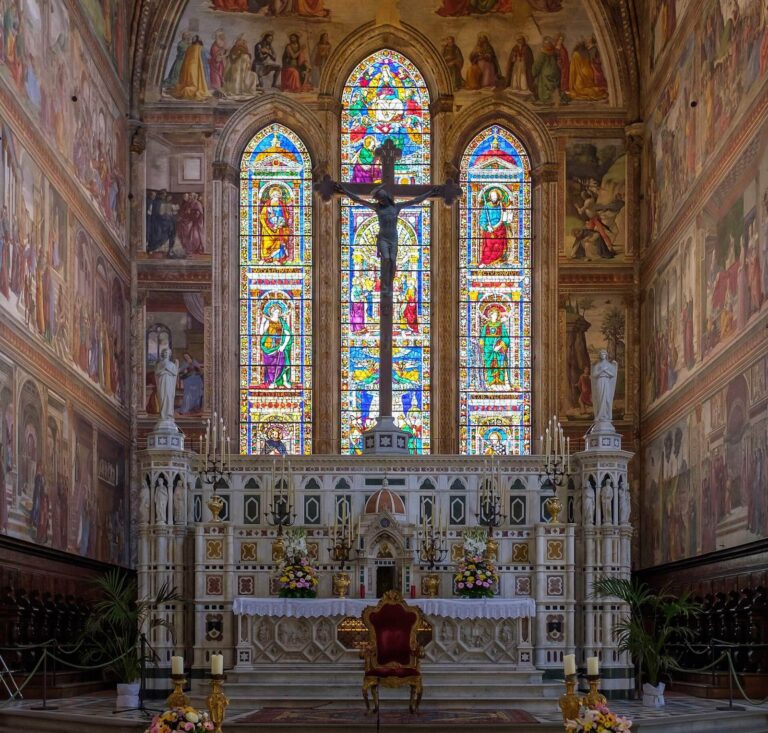
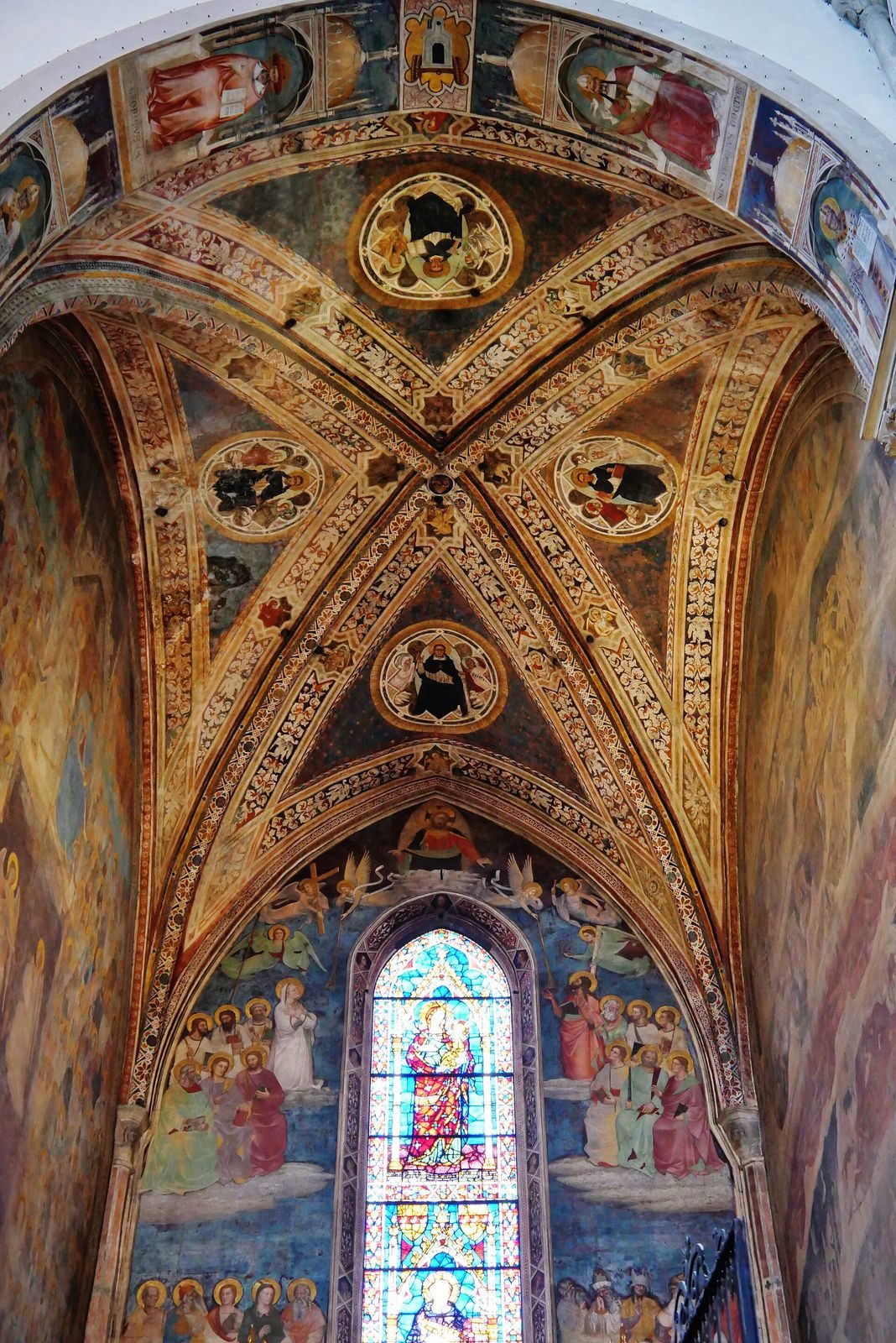
Designed by Nardo di Cione, the windows depict the Virgin and Child and Thomas Aquinas. The heads in the windows are modern restorations.
Entrance arch and vault
The inner face of the entrance arch bears images of four Doctors of the Church, saints recognized by the Catholic Church as authoritative teachers: Jerome and Augustine on the left, and Gregory and Ambrose on the right. Medallions in the cross vault, a ceiling formed by two intersecting barrel vaults, contain images of Thomas Aquinas and the Virtues attributed to Giovanni del Biondo.
Altarpiece and exterior clock
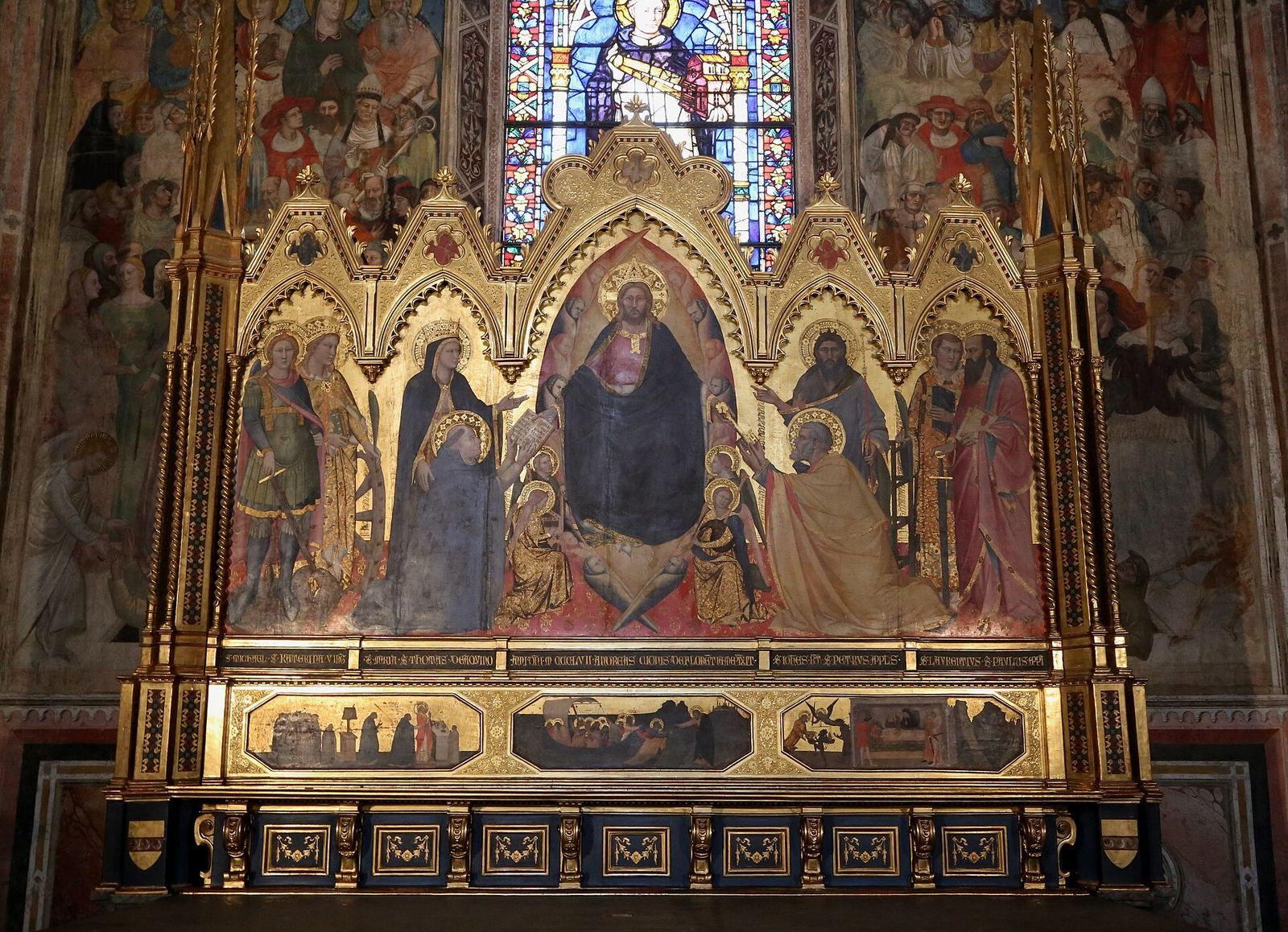
The altar holds a five-panel polyptych, or multi-panel altarpiece, signed and dated by Andrea Orcagna in 1357. Measuring 296 by 160 centimetres, it has a predella, the lower section of an altarpiece, with three painted scenes. Christ appears in glory within an angelic mandorla, an almond-shaped frame, giving the keys to Saint Peter and a book to Thomas Aquinas. The Virgin, John the Baptist, and other saints also appear. On the left are Saint George with the dragon and Saint Catherine of Alexandria with the toothed wheel associated with her martyrdom; on the right are Saint Paul with a sword and Saint Lawrence with a gridiron. The work reflects a broader move in the later fourteenth century toward more doctrinal, archaic, and static imagery, unlike the emphasis on realism and narrative associated with Giotto and his school about half a century earlier. A frescoed clock on the chapel’s exterior wall carries a couplet by the poet Agnolo Poliziano.
Burial chapel beneath the stairs
An old funerary chapel lies beneath the access stairs. It contains burials of members of the Mantuan branch of the Strozzi family and of Blessed Alessio, whose remains are held in a crystal funerary urn. A fresco from the second half of the fourteenth century depicts the Deposition and saints. Two carved prophets by an unidentified Florentine sculptor, made around 1335–1340, decorate the arch.