Spanish Chapel in Florence: A Dominican Convent Chapel
Site at a Glance
- Popularity
- High
- Country
- Italy
- Primary era
- Medieval
- Eras represented
- Medieval, Early Modern
- Civilizations
- Duchy of Florence, Grand Duchy of Tuscany, Holy Roman Empire, Republic of Florence
- Site type
- Religious
- Remains
- Chapel
On this page17 sections
History
Construction and Dominican use
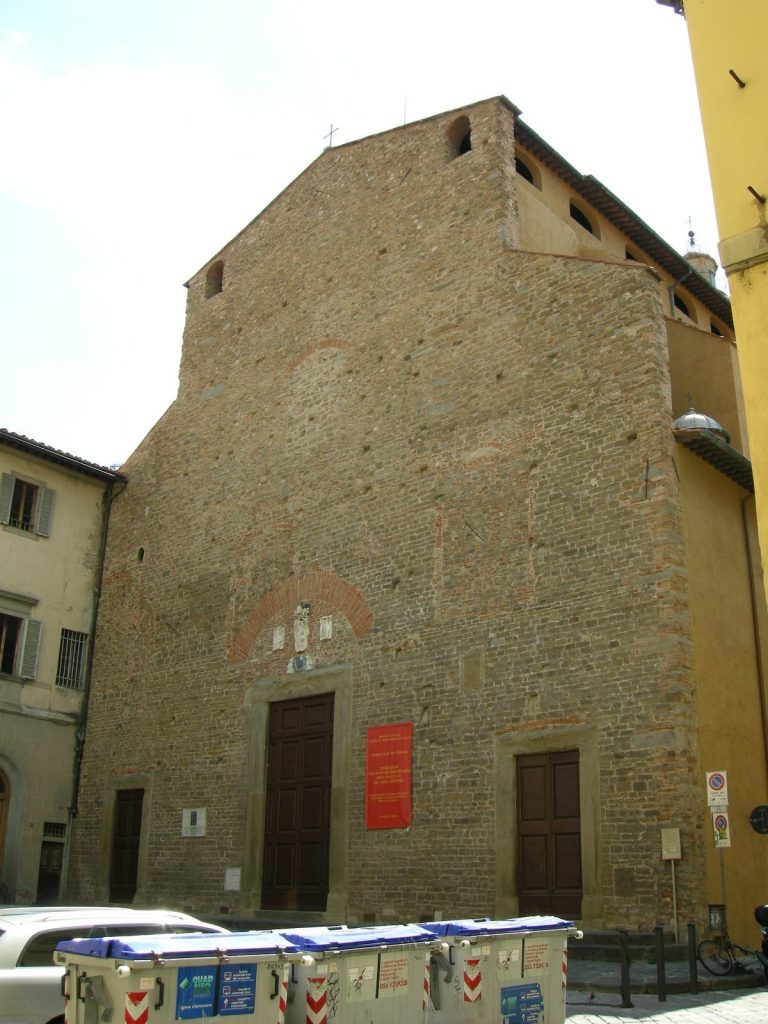
The Spanish Chapel is a 14th-century chapel within the convent of Santa Maria Novella in Florence, Italy. Friar Jacopo Talenti carried out its construction from 1343 to about 1355, during the final phase of work on the convent. Buonamico “Mico” Guidalotti funded the building through a bequest in his will, intending it as his burial chapel and dedicating it to Thomas Aquinas, a 13th-century Dominican theologian and philosopher.
The Dominicans, also known as the Order of Preachers, combined communal religious life with preaching and teaching. Before it became a chapel, the room served as the convent’s chapter house, where the community met and, in this case, discussed doctrine.
The fresco commission
Guidalotti also arranged for the chapel to receive painted decoration. Andrea di Bonaiuto and other painters produced the surviving fresco cycle between 1365 and 1367 under Prior Zanobi Guasconi. Its subject plan had been set by Guasconi’s predecessor, Friar Jacopo Passavanti. Painters from Florence or Siena may have started work earlier, but their paintings could have been covered by the completed cycle.
The images address Christ’s Passion, death, and Resurrection, as well as the Dominican order’s mission to teach and defend belief in divine sacrifice. They also include episodes from the life of Peter of Verona, a Dominican preacher and martyr.
Spanish use and later restoration
After Eleanor of Toledo came to Florence with her entourage, Spanish residents gathered at the chapel. Eleanor had married Cosimo I de’ Medici in 1539. In 1566 Cosimo granted the Spanish community use of the room for worship, and the chapel acquired its present name. The change of use brought a gallery for worshippers that cost much of the entrance-wall decoration. The altar area received paintings and an altarpiece in 1592.
In 1735–1736 Agostino Veracini repainted broad areas of the frescoes while trying to retain their 14th-century character. A major restoration took place in 1960–1965, but the Florence flood of 1966 badly damaged the paintings and led to further work. The chapel is now part of the Santa Maria Novella museum complex.
Remains
Layout and furnishings
Main chamber
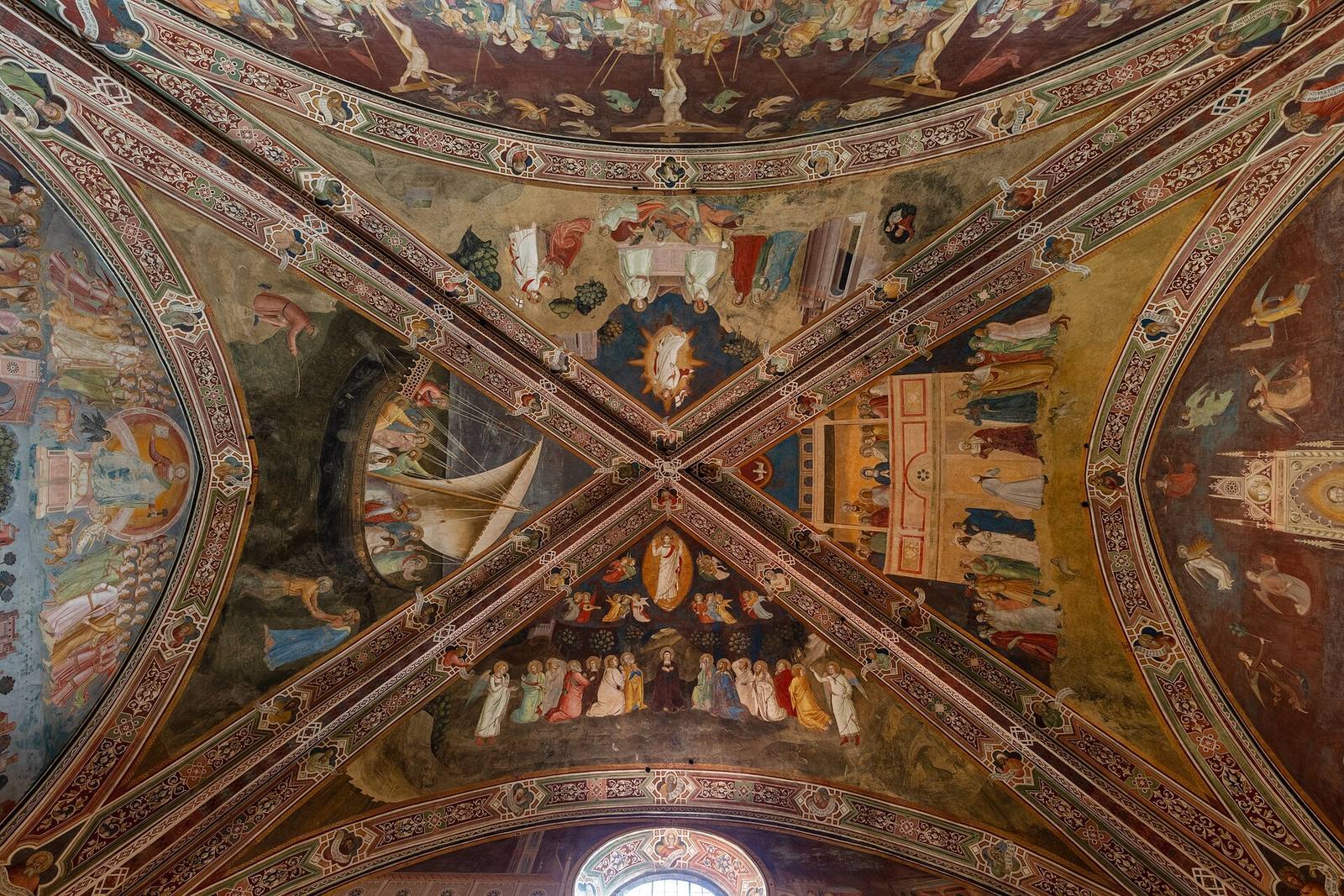
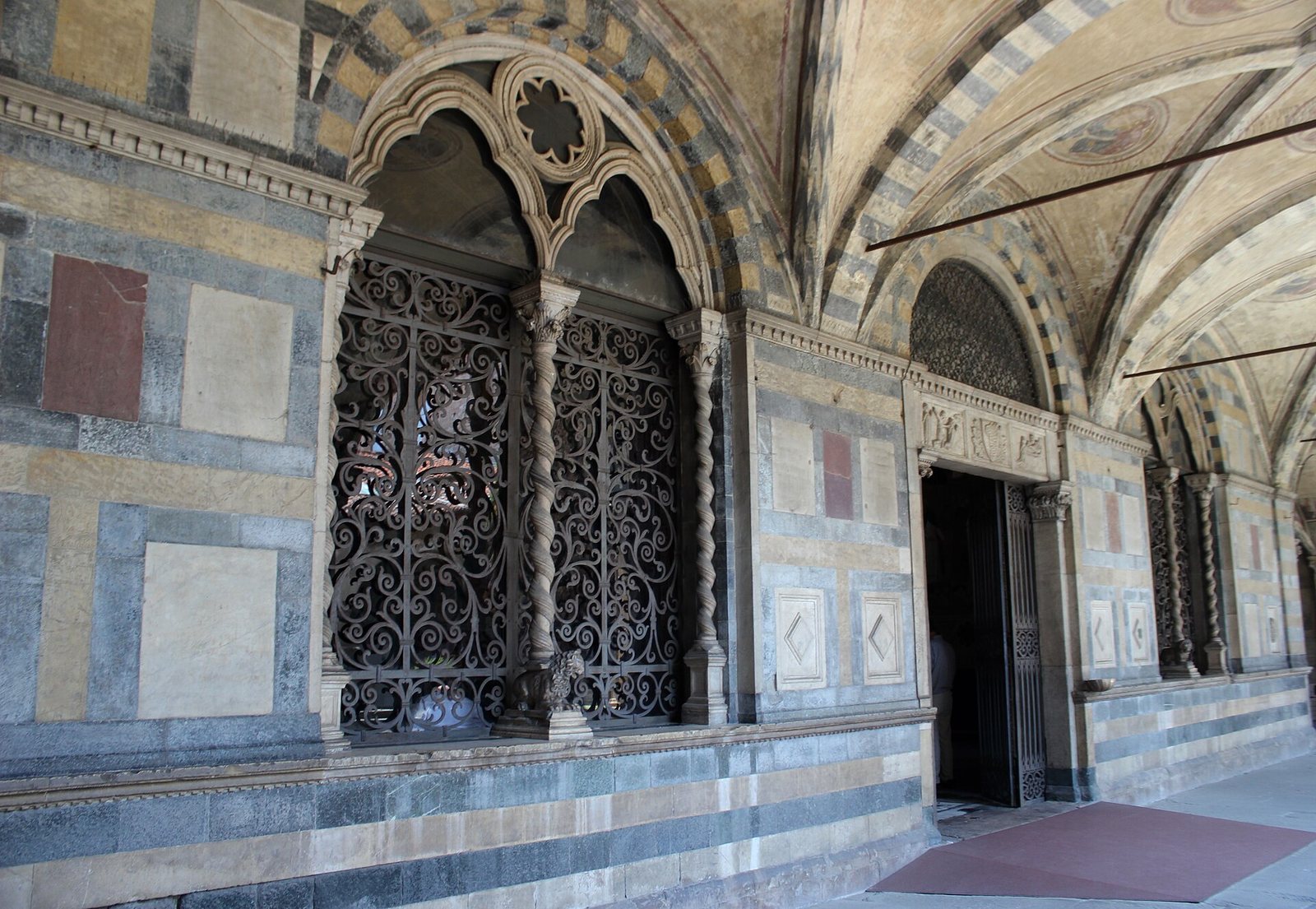
The chapel stands along the north side of the Green Cloister and opens onto it. Its main room is square, with a pointed rib vault, a ceiling carried by projecting ribs. Four octagonal piers support the vault at its corners, and the ribs are painted in two colors. A two-opening window divided by a central upright faces the cloister, while a round window above the altar brings light into the far end. The sculpted portal has a carved horizontal band with scenes of Peter Martyr’s martyrdom and ascension; the work may be by Talenti.
Guidalotti’s coat of arms appears above the side piers at the base of the vault. Tomb slabs are set into the floor, including those associated with Spanish nobles who lived in Florence. An older slab before the altar steps marks Guidalotti’s burial.
Altar area and furnishings
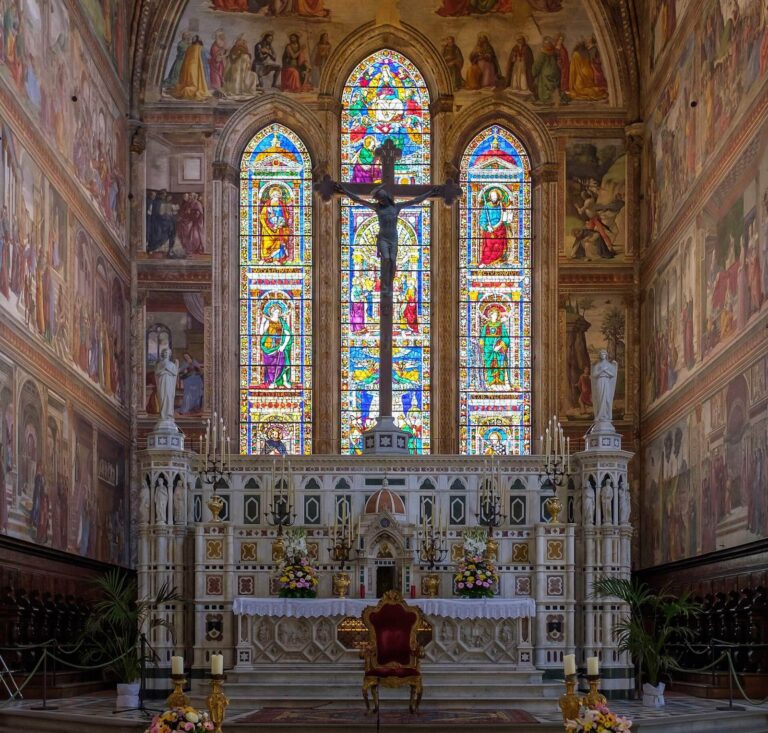
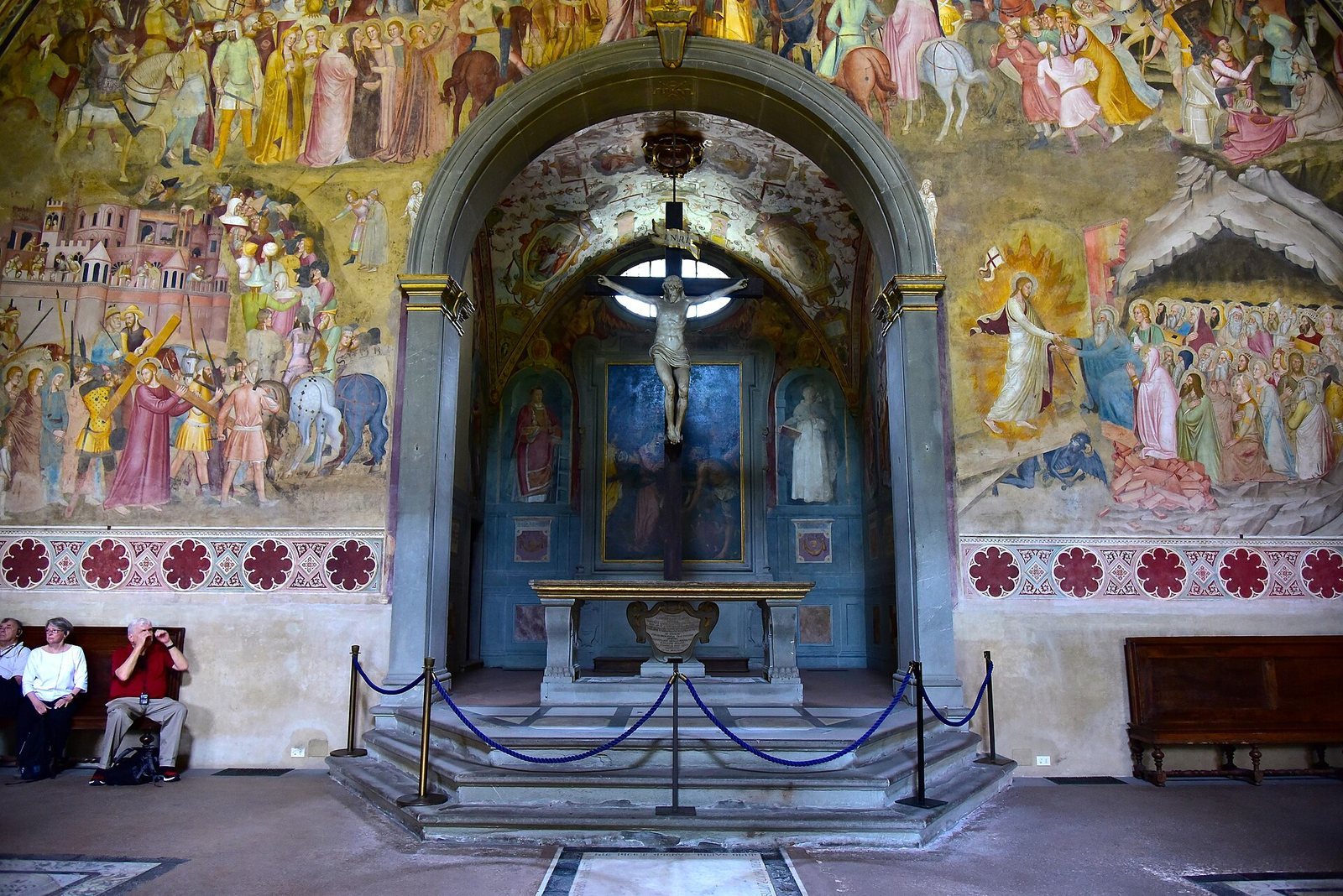
A smaller rectangular space at the western end contains the altar, and a further chapel within the building is dedicated to the Blessed Sacrament, the consecrated Eucharist believed by Catholics to be Christ’s presence. A marble crucifix by Domenico Pieratti, made in the early 17th century, is in the altar area. Gian Gastone de’ Medici gave it to the chapel in 1731.
The altar once held Bernardo Daddi’s five-panel Gothic altarpiece, made in 1344 and probably intended for this chapel. It shows the Madonna and Child enthroned among four saints. The work, a polyptych made of several joined panels, is now displayed in a nearby museum room identified as the refectory.
Fourteenth-century fresco cycle
Vault
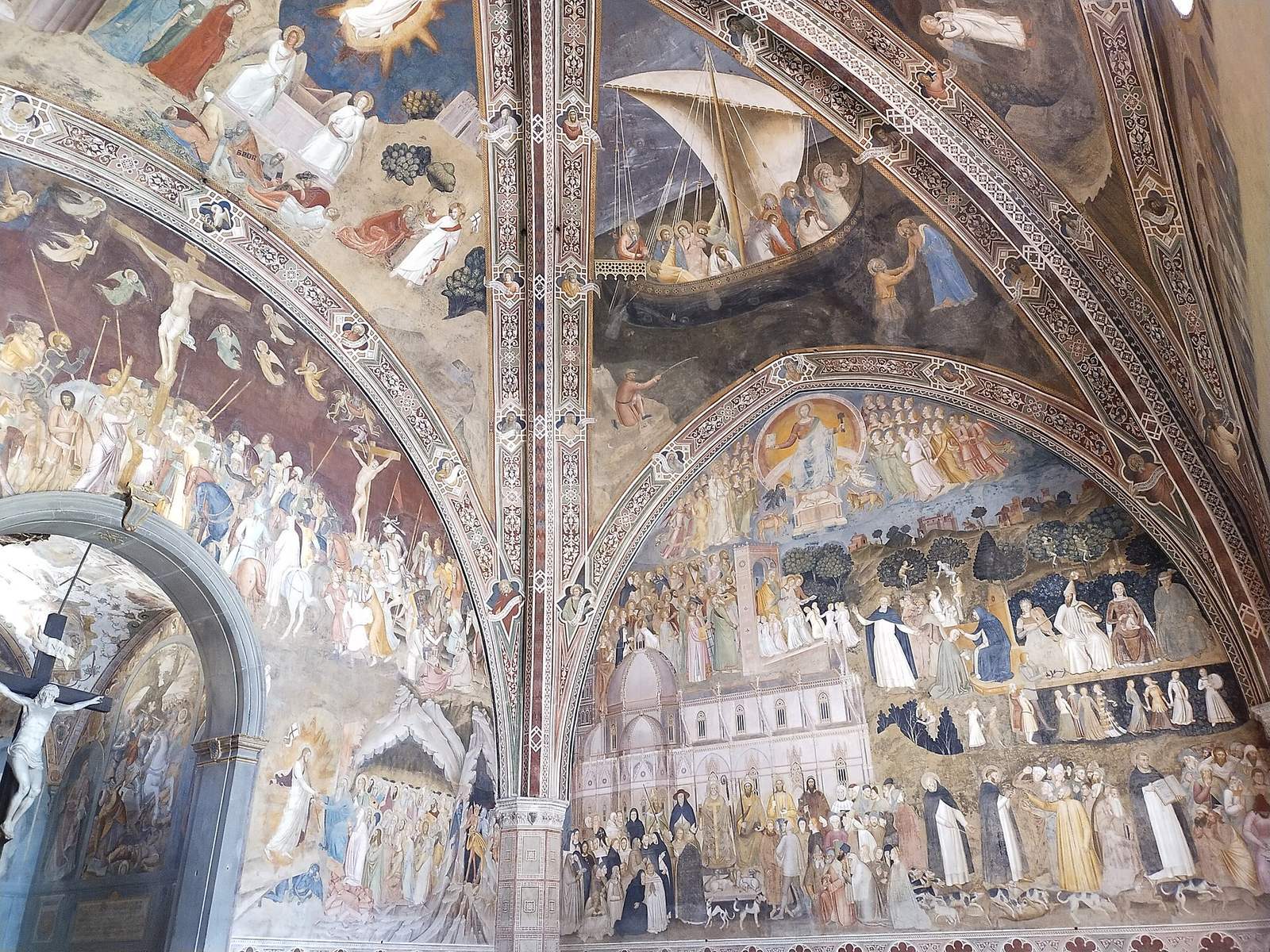
The four sections of the vault show the Boat of Saint Peter, the Resurrection, the Ascension, and Pentecost. The boat scene refers to Peter the Apostle, one of Jesus’s central disciples.
Entrance wall
The entrance wall is heavily damaged, but its paintings depict episodes from Peter of Verona’s life. Above, he takes the Dominican habit and preaches. Lower down on the left is his martyrdom, followed by the veneration of his tomb at Sant’Eustorgio in Milan. Beside the portal, the scene of his posthumous healing of Agata appears; at the lower right, he appears after death to the sick Rufino di Canapiccio.
Wall opposite the entrance
Christ’s Passion unfolds across a single pictorial space. The Way to Calvary occupies the left, the Crucifixion is placed high in the center, and the Descent into the Underworld fills the right.
Right wall: Church and Dominican community
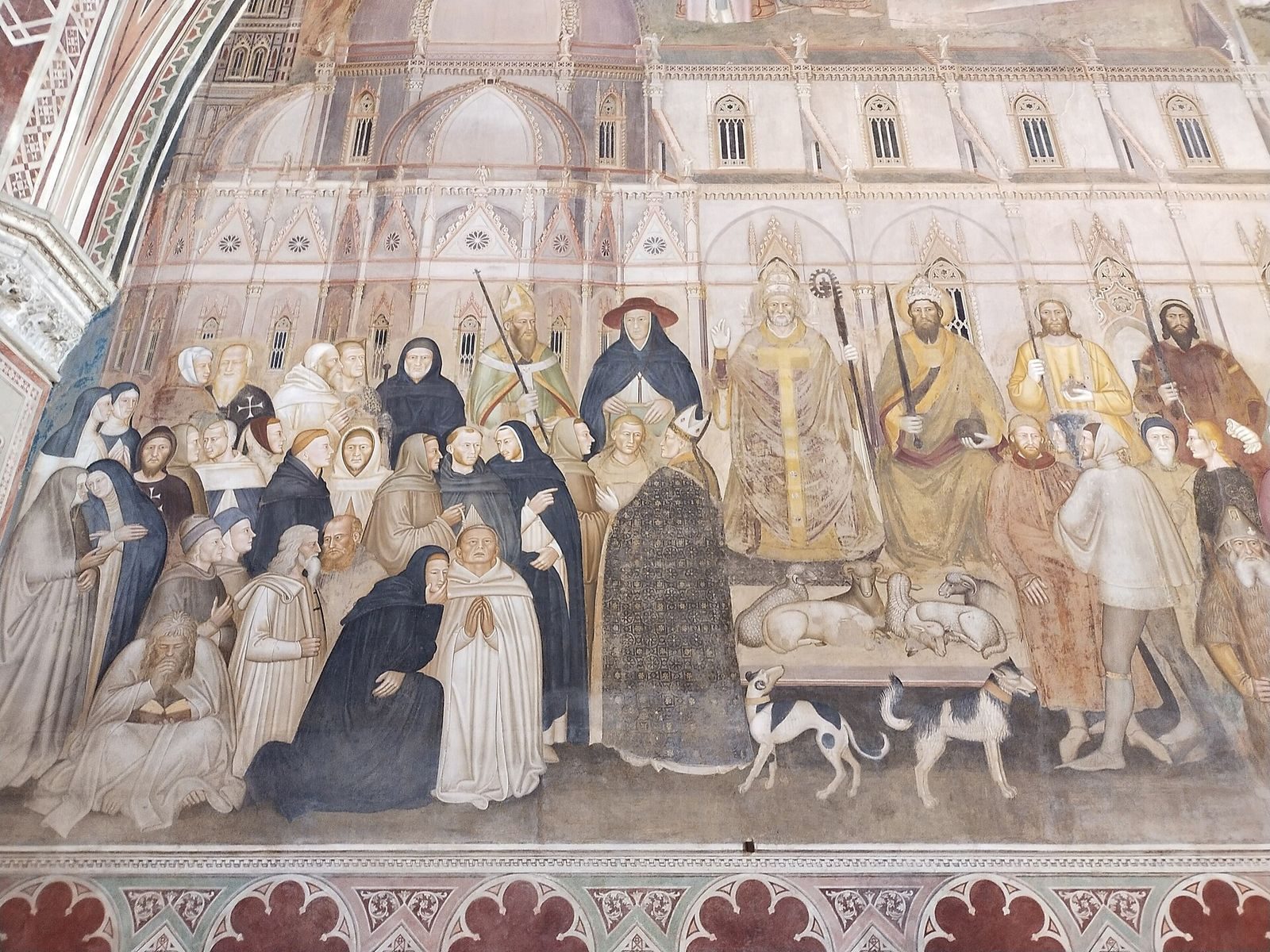
The right-hand wall is dominated by the Way of Truth, an allegory of the Church Militant, meaning the Church’s struggle in earthly life, and the Church Triumphant, the blessed in heaven. Religious authorities stand before a painted model of Santa Maria del Fiore, Florence’s cathedral. The group includes a pope, emperor, cardinal, Dominican bishop, king of France, and figures representing the Christian community. The cathedral is shown close to its completed appearance, though its great dome had not yet been built.
Other scenes present Dominican preaching. Dominic, Peter Martyr, and Thomas Aquinas confront heretics and urge them to abandon their beliefs; below, dogs pursue wolves and foxes. Nearby, young people dance, make music, and reach for forbidden fruit beneath figures representing Pride, Lust, and Avarice. A violin player beside Pride has been interpreted by art historian Timothy Verdon as Pleasure, although the figure’s identity remains uncertain. Further scenes show a Dominican hearing confession, Dominic directing souls toward Paradise, and Saint Peter and angels at its gate. The blessed turn toward Christ in glory amid apocalyptic symbols and angelic choirs.
Tradition identifies several people in the crowd as the painters Cimabue and Giotto, the architects Arnolfo di Cambio and Lapo Tedesco, and the poets Dante, Petrarch, and Boccaccio, shown with Beatrice, Laura, and Fiammetta respectively. Villana de’ Botti, a Dominican woman revered as blessed, is also identified there. These portraits are traditional identifications rather than certain ones.
Left wall: Triumph of Thomas Aquinas
The Triumph of Thomas Aquinas shows the theologian enthroned among the theological virtues of Faith, Hope, and Charity, and the cardinal virtues of Temperance, Prudence, Justice, and Fortitude. Beneath him are defeated figures including Sabellius or Nestorius, Arius, and Averroes, a medieval Muslim philosopher. Nearby appear Job, David, Paul, the Evangelists Mark, John, Matthew, and Luke, as well as Moses, Isaiah, and Solomon. The composition gives visual form to ideas in Aquinas’s Summa, his systematic work of theology.
Below the scene, fourteen decorated stalls contain female personifications of sacred learning and the liberal arts, each paired with a notable figure. Civil law is linked to Justinian and canon law to Pope Clement V; philosophy to Aristotle, Scripture to Jerome, theology to John of Damascus, contemplation to Dionysius the Areopagite, and preaching to Augustine. Arithmetic appears with Pythagoras, geometry with Euclid, astronomy with Ptolemy, music with Tubal-Cain, dialectic with Peter Hispanus, rhetoric with Cicero, and grammar with schoolchildren and Priscian. Peter Hispanus is traditionally identified with Pope John XXI.
Each discipline is associated with a planet, following a Pythagorean tradition taken up in the Middle Ages by Michael Scot, Aquinas, and Dante. In the pediment above Dialectic, Mercury appears as Nabu, an ancient Mesopotamian deity associated with writing.
Later altar decoration
Side walls and altarpiece
The altar area’s painted decoration includes an altarpiece credited to Alessandro Allori with assistance from his workshop. It shows Saint James being led to martyrdom as he heals a paralytic. Six Spanish saints appear on the side walls, each above monochrome scenes from that saint’s life. From left to right, they are Vincent Ferrer and Hermenegild, Lawrence and Dominic, then Vincent Martyr and Isidore. The last pair flank a scene of the Battle of King Ramiro, in which the Spanish defeat Caliph Abd al-Rahman III through Saint James’s intervention.
Altar vault
Bernardino Poccetti painted the altar-area vault with scenes from Saint James’s life, Spain’s arms, and personifications of Prayer, Religion, and the Four Continents.