Gorgoepikoos Monastery: An 11th-Century Monastic Community in Greece
Site at a Glance
- Popularity
- Medium
- Country
- Greece
- Primary era
- Unclassified
- Eras represented
- Unclassified
- Civilizations
- Unclassified
- Site type
- Religious
- Remains
- Monastery
On this page6 sections
History
Foundation and religious continuity
Gorgoepikoos Monastery is a male monastic community on Goulas Hill in Greece, thought to have been founded in 1060 by Alexios Komnenos. Alexios Komnenos was a name borne by members of the Byzantine imperial dynasty, so the name alone does not identify a particular individual. The hill has remained dedicated to a female aspect of the divine, a continuity of worship that does not identify a specific deity.
Later use and administration
The monastery was operating in 1536. Its principal feast is the Dormition of the Theotokos on August 15, an Eastern Orthodox observance commemorating the death of Mary, the mother of Jesus, and her bodily assumption into heaven. The monastery also holds a public celebration on October 1.
From 1920, the monastery was officially recorded as a settlement within the community of Tsipiana. Following the Kallikratis Plan, a Greek reform of local government, it became part of the Local Community of Nestani, together with Nestani and Milia, within the Municipal Unit of Mantineia and the Municipality of Tripoli.
Remains
Church and hilltop setting
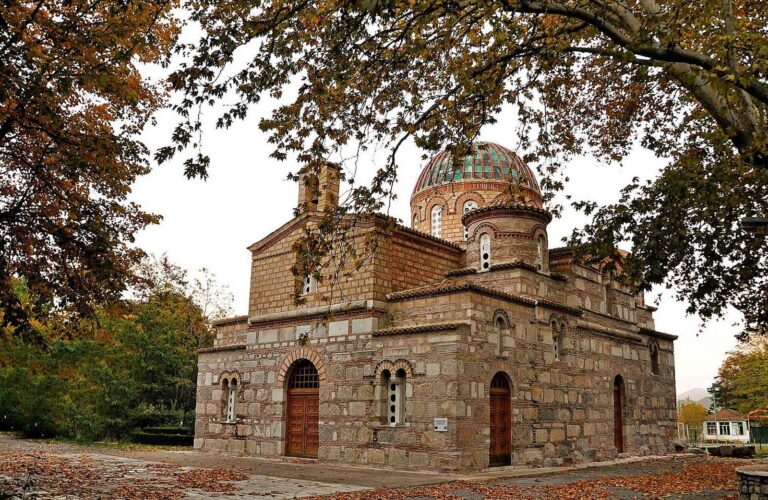
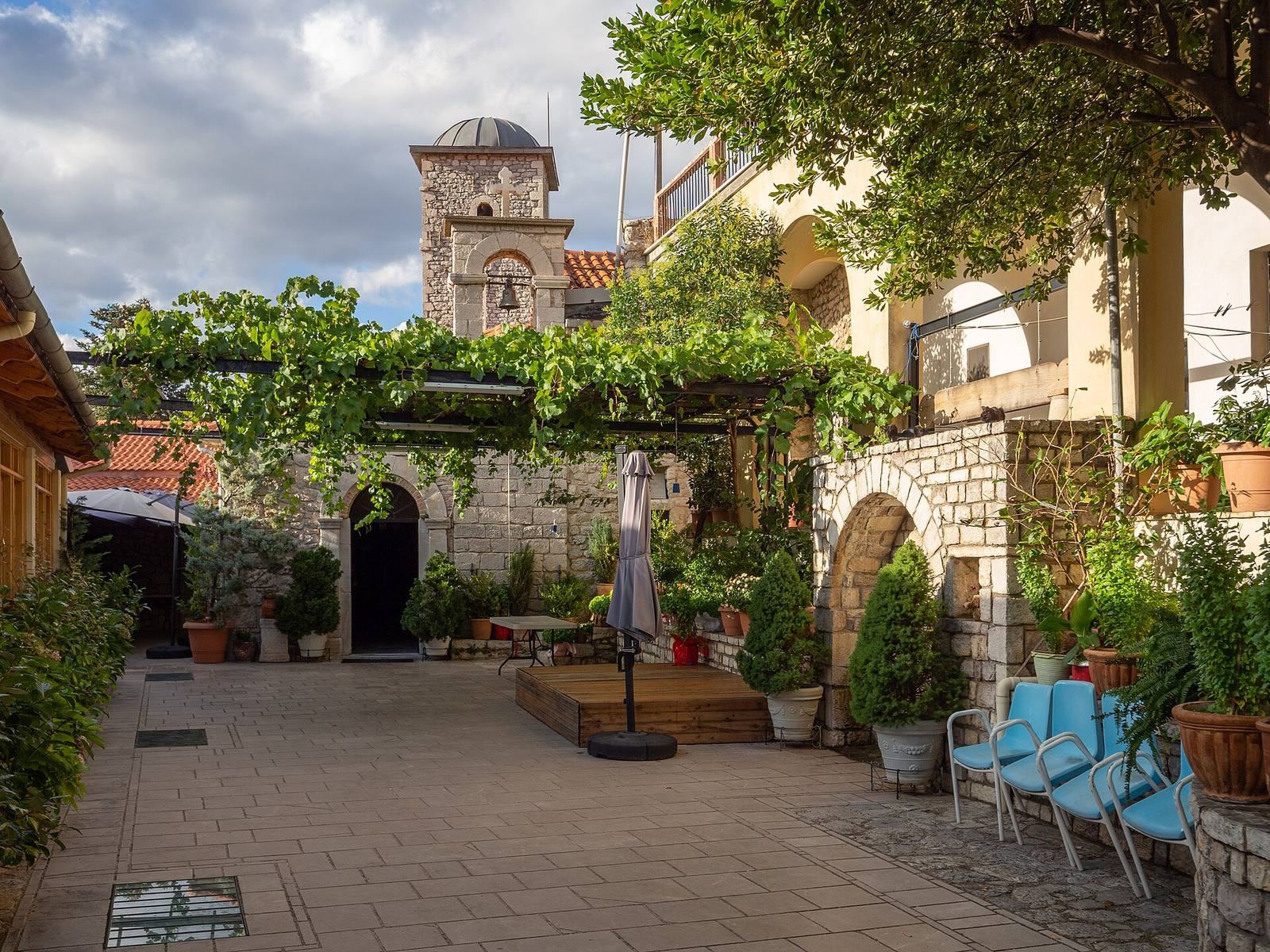
The monastery stands at an elevation of 680 metres on Goulas Hill, overlooking the Mantinean plain. A stone path runs through pine trees toward the heart of the complex. Its church is a three-aisled basilica, with a central aisle flanked by two side aisles, and has a vaulted roof.
Religious objects and relics
The monastery keeps a miraculous icon attributed to Luke, whom Christian tradition identifies as the author of the Gospel of Luke and the Acts of the Apostles. Its religious heirlooms also include icons, manuscript books and parchments. Relics associated with ascetics, people devoted to strict religious discipline, and saints are kept within the precincts and are important to worship.